Quick Answer: Are Small Electric SUVs Worth It in 2026?
Small electric SUVs—typically priced between $32,000 and $48,000 and offering 240–320 miles of EPA range—are the sweet spot for most US households. They combine hatchback-like efficiency (averaging 3.0–3.5 miles per kWh) with 8–10 inches of ground clearance and 55–70 cubic feet of cargo space. For buyers with Level 2 home charging access, the total 5-year cost of ownership undercuts comparable gas crossovers by $4,000–$8,000, even after accounting for higher purchase prices and insurance premiums. The catch: apartment dwellers without reliable home or workplace charging should consider a plug-in hybrid instead.
The Small Electric SUV Landscape: What's Available Now
The compact electric SUV segment has matured past early-adopter territory. In 2026, you'll find proven platforms from legacy automakers alongside Tesla's continued volume leader, all competing on charging speed, battery chemistry, and real-world efficiency. Here's how the major contenders stack up by the numbers.
| Model | EPA Range | Battery (kWh) | Peak DC Charge (kW) | 10–80% Time | 0–60 mph | Starting MSRP |
|---|---|---|---|---|---|---|
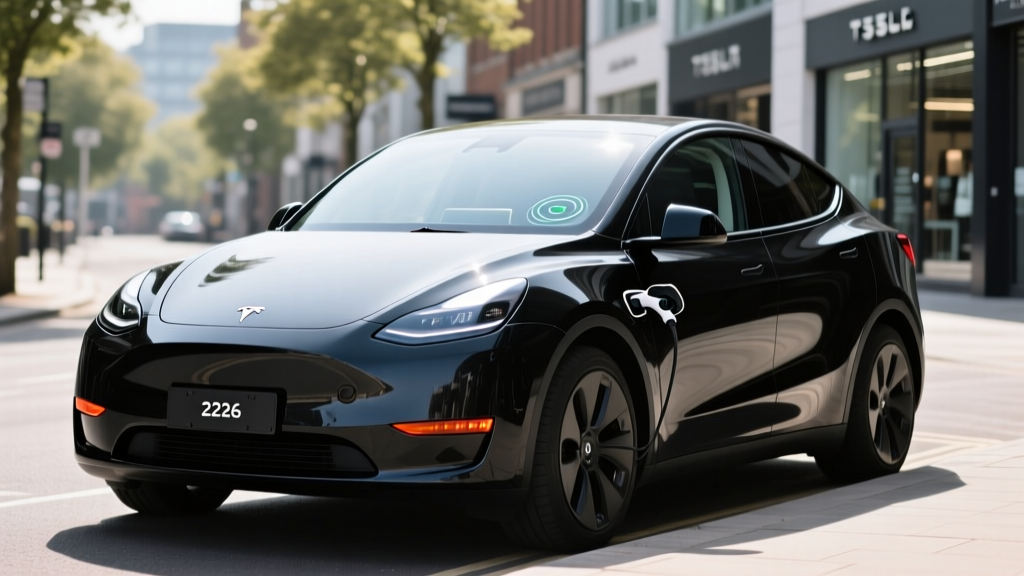
| Tesla Model Y (Long Range) | 320 mi | 75 kWh (NMC) | 250 kW | ~17 min | 5.0 sec | $44,990 |
| Hyundai Ioniq 5 (SEL) | 303 mi | 77.4 kWh (NMC) | 238 kW | ~18 min | 5.1 sec | $43,500 |
| Kia EV6 (Wind RWD) | 310 mi | 77.4 kWh (NMC) | 238 kW | ~18 min | 7.2 sec | $43,400 |
| Ford Mustang Mach-E (Select) | 250 mi | 72 kWh (LFP) | 150 kW | ~32 min | 5.5 sec | $38,995 |
| Volkswagen ID.4 (Pro) | 291 mi | 82 kWh (NMC) | 175 kW | ~28 min | 7.7 sec | $41,190 |
| Nissan Ariya (Engage FWD) | 289 mi | 63 kWh (NMC) | 130 kW | ~35 min | 7.5 sec | $39,590 |
Chemistry matters: Ford's shift to LFP (lithium iron phosphate) in the Mach-E Select trim sacrifices about 40 miles of range versus NMC competitors but gains a longer cycle life and the ability to charge to 100% daily without accelerating degradation. If your commute is under 50 miles round-trip and you want a no-worry daily driver, LFP is a legitimate trade-off. If road trips are frequent, NMC's higher energy density wins.
Real-World Range vs. EPA Stickers: What to Actually Expect
EPA range estimates are tested on mixed driving cycles at moderate temperatures. In practice, three factors consistently erode those numbers:
- Highway driving at 70+ mph: Expect 15–20% less range than the EPA sticker. A Model Y rated at 320 miles will realistically deliver 255–275 miles on an interstate road trip.
- Cold weather (below 32°F): Battery chemistry slows and cabin heating draws 2–5 kW continuously. Plan for 20–35% range loss depending on severity. An Ioniq 5 at 303 EPA miles may deliver as little as 200 miles in a 15°F Minnesota January.
- Elevation and terrain: Mountain passes consume energy climbing; regenerative braking recovers some on descent, but net loss on a 5,000-foot pass typically runs 10–15%.
Rule of thumb for trip planning: Multiply the EPA range by 0.75 for highway driving in moderate weather, and by 0.60 for highway driving in sub-freezing temperatures. That's the buffer you should plan around when routing between DC fast chargers.
Heat pumps—which Tesla, Hyundai/Kia, and VW include as standard—reduce cold-weather cabin-heating energy draw by roughly 30–40% compared to resistive heaters. If you live in a climate with sustained winter temperatures below 40°F, a heat pump is not optional; it's essential.
EV vs. Gas Crossover: The True Cost Comparison
Comparing a small electric SUV to a gas crossover like the Toyota RAV4 or Honda CR-V requires looking beyond the sticker price. Here's a 5-year, 60,000-mile ownership breakdown.
| Cost Category | Hyundai Ioniq 5 SEL (EV) | Toyota RAV4 XLE (Gas) |
|---|---|---|
| Purchase price (MSRP) | $43,500 | $33,250 |
| Federal tax credit (§30D)* | −$3,750 to $7,500 | $0 |
| Fuel/energy (60k mi) | $3,960 (home L2, $0.14/kWh) | $7,500 (27 MPG, $3.38/gal) |
| Maintenance (60k mi) | $600 | $2,800 |
| Insurance (5-yr avg) | $9,500 | $7,200 |
| Estimated depreciation | $18,000 | $14,500 |
| 5-Year Total | $35,810–$39,560 | $65,250 |
*Federal §30D tax credit eligibility depends on battery sourcing, buyer income caps ($150K single / $300K joint), and MSRP caps ($80K for SUVs). Credit amounts vary by vehicle and model year. Verify current eligibility at IRS.gov. Point-of-sale transfer is available, reducing your dealer price directly.
The EV wins on operating costs by $5,000–$6,000 over five years, driven by electricity savings (~$0.06–0.08 per mile vs. $0.12–0.14 per mile for gas) and near-zero scheduled maintenance (no oil changes, no transmission fluid, brake pads lasting 100K+ miles thanks to regenerative braking). Insurance runs 15–30% higher on EVs due to repair costs and parts pricing—shop quotes before buying.
Charging at Home: The Make-or-Break Factor
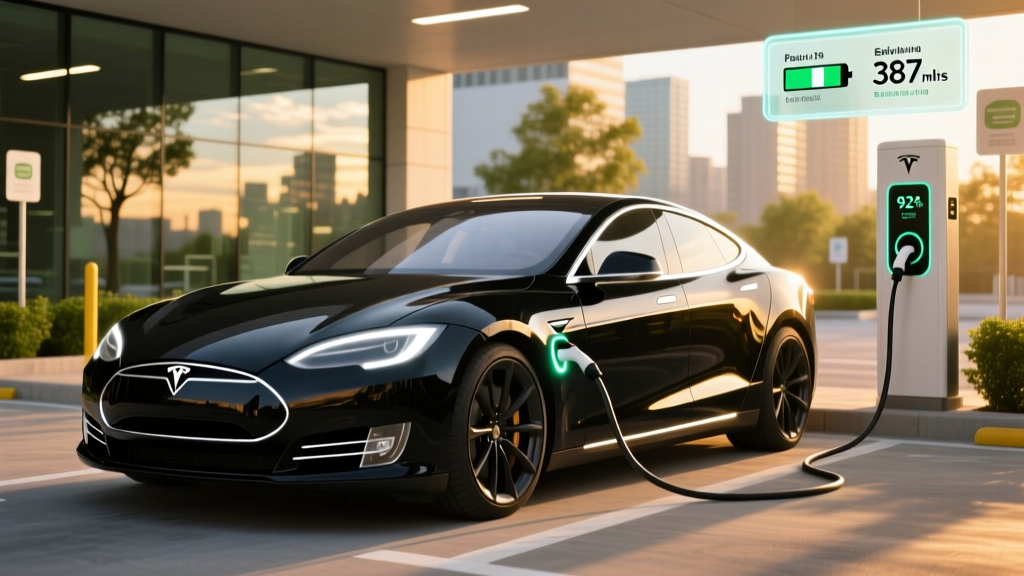
Home Level 2 charging is the single biggest ownership advantage for an electric SUV. A 240V/40A circuit delivers roughly 9.6 kW, adding about 30–35 miles of range per hour—enough to fully replenish any small EV SUV overnight. But installation costs vary widely.
| Component | Typical Cost Range | Notes |
|---|---|---|
| Level 2 charger (hardwired, 40–48A) | $350–$700 | ChargePoint Home Flex, Wallbox Pulsar Plus, Tesla Wall Connector |
| Electrician labor | $500–$2,000 | Depends on panel proximity, conduit run length |
| Electrical panel upgrade (if needed) | $1,500–$3,500 | Required if panel is 100A or at capacity |
| Permits and inspection | $100–$400 | Varies by municipality |
| Total (no panel upgrade) | $950–$3,100 | |
| Total (with panel upgrade) | $2,450–$6,600 |
If your home has a 200-amp panel with spare capacity and your parking spot is within 50 feet of the panel, expect a straightforward $1,200–$2,000 install. Older homes with 100-amp service or parking on the opposite side of the house from the panel should budget for the higher end.
Public charging reality check: DC fast charging costs $0.30–$0.55 per kWh at networks like Electrify America and EVgo, making it more expensive than gasoline on a per-mile basis. EVs are cheapest when charged at home; frequent reliance on public DC charging erases the fuel-cost advantage. If you cannot install a Level 2 charger at home or work, a plug-in hybrid (PHEV) like the Toyota RAV4 Prime (42 miles electric-only, then 38 MPG on gas) may serve you better.
Tax Credits and Incentives: What You Actually Qualify For
The federal §30D clean vehicle credit remains the biggest purchase-price offset, but qualifying requires meeting multiple criteria simultaneously:
- Buyer income cap: Modified AGI ≤ $150,000 (single), $225,000 (head of household), $300,000 (joint)
- MSRP cap: ≤ $80,000 for SUVs, vans, and pickup trucks
- Battery sourcing: Increasing percentages of critical minerals and battery components must be sourced from the US or free-trade-agreement countries—this requirement tightens annually and eliminates some models from full credit eligibility
- Assembly: Final assembly must occur in North America (check VIN at fueleconomy.gov)
- Point-of-sale transfer: You can transfer the credit to the dealer at purchase, reducing your out-of-pocket cost immediately rather than waiting for tax filing
As of 2026, the Hyundai Ioniq 5 (built in Georgia) and Tesla Model Y (built in Texas) qualify for partial to full credits depending on the specific battery batch and sourcing documentation. The Kia EV6, imported from South Korea, does not qualify for §30D as a new purchase but may qualify for the used-EV credit ($4,000 or 30% of price, whichever is lower) if purchased pre-owned. Always verify the specific VIN's eligibility before signing—dealers sometimes misstate credit amounts.
Decision Framework: Which Small Electric SUV Fits You?
Choose Based on Your Actual Driving Life
Choose the Tesla Model Y if: You prioritize the Supercharger network for road trips, want the longest EPA range (320 mi), and value over-the-air software updates. Trade-off: polarizing styling, limited service center availability in rural areas.
Choose the Hyundai Ioniq 5 or Kia EV6 if: You want the fastest DC charging in the segment (800V architecture enabling 10–80% in ~18 minutes), distinctive design, and strong build quality. The E-GMP platform's charging curve sustains high kW longer than competitors—it doesn't taper sharply above 60% like many 400V systems.
Choose the Ford Mustang Mach-E (LFP) if: Your daily commute is under 80 miles round-trip and you want a battery you can charge to 100% every night without degradation worry. The lower starting price ($38,995) and LFP longevity make this a strong value play for predictable routines.
Choose the VW ID.4 if: You want a conventional SUV driving feel, competitive cargo space (64.2 cu ft seats-folded), and a proven dealer service network. Its 175 kW peak charge rate is slower than Hyundai/Kia, but adequate for most overnight hotel stops.
Choose a PHEV (RAV4 Prime, Tucson PHEV) instead if: You live in an apartment without charging access, regularly drive 400+ miles in remote areas, or experience winter temperatures below 0°F where range loss becomes operationally challenging.
Common Misconceptions About Small Electric SUVs
| Myth | Fact |
|---|---|
| "Batteries need replacing every 5 years" | Modern NMC and LFP batteries degrade 1–2% per year. At year 10, expect 85–90% of original capacity. Federal warranty mandates 8 years/100,000 miles with ≤30% degradation. |
| "EVs are worse in winter" | Range drops 20–35%, but EVs start instantly in any cold, have no cold-start emissions, and precondition the battery while plugged in. With a heat pump and home charging, winter is manageable—just plan shorter legs between charges. |
| "Charging takes too long" | Home Level 2 charging happens while you sleep—zero active time. On road trips, 800V platforms (Ioniq 5, EV6) add 200+ miles in 18 minutes, aligning with a rest stop. |
| "EVs are more expensive to own" | Higher sticker price, but lower fuel, maintenance, and (often) depreciation costs result in 5-year parity or savings for most buyers with home charging. |
| "The grid can't handle EVs" | Most EV charging happens overnight during off-peak hours when grid capacity is underutilized. A single small EV SUV uses roughly 3,000 kWh/year—about the same as a central air conditioner. |
What First-Time EV Buyers Must Know Before Signing
- Confirm home charging feasibility first. Before falling in love with a model, verify your electrical panel capacity and outlet proximity. A $1,500 install is routine; a $5,000 panel upgrade plus trenching is a different calculus.
- Test-drive in conditions you actually drive. Highway merging, one-pedal regenerative braking feel, and visibility are all model-specific. The Ioniq 5's regen is aggressive; the ID.4's is gentle. You'll live with this every day.
- Understand the charging curve. Peak kW (e.g., "238 kW!") is the maximum rate, sustained for only a portion of the session. Charging from 10–80% at a rated station takes the listed time, but 80–100% can take just as long due to taper. Road-trip planning means charging to 80% and moving on.
- Download the charging apps before buying. PlugShare, Electrify America, EVgo, and ChargePoint all have different reliability records in your area. Check station density and uptime reviews for your commute and frequent routes.
- Get insurance quotes before committing. EV insurance premiums run 15–30% higher than gas equivalents. A Model Y may cost $200/month to insure; an ID.4 might be $160. This $40–$50/month difference adds up.
- Check state incentives separately. States like Colorado, California, and New York offer additional rebates ($1,000–$5,000) stacked on top of the federal credit. These vary by jurisdiction and income—check your state energy office or AFDC.energy.gov for current programs.
Frequently Asked Questions
What's the best small electric SUV for road trips?
The Tesla Model Y leads with 320 miles of EPA range and access to the Supercharger network (17,000+ stalls in the US). However, with the NACS connector now adopted by Ford, GM, Hyundai/Kia, and others, non-Tesla EVs can access Superchargers via adapter or native NACS port starting in 2025–2026, narrowing this advantage.
How long do small electric SUV batteries last?
Based on current degradation data, expect 85–90% state of health at 10 years or 100,000 miles. LFP batteries (Ford Mach-E Select) show even slower degradation, potentially retaining 90%+ at the same interval. Full battery replacement costs $8,000–$15,000 out of warranty but is rarely needed—most batteries outlast the vehicle's economic life.
Can I tow with a small electric SUV?
Most small electric SUVs are rated for 1,500–3,500 pounds. The Model Y tows up to 3,500 lbs; the Ioniq 5 is rated at 2,300 lbs. Be aware that towing reduces range by 40–60%—a 300-mile EV becomes a 130-mile EV with a loaded trailer.
Is a small electric SUV practical for apartment dwellers?
Without reliable home or workplace Level 2 charging, EV ownership becomes inconvenient and expensive (relying on $0.40+/kWh public DC charging). If you can't charge at home, consider a PHEV instead—it gives you 30–42 miles of electric range for daily driving with a gas backup for longer trips.
Do small electric SUVs qualify for the $7,500 tax credit?
Some do, partially or fully, depending on battery sourcing, buyer income, MSRP, and North American assembly. The credit is not a flat $7,500 for every buyer—it's a complex formula that changes annually. Verify the specific VIN at fueleconomy.gov and consult a tax professional for your situation.