Quick Answer: What Is a Small Electric Cart (and Is It Worth It)?
A "small electric cart" typically refers to a Neighborhood Electric Vehicle (NEV) or Low-Speed Vehicle (LSV) — a compact, battery-powered vehicle federally limited to a top speed of 25 mph and legal on roads with speed limits up to 35 mph (varies by state). In 2026, popular models like the GEM e2, Club Car Onward EV, and Polaris GEM e4 offer 30–60 miles of real-world range from lead-acid or lithium-ion battery packs, cost $8,000–$18,000 before any incentives, and run on standard 120V household outlets. They are not highway-capable, do not qualify for the federal §30D EV tax credit (which applies to full-speed passenger vehicles), and lack the crash protection of a conventional car. For short neighborhood errands, campus use, or gated-community driving, they can replace a gas car trip at roughly $0.03–$0.05 per mile in electricity — but they are not a substitute for a full-size EV or hybrid if you need highway access, cold-weather reliability, or occupant protection.
What Exactly Counts as a Small Electric Cart?
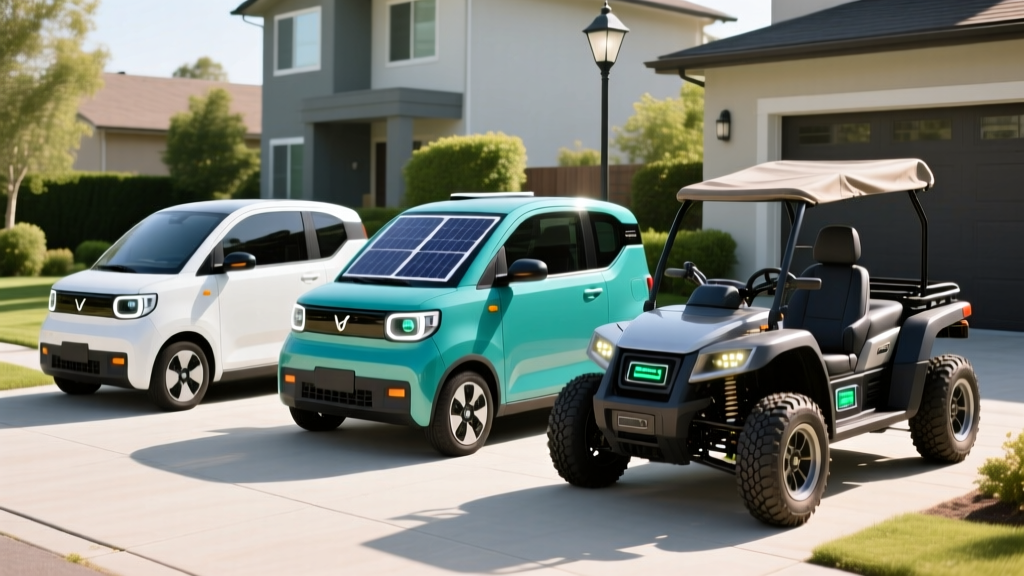
The term "small electric cart" is colloquial. In regulatory and purchasing terms, you're usually looking at one of three vehicle categories:
- Neighborhood Electric Vehicle (NEV) / Low-Speed Vehicle (LSV): Federally defined under FMVSS 500. Must have four wheels, a top speed between 20–25 mph, headlights, turn signals, seat belts, and a VIN. Legal on roads posted 35 mph or lower in most states.
- Golf Cart (Personal Transportation Vehicle): Not street-legal by default unless modified and registered as an LSV. Many gated communities allow them on private roads.
- Utility/Task Cart: Brands like Polaris and Club Car sell work-oriented electric carts for farms, campuses, and large properties. These may or may not be street-legal depending on configuration.
If you're considering a small electric cart for daily errands, you almost certainly want an LSV-compliant NEV. Here's what the current market looks like in 2026.
2026 Small Electric Cart Models: Range, Price, and Specs
Unlike full-size EVs tracked by fueleconomy.gov, NEVs don't carry EPA range stickers. Manufacturers provide estimated range based on ideal conditions — and real-world results are typically 20–40% lower, especially in cold weather or with heavy payloads. Here's a spec comparison of the most common 2026 models:
| Model | Battery | Est. Range (Ideal) | Real-World Range | Top Speed | Charge Time (120V) | Base MSRP (2026) |
|---|---|---|---|---|---|---|
| GEM e2 (2-seat) | 12.5 kWh Lithium | ~50 mi | 30–40 mi | 25 mph | 6–8 hours | $12,495 |
| GEM e4 (4-seat) | 12.5 kWh Lithium | ~45 mi | 25–35 mi | 25 mph | 6–8 hours | $14,995 |
| Club Car Onward EV (4-seat) | ~10 kWh Lithium (LiFePO4) | ~40 mi | 25–32 mi | 19–23 mph | 8–10 hours | $11,500–$14,000 |
| Polaris GEM eL XD | 14.3 kWh Lithium | ~55 mi | 35–45 mi | 25 mph | 6–8 hours | $16,500 |
| Tomberlin E-Merge (LSV) | ~10 kWh Lead-Acid | ~30 mi | 18–24 mi | 25 mph | 10–12 hours | $9,800 |
Key takeaway: Expect 20–40 real-world miles from most small electric carts. Lithium-ion (especially LFP/LiFePO4) packs outperform older lead-acid batteries in both range and longevity, but add $1,500–$3,000 to the price. Lead-acid batteries also degrade faster — plan for a full replacement every 3–5 years at roughly $1,200–$2,000, versus 8–10+ years for lithium.
Small Electric Cart vs. Gas Golf Cart vs. Compact EV: The Cost Breakdown
If you're deciding between a small electric cart, a gas-powered golf cart, or a compact full-size EV like a used Nissan LEAF or Chevy Bolt, the economics diverge sharply depending on how you use the vehicle.
| Factor | Electric NEV (Lithium) | Gas Golf Cart | Used Compact EV (e.g., 2023 Bolt) |
|---|---|---|---|
| Purchase Price | $10,000–$17,000 | $8,000–$12,000 | $15,000–$22,000 |
| Fuel/Energy Cost Per Mile | $0.03–$0.05 | $0.12–$0.18 | $0.04–$0.06 |
| Annual Maintenance | $100–$250 | $300–$600 | $400–$700 |
| Battery Replacement | $1,500–$3,000 (8–10 yr) | N/A | $5,000–$14,000 (10–15 yr) |
| Insurance (Annual) | $200–$500 | $150–$400 | $800–$1,400 |
| Highway Legal? | No (35 mph roads max) | No | Yes |
| Crash Protection | Minimal (no airbags, crumple zones) | None | Full (airbags, structure, IIHS-rated) |
Over five years of light use (3,000 miles/year), an electric NEV costs roughly $1,500–$2,500 less to operate than a gas cart when you factor in fuel and maintenance savings. But if you need to drive on roads posted above 35 mph, carry passengers safely at speed, or travel more than 30 miles in a day, a used compact EV is the only option that covers those needs — and many 2023–2024 models still qualify for the §30D federal tax credit (up to $7,500, subject to MSRP caps, buyer income limits, and battery-sourcing requirements).
Real-World Ownership: What First-Time Buyers Need to Know
Buying a small electric cart is not like buying a car. The dealership experience, registration, insurance, and daily operation all have quirks that catch first-time owners off guard.
Street Legality and Registration
An LSV-compliant NEV must be titled and registered in most states, carry liability insurance, and display a license plate. You'll need a valid driver's license to operate one on public roads. State rules vary significantly — some states allow NEVs on roads up to 35 mph, others up to 45 mph with additional equipment. Check your state DMV before purchasing.
Charging at Home
Almost all small electric carts charge on a standard 120V household outlet using an onboard charger rated between 0.8 kW and 1.5 kW. This means:
- No special electrical work or Level 2 charger installation required.
- A full charge draws roughly 10–15 kWh — costing $1.30–$2.25 at the national average residential rate of ~$0.15/kWh.
- Charge times are long (6–12 hours) but usually managed overnight.
If you live in an apartment or lack a garage or dedicated parking spot with outlet access, charging becomes a significant logistical problem. Unlike full-size EVs, NEVs have virtually no public charging infrastructure — you cannot pull up to an Electrify America or ChargePoint station and plug in.
Climate and Range Reality
Small electric carts are extremely vulnerable to cold weather. Lithium-ion batteries lose 15–30% of usable capacity below 40°F, and lead-acid batteries fare even worse. If you live in a northern climate and plan to drive your NEV year-round, expect real-world winter range to drop to 15–25 miles from a cart rated at 40–50 miles in ideal conditions. Most NEVs also lack cabin heating beyond a small electric blower, which further drains the battery.
What About the Federal EV Tax Credit?
Small electric carts and NEVs do not qualify for the §30D Clean Vehicle Credit. That credit applies only to vehicles with a gross vehicle weight rating (GVWR) under 14,000 lbs that are capable of sustained highway speeds and meet specific battery-sourcing and critical-minerals thresholds. Some states or local utilities offer rebates for NEVs or electric golf carts — check your state energy office or utility provider — but don't count on a $7,500 federal credit.
Common Misconceptions About Small Electric Carts
| Myth | Fact |
|---|---|
| "They're just golf carts — I can drive them anywhere." | LSVs are street-legal only on roads posted 35 mph or lower (in most states). Driving on highways or high-speed roads is illegal and dangerous. |
| "Electric carts are maintenance-free." | Batteries degrade. Lead-acid packs need water topping and terminal cleaning. Tires, brakes, and controllers still require service. |
| "I'll save a ton vs. buying a real car." | Upfront savings are real, but an NEV can't replace a car for highway trips, long commutes, bad weather, or carrying more than 2–4 people safely. |
| "They charge as fast as an EV." | Most NEVs charge at 0.8–1.5 kW on 120V — roughly 30–50x slower than a DC fast charger for a full-size EV. Plan for overnight charging only. |
| "They qualify for the $7,500 EV tax credit." | They do not. §30D applies to full-speed highway-capable vehicles only. No federal credit is available for NEVs or golf carts. |
Decision Framework: Should You Buy a Small Electric Cart?
Choose a Small Electric Cart (NEV/LSV) If:
- You live in a gated community, retirement village, campus, or small town with low-speed roads.
- Your typical trips are under 20 miles round-trip and don't require highway driving.
- You have a garage, carport, or dedicated parking spot with a 120V outlet for overnight charging.
- You already own a full-size car or EV for highway trips, and the NEV is a secondary vehicle for errands.
- You're in a warm or moderate climate, or you accept significantly reduced range in winter.
Choose a Compact Full-Size EV (Used Bolt, LEAF, etc.) If:
- You need to drive on roads posted above 35 mph or access highways.
- You need crash protection, airbags, and climate control for year-round driving.
- You want to qualify for the §30D tax credit (up to $7,500 on eligible new models, or up to $4,000 on eligible used EVs under the §25E used-EV credit).
- You need 150+ miles of range and access to public DC fast-charging networks.
Choose a Gas Golf Cart If:
- You lack reliable access to an electrical outlet for overnight charging.
- You use the cart primarily on private property (farms, large estates, off-road) where street legality isn't a concern.
- You need extended range in a single day (40+ miles) without waiting 8 hours to recharge.
5-Year Cost of Ownership: Small Electric Cart vs. Alternatives
| Cost Category | Electric NEV (Lithium) | Gas Golf Cart | Used Compact EV (2023 Bolt) |
|---|---|---|---|
| Purchase Price | $13,000 | $10,000 | $18,000 |
| Fuel/Energy (5 yr, 3k mi/yr) | $750 | $2,500 | $900 |
| Maintenance (5 yr) | $800 | $2,000 | $2,500 |
| Insurance (5 yr) | $1,750 | $1,250 | $5,500 |
| Tax Credit / Rebate | $0 | $0 | –$4,000 (§25E used credit, if eligible) |
| 5-Year Total | $16,300 | $15,750 | $22,900 |
The NEV edges out the gas cart on operating costs, but the used Bolt — even at a higher purchase price — delivers dramatically more capability (highway access, 250+ mile range, full safety equipment) for a modest premium. If you qualify for the §25E used-EV credit (income caps apply: $75K single / $150K joint), the Bolt's effective cost drops further.
Frequently Asked Questions
Do I need a driver's license to operate a small electric cart?
On public roads, yes. Most states require a valid driver's license, registration, and insurance to operate an LSV/NEV on any public street. On private property (gated communities, farms, campuses), rules vary and a license may not be required.
Can I drive a small electric cart in the rain or winter?
Most NEVs have basic weather enclosures (soft or hard tops, optional doors), but they are not sealed like a car. Heavy rain, snow, and extreme cold are significant comfort and safety challenges. Battery range drops 20–40% in cold weather. Most NEV owners in northern climates treat them as seasonal vehicles.
How long do the batteries last in a small electric cart?
Lead-acid batteries typically last 3–5 years (500–800 charge cycles). Lithium-ion (LFP/LiFePO4) batteries last 8–12 years (2,000–3,000+ cycles) with minimal degradation. Replacement cost: $1,200–$2,000 for lead-acid, $2,500–$4,000 for lithium.
Can I charge a small electric cart at a public EV charging station?
No. NEVs use standard 120V AC plugs (NEMA 5-15) and onboard chargers. Public Level 2 (J1772) and DC fast-charging (CCS/NACS) stations are not compatible. You charge at home from a wall outlet.
Are small electric carts safe compared to cars?
No. NEVs are not required to meet the same crash-test standards as passenger cars. They lack airbags, crumple zones, and reinforced structures. They are safest at low speeds on low-traffic roads. NHTSA regulates LSVs under FMVSS 500, which mandates seat belts, headlights, and reflectors — but not crashworthiness testing.
What's the best small electric cart for a family with kids?
A 4-seat or 6-seat NEV like the GEM e4 or Polaris GEM e6 is the most practical for families. Ensure the model has rear seat belts (required for LSV compliance) and consider a hard enclosure with doors for weather protection. Never carry children without proper restraints — NEVs have no child-seat anchors (LATCH) in most cases.
Sources: NHTSA FMVSS 500 (LSV regulations), IRS §30D Clean Vehicle Credit, IRS §25E Used Clean Vehicle Credit, manufacturer specifications from GEM, Club Car, and Polaris (2026 model year). State-specific NEV registration requirements vary — consult your local DMV.