Quick Answer: Small Electric Boats in 2026
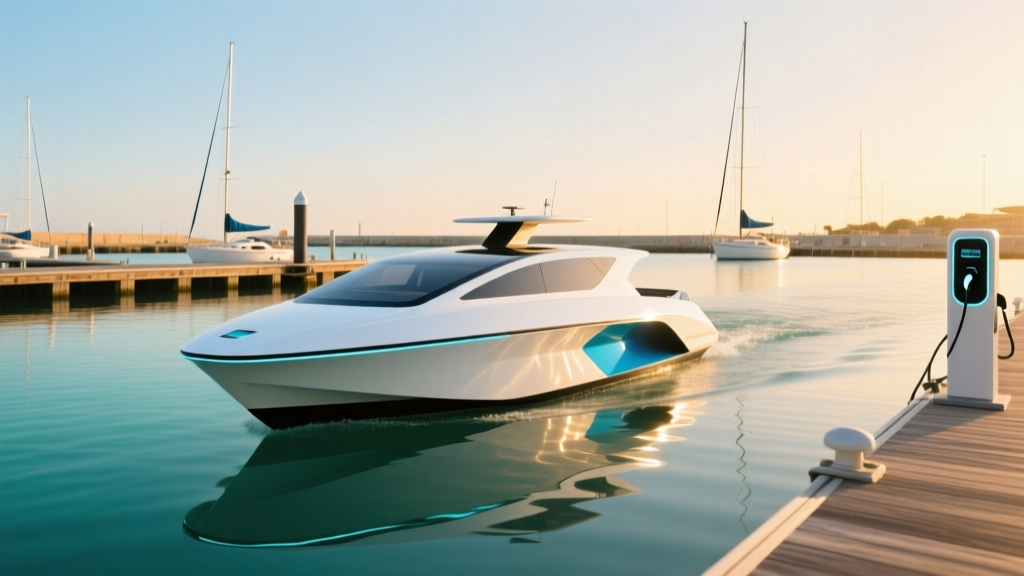
Small electric boats for sale in 2026 range from $8,000 personal pontoons to $45,000+ day cruisers, typically powered by 10–40 kWh lithium battery packs (often LFP chemistry for marine safety). Expect 2–6 hours of cruising at moderate speeds, with Level 2 (240V) dock charging taking 4–10 hours. While electric boats eliminate fuel, oil, and winterization costs, they face real limitations: shorter range than gas counterparts, limited public marina charging, and higher upfront purchase prices. For autoedgeview.com readers, the EV ownership principles you know from cars — kW vs kWh, LFP vs NMC, home charging access — transfer directly to the dock.
Why EV Owners Are Searching for Small Electric Boats
If you already own an EV, the appeal of a small electric boat for sale is intuitive: silent operation, zero exhaust fumes at the dock, instant torque off the line, and dramatically lower running costs. The marine electrification market has accelerated through 2026, with manufacturers like Flux Marine, X Shore, and Navier expanding lineups that mirror the EV car market's trajectory from five years ago.
But marine electrification is not simply car tech bolted onto a hull. Saltwater corrosion, bilge safety, US Coast Guard (USCG) certification, and the absence of a standardized charging connector (unlike NACS/CCS in cars) mean buyers need a different — but related — evaluation framework.
Electric Boat vs Gas Boat: The Numbers
The comparison that matters most to EV-curious boaters is cost-per-hour on the water. Here is how a typical 20-foot electric day boat stacks up against a comparable gas outboard in 2026:
| Metric | Electric (20 kWh LFP) | Gas (115 HP Outboard) |
|---|---|---|
| Base MSRP | $32,000–$42,000 | $18,000–$26,000 |
| Energy/Fuel Cost per Hour | $1.50–$3.00 (at $0.16/kWh) | $18–$28 (at $4.20/gal, 6 GPH) |
| Annual Maintenance | $200–$400 | $800–$1,500 (oil, impeller, lower unit) |
| Cruise Range (real-world) | 20–40 miles (2–4 hours) | 150–250 miles (10+ hours) |
| Top Speed | 20–28 mph | 35–45 mph |
| Winterization | Not required (no coolant/fuel) | $300–$600 per season |
| Noise at Cruise | ~55 dB (conversation level) | ~85 dB (hearing protection recommended) |
The operating-cost gap is stark: electric boats cost roughly 85–90% less per hour to run. But the upfront premium of $10,000–$20,000 means break-even takes 5–8 years for weekend-only boaters, or 2–4 years for frequent users.
Battery Chemistry, Range, and the Marine kWh Reality
Marine battery packs in 2026 predominantly use LFP (lithium iron phosphate) chemistry — and for good reason. LFP offers superior thermal stability (critical in enclosed bilges), 3,000+ cycle life vs ~1,000–1,500 for NMC, and no cobalt sourcing concerns. The trade-off is lower energy density: LFP packs are 20–30% heavier than equivalent NMC, which matters less in a boat than a car since hull buoyancy absorbs mass more gracefully.
| Attribute | LFP (Marine Standard) | NMC (Performance Builds) |
|---|---|---|
| Energy Density | 140–160 Wh/kg | 220–260 Wh/kg |
| Cycle Life (80% SoH) | 3,000–5,000 cycles | 1,000–1,500 cycles |
| Thermal Runaway Risk | Very low | Moderate (requires active BMS) |
| Cost per kWh (pack level) | $180–$240 | $140–$190 |
| Cold-Weather Performance | Reduced below 32°F | Better low-temp output |
Range is where real-world honesty matters most. A manufacturer-claimed "40-mile range" assumes calm water, 8 mph cruise, and 70°F. Add chop, headwind, or a 25 mph cruise speed and real range drops to 20–25 miles — a 40–50% reduction, mirroring the highway/cold-weather range loss EV drivers already know. Plan trips on the lower number.
Charging a Small Electric Boat: Dock, Home, and Marina
Unlike the EV world where NACS has largely standardized connectors, marine charging in 2026 remains fragmented. Most small electric boats use one of these:
- Standard 120V (Level 1): 1.2–1.8 kW, adding 2–4 miles of range per hour. A full charge from empty can take 15–25 hours — overnight only.
- 240V Shore Power (Level 2): 3.3–7.2 kW, the practical standard. A 20 kWh pack charges in 3–6 hours. Requires a 30A or 50A marine receptacle at your slip.
- DC Fast (rare): A handful of premium models support 20–40 kW DC charging, cutting 10–80% to under an hour — but public marina DC chargers remain scarce outside a few coastal hubs.
Home charging works if you keep the boat on a trailer: plug into a NEMA 14-50 outlet in your driveway (the same one your EV uses) and you are set. In-water slip charging requires marina permission and often a dedicated circuit — budget $500–$2,000 for an electrician to install a marine-grade pedestal if your marina lacks one.
Total Cost of Ownership: 5-Year Breakdown
For buyers weighing a small electric boat for sale against a gas alternative, total cost of ownership (TCO) tells the real story. Below is a 5-year projection assuming 80 hours/year on the water, residential electricity at $0.16/kWh, and gas at $4.20/gallon:
| Cost Category | Electric ($38,000 MSRP) | Gas ($22,000 MSRP) |
|---|---|---|
| Purchase Price | $38,000 | $22,000 |
| Fuel/Energy (5 yrs) | $1,600 | $13,200 |
| Maintenance (5 yrs) | $1,500 | $5,500 |
| Winterization (5 yrs) | $0 | $2,000 |
| Insurance (5 yrs) | $4,500 | $3,800 |
| Slip/Storage (5 yrs) | $7,500 | $7,500 |
| 5-Year Total | $53,100 | $54,000 |
By year five, TCO nearly converges — and by year seven, electric pulls ahead. Note that marine insurance for electric boats currently runs 10–20% higher than gas, as underwriters price in unfamiliar technology and battery replacement risk. This gap is expected to narrow as claims data matures.
Common Misconceptions About Electric Boats
| Myth | Fact |
|---|---|
| "Electric boats can't handle rough water." | Seaworthiness is a hull-design issue, not a powertrain issue. Electric drivetrains are sealed and often more reliable than gas in wet conditions. |
| "The battery will need replacing in 3 years." | Modern LFP marine packs are warrantied for 8–10 years and 3,000+ cycles. At 80 hours/year, that is 30+ years of typical use before hitting 80% SoH. |
| "There are no federal incentives for electric boats." | The IRS §30D credit applies to road-registered vehicles, not boats. However, some states (CA, NY, WA) offer marine electrification rebates — check your state energy office. |
| "Charging at a marina is as easy as a gas pump." | Public marina charging infrastructure lags far behind EV charging networks. Most electric boaters rely 95% on home/slip charging. Plan accordingly. |
| "Electric boats are silent and therefore dangerous." | Legitimate concern: kayakers and swimmers may not hear you. Responsible owners carry a horn and post a lookout at low speeds. |
Decision Framework: Is a Small Electric Boat Right for You?
Choose Electric If:
- You boat primarily on lakes, calm rivers, or protected harbors (range fits your loop).
- You have slip access with 240V shore power, or trailer storage with a NEMA 14-50 outlet at home.
- You value silence (wildlife viewing, conversation, no fumes at anchor).
- You boat 50+ hours/year, accelerating the operating-cost payback.
- You already own an EV and understand kWh planning and charge-curve realities.
Choose Gas (or Wait) If:
- You need 100+ mile range for open-water crossings or long river runs.
- Your marina has no shore power and refuses charging infrastructure.
- You waterski or tube at high speeds for hours (high sustained kW drain kills range).
- You boat fewer than 30 hours/year — the upfront premium won't pay back.
- You operate in remote areas with no electrical grid access for days at a time.
Frequently Asked Questions
How long do electric boat batteries last?
LFP marine packs typically last 3,000–5,000 full cycles before degrading to 80% State of Health (SoH). At typical recreational use (60–100 hours/year), that translates to 20–40 years before noticeable capacity loss. Warranties in 2026 commonly cover 8–10 years with a 70–80% retention guarantee.
Can I charge an electric boat from my home solar panels?
Yes, if you trailer the boat at home. A 10 kW residential solar array producing ~40 kWh/day can fully recharge a 20 kWh boat battery in roughly half a sunny day. This makes marginal energy cost approach zero — a compelling scenario for solar-equipped EV owners.
Are electric boats US Coast Guard certified?
Recreational electric boats sold in the US must meet the same USCG safety standards as gas boats (ventilation, flotation, electrical systems). Look for ABYC (American Boat & Yacht Council) compliance certification, which covers high-voltage marine installations specifically. Reputable manufacturers publish their ABYC certification on spec sheets.
What happens if I run out of charge on the water?
Unlike a gas boat where a jerry can solves the problem, a dead electric boat requires a tow. Most electric boat owners treat 20% SoC as their hard floor (mirroring EV habits) and plan routes with a 30% reserve. Marine assistance services (TowBoatUS, Sea Tow) handle dead-battery tows routinely in 2026.
Do electric boats qualify for any tax credits?
The federal §30D clean vehicle credit does not apply to boats — it covers road-registered vehicles with four wheels. Some state and local programs offer marine electrification incentives; the Alternative Fuels Data Center maintains a searchable database of current programs by state.