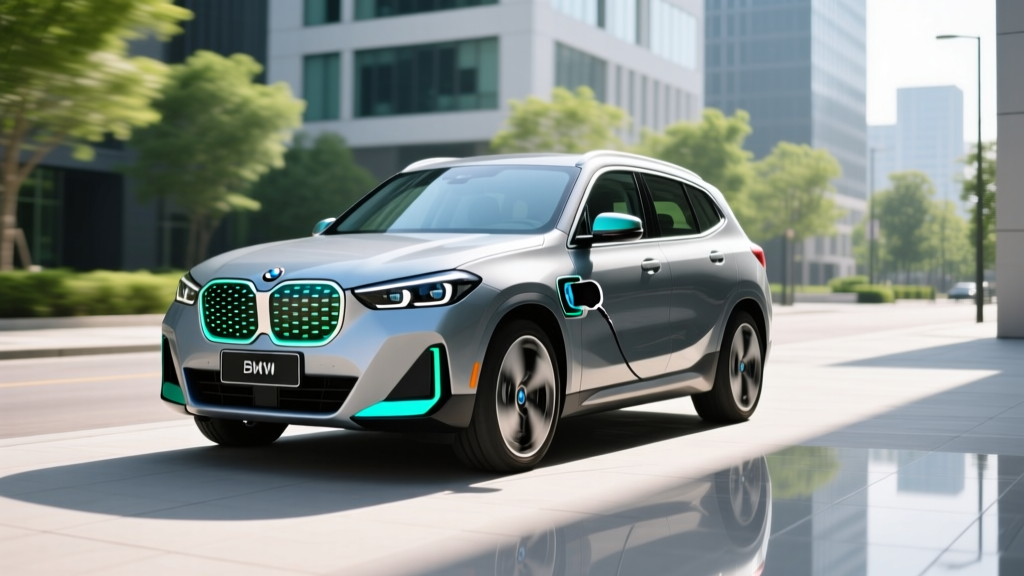
If you're searching for a small BMW electric car, the 2026 BMW iX1 xDrive28 is currently the most accessible battery-electric option in BMW's U.S. lineup. It delivers an EPA-estimated 247 miles of range from a 64.7 kWh (usable) NMC battery, peaks at 130 kW DC fast charging (10–80% in roughly 29 minutes), and starts at approximately $42,100 before destination. It qualifies for a partial or full §30D federal tax credit depending on your income, battery-sourcing compliance, and point-of-sale election — but not every buyer will see the full $7,500.
Quick Verdict: Who Should Buy the Small BMW Electric Car?
Buy it if: you want a premium subcompact electric crossover with all-wheel drive, mostly drive under 200 miles per day, have access to Level 2 home charging, and value BMW's driving dynamics over maximum range-per-dollar.
Skip it if: you need 300+ miles of range, regularly road-trip in winter, rely exclusively on public DC fast charging, or want the lowest total cost of ownership in the segment.
Range, Battery, and Real-World Expectations
The iX1 xDrive28 uses a 64.7 kWh usable lithium-ion pack (NMC chemistry) paired with dual motors producing 313 horsepower and 364 lb-ft of torque. The EPA rates it at 247 miles combined, with an efficiency of roughly 2.5 kWh/mile (about 118 MPGe combined).
EPA vs. Real-World Range
EPA Sticker: 247 miles
Expect in practice: 200–220 miles on highway-heavy trips at 70+ mph; 160–185 miles in sub-30°F winter conditions without preconditioning; up to 240 miles in mild city/suburban driving with regen-heavy routes.
BMW's thermal management system and available heat pump help mitigate cold-weather losses, but any EV loses 15–30% of range in freezing temps — the iX1 is no exception.
For daily commuting under 80 miles round-trip, you'll charge every 2–3 days on Level 2. For road trips exceeding 200 miles, plan one DC fast-charge stop. The iX1's 130 kW peak charge rate is adequate but trails rivals like the Hyundai Ioniq 5 (which peaks near 240 kW on 800V architecture).
Charging Speeds and Infrastructure
| Charging Level | Power (kW) | Miles Added per Hour | Typical Use Case |
|---|---|---|---|
| Level 1 (120V) | ~1.4 kW | ~4–5 miles | Overnight trickle; emergency top-up |
| Level 2 (240V, 48A) | ~11 kW | ~35–40 miles | Home daily charging; full charge in ~6 hours |
| DC Fast Charge | 130 kW peak | ~250+ miles (peak) | Road trips; 10–80% in ~29 minutes |
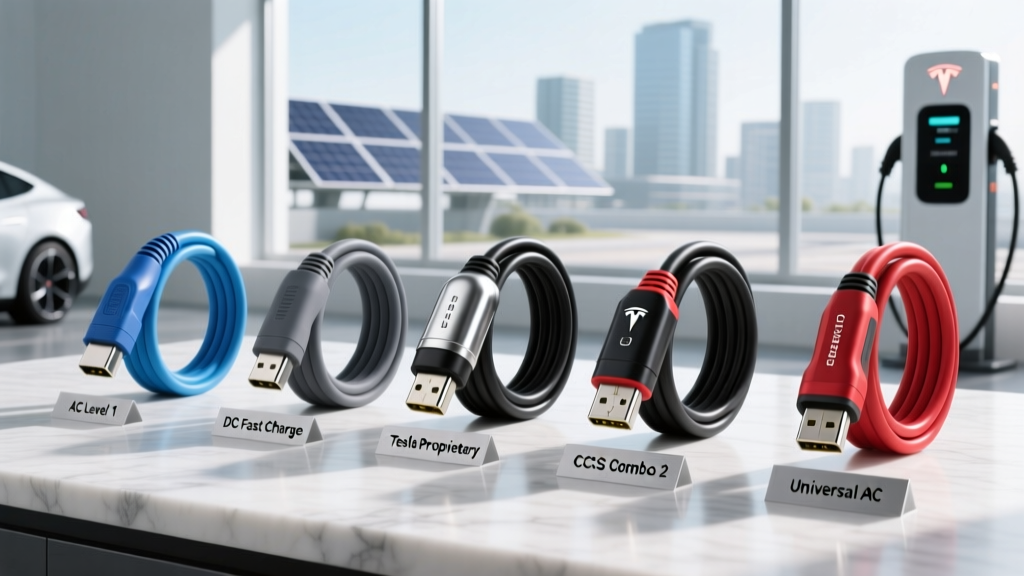
The iX1 uses the CCS1 connector standard for DC fast charging in the U.S. (NACS adapter availability may vary by model year and BMW's network agreements). At home, a 48-amp Level 2 charger on a 60-amp circuit will replenish the battery from 20–80% overnight in about 4 hours.
Home charging installation cost: Expect $800–$2,500 for a quality Level 2 station (like a ChargePoint Home Flex or Emporia Level 2) plus electrician labor, assuming your panel has capacity. Older homes may need a $1,500–$3,000 panel upgrade to support a dedicated 60-amp circuit. Always consult a licensed electrician for final specs.
Cost Breakdown: Purchase, Charging, and Ownership
| Cost Category | BMW iX1 xDrive28 (EV) | BMW X1 xDrive28 (Gas Equivalent) |
|---|---|---|
| Base MSRP | $42,100 | $40,500 |
| Federal Tax Credit (§30D) | Up to $7,500 (if eligible) | $0 |
| Effective Price (after credit) | ~$34,600 | $40,500 |
| Fuel/Energy Cost (15,000 mi/yr) | ~$600–$900 (home charging at $0.14/kWh avg) | ~$2,100 (gas at $3.50/gal, 28 MPG combined) |
| Annual Maintenance | ~$300 (tire rotation, cabin filter, fluid top-offs) | ~$700 (oil changes, filters, brake wear) |
| Insurance (annual avg) | ~$1,800–$2,200 | ~$1,500–$1,800 |
| 5-Year Total Fuel + Maintenance | ~$4,500–$7,500 | ~$14,000 |
The iX1's upfront price premium shrinks significantly with the §30D tax credit — but eligibility is not guaranteed. For 2026, the IRS requires that the buyer's modified adjusted gross income fall below $150,000 (single) or $300,000 (joint), the vehicle MSRP stay under $80,000 for SUVs (iX1 qualifies), and the battery meet critical-mineral and component sourcing thresholds that shift annually. You can elect to transfer the credit to the dealer at point of sale, reducing your out-of-pocket cost immediately. Confirm current-year rules at irs.gov before purchase.
Insurance note: EVs typically cost 15–25% more to insure than gas equivalents due to higher repair costs and battery replacement risk. Get quotes from your provider before committing.
EV vs. Gas: Is the Small BMW Electric Car Worth It?
| Factor | iX1 (Electric) | X1 (Gas) |
|---|---|---|
| 0–60 mph | 5.6 seconds | 6.3 seconds |
| Drivetrain | AWD, dual motor | AWD, turbo 4-cyl |
| Energy Cost per Mile | ~$0.04–$0.06 (home charging) | ~$0.14 (gas) |
| Refueling/Recharging Time | 6 hours (Level 2 full); 29 min (10–80% DC) | 5 minutes (gas station) |
| Cargo Volume (rear seats up) | 25.7 cu ft | 25.7 cu ft |
| Towing Capacity | Not rated for towing | ~2,000 lbs (with proper equipment) |
| Long-Term Battery Risk | Replacement: $10,000–$15,000 out of warranty | Engine/transmission: $5,000–$8,000 out of warranty |
The iX1 wins on acceleration, per-mile energy cost, and (with tax credit) effective purchase price. The gas X1 wins on refueling speed, towing, and zero range variability in extreme cold. For urban and suburban drivers with home charging, the iX1's economics are compelling. For frequent road-trippers or those without reliable home charging access, the gas X1 remains pragmatic.
Common Misconceptions About Small BMW Electric Cars
| Myth | Fact |
|---|---|
| "The battery will need replacement in 5 years." | BMW warranties the iX1 battery for 8 years/100,000 miles against degradation below 70% capacity. Real-world data from similar NMC packs suggests 10–15% degradation over 8–10 years is typical. |
| "I can't road-trip an EV." | DC fast charging adds ~150 miles in 20 minutes. Cross-country trips require planning but are feasible on Electrify America, EVgo, and Tesla Supercharger networks (with adapter where supported). |
| "EVs are worse in winter." | Range drops 15–30% in freezing temps, but the iX1's heat pump and battery preconditioning mitigate losses. Traction is excellent with AWD and winter tires. |
| "Charging is more expensive than gas." | Home charging at $0.14/kWh costs ~$0.05/mile. Public DC fast charging at $0.40/kWh costs ~$0.10/mile — still cheaper than gas at $0.14/mile. |
| "I need a Tesla to use Superchargers." | BMW has announced NACS adapter compatibility and Supercharger network access for certain models; confirm for the iX1 at purchase. |
Decision Framework: Should You Buy the iX1?
If-Then Guide for the Small BMW Electric Car
- If you drive <100 miles/day and have Level 2 home charging: the iX1 is an excellent fit. You'll rarely need public charging and save $1,200–$1,500/year on fuel.
- If you drive 100–200 miles/day with occasional road trips: the iX1 works but requires DC fast-charge planning. Consider the Hyundai Ioniq 5 or Tesla Model Y for faster charging and longer range.
- If you regularly exceed 250 miles/day or live in a charging desert: the iX1's 247-mile EPA range and 130 kW charge rate may frustrate. A PHEV like the BMW X1 xDrive25e (if available) or a longer-range EV (Tesla Model Y, 330+ miles) is wiser.
- If you live in sub-freezing climates and lack a garage: expect 160–185 miles of real winter range. Precondition the battery while plugged in to minimize losses, or consider a gas/hybrid alternative.
- If you qualify for the full §30D credit and can charge at home: the iX1's effective price (~$34,600) undercuts the gas X1 and delivers lower 5-year ownership costs.
- If you don't qualify for the credit (income cap, sourcing rules): the iX1's $42,100 MSRP is harder to justify vs. rivals offering more range for less (Chevrolet Equinox EV, Hyundai Kona Electric).
What First-Time EV Buyers Should Know
1. Home charging is non-negotiable for convenience. Relying solely on public DC fast charging is expensive ($0.35–$0.50/kWh) and time-consuming. Budget $1,000–$2,500 for Level 2 installation.
2. Understand kW vs. kWh. kW (kilowatts) measures power — how fast you charge. kWh (kilowatt-hours) measures energy — how much the battery holds. The iX1's 130 kW peak charge rate doesn't mean it charges at 130 kW the entire session; charge curves taper above 80% to protect the battery.
3. Preconditioning matters. Use the iX1's navigation system to precondition the battery before DC fast charging. A cold battery charges slower; preconditioning warms it to optimal temperature for peak 130 kW speeds.
4. Tax credits are not automatic. The §30D credit has income caps, MSRP limits, and battery-sourcing requirements that change yearly. Verify eligibility at irs.gov and consult a tax professional.
5. Depreciation is steeper for EVs (currently). Used EV values have dropped 20–30% faster than gas cars in 2024–2025 due to Tesla price cuts and lease expirations. If you plan to sell in 3 years, expect higher depreciation. Leasing may be smarter.
FAQ: Small BMW Electric Car Questions
Does the BMW iX1 qualify for the $7,500 federal tax credit?
Possibly. For 2026, eligibility depends on your income (below $150K single/$300K joint), the vehicle's MSRP (under $80K for SUVs — iX1 qualifies), and battery-sourcing compliance with critical-mineral and component rules. The credit can be transferred to the dealer at point of sale. Check current rules at irs.gov.
What's the real-world range of the BMW iX1?
EPA-estimated 247 miles combined. Expect 200–220 miles on highway-heavy trips, 160–185 miles in freezing winter conditions, and up to 240 miles in mild city driving with regenerative braking.
How long does it take to charge the iX1 at home?
On a 48-amp Level 2 charger (11 kW), a full charge from 20–100% takes about 6 hours. Most owners charge overnight and wake up to a full battery.
Can I road-trip the BMW iX1?
Yes, with planning. DC fast charging adds ~150 miles in 20 minutes (10–80% in ~29 minutes at 130 kW peak). Use apps like PlugShare or A Better Routeplanner to map charging stops. The iX1's 247-mile range means stops every 150–180 miles on highway trips.
Is the iX1 better than the Tesla Model Y?
Depends on priorities. The Model Y Long Range offers 330+ miles of range, faster Supercharger network access, and lower starting price (~$44,000). The iX1 offers BMW's premium interior, driving dynamics, and a more compact footprint. For range and charging speed, Model Y wins. For build quality and brand cachet, iX1 competes.
What's the battery warranty on the BMW iX1?
BMW covers the high-voltage battery for 8 years or 100,000 miles against defects and degradation below 70% of original capacity. Out-of-warranty replacement costs $10,000–$15,000 based on current NMC pack pricing.
The 2026 BMW iX1 xDrive28 is a capable small BMW electric car for premium-minded buyers with home charging and moderate daily range needs. Its 247-mile EPA range, 130 kW charging, and ~$34,600 effective price (with full tax credit) make it competitive — but verify your §30D eligibility, budget for Level 2 installation, and accept that road trips require more planning than a gas X1. For spec details, consult fueleconomy.gov and BMW's official U.S. press site.