Quick Answer: Is the Slate Truck Electric Truck Worth Buying in 2026?
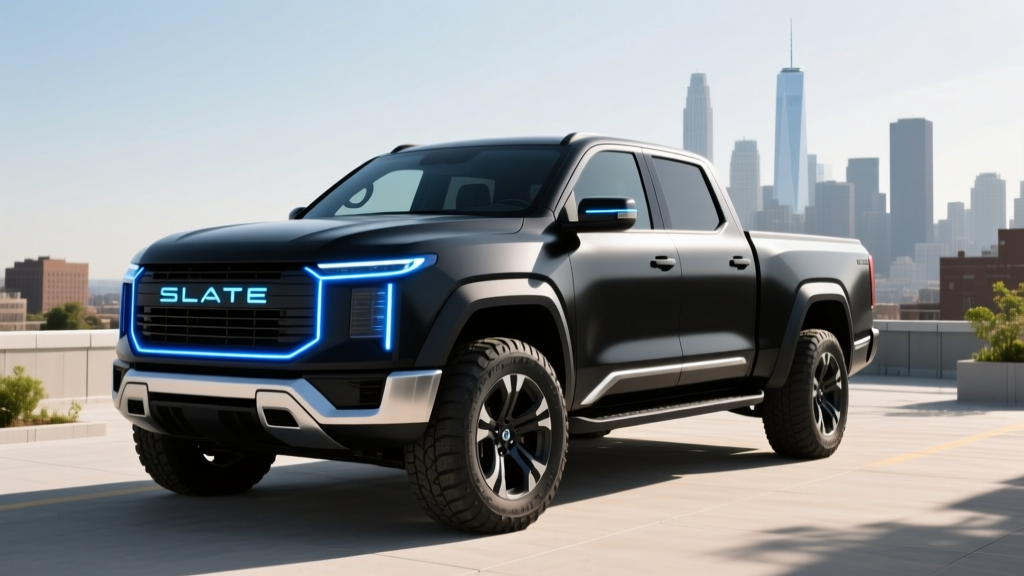
The Slate truck is an upcoming electric pickup from Slate Auto, a startup focused on affordable, purpose-built EVs. As of early 2026, the Slate truck is announced but not yet in customer deliveries. The company has targeted a sub-$40,000 starting price before incentives, aiming to undercut rivals like the Ford F-150 Lightning, Rivian R1T, and Chevrolet Silverado EV on cost. Preliminary specs suggest a range of approximately 150–250 miles depending on battery configuration, with a focus on urban and fleet use rather than long-haul towing. If you need a truck primarily for commuting, job-site runs, and light cargo, the Slate truck could be a compelling budget option — but buyers should be aware that startup production timelines frequently slip, and charging infrastructure access remains a real-world variable you must evaluate before committing.
What Is the Slate Truck? A No-Frills Electric Pickup Explained
Slate Auto emerged from stealth with a clear thesis: most truck owners don't need a $70,000 luxury electric pickup with 400 miles of range. They need an affordable, durable work vehicle that handles daily drives under 100 miles and can plug in overnight. The Slate truck is designed around that reality — a compact-to-midsize electric pickup with a utilitarian interior, a modular bed system, and a price point that targets the heart of the mass market.
Unlike the Tesla Cybertruck or Rivian R1T, which lean heavily into performance and lifestyle branding, the Slate truck is positioned closer to a commercial fleet vehicle that happens to be available to retail buyers. Think of it as the electric equivalent of a base-model Ford Maverick — simple, functional, and priced to move.
Preliminary Slate Truck Specs (Announced / Estimated)
| Specification | Estimated Figure |
|---|---|
| Base MSRP (target) | ~$37,000–$39,990 |
| Battery Chemistry | LFP (Lithium Iron Phosphate) — expected |
| Battery Capacity (usable) | ~60–85 kWh (config-dependent) |
| EPA Range (est.) | ~150–250 miles |
| Peak DC Fast Charge Rate | ~150 kW (est.) |
| 10–80% DC Charge Time (est.) | ~25–35 minutes |
| Level 2 Charge Rate | ~11.5 kW (est.) |
| Horsepower | ~200–280 HP (est.) |
| 0–60 mph | Not disclosed (est. 6.5–8.0 sec) |
| Towing Capacity | ~3,500–5,000 lbs (est.) |
| Payload Capacity | ~1,200–1,500 lbs (est.) |
| Battery/Powertrain Warranty | 8 yr / 100,000 mi (expected, per industry norm) |
Note: All specifications above are preliminary estimates based on Slate Auto announcements and industry reporting as of early 2026. Final EPA-certified numbers may differ. Slate Auto has not yet confirmed all trims or configurations.
Slate Truck vs. Gas Pickups: Real Cost Comparison
The core value proposition of the Slate truck is total cost of ownership (TCO) undercutting comparable gas-powered compact and midsize pickups. Let's break that down with concrete numbers, comparing the Slate truck (estimated) against a 2026 Ford Maverick (gas, FWD, base trim) and a 2026 Toyota Tacoma (gas, base SR trim).
| Cost Factor | Slate Truck (Est.) | Ford Maverick Gas | Toyota Tacoma Gas |
|---|---|---|---|
| Base MSRP | ~$38,000 | ~$28,000 | ~$33,000 |
| Federal Tax Credit (§30D) | Up to $7,500 (if eligible) | $0 | $0 |
| Effective Price After Credit | ~$30,500 | ~$28,000 | ~$33,000 |
| Fuel/Energy Cost per Mile | ~$0.04–$0.06 (home charging) | ~$0.14–$0.16 | ~$0.15–$0.18 |
| Annual Fuel/Energy (12,000 mi) | ~$480–$720 | ~$1,680–$1,920 | ~$1,800–$2,160 |
| Annual Maintenance | ~$200–$350 | ~$500–$700 | ~$550–$750 |
| 5-Year Fuel/Energy Total | ~$2,400–$3,600 | ~$8,400–$9,600 | ~$9,000–$10,800 |
| 5-Year Maintenance Total | ~$1,000–$1,750 | ~$2,500–$3,500 | ~$2,750–$3,750 |
The takeaway: Even with a higher sticker price than a base Maverick, the Slate truck's effective cost after the federal tax credit becomes competitive — and over five years, the fuel and maintenance savings can total $8,000–$12,000 compared to gas trucks. That's assuming you can charge at home. If you rely exclusively on public DC fast charging at $0.35–$0.50/kWh, your per-mile energy cost rises to roughly $0.10–$0.14, narrowing the gap significantly.
For the latest IRS §30D credit eligibility rules — including income caps ($150K single / $300K joint), MSRP limits ($80K for trucks), and battery critical-mineral sourcing requirements — consult the official IRS clean vehicle credit page or a qualified tax professional.
Range Reality Check: What the EPA Sticker Won't Tell You
EPA Estimated Range: ~150–250 miles (depending on battery pack configuration)
Real-World Expectation: Expect ~120–210 miles in mixed driving. Highway speeds above 70 mph, cold weather below 30°F, and loaded beds can each reduce range by 15–30%.
Range is where EV truck buyers get burned by optimistic marketing. The Slate truck's LFP battery chemistry (expected) offers excellent longevity and thermal stability, but LFP cells have lower energy density than the NMC (nickel manganese cobalt) chemistry used in longer-range competitors. That means a physically smaller or heavier battery for the same kWh — which is fine for a truck targeting 150–250 miles, but it means you won't see a 350-mile variant anytime soon.
Real-World Range Factors That Matter
- Cold weather (below 30°F): Expect 20–30% range loss due to battery resistance and cabin heating demands. A 200-mile EPA truck may deliver 140–160 miles in a January Minnesota commute.
- Highway driving (75+ mph): Aerodynamic drag hits pickups hard. Expect 10–15% below EPA combined range on sustained interstate runs.
- Payload and towing: A loaded bed adds weight; towing a trailer adds weight and drag. Towing at highway speeds can cut range by 40–50%.
- Regenerative braking benefit: Stop-and-go city driving actually improves EV range through regen. The Slate truck's urban efficiency will likely exceed its highway numbers.
If your daily round-trip commute is under 80 miles and you can charge at home overnight, even the smaller battery configuration will cover your needs with a comfortable margin. If you regularly drive 200+ miles between charges or live in a region with sparse public charging, this truck's range ceiling is a genuine limitation.
Charging: Home Setup, Public Networks, and What It Costs
Charging access is the single biggest ownership variable for any EV, and it's especially important for truck buyers who may park in driveways without easy 240V access or who work job sites without charging infrastructure.
| Charging Level | Power (kW) | Miles Added per Hour | Typical Use Case |
|---|---|---|---|
| Level 1 (120V household) | ~1.4 kW | ~3–5 miles/hr | Emergency / overnight trickle (adds ~40 mi in 10 hrs) |
| Level 2 (240V home/work) | ~7.7–11.5 kW | ~20–35 miles/hr | Primary daily charging — full overnight refill |
| DC Fast Charge (public) | ~50–150 kW | ~100–250 miles/hr | Road trips, quick top-ups (10–80% in ~25–35 min est.) |
Home Level 2 Installation: What to Budget
A Level 2 home charger is practically essential for EV truck ownership. Here's a realistic cost breakdown based on national averages:
| Item | Cost Range |
|---|---|
| Level 2 Charger (hardware, e.g., ChargePoint Home Flex, Emporia Vue) | $350–$700 |
| Electrician labor (240V / 40–50A circuit) | $500–$1,500 |
| Permit and inspection | $50–$200 |
| Electrical panel upgrade (if needed, 100A → 200A) | $1,500–$3,500 |
| Total (no panel upgrade) | $900–$2,400 |
| Total (with panel upgrade) | $2,400–$5,900 |
The panel upgrade is the wildcard. If your home already has a 200-amp service panel with spare breaker slots, you're likely in the lower range. Older homes with 100-amp panels may require an upgrade — get a quote from a licensed electrician before purchasing the truck.
For public charging, the Slate truck is expected to use the NACS (North American Charging Standard) connector, consistent with the industry-wide shift to Tesla's connector format. This gives access to Tesla Superchargers (now open to non-Tesla EVs via adapter or native NACS), Electrify America, EVgo, and other networks. Check fueleconomy.gov for the latest efficiency and range data once EPA certification is published.
Ownership Costs: Insurance, Depreciation, and the Things Nobody Mentions
Purchase price and fuel savings get the headlines, but real ownership costs include insurance, depreciation, tire wear, and the opportunity cost of your time spent charging on road trips.
Insurance
EV insurance premiums typically run 10–25% higher than comparable gas vehicles, driven by higher repair costs for battery packs and specialized bodywork. For a ~$38,000 electric truck, expect annual premiums of $1,600–$2,400 depending on your state, driving record, and coverage level. Get quotes from at least three insurers before purchasing — EV-specific policies from companies like Geico, Progressive, and Tesla Insurance vary widely by model.
Depreciation
EV depreciation has been steeper than gas vehicles in recent years, partly due to rapid price cuts by Tesla and others resetting used-market expectations. However, affordable EV trucks in the $30K–$40K range may hold value better than luxury EVs simply because the used-truck market is robust. Plan for 40–55% depreciation over five years — roughly in line with midsize gas pickups.
Tires
EVs are heavier than gas equivalents and deliver instant torque, which accelerates tire wear. Budget for tire replacement every 30,000–40,000 miles rather than the 50,000+ miles typical for lighter gas trucks. A set of four all-season tires for a midsize pickup runs $600–$1,200 installed.
Maintenance Savings (The Real Win)
EVs eliminate oil changes, spark plugs, transmission fluid, and most brake wear (thanks to regenerative braking). Annual maintenance for an EV truck typically costs $200–$350 versus $500–$750 for a gas truck. Over five years, that's a $1,500–$2,500 savings.
Common Misconceptions About Affordable Electric Trucks
| Myth | Fact |
|---|---|
| "EV batteries need replacing every 5 years" | Modern LFP batteries are rated for 3,000+ charge cycles with minimal degradation. Expect 80%+ capacity retention at 100,000–150,000 miles. Federal law mandates battery warranties of at least 8 years / 100,000 miles. |
| "You can't tow with an electric truck" | You can tow — but range drops dramatically (40–50% at highway speeds). The Slate truck's estimated 3,500–5,000 lb capacity handles light trailers, but don't plan 200-mile towing runs without careful charging route planning. |
| "Electric trucks are all $70,000+" | The Slate truck targets ~$38K before credits. The Ford Maverick hybrid starts at ~$28K (not a BEV but very efficient). Budget-friendly EV trucks are arriving — but availability remains limited. |
| "Charging takes too long" | Home Level 2 charging happens while you sleep — zero active time. DC fast charging adds 100+ miles in 20–30 minutes. The friction is planning, not waiting. |
| "EVs are worse in winter" | EVs start reliably in any temperature (no cold-cranking amps to worry about). Range drops 20–30% in deep cold, but preconditioning the battery while plugged in mitigates charging-speed loss. |
Decision Framework: Is the Slate Truck Right for You?
Choose the Slate Truck If:
- Your daily round-trip driving is under 100 miles
- You have access to Level 2 charging at home or work
- You want a truck for commuting, light cargo, and job-site runs — not heavy towing
- You qualify for the federal §30D tax credit (income under $150K single / $300K joint; see IRS rules)
- You're comfortable buying from a startup with limited production and service history
- You prioritize low operating costs over premium features and long range
Look Elsewhere If:
- You regularly drive 200+ miles between charging opportunities
- You need to tow heavy loads (5,000+ lbs) over long distances
- You live in an apartment or lack reliable access to Level 2 charging
- You want a proven service network with dealerships in every state
- You need a crew cab with full-size bed — the Slate truck is expected to be more compact
Consider a Hybrid Instead If:
- You want truck utility without any range or charging compromise — the Ford Maverick Hybrid (42 MPG combined, ~$28K) or Toyota Tacoma Hybrid offer strong efficiency with zero charging dependency
Frequently Asked Questions
When will the Slate truck be available to buy?
As of early 2026, Slate Auto has announced the vehicle and opened reservations, but customer deliveries have not yet begun. Startup production timelines are notoriously fluid — expect potential delays. Monitor Slate Auto's official communications for delivery updates.
Will the Slate truck qualify for the $7,500 federal tax credit?
It's too early to confirm. The §30D credit requires the vehicle to meet battery critical-mineral and component sourcing thresholds, MSRP caps ($80,000 for trucks), and buyer income limits. If Slate sources its LFP cells from China-heavy supply chains, the credit could be reduced or unavailable. Check the IRS clean vehicle credit page once the truck is officially on sale and listed.
What is LFP battery chemistry and why does it matter?
LFP (lithium iron phosphate) is a battery chemistry that trades some energy density for superior cycle life, thermal stability, and lower cost. LFP batteries can be charged to 100% daily without accelerating degradation (unlike NMC batteries, which prefer 80% daily limits). For a daily-driver truck charged at home, LFP is an excellent fit. The trade-off is a heavier battery pack for the same range.
Can I charge the Slate truck at Tesla Superchargers?
If the Slate truck ships with a native NACS charge port (as expected for 2026+ vehicles), it will be compatible with Tesla Superchargers that have been opened to non-Tesla vehicles. This dramatically expands fast-charging access compared to CCS-only vehicles.
How does the Slate truck compare to the Ford F-150 Lightning?
The F-150 Lightning is a full-size truck with up to 320 miles of EPA range, 775 lb-ft of torque, and a starting price around $55,000 (before credits). The Slate truck is expected to be smaller, shorter-range, and significantly cheaper — closer in spirit to a Ford Maverick than an F-150. They serve different buyers: the Lightning for full-size truck needs, the Slate for budget-conscious urban/suburban truck use.
What happens if Slate Auto goes out of business?
This is the real risk with any startup. If the company fails, warranty support, parts availability, and software updates could cease. Mitigate this risk by: (1) not paying above MSRP, (2) understanding that third-party repair shops can service most EV mechanical components, and (3) accepting that resale value could drop sharply if the company folds. Compare this to buying from Ford or Toyota, where parts and service networks are virtually permanent.