Quick Answer: Is the Slate Electric Pickup Truck Available to Buy?
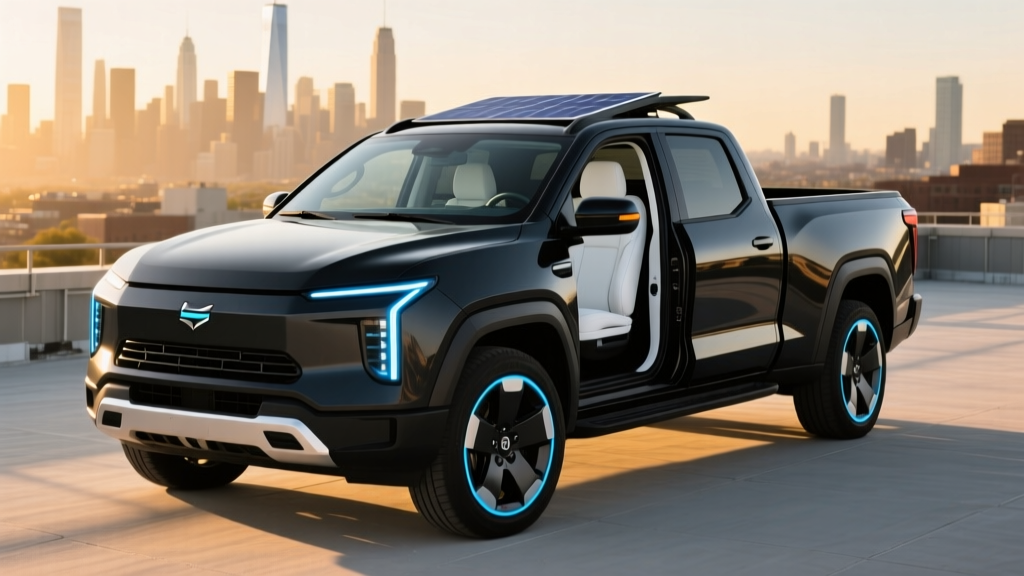
As of early 2026, the Slate electric pickup truck remains in pre-production and reservation stages — it is not yet available for delivery or purchase at dealerships. Slate Auto, the startup behind the vehicle, has announced a compact, modular, and aggressively priced electric pickup targeting a base price near $20,000–$25,000 before incentives, with an estimated EPA range of approximately 150–250 miles depending on battery configuration. The truck is designed as a lightweight, utilitarian alternative to full-size electric pickups like the Ford F-150 Lightning and Rivian R1T. If you're considering a reservation, this guide breaks down what's confirmed, what's estimated, and what real-world ownership will likely cost.
What Is the Slate Electric Pickup Truck?
Slate Auto is a US-based EV startup (headquartered in Michigan) focused on building a small, affordable, and highly customizable electric pickup. Unlike the heavy, expensive electric trucks dominating headlines — the F-150 Lightning starts around $55,000 and the Rivian R1T near $70,000 — Slate is targeting the compact pickup segment with a modular design philosophy. The idea: buy the base platform and configure the bed, cabin, and accessories to your needs, whether that's a bare-bones work truck or a more finished daily driver.
Key design principles Slate has publicly outlined include:
- Lightweight construction — targeting a curb weight significantly below the 6,000+ lb mass of full-size electric pickups, which improves efficiency and reduces tire wear.
- Modular body panels and bed configurations — owners can swap or upgrade components without replacing the whole vehicle.
- Lower battery capacity — a smaller battery means lower cost, faster charging, and less resource intensity, though it also means shorter range.
- US assembly — Slate has signaled intent to manufacture domestically, which is relevant for IRS §30D tax credit eligibility regarding battery sourcing and final assembly requirements.
Estimated Specs: Range, Battery, Charging & Performance
Because the Slate pickup is not yet in production, the following figures are preliminary estimates based on Slate's public announcements, industry analysis of comparable compact EV platforms, and the physics of lightweight electric trucks. Final EPA-certified numbers will differ.
| Specification | Estimated (Base) | Estimated (Extended Range) |
|---|---|---|
| Battery Capacity (usable) | ~40–50 kWh | ~60–75 kWh |
| Battery Chemistry | LFP (expected) | LFP or NMC (TBD) |
| EPA Range (est.) | ~150 mi | ~250 mi |
| Real-World Highway Range | ~120–130 mi | ~200–220 mi |
| Cold-Weather Range Loss (est.) | 20–30% | 20–30% |
| Peak DC Fast Charge Rate | ~80–100 kW | ~100–150 kW |
| 10–80% DC Charge Time (est.) | ~30–35 min | ~25–35 min |
| Level 2 Charging Rate | ~7.2–11.5 kW | ~7.2–11.5 kW |
| Motor Power | ~150–200 hp | ~200–250 hp |
| 0–60 mph (est.) | ~7–9 sec | ~6–7 sec |
| Towing Capacity (est.) | ~2,500–3,500 lb | ~3,500–5,000 lb |
| Payload Capacity (est.) | ~1,000–1,500 lb | ~1,000–1,500 lb |
Real-World Range Reality Check
A lightweight compact electric pickup with a ~50 kWh battery and an EPA estimate of ~150 miles will realistically deliver 120–130 miles on the highway at 70 mph in moderate temperatures. In winter conditions (below 30°F), expect that to drop to 90–110 miles. This is adequate for urban and suburban commuting, short job-site runs, and local errands — but it is not a road-trip vehicle without careful DC fast-charging planning. If your daily driving exceeds 100 miles round-trip, the base battery will feel limiting.
Battery Chemistry: Why LFP Matters Here
Slate is widely expected to use LFP (lithium iron phosphate) cells in the base configuration. LFP offers several advantages for a budget-oriented truck:
- Lower cost per kWh — critical for hitting a sub-$25,000 price point.
- Longer cycle life — LFP cells typically tolerate 3,000+ full charge cycles before degrading to 80% capacity, vs. ~1,000–2,000 for NMC.
- 100% daily charging OK — unlike NMC, LFP doesn't suffer from being held at high state of charge, so you can charge to 100% daily without accelerating degradation.
- Trade-off: lower energy density — LFP is heavier per kWh, which is why a compact truck with LFP won't match the range of an NMC-equipped Rivian or Ford. For a lightweight platform, this trade-off is manageable.
How the Slate Pickup Compares to Gas, Hybrid & Other EVs
To understand whether the Slate electric pickup truck makes financial sense, you need to compare it against realistic alternatives. Most buyers cross-shopping a compact electric pickup are also considering a Ford Maverick (gas and hybrid), a Hyundai Santa Cruz, or possibly a used Ford F-150 Lightning.
| Metric | Slate EV (est.) | Ford Maverick Hybrid | Ford F-150 Lightning (base) |
|---|---|---|---|
| Base MSRP | ~$20,000–$25,000 | ~$28,000 | ~$55,000 |
| EPA Range / Fuel Economy | ~150–250 mi / ~100 MPGe | ~42 MPG combined | ~240 mi / ~70 MPGe |
| Energy/Fuel Cost per Mile | ~$0.04–$0.06 (home charging) | ~$0.10–$0.13 | ~$0.05–$0.08 (home) |
| Annual Fuel/Energy (12k mi) | ~$480–$720 | ~$1,200–$1,560 | ~$600–$960 |
| Maintenance (annual est.) | ~$300–$400 | ~$600–$900 | ~$400–$600 |
| Federal Tax Credit (§30D) | Up to $7,500 (if eligible) | $0 (hybrid, not PHEV/BEV) | Up to $7,500 (if eligible) |
| Cargo/Bed Utility | Compact bed (~4–5 ft) | 4.5-ft bed | 5.5-ft bed + frunk |
| Towing Capacity | ~2,500–5,000 lb (est.) | ~2,000 lb | ~7,700 lb |
Key takeaway: The Maverick Hybrid's 42 MPG combined is genuinely impressive and delivers ~380 miles of total range on a tank. If you regularly drive 300+ miles between fill-ups, the Maverick Hybrid is the more practical choice today. The Slate's advantage is lower operating cost per mile, lower purchase price (if estimates hold), and zero tailpipe emissions — but only if the range fits your driving pattern.
Real Ownership Costs: 5-Year Breakdown
Purchase price is only part of the equation. Here's a projected 5-year / 60,000-mile total cost of ownership (TCO) comparison, assuming 12,000 miles driven annually, home Level 2 charging at $0.14/kWh national average, and gas at $3.40/gallon.
| Cost Category (5 yr / 60k mi) | Slate EV (est.) | Maverick Hybrid |
|---|---|---|
| Purchase Price (base MSRP) | $22,500 | $28,000 |
| Federal Tax Credit (§30D) | –$7,500 (if eligible)* | $0 |
| Net Purchase Cost | $15,000 | $28,000 |
| Home Charger Install (Level 2) | $800–$2,000 | $0 |
| Energy/Fuel (5 years) | $2,400–$3,600 | $6,000–$7,800 |
| Maintenance (5 years) | $1,500–$2,000 | $3,000–$4,500 |
| Insurance (5 years, est.) | $6,000–$8,000 | $5,000–$6,500 |
| Estimated 5-Year TCO | $25,700–$30,600 | $42,000–$46,800 |
*§30D tax credit eligibility requires meeting MSRP caps (trucks: ≤$80,000), buyer income limits ($150k single / $300k joint AGI), critical mineral and battery component sourcing thresholds, and North American final assembly. The credit can be applied at point of sale as a down-payment reduction under current IRS rules. Consult a tax professional — eligibility varies and sourcing requirements tighten annually.
Where the Slate Wins on Cost
The combination of a low purchase price, potential $7,500 federal credit, cheap home charging, and minimal maintenance (no oil changes, no transmission fluid, fewer brake replacements due to regenerative braking) gives the Slate a dramatically lower TCO — if the production price lands where Slate has targeted and the truck qualifies for the full credit.
Where Costs Could Surprise You
- Insurance: EV insurance premiums are typically 15–25% higher than equivalent gas vehicles due to repair costs and battery replacement risk. A startup EV may carry an additional premium until claims data matures.
- Home charger installation: If your electrical panel needs a 200-amp upgrade to support a Level 2 charger, add $1,500–$3,500 to your upfront cost. Budget for this before reserving.
- Depreciation uncertainty: There is no resale data for Slate vehicles. Startup EVs from companies like Rivian saw steep initial depreciation. This is a risk factor the Maverick Hybrid doesn't carry.
- Public DC fast charging: At $0.35–$0.50/kWh on networks like Electrify America, road-trip charging costs can exceed gasoline per mile. The Slate's smaller battery means more frequent stops on long drives.
Who Should (and Shouldn't) Consider the Slate Pickup
Decision Framework: Is the Slate Right for You?
Choose the Slate electric pickup truck IF:
- Your daily round-trip commute is under 80 miles and you can charge at home overnight.
- You want a compact, affordable truck for job-site runs, hauling materials, or weekend utility — not long-distance towing.
- You qualify for the §30D federal tax credit and can apply it at point of sale.
- You have (or can install) a Level 2 home charger on a 240V circuit.
- You're comfortable being an early adopter of a startup brand with no service-history track record.
Look elsewhere (Maverick Hybrid, F-150 Lightning, or wait) IF:
- You regularly drive 200+ miles in a day or need to tow more than 5,000 lb.
- You live in an apartment or lack reliable home/workplace charging access.
- You live in a region with extreme cold (consistent sub-20°F winters) and need maximum range reliability.
- You need a proven dealer/service network within 30 miles of your home.
- You cannot absorb the risk of a startup potentially failing to deliver or delaying production significantly.
Charging at Home: What You Need to Know
If you're buying any EV — especially one with a smaller battery like the Slate — home Level 2 charging is practically mandatory for convenient ownership. Here's what installation involves:
- Level 1 (120V outlet): Adds ~3–5 miles of range per hour. For a 50 kWh battery, a full charge from empty takes 15–20+ hours. Usable for overnight top-ups if your daily drive is under 30 miles, but inadequate as a primary strategy.
- Level 2 (240V, 32–48A): Adds ~20–35 miles per hour. A full charge of the Slate's base battery takes ~5–7 hours — easily overnight. This is the standard home setup.
- DC Fast Charging (public): The Slate's estimated 80–150 kW peak rate means a 10–80% session in ~25–35 minutes. Adequate for occasional road trips, but the smaller battery means more stops than a 130+ kWh F-150 Lightning Extended Range.
Home install cost reality: Expect $500–$1,200 for a straightforward Level 2 install (existing 200A panel, short conduit run). If you need a panel upgrade to 200A, add $1,500–$3,500. Always get a quote from a licensed electrician before committing to a vehicle purchase.
Common Misconceptions About the Slate (and Compact EVs)
| Myth | Fact |
|---|---|
| "150 miles of range isn't enough for any real truck work." | The average American drives ~37 miles/day (FHWA data). A 150-mile EV covers 95%+ of daily driving. The issue is the 5% of long-trip days — plan those around DC fast chargers. |
| "Small batteries degrade faster." | Degradation is driven by cycle count, heat, and charge habits — not battery size alone. LFP chemistry, expected in the Slate, actually offers superior cycle life. A 50 kWh LFP battery charged daily to 100% will outlast a 100 kWh NMC battery held at 80% in many scenarios. |
| "A $20,000 EV must be cheaply built." | Slate's low price target is achieved through simplicity — fewer features, modular panels, smaller battery — not necessarily poor quality. The base model will be spartan. Options and upgrades will raise the price. |
| "I'll get the full $7,500 tax credit." | Eligibility depends on your income, the truck's MSRP, battery sourcing compliance, and final assembly location. Sourcing thresholds tighten each year under the Inflation Reduction Act. Check fueleconomy.gov for the current eligible-vehicle list before assuming you qualify. |
| "EVs are worse in cold weather." | EVs do lose 20–30% range in sub-freezing temperatures due to battery chemistry and cabin heating demands. But they start instantly, don't idle to warm up, and with preconditioning and a heat pump (if equipped), cold-weather usability is manageable — just plan for reduced range. |
Production Timeline and Reservation Risks
Slate Auto has been in development since approximately 2022–2023, with production targets shifting as startup funding, supply chain, and factory build-out timelines evolve. As of 2026, the company has not begun customer deliveries at scale. If you're considering placing a reservation:
- Reservation deposits are typically $100–$500 and may or may not be fully refundable — confirm the terms before paying.
- Production delays are the norm for EV startups. Rivian, Lordstown, and Canoo all experienced significant delays (or failures). Budget for the possibility that delivery could slip 12–24 months beyond any announced date.
- Specs may change between announcement and production. Battery suppliers, motor outputs, and feature availability can shift as engineering finalizes.
- Service infrastructure is unproven. Unlike Ford or Toyota, Slate has no existing dealer network. Ask how service, warranty repairs, and parts availability will work in your region before committing.
Frequently Asked Questions
Can I buy the Slate electric pickup truck right now?
No. As of 2026, the Slate pickup is in pre-production. You may be able to place a reservation, but customer deliveries have not begun at scale. Treat all specs and timelines as preliminary.
Will the Slate qualify for the $7,500 federal EV tax credit?
It's possible but not guaranteed. Eligibility depends on final assembly in North America, battery component and critical mineral sourcing thresholds (which tighten annually under IRS §30D rules), the truck's MSRP staying under the $80,000 cap for trucks, and your personal income falling under the AGI limits ($150k single / $300k joint). Verify on fueleconomy.gov once the vehicle is officially listed.
How does the Slate compare to the Ford Maverick Hybrid?
The Maverick Hybrid offers ~42 MPG combined, ~380 miles of total range, a proven dealer network, and an ~$28,000 starting price — but no federal EV tax credit. The Slate targets a lower purchase price (after credit), much lower per-mile energy cost, and zero tailpipe emissions, but with significantly less range (~150–250 mi) and the risk of a startup brand. If range flexibility and dealer support matter most, the Maverick Hybrid wins today. If low operating cost and EV ownership appeal to you — and your daily miles are modest — the Slate could be compelling once it ships.
What happens if Slate Auto goes out of business?
This is a real risk with any startup. Lordstown Motors, Canoo, and Fisker all faced severe financial distress or bankruptcy. If Slate fails to reach sustainable production, reservation holders may lose deposits, and early buyers could face parts shortages, no warranty support, and steep depreciation. Only reserve or purchase if you can absorb this risk.
Do I need a home charger for the Slate pickup?
Practically, yes. With a 40–50 kWh base battery and ~150-mile range, relying solely on Level 1 (120V) charging would mean 15+ hour full charges and constant range management. A Level 2 home charger ($500–$2,000 installed) transforms ownership — plug in overnight, wake up to a full battery every morning. If you can't install home charging, evaluate workplace charging or nearby public Level 2 options before committing.
Will the Slate have all-wheel drive?
Slate has indicated that AWD/dual-motor configurations are part of the long-term plan, but the initial production models are expected to be rear-wheel drive. If AWD is essential for your climate or terrain, you may need to wait for later model years or consider alternatives like the Rivian R1T or F-150 Lightning.