Quick Answer: Is a Skoda Electric Car Worth It in 2026?
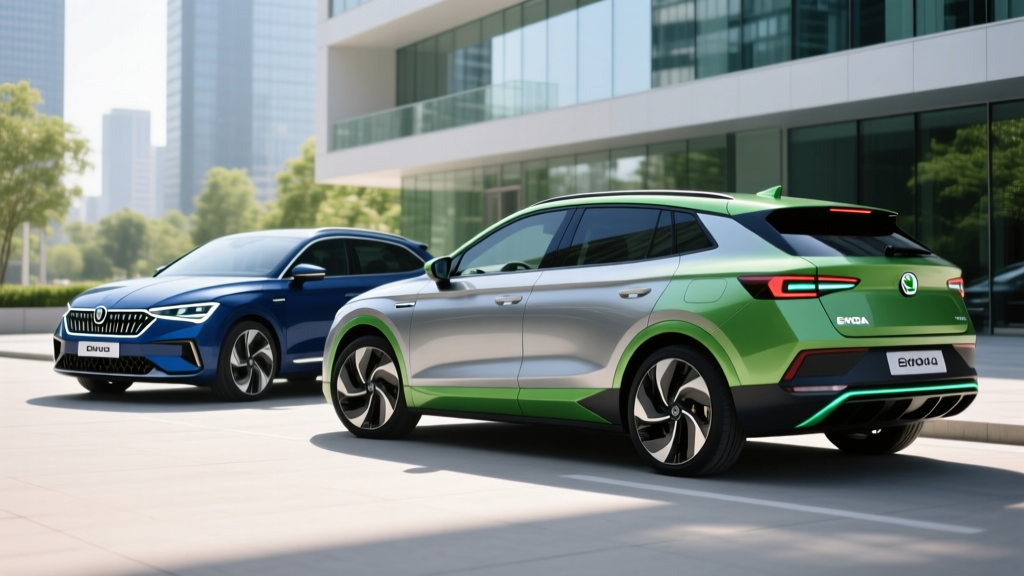
The 2026 Skoda Enyaq iV is the brand's primary battery-electric offering for global markets, with EPA-estimated range up to 280 miles (iV 80), a 77 kWh usable NMC battery, and DC fast charging up to 135 kW (10–80% in approximately 29 minutes). Starting around $42,000 MSRP before incentives, it undercuts rivals like the Volkswagen ID.4 on price while sharing the same MEB platform. However, Skoda's US availability remains limited compared to Europe, where it is a top-selling EV brand. For buyers in markets where it's sold, the Enyaq delivers practical family-SUV space, honest range, and competitive charging — but it is not a performance EV, and public charging costs can erode savings if you lack home charging access.
Skoda's Electric Lineup: What's Available Now
As of the 2026 model year, Skoda's fully electric portfolio centers on the Enyaq iV (compact SUV) and the Enyaq Coupé iV (its sleeker sibling). Skoda also sells plug-in hybrid variants of the Octavia and Superb in Europe, but for pure battery-electric vehicles, the Enyaq family is the focus. The Enyaq rides on Volkswagen Group's MEB platform — the same architecture underpinning the VW ID.4, Audi Q4 e-tron, and Cupra Tavascan — meaning proven battery supply chains and shared service networks.
Skoda has also announced the Elroq, a smaller electric SUV positioned below the Enyaq, with preliminary specs suggesting a ~59 kWh battery and approximately 220 miles of range. The Elroq is expected to reach select markets in late 2026 at an estimated starting price near $35,000. Specs remain preliminary until official homologation.
| Spec | Enyaq iV 60 | Enyaq iV 80 | Enyaq iV 80x (AWD) |
|---|---|---|---|
| Battery (usable) | 59 kWh (NMC) | 77 kWh (NMC) | 77 kWh (NMC) |
| EPA Range (est.) | ~220 mi | ~280 mi | ~260 mi |
| Horsepower | 178 hp | 282 hp | 295 hp |
| 0–60 mph | 8.7 sec | 6.7 sec | 6.4 sec |
| Peak DC Charge Rate | 120 kW | 135 kW | 135 kW |
| 10–80% DC Fast Charge | ~31 min | ~29 min | ~29 min |
| Level 2 AC Charge (11 kW) | ~6 hr 15 min | ~7 hr 45 min | ~7 hr 45 min |
| Base MSRP (est.) | $42,000 | $47,500 | $52,000 |
| Battery Warranty | 8 years / 100,000 mi (70% capacity retention) | ||
Real-World Range vs. EPA Sticker
The Enyaq iV 80's EPA-estimated 280 miles assumes mixed driving at moderate temperatures. In real-world highway testing at 70 mph, expect approximately 240–255 miles. In cold weather (below 32°F / 0°C), range can drop to 200–220 miles due to cabin heating demands and increased battery internal resistance — even with the Enyaq's standard heat pump, which recovers waste heat from the drivetrain to warm the cabin more efficiently than resistive heating.
Charging the Skoda Enyaq: Home, Public, and Speed Reality
Understanding the difference between kW (kilowatts — the rate of power delivery) and kWh (kilowatt-hours — the total energy stored in the battery) is essential. The Enyaq iV 80 stores 77 kWh of energy. Charging at a peak rate of 135 kW means that, in ideal conditions, the charger could theoretically deliver 135 kWh in one hour — but the battery is only 77 kWh, and charging speed tapers as the battery fills.
| Charging Level | Power (kW) | Miles Added per Hour | Typical Use Case |
|---|---|---|---|
| Level 1 (120V household) | ~1.4 kW | ~4 mi/hr | Emergency / overnight top-up |
| Level 2 (240V home/public) | 7.2–11 kW | 22–35 mi/hr | Daily home charging, workplace |
| DC Fast Charge | 50–135 kW peak | 150–400+ mi/hr (peak) | Road trips, highway corridors |
The Charging Curve Reality
The Enyaq iV 80's advertised 135 kW peak charge rate applies only at a low state of charge (around 10–20%) and optimal battery temperature (achieved through preconditioning — warming the battery before you arrive at the charger via the car's navigation system). As the battery fills past 50%, the charge rate progressively drops. By 80%, you're typically seeing 50–60 kW. This is why manufacturers quote 10–80% times rather than 0–100% — the final 20% can take as long as the first 70%.
For daily driving, Level 2 home charging is the practical standard. A full overnight charge on an 11 kW wallbox takes roughly 7 hours 45 minutes for the iV 80 — more than enough to replenish a day's driving while you sleep.
Cost of Ownership: Skoda Enyaq vs. Gas SUV
The strongest argument for any EV is operating cost, but the math only works if you understand your local electricity rate, driving patterns, and whether you can charge at home. Here's a data-driven comparison between the Enyaq iV 80 and a comparable gasoline compact SUV (e.g., a Skoda Kodiaq or VW Tiguan averaging 28 MPG combined).
| Cost Category | Skoda Enyaq iV 80 | Gas Compact SUV (28 MPG) |
|---|---|---|
| Purchase Price (MSRP) | $47,500 | $35,000 |
| Federal Tax Credit (§30D)* | Up to $7,500 (see eligibility) | $0 |
| Effective Purchase Price | ~$40,000 | $35,000 |
| Fuel/Energy (15,000 mi/yr × 5 yrs) | $3,750 (home @ $0.14/kWh) | $9,375 (@ $3.50/gal) |
| Maintenance (5 yrs) | ~$1,200 | ~$3,500 |
| Insurance (avg. 5 yrs) | ~$8,500 | ~$7,000 |
| Total 5-Year Cost | ~$53,450 | ~$54,875 |
*Federal tax credit eligibility under IRS §30D depends on buyer income caps ($150K single / $300K joint), vehicle MSRP caps ($80K SUVs), battery critical-mineral sourcing, and North American assembly requirements. Skoda vehicles assembled in Europe may not qualify for the full credit — verify current-year rules with a tax professional and the IRS.
When Public Charging Changes the Math
If you rely exclusively on DC fast charging at public stations (average cost $0.35–$0.50/kWh in 2026), your annual energy cost jumps to approximately $6,500–$8,000 — nearly matching gasoline costs. The Enyaq's efficiency of roughly 3.2–3.5 mi/kWh means each kWh matters. Home charging is the economic keystone of EV ownership.
Skoda Enyaq vs. Key Rivals: Where It Stands
The Enyaq doesn't exist in a vacuum. Here's how it compares to the most relevant alternatives in the electric compact SUV segment:
| Metric | Skoda Enyaq iV 80 | VW ID.4 Pro S | Hyundai Ioniq 5 SEL | Tesla Model Y LR |
|---|---|---|---|---|
| EPA Range | ~280 mi | ~275 mi | ~303 mi | ~320 mi |
| Battery | 77 kWh NMC | 77 kWh NMC | 77.4 kWh NMC | ~75 kWh NMC |
| Peak DC Charge | 135 kW | 135 kW | 240 kW | 250 kW |
| 10–80% Time | ~29 min | ~29 min | ~18 min | ~17 min |
| 0–60 mph | 6.7 sec | 7.7 sec | 7.4 sec | 4.8 sec |
| Cargo (rear seats up) | 30.3 cu ft | 30.3 cu ft | 27.2 cu ft | 30.2 cu ft |
| Base MSRP | $47,500 | $46,500 | $46,000 | $48,000 |
The Enyaq trades charging speed for interior space and a more traditional, intuitive cabin layout. If fast DC charging is your priority (frequent road trips), the Ioniq 5 and Model Y are measurably quicker. If you value cargo volume, ride comfort, and a less minimalist interior, the Enyaq holds its own. The shared MEB platform with the ID.4 means parts availability and service infrastructure overlap significantly in markets where VW has a strong dealer presence.
Battery Longevity: What Skoda Owners Actually Experience
The Enyaq uses an NMC (nickel manganese cobalt) lithium-ion battery — the chemistry standard for most European-market EVs prioritizing energy density. Skoda warranties the battery for 8 years or 100,000 miles, whichever comes first, with a 70% state-of-health (SoH) retention threshold. If the battery degrades below 70% capacity within that period, Skoda will repair or replace it.
Real-world data from European MEB-platform vehicles (now accumulating 4+ years of fleet data) suggests typical degradation of 8–12% over the first 100,000 miles, meaning most owners will retain 88–92% of original capacity — well within the warranty threshold. Factors that accelerate degradation include:
- Frequent DC fast charging above 100 kW without preconditioning
- Regularly charging to 100% and leaving the car parked at full state of charge
- Extreme heat exposure (sustained ambient above 95°F / 35°C)
- Deep discharges below 10% state of charge
Best practice for NMC batteries: charge daily to 80%, precondition before fast charging, and only charge to 100% when you need the full range for a trip.
Myths vs. Facts: Skoda EV Ownership
| Myth | Fact |
|---|---|
| "The battery will need replacing in 5 years." | MEB batteries are designed for 1,500+ full charge cycles. At 280 miles per cycle, that's 420,000 miles before reaching end-of-life (70% SoH). Most owners will never need a replacement. |
| "You can't drive an EV in cold weather." | Range drops 20–30% in sub-freezing temps, but the Enyaq's heat pump mitigates cabin-heating energy draw. Preconditioning while plugged in preserves range further. |
| "EVs are cheaper to own no matter what." | Only if you charge at home. Public-only charging can match or exceed gasoline fuel costs. Insurance premiums for EVs also average 15–25% higher. |
| "The Enyaq qualifies for the full $7,500 tax credit." | §30D credits require North American battery assembly and critical-mineral sourcing. European-built Skodas may qualify for $0–$3,750 depending on current-year rules. Always verify with the IRS. |
| "Home charging installation is always expensive." | A Level 2 wallbox install ranges from $500–$2,500 depending on panel capacity and wiring distance. Many homes with a 200-amp panel need only a dedicated 40-amp circuit and a NEMA 14-50 outlet ($500–$900). |
Decision Framework: Is the Skoda Enyaq Right for You?
Choose the Skoda Enyaq iV 80 if:
- You have reliable home charging (Level 2) and drive under 250 miles daily
- You want a spacious family SUV with a conventional, non-minimalist interior
- You prioritize ride comfort and practicality over acceleration and charging speed
- You live in a market with Skoda dealer support and MEB-platform service capability
- You value cargo space (30.3 cu ft) and a usable frunk for charging cables
Look at alternatives if:
- You road-trip frequently and need sub-20-minute DC fast charging (consider Hyundai Ioniq 5 or Tesla Model Y)
- You lack home charging and depend on public infrastructure — the Enyaq's 135 kW peak isn't class-leading
- You need guaranteed US federal tax credit eligibility — check current §30D sourcing rules, as European-built EVs face restrictions
- You want the longest possible EPA range — the Tesla Model Y Long Range (320 mi) and Ioniq 5 (303 mi) edge ahead
- You want all-wheel drive for snow — the Enyaq 80x offers this but at a $4,500 premium and reduced range (~260 mi)
First-Time EV Buyer Checklist
If the Enyaq is your first electric vehicle, work through these practical items before signing:
- Confirm home charging feasibility: Do you have a garage or dedicated parking with access to a 240V circuit? A licensed electrician can assess your panel for $100–$200.
- Calculate your real daily mileage: The average US driver covers 37 miles/day. Even the Enyaq iV 60 (220 mi range) handles this easily with nightly Level 2 charging.
- Map your longest regular trip: If you drive 200+ miles one-way monthly, identify DC fast chargers along that route using PlugShare or the vehicle's built-in route planner.
- Budget for insurance: EV insurance averages 15–25% higher than equivalent gas vehicles. Get quotes before committing.
- Understand the tax credit reality: Don't build your purchase decision around $7,500 in savings until you've confirmed eligibility based on your income, the vehicle's sourcing compliance, and current-year IRS rules.
- Test the regen braking feel: The Enyaq offers adjustable regenerative braking via paddle shifters (from coasting to strong one-pedal-style deceleration). Spend 15 minutes in traffic to find your preference.
Frequently Asked Questions
Is Skoda a reliable EV brand?
Skoda benefits from Volkswagen Group's MEB platform, which has accumulated millions of EV miles across the ID.3, ID.4, and Audi Q4 e-tron. Early MEB software issues (2021–2022) have been largely resolved through over-the-air updates. Build quality and mechanical reliability align with VW Group averages. Skoda consistently ranks in the mid-tier of European reliability surveys — not class-leading, but not problematic.
Can the Skoda Enyaq tow?
The Enyaq iV 80 and 80x are rated to tow up to 2,645 lbs (1,200 kg) with a braked trailer. Towing significantly impacts range — expect a 30–45% reduction depending on trailer weight and aerodynamics. If towing is a regular need, factor this into your range planning.
Does the Enyaq have a frunk?
Yes, but it's small — approximately 0.7 cu ft, enough for charging cables and a tire-repair kit. Unlike Tesla's larger front trunks, the MEB platform's frunk is modest because the power electronics occupy significant under-hood space.
What connector does the Skoda Enyaq use?
In Europe, the Enyaq uses the CCS2 (Combined Charging System) standard. In markets adopting the NACS (North American Charging Standard, used by Tesla Superchargers), availability depends on regional spec. Check your local market's connector before relying on specific charging networks. Adapters (CCS-to-NACS) are available but add cost and slight charging-speed overhead.
How does the Enyaq handle in snow?
The rear-wheel-drive iV 80 is adequate in light snow with winter tires, but the AWD iV 80x is the clear choice for regular winter driving. The 80x's dual-motor system provides torque to both axles, improving traction on icy roads. Ground clearance of 7.5 inches is competitive for the segment.
What's the real cost to charge the Enyaq at home?
At the US average residential electricity rate of $0.14/kWh (2026), a full 77 kWh charge costs approximately $10.78 and provides roughly 240 real-world highway miles. That's about $0.045 per mile — compared to $0.13–$0.15 per mile for a 28 MPG gasoline SUV at $3.50/gallon.
For official range and efficiency data, consult fueleconomy.gov once EPA testing is published for your market. Safety ratings and crash-test results are available through Euro NCAP (European market) and NHTSA where applicable. Always verify current incentives and tax-credit eligibility directly with the IRS §30D guidance page and a qualified tax professional before finalizing your purchase.