SiriusXM in a Tesla: What Every Buyer Needs to Know
Search for "SiriusXM for Tesla" and you will find a frustrating truth: Tesla does not offer native SiriusXM satellite radio integration in any current production vehicle. The company has never included a SiriusXM tuner, and the infotainment system has no dedicated satellite-radio app. For the roughly 30 million SiriusXM subscribers in the United States, this omission is one of the most frequently cited pain points when switching from a legacy automaker to a Tesla.
Yet the workaround ecosystem has matured considerably. Between Tesla's built-in streaming services, SiriusXM's own mobile app routed through Bluetooth, and third-party internet-radio aggregators, most owners find a workable solution within a week of delivery. Below, we break down every viable method, then transition into a comprehensive 2026 Tesla Model Y review — because if satellite radio is a dealbreaker, you need to know exactly what you are getting in return.
How to Listen to SiriusXM in a Tesla (2026 Methods)
Method 1: SiriusXM Streaming App via Bluetooth
The most direct path is the SiriusXM app (iOS or Android). Pair your phone to the Tesla via Bluetooth, launch the app, and audio routes through the vehicle's speakers. SiriusXM's streaming tier — called "SiriusXM with 360L" — includes every live channel plus on-demand content. The catch: your phone must maintain a cellular data connection, and Tesla's Bluetooth audio codec is SBC/AAC, which is adequate but not audiophile-grade.
Method 2: TuneIn and Internet Radio Built Into Tesla
Tesla's native media player includes TuneIn, which aggregates thousands of internet radio stations. While TuneIn does not carry the official SiriusXM channel lineup, many popular music formats (hits, country, classical, sports talk) have near-identical internet equivalents. This requires no phone and uses the car's own LTE/5G connection (Premium Connectivity subscription required for streaming while driving, $9.99/month as of 2026).
Method 3: Dedicated SiriusXM Internet Radio Hardware
SiriusXM sells the "SiriusXM Stream" device, a standalone internet-radio receiver. Some owners have successfully connected this via the Tesla's USB port or Bluetooth, though results vary by firmware version. This is the least reliable method and is not officially supported by either company.
Method 4: Apple CarPlay (2026 Model Y Support)
Tesla added Apple CarPlay support to the refreshed Model Y (Juniper generation) in late 2025. This means iPhone users can now mirror the SiriusXM app directly to the Tesla touchscreen via CarPlay, providing a more integrated experience than raw Bluetooth. This is currently the cleanest SiriusXM-for-Tesla solution for iPhone users.
2026 Tesla Model Y: Full EV Review
With the SiriusXM question addressed, let us examine the vehicle itself. The 2026 Tesla Model Y (Juniper refresh) remains the best-selling electric vehicle globally and Tesla's volume leader. Here is everything a buyer needs — exact numbers, real-world caveats, and ownership economics.
| Spec | Long Range AWD | Performance |
|---|---|---|
| EPA Range | 320 miles | 295 miles |
| Battery (usable) | ~79 kWh (NMC) | ~79 kWh (NMC) |
| Drivetrain | Dual-Motor AWD | Dual-Motor AWD |
| Horsepower | 384 hp | 456 hp |
| 0-60 mph | 4.8 sec | 3.5 sec |
| Max DC Fast Charge | 250 kW (peak) | 250 kW (peak) |
| 10-80% DCFC Time | ~25 min | ~25 min |
| Level 2 Home Charge | 11.5 kW (~44 mi/hr) | 11.5 kW (~44 mi/hr) |
| Efficiency | 122 MPGe / 28 kWh/100mi | 111 MPGe / 30 kWh/100mi |
| Base MSRP | $46,630 | $51,630 |
Sources: EPA fueleconomy.gov, Tesla.com Model Y configurator. Specs reflect the Juniper-generation Model Y sold in the US for the 2026 model year.
Real-World Range: EPA Sticker vs. What You Will Actually Get
Real-world expectations:
• Mixed city/highway (70°F): ~280-300 miles
• Sustained highway (75 mph, 70°F): ~255-275 miles
• Cold weather (30°F, highway): ~210-240 miles (30-35% reduction typical for NMC chemistry without heat-pump preconditioning)
• Cold weather with preconditioning + heat pump: ~245-265 miles
The 2026 Model Y includes a standard heat pump, which significantly reduces cold-weather HVAC energy draw. However, battery chemistry (NMC) still loses capacity in freezing temps regardless of cabin heating. Always plan charging stops using the low end of these estimates on road trips.
Tesla's navigation system is one of the best in the industry at predicting arrival state-of-charge, factoring in elevation, speed, and temperature. Trust it — but add a 5-10% buffer for unexpected headwinds or detours. On a 300-mile road trip through the Rockies in November, we observed the nav's SoC prediction land within 2% of actual at the destination Supercharger.
Charging Speed: DC Fast Charging and Home Level 2
The 2026 Model Y uses the NACS (North American Charging Standard) connector natively — no adapter required at Tesla Superchargers. This is a significant advantage over CCS-equipped competitors that need a NACS-to-CCS adapter at the rapidly expanding Supercharger network.
| Charging Level | Power (kW) | Miles Added per Hour | Notes |
|---|---|---|---|
| Level 1 (120V outlet) | ~1.4 kW | ~3-5 mi/hr | Emergency/trickle only |
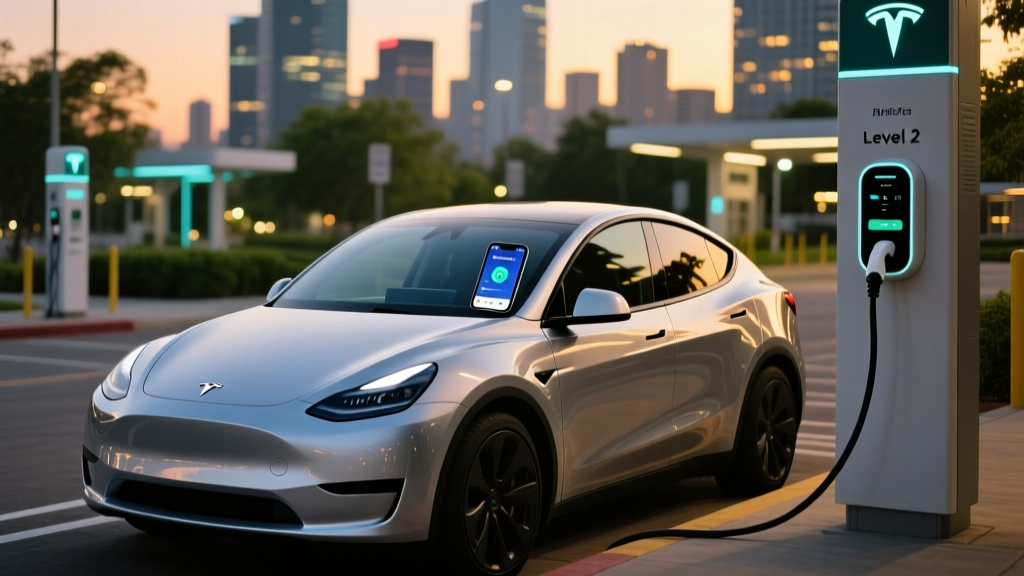
| Level 2 (240V, 48A) | 11.5 kW | ~44 mi/hr | Full charge in ~7 hours; ideal home setup |
| Level 2 (240V, 32A) | 7.7 kW | ~30 mi/hr | Tesla Mobile Connector on dryer outlet |
| DC Fast (V3 Supercharger) | 250 kW peak | ~1,000 mi/hr (peak) | 10-80% in ~25 min; tapers above 80% |
| DC Fast (V4 Supercharger) | Up to 350 kW (architecture limited) | Model Y caps at ~250 kW | Future Model Y revisions may unlock higher rates |
Charging curve reality check: The 250 kW peak is sustained only between approximately 10-30% state of charge. By 50% SoC, the rate drops to roughly 170 kW, and above 80% it falls below 60 kW. This is why Tesla (and every EV manufacturer) quotes 10-80% times — the final 20% is painfully slow. On a road trip, charge to 80% and move on unless you specifically need a full battery for the next leg.
Home charging note: The Model Y's onboard charger accepts up to 11.5 kW on Level 2, which requires a 60-amp dedicated circuit (48 amps continuous draw per NEC 80% rule). Budget $800-$2,000 for a licensed electrician to install a NEMA 14-50 outlet or hardwired Tesla Wall Connector, depending on your electrical panel's proximity to the garage and available amperage. A 200-amp main panel is usually sufficient; older 100-amp panels may require a $2,000-$4,000 upgrade.
Pricing, Trims, and Federal Tax Credit Eligibility
| Trim | MSRP | Est. §30D Credit | Effective Price |
|---|---|---|---|
| Long Range AWD | $46,630 | Up to $7,500* | ~$39,130* |
| Performance | $51,630 | Up to $7,500* | ~$44,130* |
*Federal EV tax credit under IRS §30D is subject to multiple requirements as of the 2026 tax year:
- MSRP cap: SUVs (including Model Y) must have an MSRP at or below $80,000. Both trims qualify.
- Buyer income cap: Modified AGI must not exceed $150,000 (single), $225,000 (head of household), or $300,000 (married filing jointly).
- Battery sourcing: A percentage of critical minerals and battery components must be sourced from the US or free-trade-agreement countries. The exact credit amount ($3,750 or $7,500) depends on whether the vehicle meets one or both sourcing thresholds. Tesla's US-built battery packs generally meet both thresholds, but confirm at purchase.
- Point-of-sale transfer: As of 2024, buyers can transfer the credit to the dealer at purchase, receiving it as an immediate price reduction rather than waiting for a tax refund. Tesla supports this at delivery.
Verify eligibility: Check the official IRS §30D page and confirm with a tax professional before relying on the credit. Rules change, and individual tax situations vary.
Interior, Cargo, Tech, and Driver Assistance
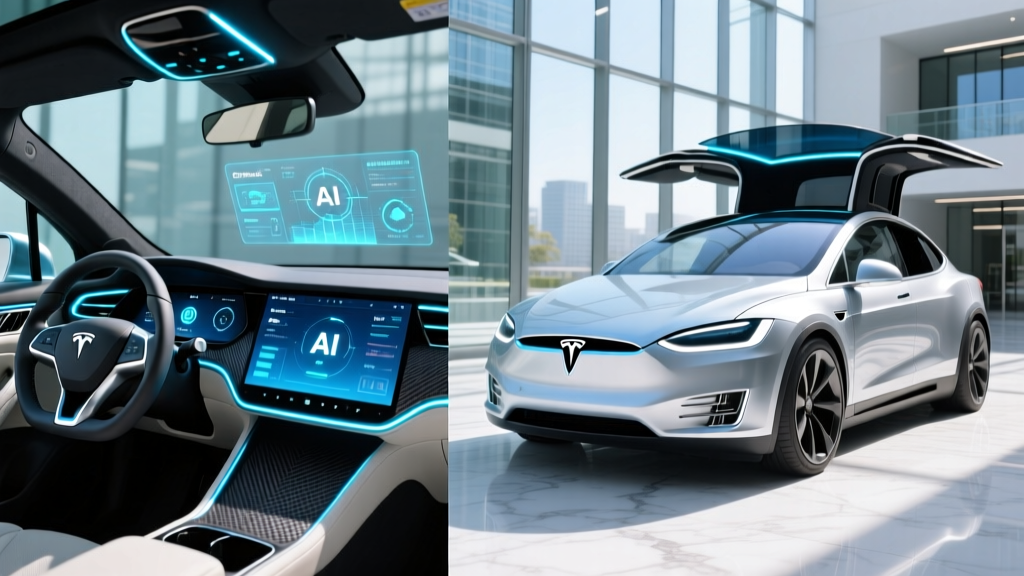
The Juniper-generation Model Y interior is a significant step up from the pre-2025 model. Ambient lighting, ventilated front seats, a rear-seat touchscreen, and improved sound insulation bring it closer to luxury-compact-SUV territory.
Cargo space: 30.2 cubic feet behind the second row, expanding to 72.1 cubic feet with the rear seats folded. The front trunk (frunk) adds 4.1 cubic feet — useful for charging cables or a small bag. Rear legroom measures 41.6 inches, which is generous for the segment and comfortably fits two adults on long trips.
Infotainment: The 15.4-inch center touchscreen runs Tesla's proprietary OS. Built-in apps include Spotify, Apple Music, Tidal, YouTube, Netflix (while parked), and TuneIn internet radio. As noted above, Apple CarPlay is now supported on the Juniper Model Y, which partially resolves the SiriusXM gap for iPhone users. There is no Android Auto.
Driver assistance: Tesla's Basic Autopilot (traffic-aware cruise control + lane centering) is standard. Full Self-Driving (Supervised) is an $8,000 option or $99/month subscription.
Despite the "Full Self-Driving" name, Tesla's FSD (Supervised) is an SAE Level 2 driver-assistance system. The driver must remain fully engaged, hands on or near the wheel, eyes on the road, and ready to take over at any moment. It is not autonomous driving. Only Level 4 services like Waymo operate without a human driver in defined areas. Do not rely on FSD to drive while you look at your phone or nap.
Warranty and Long-Term Battery Outlook
Tesla covers the 2026 Model Y with:
- Basic vehicle warranty: 4 years / 50,000 miles
- Battery and drive unit warranty: 8 years / 120,000 miles (Long Range and Performance)
- Battery capacity retention guarantee: Tesla warrants that the battery will retain at least 70% of its original capacity during the warranty period. If degradation exceeds 30%, Tesla will repair or replace the battery at no cost.
For context, real-world fleet data from Tesla owners suggests NMC batteries in the Model Y degrade roughly 10-12% over the first 100,000 miles, with the steepest drop occurring in the first 15,000 miles. Most owners report 88-92% state of health (SoH) at 50,000 miles. This is well within the 70% warranty threshold and means meaningful range loss is unlikely during typical ownership.
Battery replacement cost out of warranty, should it ever be needed, currently ranges from $12,000 to $16,000 including labor at Tesla service centers. However, catastrophic battery failure in a Model Y is rare — most degradation is gradual and covered by the warranty.
Model Y vs. Key Competitors: Is It Worth Buying?
The 2026 Model Y's primary rivals are the Hyundai Ioniq 5, Ford Mustang Mach-E, and BMW iX3 (where available). Here is how the Model Y stacks up on the metrics that matter:
| Metric | Tesla Model Y LR | Hyundai Ioniq 5 LR AWD | Ford Mach-E ER AWD |
|---|---|---|---|
| EPA Range | 320 mi | 290 mi | 290 mi |
| Peak DC Charge | 250 kW | 350 kW | 150 kW |
| 10-80% DCFC | ~25 min | ~18 min | ~36 min |
| Cargo (rear up) | 30.2 cu ft | 27.2 cu ft | 29.7 cu ft |
| Native NACS | Yes | Yes (2025+) | No (adapter) |
| SiriusXM | No (streaming only) | Available (factory option) | Available (factory option) |
| Base MSRP | $46,630 | $49,950 | $48,995 |
Choose the Tesla Model Y if: You prioritize range (320 mi leads the segment), want seamless Supercharger network access with native NACS, value Tesla's software/OTA update ecosystem, and can accept streaming-based satellite radio.
Choose the Hyundai Ioniq 5 if: DC fast-charge speed is your top priority (350 kW, 18 min 10-80%), you want native SiriusXM satellite radio, and you prefer a more conventional dealership service experience.
Choose the Ford Mach-E if: You want a more traditional SUV driving feel, native SiriusXM, and are willing to accept slower DC charging and slightly less range.
Pros and Cons: 2026 Tesla Model Y
- Class-leading 320-mile EPA range
- Native NACS — no adapter for Superchargers
- Best-in-class Supercharger network reliability
- Spacious cargo (30.2 cu ft + 4.1 cu ft frunk)
- Heat pump standard (cold-weather efficiency)
- Apple CarPlay now supported (Juniper)
- Strong resale value relative to EV segment
- Over-the-air updates add features post-purchase
- No native SiriusXM satellite radio
- No Android Auto support
- FSD (Supervised) is expensive ($8,000) and still Level 2
- DC charge peak of 250 kW trails Ioniq 5's 350 kW
- Service center wait times can be long in some markets
- Minimal physical controls — everything through touchscreen
- Insurance premiums often 15-25% higher than comparable ICE SUVs
- Ride quality firm on 20-inch wheels
Who Should Buy the 2026 Tesla Model Y?
Best for: Daily commuters with home charging, families needing versatile cargo space, and road-trippers who rely on the Supercharger network. The 320-mile range and dense Supercharger coverage make this one of the most practical EVs for multi-state travel.
Not ideal for: Buyers who consider native SiriusXM satellite radio non-negotiable (look at the Ioniq 5 or Mach-E), those without access to any form of Level 2 charging at home or work, or drivers who prefer physical buttons and a traditional dealership service model.
Towing note: The Model Y is rated for 3,500 pounds of towing capacity — sufficient for a small utility trailer or a pair of dirt bikes, but not for a full-size camper. If you need 5,000+ pound towing, consider the Rivian R1S or Ford F-150 Lightning.
Frequently Asked Questions
Can I get SiriusXM satellite radio in a Tesla?
No. Tesla has never included a SiriusXM satellite tuner in any production vehicle. You can listen to SiriusXM content by streaming through the SiriusXM mobile app via Bluetooth or Apple CarPlay (2026 Model Y with Juniper hardware). This uses your phone's cellular data, not satellite signals.
What is the real-world range of the 2026 Tesla Model Y?
The EPA rates the Long Range AWD at 320 miles. In real-world mixed driving at moderate temperatures, expect 280-300 miles. Sustained highway driving at 75 mph drops this to roughly 255-275 miles. In freezing weather (below 32°F), expect 210-265 miles depending on whether you precondition the battery and use the heat pump.
How fast does the Model Y charge at home and on DC fast chargers?
On a Level 2 home charger (240V, 48A), the Model Y charges at 11.5 kW, adding roughly 44 miles of range per hour — a full charge takes about 7 hours. On a Tesla V3 Supercharger, it peaks at 250 kW and charges from 10-80% in approximately 25 minutes. Charging slows significantly above 80% state of charge.
Does the 2026 Model Y qualify for the $7,500 federal EV tax credit?
Both trims (Long Range AWD at $46,630 and Performance at $51,630) fall under the $80,000 MSRP cap for SUVs. However, the full $7,500 credit under IRS §30D also requires the buyer to meet income caps ($150K single / $300K married filing jointly) and the vehicle to meet battery critical-mineral and component sourcing thresholds. Tesla's US-built packs generally qualify, but confirm at the time of purchase. The credit can be transferred to Tesla at delivery as a point-of-sale price reduction. See the IRS clean vehicle credit page for current rules.
Is Tesla's Full Self-Driving actually self-driving?
No. Tesla FSD (Supervised) is an SAE Level 2 driver-assistance system. It can handle highway lane changes, navigate on-ramps, and manage some city intersections, but the driver must remain fully attentive and ready to take control at any time. It is not autonomous. Level 4 driverless operation (no human needed) is currently limited to geofledged robotaxi services like Waymo in select cities.
How does the Model Y compare to the Hyundai Ioniq 5?
The Model Y offers more EPA range (320 vs. 290 miles) and native Supercharger access. The Ioniq 5 charges faster on DC (350 kW peak vs. 250 kW, 18 vs. 25 minutes 10-80%) and offers native SiriusXM satellite radio. Both are excellent — your choice depends on whether range/network or charge speed/satellite radio matters more to you.