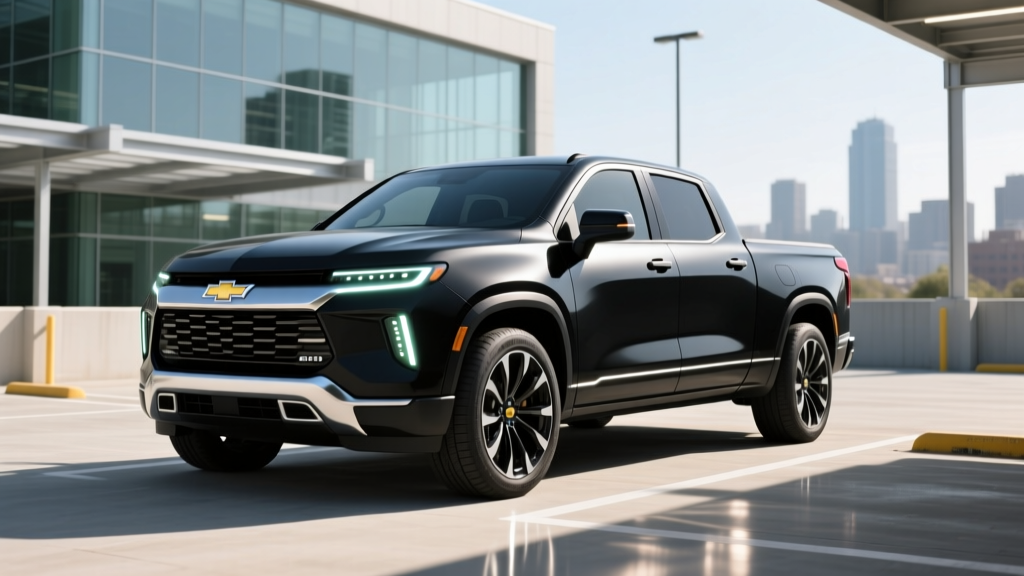
The 2026 Chevrolet Silverado EV is one of the heaviest production pickups on the road, and that mass shapes everything from its real-world range to its tire wear, braking distances, and payload math. But weight alone doesn't tell the story. Chevy's Ultium-platform truck pairs that heft with one of the largest battery packs in any consumer vehicle, class-leading DC fast-charging architecture, and a suite of tech that challenges the Ford F-150 Lightning and Rivian R1T directly.
If you're researching the Silverado EV weight and what it means for daily driving, towing, and long-term ownership, this profile breaks down every relevant spec — from curb weight by trim to real-world efficiency penalties you won't find on the window sticker.
Silverado EV Weight by Trim: The Numbers
The Silverado EV's mass varies significantly depending on trim, battery configuration, and equipment. Here's where each current model lands on the scale:
| Trim / Configuration | Curb Weight (lbs) | Battery (kWh usable) | GVWR (lbs) | Max Payload (lbs) |
|---|---|---|---|---|
| 4WT (Work Truck, Fleet) | ~8,530 | 200 kWh (NMC) | 10,600 | ~1,800 |
| RST (Range-topping consumer) | ~8,810 | 200 kWh (NMC) | 10,600 | ~1,300 |
| Trail Boss (Off-road oriented) | ~8,950 | 200 kWh (NMC) | 10,600 | ~1,200 |
| LT (Mid-tier consumer) | ~8,700 | 200 kWh (NMC) | 10,600 | ~1,400 |
For context, a gas-powered 2026 Silverado 1500 crew cab 4WD weighs between 4,800 and 5,400 lbs depending on engine. The EV is roughly 3,500 to 4,000 lbs heavier — almost entirely due to the Ultium battery pack, which itself accounts for approximately 2,900 lbs of that delta. The reinforced body structure, dual-motor AWD hardware, and onboard charging systems add the rest.
Real-World Range vs. EPA Estimates
EPA Estimated Range: Up to 460 miles (4WT Max Range) / 440 miles (RST) / 390 miles (Trail Boss)
Real-World Expectation: Plan for 350–400 miles in mixed highway driving (65–75 mph), dropping to 280–330 miles in sustained cold weather (below 30°F) or when towing a loaded trailer. City/regenerative-heavy driving can approach or slightly exceed EPA figures.
The Silverado EV's EPA numbers are among the highest of any production EV, period — not just among trucks. But the physics of moving nearly 9,000 lbs at highway speed work against it. On the interstate at 75 mph, aerodynamic drag dominates, and the truck's tall, boxy profile and heavy mass mean it consumes energy at roughly 55–65 kWh/100 mi under those conditions. That translates to about 3.0–3.6 miles per kWh, compared to the sticker's implied ~2.3 mi/kWh combined.
Towing amplifies the penalty further. In real-world testing with a 5,000-lb enclosed trailer, expect range to drop by 40–50%, putting realistic towing range at 180–250 miles before needing a charge stop. This is comparable to the F-150 Lightning under similar loads but significantly worse than a diesel Silverado 2500HD, which can cover 400+ miles towing.
Cold weather (sub-30°F) reduces usable capacity by roughly 15–25% due to battery chemistry limitations and cabin/climate demands, even with the Silverado EV's heat pump system. Preconditioning the battery while plugged in mitigates some of this loss.
Battery Chemistry, Capacity, and Longevity
All 2026 Silverado EV trims use GM's Ultium platform with NMC (nickel manganese cobalt) lithium-ion cells, supplied in a double-stacked, 24-module configuration. The usable capacity is approximately 200 kWh — one of the largest battery packs in any production consumer vehicle (for comparison, the Ford F-150 Lightning Extended Range uses 131 kWh usable, and the Rivian R1T Max Pack uses 149 kWh).
| Specification | Detail |
|---|---|
| Chemistry | NMC (Nickel Manganese Cobalt) |
| Usable Capacity | ~200 kWh |
| Gross Capacity | ~215 kWh (includes top/bottom buffer) |
| Thermal Management | Active liquid cooling + heat pump |
| Battery Warranty | 8 years / 100,000 miles (≥70% capacity retention) |
| Expected Degradation (10 yr) | ~10–15% based on NMC fleet data |
GM warrants the battery for 8 years or 100,000 miles against defects and capacity loss below 70% of original. Real-world NMC degradation data from GM's existing Ultium fleet and similar chemistry packs (Tesla, Hyundai) suggests 10–15% total capacity loss over a decade of mixed use is typical. The Silverado EV's large buffer (~15 kWh gross-to-usable) provides additional longevity insurance — you won't notice early degradation as acutely because the buffer absorbs it before it cuts into usable range.
One practical note: the Silverado EV does not currently offer an LFP (lithium iron phosphate) option. LFP would trade some energy density (and therefore range) for longer cycle life and lower cost, but given the truck's range targets and payload requirements, NMC remains the engineering choice for now.
Charging Speed: DC Fast Charge and Home Level 2
Charging a 200-kWh battery is where the Silverado EV's 800-volt architecture pays dividends. Here's the full charging picture:
| Charging Level | Power (kW) | Speed / Time | Connector |
|---|---|---|---|
| Level 1 (120V household) | ~1.4 kW | ~3 mi/hr — impractical for full charge | J1772 / NACS adapter |
| Level 2 (240V home, 48A) | 11.5 kW | ~25 mi/hr — full charge in ~18 hours | J1772 / NACS |
| Level 2 (240V home, 80A) | 19.2 kW | ~42 mi/hr — full charge in ~10.5 hours | NACS / J1772 adapter |
| DC Fast Charge (peak) | 350 kW | 10–80% in ~30 min (100 mi in ~10 min) | NACS (native) / CCS adapter |
The headline number is 350 kW peak DC fast charging on 800V-capable chargers (such as Electrify America's 350-kW stations or Tesla V4 Superchargers with NACS). However, that peak is sustained only briefly — typically between 10% and 30% State of Charge. The charge curve tapers progressively: expect ~250 kW through 50%, dropping to ~150 kW by 70%, and below 80 kW above 80%. The 10–80% time of roughly 30 minutes is competitive but not class-leading; the Hyundai Ioniq 5 can do 10–80% in 18 minutes on a smaller battery.
At home, the 19.2-kW onboard charger (available on RST and LT trims with the upgraded charge package) is one of the fastest in any EV. It requires a 100-amp dedicated circuit and a hardwired Level 2 EVSE — budget $1,500–$3,500 for the charger and professional installation, potentially more if your electrical panel needs a 200A service upgrade. Most owners charging overnight on a 48A/11.5-kW setup will recover 150–200 miles in an 8-hour sleep cycle, which covers the vast majority of daily use.
The 2026 Silverado EV uses the NACS (North American Charging Standard) connector natively, giving it direct access to Tesla's Supercharger network — the most reliable and extensive DC fast-charging infrastructure in the U.S. A CCS adapter is included for backward compatibility with Electrify America, EVgo, and other legacy networks.
Performance, Towing, and Payload
| Metric | 4WT | RST | Trail Boss |
|---|---|---|---|
| Drivetrain | Dual-motor AWD | Dual-motor AWD | Dual-motor AWD |
| Horsepower | 510 hp | 754 hp (Wide Open Watts mode) | 655 hp |
| Torque (lb-ft) | 615 | 785 | 745 |
| 0–60 mph | ~5.5 sec | ~4.5 sec | ~4.8 sec |
| Max Towing Capacity | 12,500 lbs | 10,200 lbs | 10,000 lbs |
| Max Payload | ~1,800 lbs | ~1,300 lbs | ~1,200 lbs |
The RST's 754-hp Wide Open Watts mode makes it the quickest Silverado ever built, hitting 60 mph in roughly 4.5 seconds — remarkable for a truck that weighs nearly 9,000 lbs. The dual-motor AWD system provides instant torque delivery to all four wheels, and the low center of gravity (battery pack mounted in the floor) keeps body roll surprisingly controlled for a vehicle this tall.
Towing capacity peaks at 12,500 lbs on the 4WT fleet trim, which is competitive with a gas Silverado 1500 equipped with the max tow package. However, the real-world range penalty while towing is severe: plan on 180–250 miles of range with a 5,000–7,000-lb trailer, and you'll need to plan charge stops carefully. The 4WT's available 25-kW Energy Transfer Pro offboard power system (bidirectional/V2L) is a genuine differentiator for job-site use, capable of running power tools, lighting, or even feeding a home during an outage via V2H.
Payload is where the Silverado EV's weight works against it. The heavy battery pack eats into GVWR headroom: the RST's ~1,300-lb payload is notably less than a comparably equipped gas Silverado 1500 (which can exceed 2,000 lbs). If you regularly haul heavy bed loads, the 4WT's ~1,800-lb rating is the better choice.
Pricing, Trims, and Federal Tax Credit Eligibility
| Trim | Base MSRP | As-Tested (typical) | §30D Credit Eligible? | Effective Price (after credit) |
|---|---|---|---|---|
| 4WT (Fleet, 200 kWh) | ~$55,000 | ~$62,000 | Yes (if MSRP and sourcing rules met) | ~$47,500–$54,500 |
| LT (200 kWh) | ~$68,000 | ~$74,000 | Yes (subject to income cap) | ~$60,500–$66,500 |
| RST (200 kWh) | ~$87,300 | ~$95,000+ | Partial — MSRP cap may limit to $3,750 | ~$83,550–$91,250 |
| Trail Boss (200 kWh) | ~$78,000 | ~$84,000 | Yes (subject to income cap) | ~$70,500–$76,500 |
Federal tax credit eligibility under IRS §30D is nuanced for the Silverado EV. Key rules for 2026:
- MSRP Cap: Trucks/vans/SUVs must have an MSRP at or below $80,000 to qualify for the full $7,500 credit. The RST trim's base MSRP of ~$87,300 exceeds this cap — it may qualify for the $3,750 half-credit if it meets only one of the two battery-component/critical-minerals sourcing requirements.
- Buyer Income Cap: Modified adjusted gross income (MAGI) must not exceed $150,000 (single), $225,000 (head of household), or $300,000 (joint filing).
- Battery Sourcing: The $7,500 credit splits into two $3,750 halves — one for battery components manufactured in North America, one for critical minerals sourced from the U.S. or FTA partners. GM sources Ultium cells from U.S. plants (Lansing, MI; Spring Hill, TN), but critical-mineral compliance varies by production batch. Verify with your dealer at point of sale.
- Point-of-Sale Transfer: As of 2024, the credit can be transferred to the dealer at purchase, reducing your out-of-pocket cost immediately rather than waiting for a tax refund.
The 4WT and LT trims offer the strongest credit case. The RST's price pushes it above the MSRP cap, and buyers should confirm exact credit eligibility with both the dealer and a tax professional before purchase. State and utility incentives vary by jurisdiction — check the AFDC state incentive database for local rebates.
Interior, Cargo, and Technology
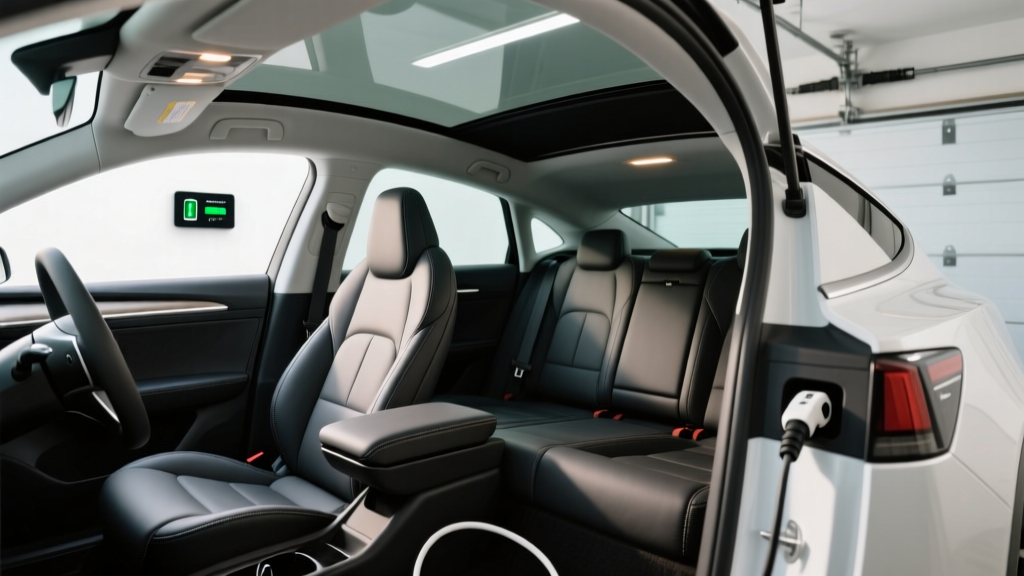
The Silverado EV's cabin is a significant departure from the gas Silverado, built on GM's dedicated BT1 electric platform rather than a modified ICE chassis. This gives it a flat floor, a midgate (a pass-through between bed and cab, borrowed from the old Avalanche), and a front trunk ("eTrunk") with 10.2 cubic feet of lockable storage — large enough for a full set of groceries or a couple of carry-on bags.
Bed volume measures 57.3 cubic feet with the midgate closed and extends to nearly 120 cubic feet with the midgate open (though this eliminates rear-seat passenger space). The 5-foot-11-inch bed is shorter than the gas Silverado's 6.5-foot option, which matters if you haul plywood or long lumber. Maximum rear-seat legroom is 43.4 inches, competitive with the crew-cab gas truck.
Technology highlights include:
- 17.7-inch diagonal infotainment touchscreen (RST/LT) running Google Built-In with native Google Maps navigation optimized for EV routing and charging
- 11-inch digital driver display with range, energy flow, and towing telemetry
- Super Cruise (SAE Level 2 hands-free driver assistance) available on RST and LT, operational on 750,000+ miles of mapped North American highways — includes automatic lane changes and trailer-towing mode
- Energy Transfer Pro (4WT): up to 25 kW bidirectional offboard power with multiple 120V and 240V outlets in the bed
- Over-the-air updates for powertrain calibration, infotainment, and ADAS features
Super Cruise is SAE Level 2, not self-driving. The driver must remain attentive at all times. An infrared camera monitors eye gaze and will issue escalating alerts — then disengage the system — if the driver looks away for too long. It does not handle construction zones, unmapped roads, or severe weather autonomously.
Efficiency and Operating Costs
| Trim | EPA MPGe (combined) | kWh / 100 mi | Cost per mile (at $0.16/kWh) |
|---|---|---|---|
| 4WT (Max Range) | ~61 MPGe | ~55 kWh/100 mi | ~$0.088 |
| RST | ~57 MPGe | ~59 kWh/100 mi | ~$0.094 |
| Trail Boss | ~54 MPGe | ~62 kWh/100 mi | ~$0.099 |
Efficiency is where the Silverado EV's weight shows most clearly. At 55–62 kWh/100 mi combined, it consumes roughly 40–50% more energy per mile than a lighter EV like the Hyundai Ioniq 5 (30 kWh/100 mi) or even the Tesla Model X (38 kWh/100 mi). That's the cost of moving 9,000 lbs.
However, even at this efficiency level, home charging at the national average of ~$0.16/kWh yields a per-mile cost of roughly $0.09 — compared to approximately $0.20–$0.25 per mile for a gas Silverado 1500 at 18 MPG and $3.75/gallon. Over 15,000 annual miles, that's roughly $1,500–$2,400 in annual fuel savings when charging at home. DC fast-charging on the road at $0.35–$0.50/kWh narrows or reverses that gap, so home charging access is essential to the economic case.
Who Should Buy the Silverado EV?
Buy the Silverado EV if:
- You need a full-size truck with genuine towing and payload capability AND want to eliminate fuel costs for daily driving
- You have reliable home Level 2 charging and a commute under 200 miles round-trip
- You value offboard power (V2L/V2H) for job-site or emergency backup use
- You want access to the Tesla Supercharger network via native NACS
- You qualify for the §30D tax credit and can bring the effective price below $60,000 (LT/4WT trims)
Consider alternatives if:
- You regularly tow over long distances (300+ miles) — the range penalty is punishing
- You need maximum payload (the Rivian R1T or a gas 2500HD outperform here)
- You lack home charging access — public-charging a 200-kWh battery is expensive and time-consuming
- The RST's $87,000+ price pushes you above the §30D MSRP cap
Pros
- Class-leading 460-mile EPA range (4WT Max Range)
- 350-kW DC fast charging on 800V architecture
- Native NACS / Tesla Supercharger access
- 25-kW bidirectional offboard power (4WT)
- Super Cruise hands-free driving with trailer mode
- Innovative midgate for extended cargo length
- 19.2-kW Level 2 onboard charger (fastest in class)
Cons
- 8,500–8,950 lb curb weight hurts efficiency and payload
- RST exceeds $80K MSRP cap — partial or no federal tax credit
- Short 5'11" bed limits full-sheet plywood hauling
- Real-world range drops 40–50% under tow load
- Full Level 2 charge still takes 10–18 hours (large battery)
- Limited service center familiarity with Ultium platform in some regions
Frequently Asked Questions
How does the Silverado EV's weight affect tire wear and maintenance?
At nearly 9,000 lbs, the Silverado EV accelerates tire wear compared to lighter trucks. Expect to replace tires every 25,000–35,000 miles rather than the 40,000–50,000 typical of gas trucks. GM specifies high-load-rated EV tires (typically 275/60R20 or 275/50R22) that carry a weight premium — budget $1,200–$1,800 for a set of four. Brake wear, conversely, is significantly reduced thanks to regenerative braking; many owners report original brake pads lasting 80,000+ miles.
Does the Silverado EV qualify for the full $7,500 federal tax credit?
It depends on the trim and your income. The 4WT (~$55,000 MSRP), LT (~$68,000), and Trail Boss (~$78,000) all fall under the $80,000 truck MSRP cap and are eligible for the full $7,500 — provided you meet the income limits and the vehicle's battery components and critical minerals satisfy the sourcing requirements. The RST (~$87,300 MSRP) exceeds the cap and may qualify for only $3,750 or no credit at all. Always verify with your dealer and consult the IRS §30D guidance before purchasing.
Can I tow a travel trailer with the Silverado EV on a road trip?
Yes, but plan carefully. With a 5,000–7,000-lb travel trailer, expect 180–250 miles of real-world range. That means charge stops every 2–3 hours on a highway trip. Super Cruise's trailer-towing mode and the built-in trailer camera system make the experience less stressful, and NACS Supercharger access helps, but many RV campgrounds lack adequate charging infrastructure. For frequent long-distance towing, a diesel remains more practical.
How does the Silverado EV compare to the Ford F-150 Lightning and Rivian R1T?
The Silverado EV beats the F-150 Lightning on range (460 vs. 320 miles EPA max) and DC fast-charge speed (350 kW vs. 150 kW peak). The Lightning offers a larger frunk (14.1 cu ft vs. 10.2) and a lower starting price. The Rivian R1T is more agile and off-road capable with a quad-motor option, but its Max Pack range tops out at ~410 miles and its starting price is higher. The Silverado EV's midgate and 25-kW offboard power are unique advantages none of its rivals match.
What is the Silverado EV's real-world range in winter?
In sustained sub-30°F conditions, expect a 15–25% range reduction from the EPA sticker. A 4WT rated at 460 miles EPA will realistically deliver 345–390 miles in cold weather, depending on driving speed, cabin heat usage, and whether the battery was preconditioned. The heat pump helps, but cold NMC chemistry inherently loses capacity. Preconditioning while plugged in and using seat/steering-wheel heaters instead of cabin air heat can recover 5–10% of that loss.
Is the Silverado EV worth buying in 2026?
For fleet buyers and homeowners with Level 2 charging who need a full-size truck primarily for commuting, light hauling, and job-site power, the Silverado EV (especially the 4WT and LT trims) is a compelling package with genuine cost-of-ownership advantages over gas. The RST is a premium showcase but its price and tax-credit ineligibility make it harder to justify financially. If long-distance towing is a core use case, keep a gas or diesel truck as a secondary vehicle.