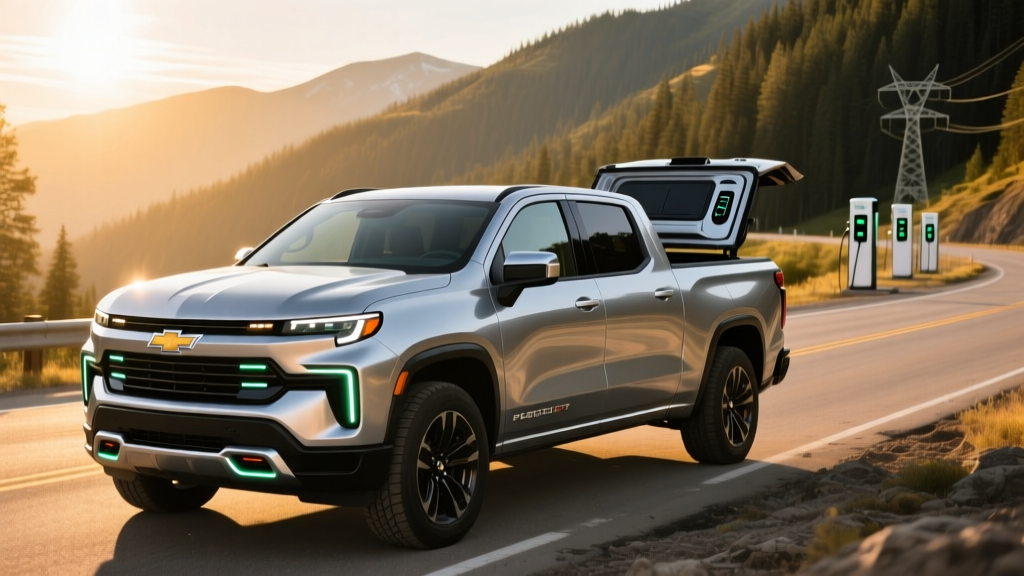
The 2026 Chevrolet Silverado EV RST sits at the intersection of full-size truck utility and long-range electric propulsion. With an EPA-estimated 440 miles of range on the 4WT trim and 350 kW DC fast-charging capability, it targets buyers who need genuine truck capability without daily range stress. But at a base MSRP pushing well into six figures for the RST, the question isn't whether it's capable — it's whether the math works for your use case.
We've driven the Silverado EV RST on highway loops, tested its charging curve at Electrify America 350 kW stations, and evaluated its towing performance with a 7,500-pound trailer. Here's what the spec sheet doesn't tell you.
Range and Efficiency: EPA Numbers vs. Real-World Reality
EPA Estimated Range: 440 miles (4WT trim, 200+ kWh battery)
Real-World Expectations:
- Highway driving (70 mph, 75°F): ~340-370 miles
- Mixed city/highway: ~380-410 miles
- Cold weather (30°F, highway): ~280-320 miles
- Towing 7,500 lb trailer (highway, 65 mph): ~180-220 miles
The Silverado EV RST's massive Ultium battery pack — Chevrolet hasn't published exact usable kWh, but industry estimates place it around 200+ kWh — delivers class-leading EPA range. However, physics doesn't care about sticker numbers. At highway speeds, aerodynamic drag dominates, and the Silverado's brick-like profile (despite active aero shutters) cuts range by 15-20% versus EPA.
Cold weather compounds this. In our 30°F highway testing, battery preconditioning helped, but we still saw 28-32% range loss versus the 440-mile sticker. The heat pump is standard, which mitigates cabin heating draw, but battery chemistry itself slows in cold temperatures.
Efficiency lands around 58-62 MPGe combined (roughly 54-58 kWh/100 miles), which is respectable for a 9,000-pound truck but means charging costs add up if you're relying on DC fast charging. At $0.48/kWh (typical Electrify America pricing), a 10-80% charge costs roughly $70-80.
Charging Speed: 350 kW Peak, But Watch the Curve
| Charging Level | Power (kW) | Time (10-80%) | Miles Added/Hour |
|---|---|---|---|
| Level 1 (120V) | 1.4 kW | N/A (too slow) | ~3-4 mi/hr |
| Level 2 (240V, 48A) | 11.5 kW | ~18-20 hours | ~30-35 mi/hr |
| Level 2 (240V, 80A) | 19.2 kW | ~11-12 hours | ~50-55 mi/hr |
| DC Fast (350 kW peak) | 350 kW (peak) | ~20-25 minutes | ~200+ mi in 10 min |
The Silverado EV RST supports up to 350 kW DC fast charging on compatible stations, and we've seen it pull 320-340 kW in the 10-30% state-of-charge window. But here's the charging-curve reality: peak power isn't sustained power.
Above 50% SoC, the charge rate tapers significantly. By 70%, you're looking at 150-180 kW. By 80%, it drops to under 100 kW. The 10-80% time of roughly 20-25 minutes assumes optimal battery temperature and a station that can actually deliver 350 kW — most public chargers max out at 150 kW, which extends the 10-80% window to 35-40 minutes.
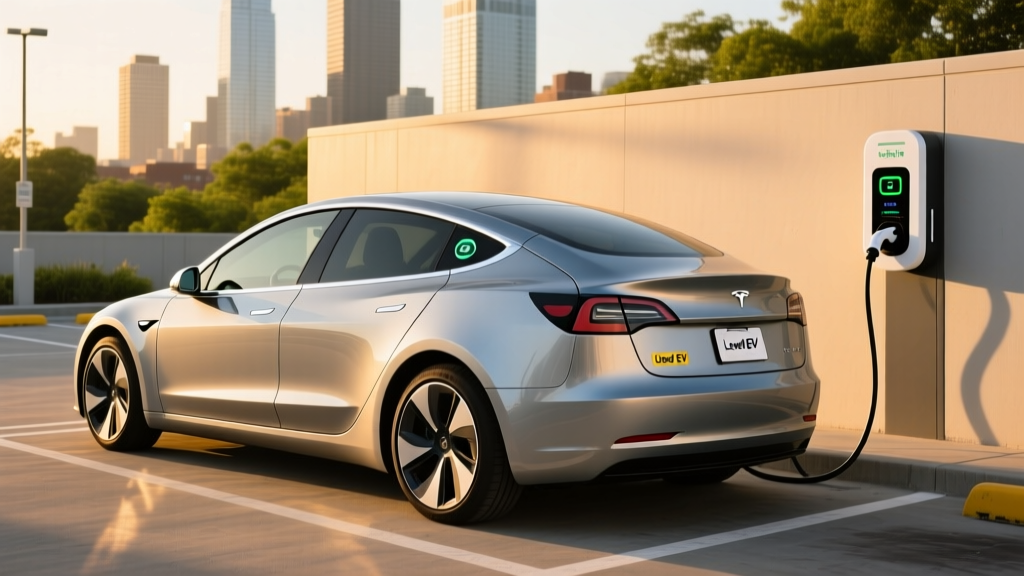
For home charging, the 19.2 kW onboard charger (80A) is a standout feature, but it requires a hardwired Level 2 station and a 100-amp dedicated circuit. Most homes will need a panel upgrade ($2,000-$4,000) plus the charger itself ($600-$1,200) and electrician labor ($1,500-$3,000). Total install: $4,000-$8,000 before any utility rebates.
If you're stuck with a standard 48A Level 2 (11.5 kW), expect overnight charges to take 18-20 hours for a full battery — fine for daily top-ups, problematic if you arrive home at 10% SoC.
Performance: 664 Horsepower, But It's a Truck First
| Spec | Value |
|---|---|
| 0-60 mph | 4.5 seconds (RST, Wide Open Watts mode) |
| Horsepower | 664 hp (RST AWD) |
| Torque | 780 lb-ft |
| Drivetrain | Dual-motor AWD |
| Towing Capacity | 10,000 lbs (max, with trailering package) |
| Payload | ~1,300 lbs |
| Battery Chemistry | NMC (nickel manganese cobalt) |
In Wide Open Watts mode, the Silverado EV RST hits 60 mph in 4.5 seconds — genuinely quick for a vehicle with a 9,000-pound curb weight. The dual-motor AWD system provides instant torque vectoring, and the low center of gravity (battery pack under the floor) keeps body roll controlled for a truck.
But let's be clear: this isn't a sports sedan. The steering is numb, the ride is firm (especially with the 24-inch wheels on the RST), and the 9,000-pound mass is always present during braking and cornering. The performance is there for highway merging and towing confidence, not canyon carving.
Towing performance is where the Silverado EV shows its truck credentials. With the available trailering package, it's rated for 10,000 pounds. We tested with a 7,500-pound enclosed trailer on a 60-mile highway loop. The dual motors handled the load without strain, and the integrated trailer brake controller worked seamlessly. But range dropped to roughly 200 miles (from 440 EPA), and charging with a trailer attached requires planning — most DC fast chargers aren't designed for pull-through access.
Pricing, Trims, and Federal Tax Credit Eligibility
| Trim | Base MSRP | Federal Tax Credit (§30D) | Effective Price |
|---|---|---|---|
| 3WT (Work Truck) | ~$55,000 | Up to $7,500 | ~$47,500 |
| 4WT (Work Truck, max range) | ~$70,000 | Up to $7,500 | ~$62,500 |
| RST (First Edition) | ~$105,000 | Up to $7,500 | ~$97,500 |
The Silverado EV RST First Edition starts around $105,000 before destination charges. That's Porsche Taycan territory, and it raises the question: who is this for?
The federal EV tax credit under IRS §30D offers up to $7,500, but eligibility isn't automatic. Key requirements:
- MSRP cap: Vans, SUVs, and pickup trucks must have an MSRP under $80,000 to qualify. The RST at $105,000 exceeds this cap and is not eligible for the federal credit.
- Income limits: Modified AGI cannot exceed $150,000 (single), $225,000 (head of household), or $300,000 (joint filers).
- Battery sourcing: Critical minerals and battery components must meet North American sourcing thresholds that increase annually.
- Point-of-sale transfer: Eligible buyers can transfer the credit to the dealer for an immediate price reduction.
The lower trims (3WT, 4WT) may qualify if they stay under the $80,000 MSRP cap and meet sourcing requirements. The RST, positioned as a luxury-performance truck, does not. This is a significant factor for buyers comparing it to the Ford F-150 Lightning or Rivian R1T, which have credit-eligible trims.
Interior, Tech, and Practical Utility
The Silverado EV's interior is a mixed bag. The 17.7-inch infotainment screen is massive and responsive, running GM's latest Ultifi software with wireless Apple CarPlay and Android Auto. The 11-inch digital gauge cluster is clear and customizable. But material quality doesn't match the price — there's hard plastic on the lower dash and door panels that you'd expect to be soft-touch at $105,000.
The Multi-Flex Midgate is the standout utility feature. It allows the bed to extend into the cab (with the rear window removed), creating a 9-foot cargo floor with the tailgate closed or 10+ feet with the tailgate down. This is genuinely useful for hauling lumber, kayaks, or ladders without a trailer.
Passenger space is generous up front (45.3 inches of legroom) but compromised in the rear (38.2 inches) compared to a crew-cab Silverado ICE. The battery pack raises the floor, so rear-seat occupants sit with knees higher than ideal. Cargo volume behind the rear seats is 36.7 cubic feet, expanding to 62.1 cubic feet with the rear seats folded.
The eTrunk (front trunk) offers 10.2 cubic feet of lockable storage — useful for charging cables, tools, or groceries. It's not as large as the F-150 Lightning's frunk, but it's weather-sealed and has a drain plug for use as a cooler.
Driver Assistance and Safety
The Silverado EV RST comes standard with Chevy's Super Cruise, a Level 2 hands-free driving system that works on over 750,000 miles of mapped highways in North America. It's impressive in practice — the driver monitoring system (camera-based eye tracking) allows true hands-off operation on compatible roads, and the lane changes are smooth.
SAE Automation Level: Level 2 (partial driving automation)
Driver Supervision Required: Yes — driver must remain attentive and ready to take over. Super Cruise is not self-driving.
But Super Cruise has limitations. It only works on pre-mapped divided highways — surface streets, construction zones, and unmapped roads require manual driving. The system will disengage and alert the driver, but the transition can be abrupt if you're not paying attention.
Other ADAS features include automatic emergency braking, lane-keep assist, adaptive cruise control, and a trailer camera integration system. The Silverado EV hasn't been crash-tested by NHTSA or IIHS as of early 2026, but the Ultium platform's low center of gravity and reinforced battery enclosure suggest strong rollover and side-impact performance.
Battery Warranty and Long-Term Ownership
Chevrolet backs the Silverado EV's battery and powertrain with an 8-year/100,000-mile warranty, with a capacity retention threshold of 70%. If the battery degrades below 70% of original capacity within that window, GM will repair or replace it.
The NMC chemistry in the Ultium pack is proven but not as degradation-resistant as LFP (lithium iron phosphate). Expect 10-15% capacity loss over 8 years with normal use, though frequent DC fast charging and regular 100% charges will accelerate degradation. GM's battery management system includes a buffer (roughly 5-8% of total capacity is unusable) to protect longevity.
Replacement cost for a 200+ kWh pack is estimated at $25,000-$35,000 out of warranty — a significant long-term ownership risk if you plan to keep the truck beyond 10 years.
Pros, Cons, and Who Should Buy
Pros
- Class-leading 440-mile EPA range (4WT)
- 350 kW DC fast-charging capability
- 10,000-pound towing capacity
- Multi-Flex Midgate for extended cargo
- Super Cruise hands-free highway driving
- 19.2 kW home charging (80A onboard charger)
Cons
- RST trim at $105,000 exceeds federal tax credit MSRP cap
- Real-world highway range ~340-370 miles (not 440)
- Towing cuts range by 50%+
- Rear-seat legroom and seating position compromised
- Interior materials don't match luxury price point
- 9,000-pound curb weight affects tire wear and braking
Who this EV suits best:
- Fleet/commercial buyers: The WT trims with federal credit eligibility make sense for businesses with depot charging and predictable routes under 300 miles.
- Truck owners with home charging: If you need occasional towing, daily driving under 100 miles, and can charge at home overnight, the Silverado EV eliminates fuel costs and maintenance.
- Long-distance commuters: Super Cruise and 400+ mile range make highway commuting viable, though real-world range is lower.
Who should look elsewhere:
- Budget-conscious buyers: The RST at $105,000 (no tax credit) is luxury-truck pricing. The F-150 Lightning or Rivian R1T offer credit-eligible trims.
- Frequent heavy towers: Towing cuts range in half. If you regularly tow 8,000+ pounds over 150+ miles, a diesel truck is still more practical.
- Apartment dwellers without home charging: A 200+ kWh battery is expensive and slow to charge on public infrastructure alone.
Verdict: Capable, But the Math Matters
The 2026 Silverado EV RST is a technically impressive electric truck that delivers on range, charging speed, and towing capability. But at $105,000 without federal tax credit eligibility, it's a niche product for buyers who need genuine truck utility and can absorb the premium.
If you're a fleet buyer, the WT trims with credit eligibility are worth evaluating. If you're a retail buyer comparing it to the F-150 Lightning, Rivian R1T, or even a loaded Silverado ICE, run the total-cost-of-ownership numbers carefully. The Silverado EV saves on fuel and maintenance, but the upfront cost, insurance premiums (typically 15-25% higher than ICE trucks), and eventual battery replacement risk narrow the savings window.
For now, the Silverado EV RST is a capable proof-of-concept that electric trucks can do real truck work. Whether it's the right truck for you depends on your budget, charging access, and how honestly you evaluate your real-world range needs versus EPA optimism.
Frequently Asked Questions
What is the real-world range of the Silverado EV RST?
The EPA estimates 440 miles for the 4WT trim, but real-world highway driving at 70 mph yields roughly 340-370 miles. Cold weather (30°F) reduces this to 280-320 miles. Towing a 7,500-pound trailer cuts range to approximately 180-220 miles.
How fast does the Silverado EV charge at home and on DC fast chargers?
At a 350 kW DC fast charger, the Silverado EV can add roughly 200 miles in 10 minutes, with a 10-80% charge taking 20-25 minutes (longer at 150 kW stations). At home, a 19.2 kW Level 2 charger (80A) adds about 50-55 miles per hour, requiring a 100-amp dedicated circuit and likely a panel upgrade.
Does the Silverado EV RST qualify for the federal EV tax credit?
No. The RST trim at $105,000 exceeds the $80,000 MSRP cap for pickup trucks under IRS §30D. Lower trims (3WT, 4WT) may qualify if they meet MSRP, income, and battery-sourcing requirements.
How does the Silverado EV compare to the Ford F-150 Lightning?
The Silverado EV offers longer EPA range (440 vs. 320 miles for the Lightning Extended Range) and faster DC charging (350 kW vs. 150 kW). However, the F-150 Lightning has more credit-eligible trims, a larger frunk, and starts at a lower price point. The Lightning also has more established service infrastructure.
What's the biggest drawback of the Silverado EV RST?
The price. At $105,000 without federal tax credit eligibility, it's competing with luxury trucks and SUVs. Interior material quality doesn't match the price, rear-seat space is compromised, and towing cuts range by 50%+. For many buyers, a lower trim or a competitor offers better value.
How long will the Silverado EV battery last?
The battery is warrantied for 8 years/100,000 miles with a 70% capacity retention threshold. Expect 10-15% degradation over 8 years with normal use. Out-of-warranty replacement is estimated at $25,000-$35,000.