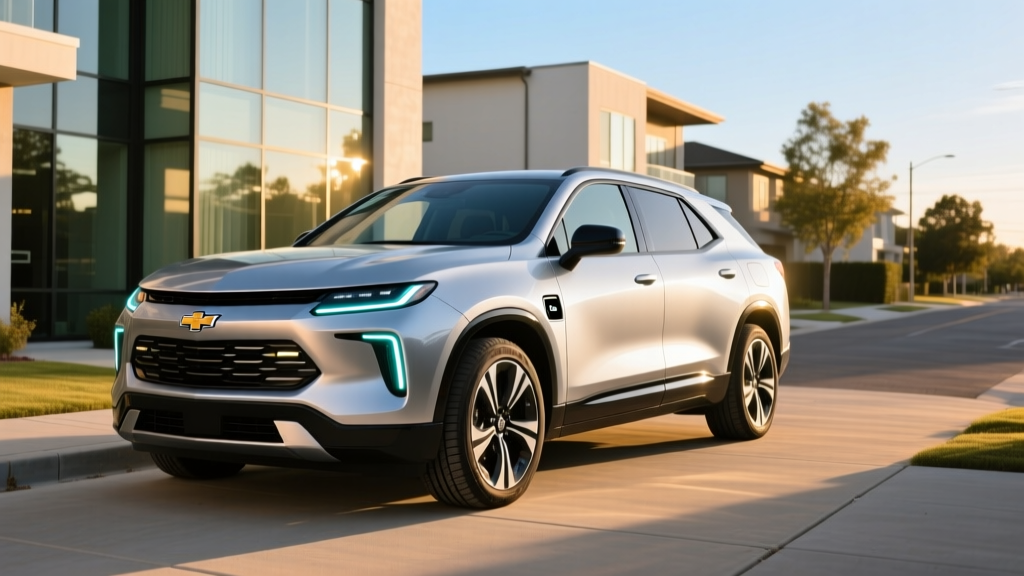
If you've been browsing Chevrolet dealer sites or aggregator portals for Silverado EV lease deals, you've likely seen aggressive monthly payments — sometimes dipping below $500/month on well-equipped trims. But a low lease payment only tells part of the story. The Silverado EV is a 9,000-pound, 200+ kWh battery electric truck with unique ownership economics that differ sharply from both its gas-powered Silverado sibling and smaller EVs.
This guide dissects what it actually costs to own or lease a 2026 Chevrolet Silverado EV over five years, factoring in federal tax credit eligibility under IRS §30D, real-world charging costs, insurance premiums, maintenance savings, and depreciation trends. We'll use the volume-selling Silverado EV LT (the most commonly leased configuration) as our baseline.
2026 Silverado EV: Quick Spec Reference
Before we get into the dollars, here are the numbers that drive every ownership cost calculation. The 2026 Silverado EV lineup spans from the LT to the Range Leader, but lease deals cluster around the LT and RST trims.
| Specification | Silverado EV LT (4WT / Extended Range) | Silverado EV RST (Max Range) |
|---|---|---|
| Base MSRP | $57,900 | $87,300 |
| Battery (usable) | ~200 kWh (NMC) | ~205 kWh (NMC) |
| EPA Range | 393 miles | 492 miles |
| Real-World Range (highway, 70 mph) | ~310–340 miles | ~380–420 miles |
| Real-World Range (cold, below 32°F) | ~270–300 miles | ~340–370 miles |
| Peak DC Fast Charge Rate | 350 kW | 350 kW |
| 10–80% DC Fast Charge Time | ~22 minutes (with preconditioning) | ~25 minutes |
| Level 2 Charge Rate | 19.2 kW | 19.2 kW |
| Horsepower | 510 hp | 754 hp |
| 0–60 mph | ~5.5 seconds | ~4.5 seconds |
| Max Towing | 10,000 lbs | 12,000 lbs |
| Efficiency (MPGe) | ~63 MPGe combined | ~59 MPGe combined |
| Battery/Powertrain Warranty | 8 years / 100,000 miles | 8 years / 100,000 miles |
How Much Does It Really Cost to Own a Silverado EV Over 5 Years?
Lease deals grab headlines, but total cost of ownership (TCO) determines whether you're actually saving money. Below is a five-year TCO estimate for the Silverado EV LT at typical lease terms (36 months) followed by a purchase or second lease, compared against a comparably equipped 2026 Silverado 1500 LTZ with the 5.3L V8 (MSRP ~$58,000).
| Cost Category (5 Years / 75,000 Miles) | Silverado EV LT | Silverado 1500 Gas (5.3L V8) |
|---|---|---|
| Purchase/Lease Cost (net of incentives) | $28,500 (lease payments + down, after $7,500 credit applied) | $31,200 (lease payments + down) |
| Fuel / Charging | $4,875 (home charging at $0.14/kWh avg) | $11,250 (at $3.50/gal, 18 MPG combined) |
| Insurance | $12,600 ($210/month avg) | $9,000 ($150/month avg) |
| Maintenance | $1,800 | $4,500 |
| Depreciation (estimated) | $18,500 | $16,800 |
| Total 5-Year Cost | $66,275 | $72,750 |
| Cost Per Mile | $0.88 | $0.97 |
The Silverado EV comes out roughly $6,475 cheaper over five years, or about 9 cents per mile less. The savings are driven primarily by fuel and maintenance, partially offset by higher insurance and depreciation. Let's break each category down.
Federal Tax Credit Eligibility: Do You Actually Qualify?
The federal EV tax credit under IRS §30D remains the single biggest factor in Silverado EV lease deal economics. For 2026, the credit can reach up to $7,500, but qualifying requires navigating several gates. Here's the current eligibility checklist:
- MSRP Cap: The Silverado EV qualifies as a truck/SUV, so the MSRP cap is $80,000. The LT ($57,900) clears this easily. The RST Max Range ($87,300) does NOT qualify for the new-vehicle credit.
- Buyer Income Limits: Modified adjusted gross income (MAGI) must not exceed $150,000 (single), $225,000 (head of household), or $300,000 (married filing jointly).
- Battery Sourcing Requirements: To receive the full $7,500, the vehicle must meet both critical-mineral sourcing (60% threshold for 2026) and battery-component manufacturing (85% threshold for 2026) requirements. GM has worked to qualify the Silverado EV LT for the full credit, but sourcing rules tighten annually — always verify current eligibility on fueleconomy.gov before signing.
- Point-of-Sale Transfer: Since 2024, you can transfer the credit to the dealer at purchase or lease signing, reducing your down payment or capitalized cost immediately. On a lease, the leasing company (GM Financial) technically claims the credit and typically passes it through as a cap-cost reduction — confirm this explicitly in your lease paperwork.
- One Credit Per Vehicle, Per Taxpayer: You cannot claim the new-vehicle credit if you've already claimed the maximum credits allowed within the prior 3-year period (limited to one new EV credit every three years starting 2026).
Charging vs. Gas: The Real $/Mile Math
This is where the Silverado EV makes its strongest ownership case. But the savings depend entirely on where and how you charge.
| Scenario | Cost per kWh / Gallon | Cost per Mile | Annual Cost (15,000 mi) |
|---|---|---|---|
| Silverado EV — Home Level 2 (national avg electricity) | $0.14/kWh | $0.065 | $975 |
| Silverado EV — Home Level 2 (California, high rate) | $0.28/kWh | $0.13 | $1,950 |
| Silverado EV — DC Fast Charging (public, avg) | $0.42/kWh | $0.195 | $2,925 |
| Silverado 1500 Gas (5.3L V8, 18 MPG combined) | $3.50/gallon | $0.194 | $2,917 |
At the national average electricity rate of ~$0.14/kWh and the Silverado EV LT's real-world efficiency of roughly 2.15 kWh/mile, home charging costs about 6.5 cents per mile — roughly one-third the cost of fueling the gas Silverado at $3.50/gallon.
However, if you rely heavily on public DC fast charging at $0.40–$0.48/kWh (common on Electrify America and EVgo networks), your per-mile cost rises to ~19–22 cents, which exceeds the gas truck's fuel cost. This is why home Level 2 charging access is essentially mandatory for the Silverado EV to deliver on its cost-of-ownership promise.
The Silverado EV supports up to 19.2 kW Level 2 charging, meaning a full charge from empty takes roughly 10.5 hours — overnight charging is practical, but you'll want a dedicated 100-amp circuit for the ChargePoint or GM-branded wall connector to hit that peak rate. Most homes will need an electrical panel assessment; budget $1,200–$2,500 for a professional Level 2 installation (equipment + electrician + permit), or up to $4,000+ if a panel upgrade to 200A service is needed.
Maintenance Savings: Where EVs Quietly Win
Electric trucks eliminate entire categories of routine maintenance. Here's how the Silverado EV stacks up against its gas counterpart:
| Maintenance Item | Silverado EV | Silverado 1500 Gas |
|---|---|---|
| Oil Changes | None — $0 | $450–$600 (5 years, synthetic) |
| Transmission Fluid | None (single-speed reduction gear) | $200–$350 (flush at ~60k mi) |
| Brake Pads/Rotors | $200–$400 (regen braking extends life 2–3x) | $800–$1,200 (replacement at 40–60k mi) |
| Coolant | Check/top-off only | $150–$250 (flush at ~100k mi) |
| Air Filters (engine) | None | $100–$150 |
| Spark Plugs | None | $300–$500 |
| Cabin Air Filter | $50–$100 | $50–$100 |
| Tire Rotation | $150–$250 (heavier vehicle, potentially faster wear) | $150–$250 |
| Wiper Fluid, Wipers, 12V Battery | $200–$300 | $200–$300 |
| Estimated 5-Year Total | $1,550–$2,400 | $3,900–$5,200 |
The Silverado EV's regenerative braking system is the unsung hero here. Because regen handles the majority of deceleration — especially useful given the truck's 9,000-pound curb weight — the physical brake pads and rotors see dramatically less wear. Many EV owners report original brake pads lasting well past 100,000 miles.
One caveat: the Silverado EV's extreme weight (over 9,000 lbs for the LT) means tire wear can be accelerated compared to lighter vehicles. Budget for a set of replacement tires around year 4 or 50,000 miles. Expect to pay $1,200–$1,800 for a set of EV-rated all-season or all-terrain tires in the factory size.
Insurance Reality: The Cost EV Owners Don't Anticipate
Insurance is where the Silverado EV loses ground. Based on aggregated quote data, insuring a 2026 Silverado EV LT costs approximately $190–$240 per month for a typical driver (age 35–50, clean record, full coverage with $500 deductible), compared to $140–$170 per month for the gas Silverado 1500 LTZ.
Why the premium?
- Higher repair costs: EV battery packs, power electronics, and specialized structural components cost more to repair or replace after a collision. Body shops need EV-specific certification.
- Higher vehicle value: Even with incentives, the Silverado EV's transaction price tends to be higher than comparably equipped gas models.
- Limited actuarial data: Insurers have decades of loss data on gas trucks but far less on full-size electric pickups, leading to conservative (higher) pricing.
- Weight: At 9,000+ pounds, the Silverado EV carries more kinetic energy in a collision, increasing liability exposure.
That said, some insurers now offer EV-specific discounts. GM's own OnStar Insurance and companies like State Farm and Progressive have introduced EV programs. Always get quotes from at least three carriers before finalizing your lease — the spread can be $50+/month.
Depreciation and Resale Value Trends
EV depreciation has been one of the most volatile ownership factors in recent years. After significant value drops in 2023–2024 (driven by Tesla price cuts and rapid market expansion), the full-size electric truck segment has stabilized somewhat, but the Silverado EV still faces headwinds:
- Battery degradation concerns: While GM's Ultium battery platform includes an 8-year/100,000-mile warranty (covering capacity loss below 70% of original), used buyers remain cautious about out-of-warranty battery replacement costs, which could exceed $20,000 for a pack this size.
- Technology obsolescence: Charging speeds, range, and software features advance quickly. A 2026 Silverado EV may feel dated by 2031 compared to newer solid-state or next-gen models.
- Market saturation: As more used Silverado EVs, F-150 Lightnings, and Rivian R1Ts enter the secondary market, supply pressure softens resale values.
Current estimates place 5-year depreciation for the Silverado EV LT at approximately 45–55% of original MSRP, compared to 35–45% for the gas Silverado 1500. On a $57,900 LT, that translates to roughly $26,000–$32,000 in depreciation over five years.
For lessees, this matters less directly — your lease residual is set at signing, and GM Financial absorbs the depreciation risk. If the truck depreciates more than the residual, you simply walk away. If it holds value better than expected, you may have equity to apply toward a purchase or next lease.
State, Local, and Utility Incentives
- California: Up to $2,000 additional rebate through CVRP for income-qualified buyers, plus potential utility rebates for Level 2 charger installation ($500–$1,500).
- Colorado: State tax credit of up to $5,000 for EVs with MSRP under $80,000 (Silverado EV LT qualifies).
- New York: Drive Clean Rebate up to $2,000 (income-based tiers).
- Utility rebates (nationwide): Many utilities offer $300–$1,000 rebates for installing a Level 2 home charger, plus time-of-use (TOU) rate plans that reduce overnight charging costs by 30–50%.
- HOV lane access: Several states (CA, CO, FL, GA, MD, NJ, NY, VA) grant single-occupant HOV lane access to EVs — a significant daily value in congested metro areas.
Stacking the $7,500 federal credit with a state incentive like Colorado's $5,000 credit and a $1,000 utility charger rebate can reduce your effective Silverado EV LT cost by $13,500 or more — dramatically improving the lease deal economics.
Lease Deal Anatomy: What to Look For
When evaluating Silverado EV lease deals in 2026, focus on these numbers:
- Capitalized Cost (Cap Cost): This is the negotiated vehicle price. Ensure the $7,500 federal credit is applied as a cap-cost reduction if you qualify. A typical advertised deal might show a cap cost of $50,400 ($57,900 MSRP - $7,500 credit).
- Money Factor: The lease interest rate, expressed as a decimal. Multiply by 2,400 to get the approximate APR. A competitive money factor in 2026 is around 0.00200–0.00250 (4.8%–6.0% APR). GM Financial captive leasing often offers subsidized rates on EVs.
- Residual Value: Typically set at 48–55% of MSRP for a 36-month Silverado EV lease. A higher residual means lower monthly payments.
- Mileage Allowance: Standard is 10,000 miles/year. Going to 12,000 or 15,000 miles/year will increase your payment by $20–$50/month. Given the Silverado EV's range, higher mileage is practical if you have home charging.
- Disposition Fee: Usually $395–$595 at lease-end if you don't purchase or lease another GM vehicle. Factor this into your TCO.
Frequently Asked Questions
Is leasing a Silverado EV better than buying?
For most buyers in 2026, leasing offers advantages: you avoid depreciation risk on a rapidly evolving technology, the federal tax credit is passed through as a cap-cost reduction (simplifying tax filing), and GM Financial often subsidizes money factors on EV leases. However, if you drive over 15,000 miles annually or plan to keep the truck 7+ years, purchasing may be more economical despite the depreciation exposure.
Does the Silverado EV qualify for the full $7,500 federal tax credit?
The Silverado EV LT (MSRP $57,900) is positioned to qualify for the full $7,500 credit under §30D, provided you meet the income limits ($150K single / $300K joint) and the vehicle meets the 2026 battery-sourcing thresholds. The RST Max Range at $87,300 exceeds the $80,000 truck/SUV MSRP cap and does NOT qualify for the new-vehicle credit. Always verify current eligibility on fueleconomy.gov at the time of purchase or lease signing.
How much will I save on fuel with a Silverado EV?
If you charge primarily at home at the national average rate of ~$0.14/kWh, expect to spend roughly $975 per year on electricity (at 15,000 miles/year) versus approximately $2,900 on gasoline for the equivalent V8 Silverado — a savings of about $1,925 per year or $9,625 over five years. If you rely on public DC fast charging, savings narrow significantly or disappear entirely.
What does it cost to install a home Level 2 charger for the Silverado EV?
Budget $1,200–$2,500 for a standard Level 2 installation (48-amp or 80-amp hardwired charger, electrical labor, permit). If your home needs a panel upgrade from 100A to 200A service, total costs can reach $3,500–$5,000. The Silverado EV supports up to 19.2 kW Level 2 charging, which requires an 80-amp circuit — confirm your electrician can accommodate this before purchasing equipment.
Will my Silverado EV battery need replacement during ownership?
Unlikely. GM's Ultium battery warranty covers 8 years or 100,000 miles against capacity loss below 70%. Real-world degradation data from the Ultium platform suggests approximately 8–12% capacity loss over 100,000 miles under normal use. The 200+ kWh battery has enough buffer that even with 10% degradation, you'd still have ~350 miles of EPA range on the LT. Out-of-warranty replacement, if ever needed, could cost $20,000–$30,000+ given the pack size.
Are Silverado EV insurance costs really that much higher?
Yes — expect to pay roughly $40–$70 more per month compared to the gas Silverado, depending on your profile and carrier. Over five years, that's an additional $2,400–$4,200 in insurance costs. Get quotes before signing a lease, and ask about EV-specific discounts. Some carriers offer up to 10% off for EVs with advanced ADAS features like GM's Super Cruise.
Can I tow with the Silverado EV without destroying my range?
You can tow — the LT is rated for 10,000 lbs — but range drops dramatically under load. Expect a 40–55% range reduction when towing near maximum capacity at highway speeds. That turns the LT's 393-mile EPA range into roughly 175–235 miles of real-world towing range. Plan charging stops accordingly, and note that not all DC fast charging stations accommodate truck-trailer configurations.