Silverado EV 0-60 and Performance: Quick Verdict
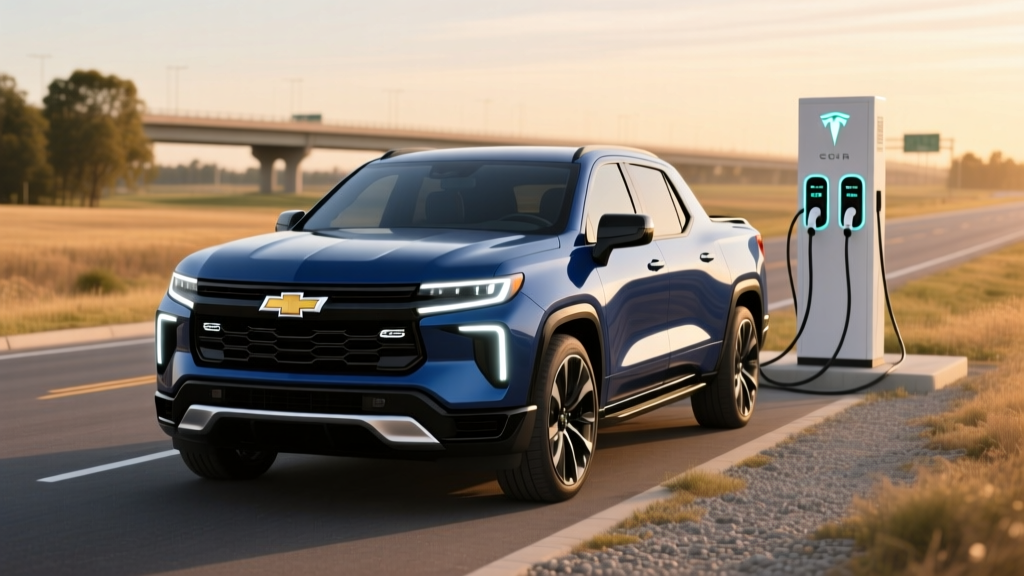
The Chevrolet Silverado EV is not your father's Silverado. Built on GM's Ultium platform — the same dedicated EV architecture underpinning the GMC Hummer EV and Cadillac Escalade IQ — this full-size electric pickup trades the traditional body-on-frame layout for a skateboard chassis that unlocks performance figures no gas-powered half-ton has ever touched.
If you landed here searching for the Silverado EV 0-60 time, here it is up front: the range-topping Silverado EV RST with the available Max Performance package hits 60 mph in approximately 4.5 seconds, courtesy of 754 horsepower and 785 lb-ft of torque from its dual-motor AWD powertrain. The more accessible WT (Work Truck) and LT trims with the standard dual-motor setup produce 510 hp and deliver a 0-60 time in the low-to-mid 5-second range. For context, the gas-powered Silverado 1500 ZR2 with its 6.2L V8 takes roughly 6.0 seconds — making even the base electric Silverado quicker than the most potent gas V8 in the lineup.
| Spec | WT (Work Truck) | LT | RST (Max Perf.) |
|---|---|---|---|
| 0-60 mph | ~5.5 sec | ~5.4 sec | ~4.5 sec |
| Horsepower | 510 hp | 510 hp | 754 hp |
| Torque | 615 lb-ft | 615 lb-ft | 785 lb-ft |
| Drivetrain | Dual-motor AWD | Dual-motor AWD | Dual-motor AWD |
| Battery (usable) | ~200 kWh (NMC) | ~200 kWh (NMC) | ~200 kWh (NMC) |
| EPA Range | Up to 390 mi | Up to 380 mi | Up to 380 mi |
| MPGe (combined) | ~63 MPGe | ~63 MPGe | ~59 MPGe |
| Max DC Fast Charge | 350 kW (peak) | 350 kW (peak) | 350 kW (peak) |
| 10-80% DCFC Time | ~28 min | ~28 min | ~28 min |
| Level 2 Charge Rate | 19.2 kW (AC) | 19.2 kW (AC) | 19.2 kW (AC) |
| Towing Capacity | Up to 12,500 lbs | Up to 12,500 lbs | Up to 10,000 lbs |
| Base MSRP | ~$55,000 | ~$67,000 | ~$87,000 |
The dual-motor all-wheel-drive system is standard across all trims, providing excellent traction in wet, snowy, or off-road conditions. The instant torque delivery is particularly useful when merging onto highways or pulling away from a stop with a loaded bed — there's no turbo lag, no transmission hunt, just immediate, linear thrust.
Range and Efficiency: EPA Numbers vs. the Real World
The Silverado EV's massive battery pack — approximately 200 kWh of usable capacity using nickel-manganese-cobalt (NMC) lithium-ion chemistry — is one of the largest ever fitted to a production vehicle. GM prioritized range and towing endurance over the lighter, lower-cost LFP chemistry found in some competitors, opting for NMC's superior energy density to keep the pack from becoming impossibly heavy.
EPA sticker: Up to 390 miles (WT with larger battery option), 380 miles (LT/RST)
Real-world highway (70-80 mph): Expect roughly 300-330 miles in moderate temperatures. Aerodynamic drag is the enemy of any pickup at speed, and the Silverado EV's tall, boxy profile is no exception.
Cold weather (below 30°F): Plan for a 20-30% reduction, bringing usable range down to approximately 230-280 miles depending on cabin heating demands and whether you precondition the battery.
Towing: With a 7,000-10,000 lb trailer, range can drop to 150-200 miles. This is consistent with every electric truck on the market — towing is where EV range takes its biggest hit.
Efficiency figures from fueleconomy.gov place the Silverado EV at approximately 63 MPGe combined for the WT and LT trims, with the RST dropping to around 59 MPGe due to its stickier tires and more aggressive tuning. In kWh terms, that translates to roughly 53-57 kWh per 100 miles — thirsty by EV sedan standards but competitive within the electric truck segment given the vehicle's 8,500+ lb curb weight.
Charging Speed: DC Fast Charging and Home Setup
GM equipped the Silverado EV with an 800-volt-capable architecture, enabling peak DC fast-charge rates up to 350 kW at compatible chargers — though sustained rates taper significantly as the battery fills. On a 350 kW station (such as Electrify America's latest stalls), you can expect a 10-80% charge in approximately 28 minutes. However, the charge curve is steep: you'll see peak rates only between roughly 10-30% state of charge, after which the system progressively dials back current to protect the battery.
At more common 150 kW chargers — still the majority of public infrastructure — expect 10-80% in roughly 45-55 minutes. Always precondition the battery via the MyChevrolet app or the navigation system's route planner before arriving at a DC fast charger; skipping this step can add 10-15 minutes to your session, especially in cold weather.
| Charge Level | Power (kW) | Miles Added per Hour | Full / 10-80% Time | Connector |
|---|---|---|---|---|
| Level 1 (120V outlet) | 1.4 kW | ~3 mi/hr | ~140+ hours (full) | NACS / J1772 adapter |
| Level 2 (240V home) | 11.5 kW | ~25 mi/hr | ~17 hours (full) | NACS (native) |
| Level 2 (240V, 80A) | 19.2 kW | ~42 mi/hr | ~10 hours (full) | NACS (native) |
| DC Fast (150 kW) | 150 kW (peak) | ~300 mi/hr (peak) | ~45-55 min (10-80%) | NACS / CCS adapter |
| DC Fast (350 kW) | 350 kW (peak) | ~700 mi/hr (peak) | ~28 min (10-80%) | NACS (native) |
For home charging, the Silverado EV comes with the NACS (North American Charging Standard) connector natively — the same plug used by Tesla. This means full access to the Tesla Supercharger network (now open to GM vehicles) without an adapter, a significant practical advantage for road trips. At home, a standard 48-amp Level 2 wallbox delivers about 11.5 kW, adding roughly 25 miles of range per hour. Upgrade to an 80-amp hardwired unit and you'll pull the full 19.2 kW the truck's onboard charger can accept, cutting a full charge to roughly 10 hours — ideal for overnight replenishment.
Home installation reality check: A 48-amp Level 2 charger typically requires a 60-amp dedicated circuit. Installation costs range from $800-$2,500 depending on panel proximity and local permit fees. If your home has a 100-amp electrical panel, you'll likely need a panel upgrade to 200 amps ($1,500-$3,500) before adding EV charging. Always consult a licensed electrician for a site-specific quote.
Pricing, Trims, and Federal Tax Credit Eligibility
The Silverado EV lineup has expanded for 2025-2026, with pricing that spans from work-truck practicality to premium performance territory. Here's how the trims stack up:
| Trim | Base MSRP | As-Tested Range | Federal Tax Credit (§30D) |
|---|---|---|---|
| WT (Work Truck) | ~$55,000 | $55,000 - $70,000 | Up to $7,500 (subject to eligibility) |
| LT | ~$67,000 | $67,000 - $82,000 | Up to $7,500 (subject to eligibility) |
| RST | ~$87,000 | $87,000 - $105,000 | Up to $7,500 (subject to eligibility) |
Federal tax credit rules (IRS §30D) — critical caveats: The Silverado EV qualifies as a light truck under the IRS guidelines, which sets the MSRP cap at $80,000 for trucks, vans, and SUVs. This means the WT and LT trims are eligible for the full credit (provided buyer income and battery-sourcing requirements are met), while the RST's base MSRP of ~$87,000 exceeds the cap, rendering it ineligible unless optioned below the threshold — which is unlikely given the RST's standard equipment.
- Buyer income caps: Modified AGI must not exceed $300,000 (joint filers), $225,000 (head of household), or $150,000 (single filers)
- Battery sourcing: Critical minerals and battery component requirements phase in annually — for 2025-2026, increasing percentages must be sourced from the US or free-trade-agreement countries. GM has been working to localize Ultium battery production at US plants (Lansing, MI; Spring Hill, TN), but always verify current-year compliance on the IRS qualified vehicles list before purchasing
- Point-of-sale transfer: Eligible buyers can transfer the credit to the dealer at purchase, reducing the out-of-pocket price immediately rather than waiting for a tax refund
A tax professional should confirm your specific eligibility — rules change annually and individual circumstances vary.
Cargo, Passenger Space, and the Multi-Flex Midgate
The Silverado EV's dedicated skateboard platform enables packaging tricks no gas Silverado can match. The most notable is the Multi-Flex Midgate, a partition behind the rear seats that folds down to extend the bed floor through the cabin. With the midgate open and the tailgate down, Chevy claims a maximum cargo length of over 10 feet — enough to haul sheets of plywood or long lumber without angling them precariously.
Cargo and interior dimensions:
- Bed length (midgate closed): ~5 ft 11 in (standard short bed equivalent)
- Bed length (midgate open): ~9 ft+ with tailgate down
- Front trunk (e-trunk): ~10.7 cu ft — large enough for several carry-on bags or a full set of groceries, with a drainable floor for use as a cooler
- Rear-seat legroom: ~43.5 inches — generous for full-size truck standards
- Front headroom: ~43.0 inches
- Total cargo volume (behind front seats, midgate open): Class-leading among electric pickups
The e-trunk is a standout feature for daily use. Unlike gas trucks where the engine bay dominates the front, the Silverado EV's compact Ultium drive units free up meaningful front storage that's lockable, weatherproof, and accessible from the exterior — perfect for securing valuables at a trailhead or keeping charging cables organized.
Tech, Driver Assistance, and Notable Drawbacks
The Silverado EV's cabin is dominated by a 17.7-inch diagonal infotainment touchscreen (LT and RST; WT gets a smaller unit) running GM's latest Google-built-in software. Navigation, voice assistant, and app store are integrated, reducing phone dependency. Wireless Apple CarPlay and Android Auto are standard across all trims.
The RST trim adds a 11-inch digital driver display, a heads-up display, and GM's Super Cruise hands-free driving system, which operates on over 750,000 miles of mapped highways in the US and Canada. Super Cruise is an SAE Level 2 driver-assistance system — despite the hands-free capability, you must remain attentive, and the system monitors your eyes via an infrared camera on the steering column. It does not handle city streets, construction zones, or unmapped roads. This is not autonomous driving; it's supervised highway automation.
Super Cruise is an SAE Level 2 system. The driver must remain alert, hands-free or not. The system will disengage in construction zones, on unmapped roads, in heavy precipitation, and when lane markings are unclear. You are legally responsible for the vehicle at all times. Do not treat this as self-driving capability.
Notable drawbacks:
- Weight: At roughly 8,500-9,000 lbs depending on trim, the Silverado EV is heavy. This impacts tire wear, braking distances, and efficiency — particularly when towing.
- Price: Even the WT trim starts around $55,000, and the RST pushes well into luxury-truck territory. The value proposition improves with the tax credit and fuel savings, but the upfront cost is substantial.
- Charging time with the massive battery: While 350 kW peak charging is impressive, filling a 200 kWh battery still takes longer than filling a 15-gallon gas tank. Road trippers should plan for 30-45 minute stops every 250-300 miles.
- No RST tax credit: The MSRP cap eliminates the federal credit for the top performance trim.
- Ride quality (WT): The Work Truck's suspension tuning prioritizes payload over comfort — expect a firmer ride when unloaded compared to the LT or RST with adaptive dampers.
Who Should Buy the Silverado EV?
The Silverado EV is not a one-size-fits-all truck. Here's a practical decision framework:
Choose the Silverado EV WT if: You need a work truck with serious towing capacity (12,500 lbs), a jobsite-friendly e-trunk for tools, and daily driving under 200 miles where overnight Level 2 charging covers your needs. The WT is also the value play for fleet operators who can leverage commercial EV incentives.
Choose the Silverado EV LT if: You want a well-equipped daily-driver truck with strong range (~380 mi EPA), hands-free highway driving via Super Cruise, and the midgate for weekend projects. This is the sweet spot for suburban truck owners who commute and occasionally tow.
Choose the Silverado EV RST if: You want the fastest factory truck Chevy has ever built (4.5-second 0-60), premium interior materials, every available option, and you're not dependent on the federal tax credit. This is the enthusiast/luxury buyer's truck.
Look elsewhere if: You regularly tow over 8,000 lbs for 300+ miles without stopping (range drops sharply), you lack home charging access, or your budget is under $50,000. The Ford F-150 Lightning, Rivian R1T, or a traditional gas/diesel Silverado may serve you better in those scenarios.
Pros and Cons
- Class-leading EPA range (up to 390 mi)
- Impressive 0-60: 4.5 sec (RST) to ~5.5 sec (WT)
- Multi-Flex Midgate enables 10+ ft cargo length
- Massive 10.7 cu ft e-trunk (front trunk)
- Native NACS connector + Tesla Supercharger access
- Up to 12,500 lbs towing (WT)
- Super Cruise hands-free highway driving (LT/RST)
- 350 kW peak DC fast charging capability
- Heavy: 8,500-9,000 lbs hurts efficiency and tire wear
- RST exceeds $80K MSRP cap — no federal tax credit
- Real-world highway range drops to ~300-330 mi
- Towing range limited to 150-200 mi with heavy trailers
- Home charging requires 200A panel for max 19.2 kW rate
- WT ride quality is firm when unloaded
- Large footprint — tight parking garages are a challenge
Battery Warranty and Long-Term Ownership
GM backs the Silverado EV's Ultium battery pack and electric powertrain with an 8-year / 100,000-mile warranty (whichever comes first), which is the federal minimum for EV battery coverage. The warranty covers defects and excessive capacity loss — GM defines this as the battery falling below a specified state-of-health threshold, typically around 60-70% of original capacity during the warranty period, though exact terms should be confirmed in your purchase documentation.
NMC chemistry, while energy-dense, tends to degrade slightly faster than LFP over thousands of charge cycles. To maximize longevity:
- Avoid routinely charging to 100% — set your daily limit to 80-90% via the MyChevrolet app
- Minimize repeated DC fast charging when Level 2 is available
- Use preconditioning to warm or cool the battery before fast-charging sessions
- Avoid leaving the truck at very low (below 10%) or very high (100%) state of charge for extended periods in extreme temperatures
Long-term battery replacement cost for a 200 kWh Ultium pack is not yet well-established in the aftermarket, but industry estimates for packs of this size range from $20,000-$35,000 out of warranty. GM's Ultium platform is designed for module-level service, which could reduce costs if only a subset of modules degrades significantly.
Frequently Asked Questions
What is the real-world range of the Chevy Silverado EV?
The EPA rates the Silverado EV WT at up to 390 miles and the LT/RST at up to 380 miles. In real-world highway driving at 70-80 mph, expect approximately 300-330 miles. Cold weather (below 30°F) can reduce that further to 230-280 miles. Towing a heavy trailer drops range to roughly 150-200 miles.
How fast does the Silverado EV charge at home and on the road?
On a 350 kW DC fast charger, the Silverado EV charges from 10-80% in approximately 28 minutes. At a 150 kW charger, expect 45-55 minutes. At home on a 240V Level 2 charger, a full charge takes roughly 10 hours (19.2 kW / 80A) to 17 hours (11.5 kW / 48A).
Does the Silverado EV qualify for the $7,500 federal tax credit?
The WT and LT trims qualify for up to $7,500 under IRS §30D, provided the buyer meets income caps ($300K joint / $150K single) and the vehicle's battery components and critical minerals meet current-year sourcing requirements. The RST trim's MSRP of ~$87,000 exceeds the $80,000 truck cap, making it ineligible. Always verify on the IRS qualified vehicles list before purchasing.
How does the Silverado EV compare to the Ford F-150 Lightning?
The Silverado EV offers significantly more EPA range (390 mi vs. the Lightning's ~320 mi with extended-range battery) and more horsepower in the RST trim. The F-150 Lightning, however, starts at a lower price point (~$50,000 for the base Pro trim), offers the Pro Power Onboard feature for jobsite power, and has a more traditional truck layout that some buyers prefer. If range is your top priority, the Silverado EV wins. If upfront cost and proven fleet availability matter more, the Lightning remains compelling.
Is the Silverado EV good for towing?
The WT trim can tow up to 12,500 lbs — best in the electric truck segment. However, towing at or near maximum capacity will reduce range to approximately 150-200 miles. If you tow frequently over long distances, plan your charging stops carefully or consider a diesel truck for routes with sparse charging infrastructure.
What connector does the Silverado EV use?
The Silverado EV uses the NACS (North American Charging Standard) connector natively. This is the same plug used by Tesla, giving Silverado EV owners direct access to the Tesla Supercharger network without an adapter. For legacy CCS chargers, a NACS-to-CCS adapter may be needed at some public stations.