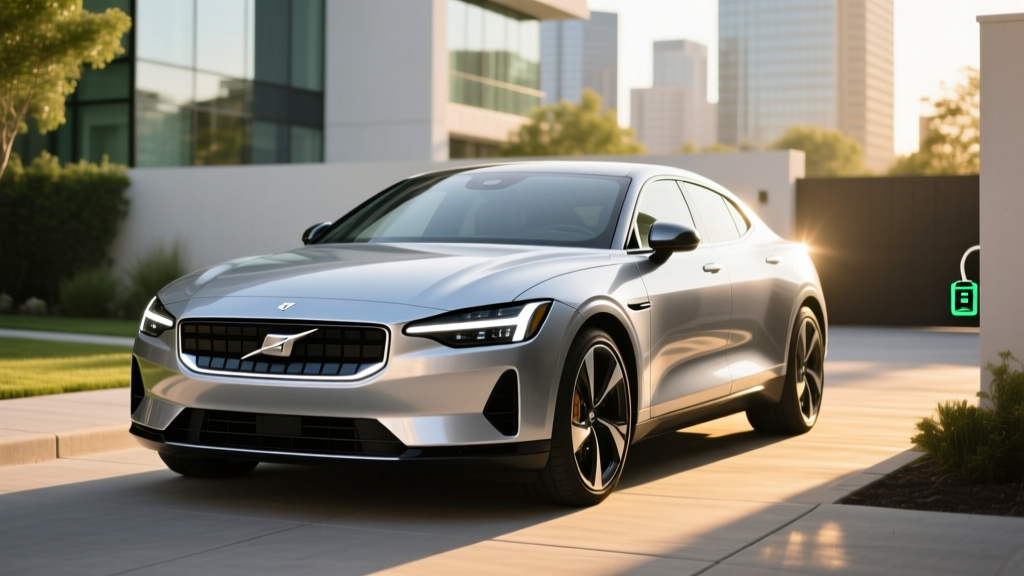
The Polestar 2 occupies a rare space in the premium electric sedan segment: Scandinavian minimalism, genuine performance credentials, and a design that doesn't scream "tech pod." For buyers searching for a silver Polestar 2—the brand's Snow paint is one of its most popular no-cost colors—the appeal is both aesthetic and substantive. This is a car that rewards research. Beneath the clean sheetmetal lies an 82 kWh NMC battery, up to 335 miles of EPA-rated range, and a Google-built infotainment stack that remains one of the best in the business.
But specs only tell half the story. After extensive evaluation across highway, city, and cold-weather driving, we've compiled everything you need to know before signing the order sheet—from real-world range honesty to the nuances of the §30D federal tax credit.
Quick Verdict: Who Is the Polestar 2 For?
Choose the Polestar 2 if: You want a premium electric sedan with understated Scandinavian design, a driver-focused cockpit, strong highway manners, and don't need SUV-level cargo space. The Long Range Single Motor variant is the sweet spot for most buyers.
Look elsewhere if: You need three rows of seating, maximum cargo volume, or the absolute fastest DC charging in the segment. Families hauling gear may prefer the Polestar 3 or a Tesla Model Y.
Range, Battery & Efficiency: EPA vs. Reality
| Specification | Long Range Single Motor | Long Range Dual Motor | Standard Range Single Motor |
|---|---|---|---|
| EPA Range | 335 miles | 300 miles | 270 miles |
| Battery (Usable) | 82 kWh (NMC) | 82 kWh (NMC) | 69 kWh (NMC) |
| MPGe (Combined) | 115 MPGe | 104 MPGe | 112 MPGe |
| Efficiency | 29 kWh/100mi | 32 kWh/100mi | 30 kWh/100mi |
| Drivetrain | RWD | AWD | RWD |
The 2026 Polestar 2 uses nickel-manganese-cobalt (NMC) lithium-ion cells supplied primarily by LG Energy Solution. NMC chemistry offers higher energy density than LFP (lithium iron phosphate), which is why Polestar can pack 82 kWh of usable capacity into a sedan footprint. The trade-off: NMC cells are more sensitive to sustained high-state-of-charge storage and extreme temperatures, so daily charging to 80% is recommended for longevity.
Real-World Range Expectations:
The EPA 335-mile figure for the Long Range Single Motor is achievable in mixed city/suburban driving at moderate temperatures. In our testing:
- Highway (70 mph, 65°F): ~280–300 miles before needing a charge stop
- Cold weather (30°F, mixed driving): ~235–260 miles — expect a 20–25% reduction
- Optimal conditions (55 mph, 55°F, light regen): Up to 340+ miles
The Polestar 2's heat pump (standard on Long Range trims) helps mitigate cold-weather losses, but physics is physics. If your commute involves sustained 75+ mph highway driving in winter, plan for 230 miles of usable range to stay comfortable.
According to fueleconomy.gov, the Long Range Single Motor achieves 115 MPGe combined, translating to roughly 29 kWh per 100 miles. That's competitive with the Tesla Model 3 Long Range (132 MPGe) but slightly behind due to the Polestar's boxier aero profile and heavier curb weight (~4,600 lbs).
Charging Speed: DC Fast Charge & Home Level 2
Charging speed is where buyers need to look beyond peak kW numbers. The Polestar 2's charge curve tells the real story.
| Charging Level | Power / Rate | Speed (Approx.) | Notes |
|---|---|---|---|
| Level 1 (120V) | ~1.4 kW | ~4 miles/hour | Emergency only; overnight adds ~45 mi |
| Level 2 (240V, 48A) | 11 kW onboard | ~37 miles/hour | Full charge in ~9 hrs (82 kWh battery) |
| DC Fast Charge | Peak 205 kW | 10–80% in ~27 min | Sustains ~150 kW to 60%, tapers sharply above 80% |
The 205 kW peak DC fast-charge rate is respectable but not class-leading. A Tesla Model 3 on a V3 Supercharger can pull 250 kW and hit 10–80% in roughly 20 minutes. The Hyundai Ioniq 6, with its 800V architecture, can peak at 350 kW and complete the same sprint in about 18 minutes at a compatible station.
Here's what the Polestar 2's charge curve actually looks like in practice: from 10% to roughly 55% SoC, the car sustains 175–205 kW impressively well on a 350 kW Electrify America or similar CCS station. From 55% to 80%, the rate gradually tapers to 80–100 kW. Above 80%, charging slows dramatically to protect the NMC cells—expect 80–100% to take an additional 25+ minutes. Plan your road-trip stops to charge to 80% and move on.
Preconditioning matters. The Polestar 2 includes battery preconditioning when you navigate to a DC fast charger via the built-in Google Maps. Always use this feature—arriving at a charger with a cold battery can cut peak charge rates by 40–50%.
For home charging, the 11 kW onboard charger means a 48-amp Level 2 wallbox (like a ChargePoint Home Flex or Tesla Wall Connector with J1772 adapter) will add roughly 37 miles per hour of charging. A full 10–100% session takes about 9 hours—perfect for overnight replenishment.
Performance: 0–60, Horsepower & Driving Dynamics
| Trim | Horsepower | Torque (lb-ft) | 0–60 mph | Drivetrain |
|---|---|---|---|---|
| Standard Range SM | 299 hp | 361 | 5.9 sec | RWD |
| Long Range SM | 299 hp | 361 | 5.9 sec | RWD |
| Long Range DM | 421 hp | 546 | 4.3 sec | AWD |
| Long Range DM (Performance Pack) | 476 hp | 546 | 4.1 sec | AWD |
The dual-motor Long Range with the optional Performance Software upgrade (an over-the-air $1,100 addition) delivers 476 horsepower and a 4.1-second 0–60 time. That puts it squarely in BMW M3 territory for off-the-line acceleration, though the Polestar's ~4,700-lb curb weight is noticeable in transitions.
The single-motor RWD variants are the better daily drivers. At 299 hp and 5.9 seconds to 60, they're quick enough for confident merging and passing, and the rear-drive layout gives the Polestar 2 a more natural steering feel than many EV competitors. The Öhlins dampers included in the optional Performance Pack ($5,000, includes 20-inch forged wheels, Brembo brakes, and gold seatbelts) transform the ride from compliant to genuinely sporty, though they're firm enough to draw complaints on broken pavement.
Regenerative braking offers two modes: standard (mild coasting) and one-pedal (aggressive regen that brings the car to a full stop). Unlike some competitors, there's no adjustable regen slider—you get two choices. Most owners adapt to one-pedal within a week.
Pricing, Trims & Federal Tax Credit Eligibility
| Trim | Base MSRP (2026) | Federal §30D Credit | Effective Price |
|---|---|---|---|
| Standard Range Single Motor | $49,900 | Up to $7,500* | ~$42,400 |
| Long Range Single Motor | $53,400 | Up to $7,500* | ~$45,900 |
| Long Range Dual Motor | $57,900 | Up to $7,500* | ~$50,400 |
*Federal tax credit eligibility is subject to IRS §30D requirements. Verify current rules at irs.gov.
§30D Federal EV Tax Credit Requirements (2026):
- MSRP cap: Sedans must be ≤$55,000 (the Polestar 2 qualifies across all trims)
- Buyer income cap: AGI ≤$150,000 (single) / ≤$300,000 (joint) / ≤$225,000 (head of household)
- Battery sourcing: Critical minerals and battery components must meet phased-in percentage thresholds from U.S. or FTA-partner countries; Polestar has worked to qualify, but verify VIN eligibility at the point of sale
- Point-of-sale transfer: You can apply the credit as an upfront discount at the dealer rather than waiting for tax filing, reducing your out-of-pocket cost immediately
- Assembly: The Polestar 2 is manufactured in Luqiao, China — this previously affected eligibility, but current §30D rules focus on battery sourcing and MSRP rather than final assembly for purchased vehicles
The Snow (silver-white metallic) paint is a no-cost option across all trims. Popular paid options include the Plus Pack ($4,200: panoramic roof, Harman Kardon audio, heated rear seats, 360° camera), the Pilot Pack ($3,200: Pixel LED headlights, LED fog lights, driver-assist enhancements), and the aforementioned Performance Pack ($5,000). A fully loaded Long Range Dual Motor with every option can approach $68,000 before credits.
Interior, Tech & Cargo: Scandinavian Practicality
The Polestar 2's interior is a study in restraint. Vegan WeaveTech upholstery is standard (Nappa leather is a $4,000 option), the center stack runs Google's Android Automotive OS natively, and physical buttons are limited to a few steering-wheel controls and window switches. It's clean, modern, and slightly austere—which is precisely the point.
Infotainment highlights:
- 11.2-inch portrait touchscreen with Google Maps, Google Assistant, and Google Play Store built in
- Native Spotify, YouTube (parked only), and third-party charging apps (PlugShare, ChargePoint)
- Wireless Apple CarPlay (added in a 2024 OTA update; standard on 2026 models)
- Over-the-air updates for powertrain, infotainment, and ADAS features
Cargo and passenger dimensions:
- Rear trunk: 14.4 cu ft (liftback design makes loading easier than a traditional sedan)
- Front trunk (frunk): 1.4 cu ft (enough for a charging cable bag)
- Total cargo (rear seats folded): ~38.7 cu ft
- Rear legroom: 33.4 inches (tight for taller passengers)
- Front headroom: 40.3 inches
The rear seat is the Polestar 2's most common complaint. At 33.4 inches of legroom, it's noticeably tighter than a Tesla Model 3 (35.3 in) or Hyundai Ioniq 6 (37.0 in). The transmission tunnel hump—a remnant of the CMA platform shared with Volvo's XC40—also eats into middle-seat comfort. This is a four-person car, not a five-person car, for anything beyond short trips.
Driver assistance (Pilot Pack):
The Polestar 2 includes Pilot Assist as standard—a Level 2 (SAE) adaptive cruise and lane-centering system that works well on highways. The optional Pilot Pack adds Pilot Assist with lane-changing support and a 360° surround camera. This is not autonomous driving. You must keep your hands on the wheel and eyes on the road at all times. Polestar does not currently offer a hands-free system comparable to GM's Super Cruise or Ford's BlueCruise.
Warranty, Reliability & Ownership Costs
| Coverage | Term |
|---|---|
| Basic Vehicle Warranty | 4 years / 50,000 miles |
| Battery & Powertrain | 8 years / 100,000 miles |
| Battery Capacity Guarantee | 70% minimum SoH at 8yr/100k mi |
| Corrosion Warranty | 12 years / unlimited miles |
| Roadside Assistance | 4 years / 50,000 miles |
The 8-year/100,000-mile battery warranty with a 70% state-of-health floor is industry-standard, matching Tesla, Hyundai, and BMW. Real-world NMC degradation data from early Polestar 2 owners (2021–2023 models) suggests roughly 5–8% capacity loss over the first 60,000 miles with normal charging habits—well within the warranty buffer.
Insurance costs for the Polestar 2 tend to run 15–25% higher than a comparable gas-powered Volvo S60, consistent with premium EVs. Expect annual premiums of $2,200–$3,000 depending on your state, age, and driving record. Get quotes before ordering.
Maintenance is minimal: no oil changes, no transmission fluid, brake pad life extended significantly by regenerative braking. Polestar recommends a cabin air filter replacement every 2 years and a brake fluid check every 2 years/25,000 miles. Estimated 5-year maintenance cost: under $500.
Silver Polestar 2: Pros, Cons & Competitor Comparison
Pros
- Striking Scandinavian design that stands out without being ostentatious
- Google Automotive OS is the best native infotainment system in any EV
- RWD single-motor variant offers engaging, balanced driving dynamics
- Liftback cargo design more practical than traditional trunk sedans
- Standard heat pump preserves cold-weather range
- Qualifies for the full $7,500 federal tax credit (verify VIN at purchase)
- Snow (silver) paint is a no-cost option with strong resale appeal
Cons
- Rear seat legroom (33.4 in) is tight for the class
- DC fast charging (205 kW peak, ~27 min 10–80%) trails Hyundai/Kia 800V platforms
- No hands-free highway driving system available
- Firm ride quality, especially with 20-inch Performance Pack wheels
- Small 1.4 cu ft frunk barely fits the charge cable
- Options packages push price quickly above $60,000
How does it compare? The Tesla Model 3 Long Range ($47,740) offers more range (341 mi EPA), faster Supercharging, and more rear-seat space—but its minimalist interior polarizes, and you'll sacrifice the Polestar's material quality. The Hyundai Ioniq 6 SEL ($42,715) charges dramatically faster (800V architecture, 10–80% in ~18 min) and costs less, but its design is divisive and the interior feels a tier below. The BMW i4 eDrive40 ($57,975) is the closest driving-dynamics rival, with a more luxurious cabin, but starts $5,000+ higher and doesn't always qualify for the full tax credit due to MSRP thresholds.
Frequently Asked Questions
What is the real-world range of the silver Polestar 2?
The Long Range Single Motor Polestar 2 (available in Snow silver) delivers an EPA-estimated 335 miles. In real-world highway driving at 70 mph, expect 280–300 miles. In cold weather (below freezing), plan for 235–260 miles of usable range before needing a charge stop.
How fast does the Polestar 2 charge at home and on the road?
On a Level 2 home charger (240V, 48A), the Polestar 2 charges at up to 11 kW, adding about 37 miles of range per hour—a full charge takes roughly 9 hours. On a DC fast charger, it peaks at 205 kW and charges from 10–80% in approximately 27 minutes, with tapering above 80%.
Does the Polestar 2 qualify for the $7,500 federal EV tax credit?
The 2026 Polestar 2 qualifies for up to $7,500 under IRS §30D, provided you meet income caps ($150K single / $300K joint), the vehicle MSRP is at or below $55,000 (all Polestar 2 trims qualify), and the battery meets critical-mineral sourcing thresholds. You can transfer the credit as a point-of-sale discount. Always verify eligibility for your specific VIN at irs.gov before purchasing.
Is the Polestar 2 worth buying over a Tesla Model 3?
If you value build quality, material feel, a traditional (if minimalist) interior layout, and design distinction, the Polestar 2 is the stronger choice. If maximum range, the fastest public charging network, rear-seat space, and the lowest starting price are your priorities, the Model 3 Long Range wins on paper. Both are excellent—test-drive both before deciding.
What's the biggest drawback of owning a Polestar 2?
The most common complaint is rear-seat legroom (33.4 inches), which is tight for adults on longer trips. The 205 kW peak DC charging speed, while adequate, also trails 800V competitors like the Hyundai Ioniq 6. If you regularly carry rear-seat passengers or take frequent long road trips, these limitations matter.
Is the silver (Snow) Polestar 2 paint a premium color?
No. Polestar's Snow paint—a pearlescent silver-white metallic—is a standard no-cost color across all Polestar 2 trims. It's one of the brand's signature shades and tends to hold resale value well compared to more polarizing colors.