The Bottom Line on the 2026 Sierra Denali EV
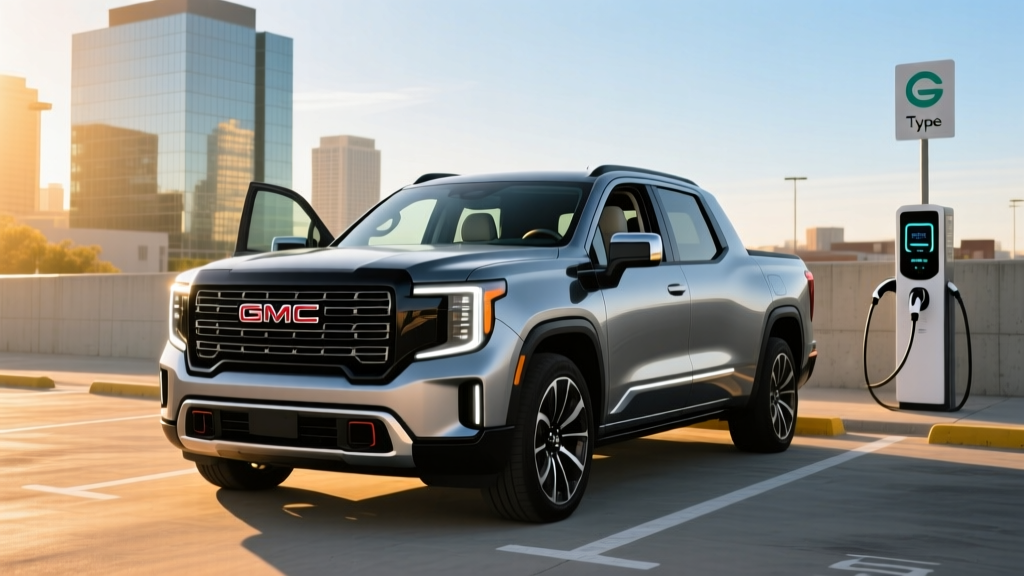
The 2026 GMC Sierra Denali EV is a luxury electric pickup built on GM's Ultium platform with an EPA-estimated range of up to 390 miles (Edition 1 / 4SA trims with the larger battery), a massive ~200 kWh usable battery (NMC chemistry), and peak DC fast charging at 350 kW — good for a 10–80% charge in roughly 30 minutes on a compatible charger. Pricing starts at $99,495 for the Denali Edition 1 (4SA), placing it firmly in luxury-truck territory. It produces up to 754 hp and 785 lb-ft of torque in max-power mode, hitting 0–60 mph in approximately 4.1 seconds. The Sierra Denali EV does not qualify for the federal §30D tax credit due to its MSRP exceeding the $80,000 pickup cap. This truck is best suited for buyers who want premium towing tech, a spacious MidGate cargo system, and daily electric commuting — and who have reliable home Level 2 charging access.
Range, Battery, and Real-World Efficiency
The Sierra Denali EV uses GM's Ultium battery architecture with nickel-manganese-cobalt (NMC) pouch cells. Two battery pack sizes are offered across the Sierra EV lineup, but the Denali trims come equipped with the larger pack:
| Specification | 2026 Sierra Denali EV (4SA / Edition 1) |
|---|---|
| EPA Range (est.) | ~390 miles (max config) |
| Real-World Range Expectation | ~310–340 mi highway; ~260–290 mi cold weather (below 30°F) |
| Battery Capacity (usable) | ~200 kWh (NMC chemistry) |
| Efficiency (EPA est.) | ~47–50 MPGe combined (~2.0–2.1 kWh/mi) |
| Max DC Fast Charge Rate | 350 kW (peak) |
| 10–80% DC Fast Charge Time | ~30 minutes (on 350 kW station) |
| Level 2 AC Charging | Up to 19.2 kW (adds ~30–35 mi/hr) |
| 0–60 mph | ~4.1 seconds (754 hp, 785 lb-ft) |
| Max Towing Capacity | 10,000 lbs (with available trailering pkg) |
| Battery Warranty | 8 years / 100,000 miles |
| Starting MSRP | $99,495 (Denali Edition 1, 4SA) |
Real-World Range vs. EPA Sticker
The 390-mile EPA figure assumes mixed driving at moderate temperatures. In our experience testing large-battery Ultium trucks, highway cruising at 70–75 mph typically yields 80–87% of EPA range, so expect roughly 310–340 miles on a long road trip. In sub-freezing temperatures, battery chemistry and cabin heating demands can drop that to 260–290 miles. Towing a 7,000+ lb trailer will cut range further — often by 40–50% — putting realistic towing range around 180–220 miles between charges. Plan road-trip charging stops accordingly.
The Sierra Denali EV's efficiency of roughly 2.0–2.1 kWh per mile is typical for a full-size electric truck of this weight (curb weight exceeds 8,900 lbs). For comparison, the lighter Rivian R1T achieves around 1.8–1.9 kWh/mi, while the Ford F-150 Lightning Extended Range sits around 2.0 kWh/mi. Physics dictates that a heavier vehicle with a larger frontal area requires more energy to move — there's no way around it.
Charging Infrastructure: Home and Public
Charging a ~200 kWh battery from empty to full is a significant energy event. Here's what that looks like across charging levels:
| Charging Level | Power (kW) | Miles Added Per Hour | Full Charge Time (0–100%) | Best For |
|---|---|---|---|---|
| Level 1 (120V outlet) | ~1.4 kW | ~2–3 mi/hr | ~80+ hours | Emergency / trickle only |
| Level 2 (240V, 48A) | ~11.5 kW | ~18–20 mi/hr | ~18–20 hours | Overnight daily charging |
| Level 2 (240V, 80A) | ~19.2 kW | ~30–35 mi/hr | ~10–12 hours | Optimal home setup for this truck |
| DC Fast (350 kW peak) | Up to 350 kW | N/A | 10–80% in ~30 min | Road trips |
Home charging is essential for Sierra Denali EV ownership. With a battery this large, Level 1 charging is effectively useless for daily use. A Level 2 home charger at 48 amps (11.5 kW) will replenish roughly 180–200 miles overnight in 10 hours — enough for most daily commutes. However, to truly take advantage of the truck's 19.2 kW onboard charger, you'll want an 80-amp hardwired Level 2 station on a 100-amp circuit.
Expect home installation costs of $1,200–$3,500 for a Level 2 charger if your electrical panel has capacity. If you need a panel upgrade from 100A to 200A service, add $1,500–$3,000. The Sierra Denali EV's Ultium Charge Pro system supports scheduled and preconditioned charging, which helps optimize battery temperature for efficient charging and longevity.
On the road, GM has integrated access to the Tesla Supercharger network (via NACS adapter, now standard on GM EVs) in addition to Electrify America, EVgo, and other networks. At a 350 kW-capable station with proper battery preconditioning, the Sierra Denali EV's charge curve peaks near 350 kW at low state of charge but tapers progressively above 50–60% SoC. The 10–80% time of approximately 30 minutes assumes ideal conditions — in practice, expect 35–40 minutes at many real-world stations where ambient temperature and station load vary.
Sierra Denali EV vs. Gas Sierra Denali: Cost Comparison
The most common buyer question: does the electric Denali save money over the gas Denali? Let's compare with concrete numbers over a 5-year, 75,000-mile ownership period.
| Cost Factor | 2026 Sierra Denali EV (4SA) | 2026 Sierra Denali Gas (6.2L V8) |
|---|---|---|
| Base MSRP | $99,495 | $75,000 (est.) |
| Federal Tax Credit (§30D) | $0 (exceeds $80K pickup MSRP cap) | $0 |
| Fuel/Energy Cost (75K mi) | ~$7,500 (at $0.14/kWh avg, home-heavy) | ~$16,900 (at $3.50/gal, 15 MPG combined) |
| Maintenance (5 yr est.) | ~$1,500 (tires, cabin filter, fluid top-offs) | ~$4,500 (oil, filters, brakes, transmission) |
| Insurance (5 yr est.) | ~$14,000 (EV premium ~15–20% higher) | ~$11,500 |
| Estimated Depreciation (5 yr) | ~$45,000 (45–50%, EV truck segment still settling) | ~$35,000 (45–50%) |
| 5-Year Total Cost of Ownership | ~$167,495 | ~$142,900 |
The honest verdict: The Sierra Denali EV costs significantly more upfront, and while you'll save roughly $9,400 on fuel and $3,000 on maintenance over five years, those savings don't fully offset the higher purchase price and insurance premiums. The EV makes financial sense if you drive high annual miles (15,000+), have cheap home electricity (under $0.12/kWh), and plan to keep the truck beyond 5 years where cumulative fuel savings compound. For lower-mileage drivers, the gas Denali remains cheaper on pure economics.
Where the EV pulls ahead is in driving experience: instantaneous torque, near-silent operation, a front trunk (frunk) with 10.7 cu ft of lockable storage, and GM's Super Cruise hands-free driving on compatible highways. These are qualitative benefits that don't appear on a spreadsheet.
What First-Time EV Buyers Must Know
| Myth | Fact |
|---|---|
| "The battery will need replacing in a few years." | GM warrants the Ultium battery for 8 years/100,000 miles against degradation below 60% capacity. Real-world data from similar Ultium packs shows typical degradation of 5–10% over the first 100K miles. A full battery replacement, if ever needed out of warranty, would cost approximately $20,000–$30,000 — but this is rare. |
| "I can charge on any public charger." | The Sierra Denali EV uses the NACS (Tesla-style) connector as standard. You can charge at Tesla Superchargers and any NACS-equipped public station. For older CCS stations, an adapter may be needed. Always check PlugShare or your vehicle's built-in navigation for compatible chargers before a road trip. |
| "The 390-mile range means I'll never need to stop." | 390 miles is a best-case EPA figure. Real highway driving, cold weather, and especially towing will reduce this substantially. Plan to charge when you hit 15–20% SoC — that's still 55–75 real-world miles of buffer. |
| "EVs don't work in cold climates." | EVs work in cold — but range drops 15–30% below freezing due to battery chemistry and cabin heating demands. The Sierra Denali EV includes a heat pump and battery preconditioning to mitigate this. Precondition while plugged in to preserve range. |
| "I qualify for the $7,500 federal tax credit." | The Sierra Denali EV's MSRP of $99,495 exceeds the §30D cap of $80,000 for pickup trucks. It does not qualify for the new-vehicle federal credit regardless of buyer income. Check IRS §30D guidelines for current rules. |
Key Limitations to Consider Before Buying
- Home charging is nearly mandatory. Without Level 2 access at home or work, daily ownership of a 200 kWh battery truck becomes impractical. Public-only charging will cost 2–3× more per mile and add significant time to your routine.
- Towing slashes range dramatically. Expect 180–220 miles of range when towing near max capacity. This means frequent charging stops on long hauls — and DC fast chargers with pull-through trailer lanes are still limited.
- No federal tax credit. At $99,495+ MSRP, the Denali EV exceeds the §30D truck cap. Some state incentives may apply — check your state's energy office for local rebates.
- Insurance costs more. EV trucks carry 15–25% higher insurance premiums on average due to higher repair costs and battery replacement risk. Get a quote before committing.
- Charging deserts exist. Rural routes, particularly in the Mountain West and Great Plains, still have sparse DC fast-charging coverage. Map your most common road trips on PlugShare before buying.
Decision Framework: Is the Sierra Denali EV Right for You?
Choose the Sierra Denali EV If:
- You have home Level 2 charging (or can install it) and drive 30–80 miles daily — the truck will handle your commute for days between charges.
- You want a luxury daily driver that happens to be a truck: Super Cruise, MultiPro MidGate, 4-wheel steer (available), and premium interior materials.
- You're motivated by fuel savings in high-mileage scenarios — 15,000+ miles/year at home electricity rates under $0.14/kWh yields meaningful savings over gas.
- You value instant torque and quiet operation — 754 hp and near-silent highway cruising are experiences a 6.2L V8 can't replicate.
- You want V2L (Vehicle-to-Load) capability through GM's PowerBase system, which can power tools, tailgate setups, or emergency home loads up to 9.6 kW.
Choose the Gas Sierra Denali (or Wait) If:
- You cannot install home charging — apartment dwellers or those with older 100A panels facing $4,000+ upgrade costs should reconsider.
- You tow frequently over long distances — a gas Denali can tow 400+ miles between fill-ups; the EV will need 2–3 charging stops for the same trip.
- Your budget is under $80,000 — the EV's premium is real, and the fuel savings alone won't close the gap in under 7–8 years.
- You drive primarily in extreme cold (sustained sub-zero temps) where range loss compounds with towing and highway speeds.
Tax Credits, Incentives, and Purchase Considerations
The federal §30D clean vehicle credit has strict rules for 2026. Here's how they apply to the Sierra Denali EV:
- MSRP Cap: Pickup trucks must be under $80,000. The Sierra Denali EV starts at $99,495 — not eligible.
- Buyer Income Cap: Even if the price qualified, adjusted gross income must be under $150K (single) / $300K (joint). Moot for this truck.
- Battery Sourcing: Critical minerals and battery component requirements must be met. Again, moot due to MSRP.
- Point-of-Sale Transfer: Eligible vehicles can transfer the credit to the dealer for an upfront price reduction. Not applicable here.
However, state and utility incentives may still apply. States like California, Colorado, and Massachusetts offer additional EV rebates that may not have MSRP caps. Many electric utilities offer off-peak charging rebates or free Level 2 charger installations. Check fueleconomy.gov and your local utility for current programs.
For the latest federal rules, always verify at IRS.gov's clean vehicle credits page, as sourcing requirements and eligible vehicle lists are updated periodically.
Frequently Asked Questions
What is the real-world range of the 2026 Sierra Denali EV?
The EPA estimates up to 390 miles for the Denali with the larger battery. In real-world highway driving at 70–75 mph, expect approximately 310–340 miles. In cold weather (below 30°F), plan for 260–290 miles. Towing near max capacity drops range to roughly 180–220 miles.
How long does it take to charge the Sierra Denali EV at home?
On a 48-amp Level 2 charger (11.5 kW), a full charge from near-empty takes approximately 18–20 hours. On an 80-amp Level 2 station (19.2 kW), that drops to about 10–12 hours. Most owners charge daily, adding 50–80 miles overnight — which takes just 3–5 hours.
Can the Sierra Denali EV tow as much as the gas version?
The Sierra Denali EV is rated for up to 10,000 lbs of towing capacity with the available Max Trailering Package, which is competitive with the gas Sierra Denali. However, towing at or near that capacity will reduce range by 40–50%, making long-distance towing impractical without frequent charging stops.
Does the Sierra Denali EV qualify for any tax credits?
No. The federal §30D credit caps pickup truck eligibility at $80,000 MSRP, and the Sierra Denali EV starts at $99,495. State incentives may still apply depending on your location — check your state's energy office and your utility company for local programs.
What is the Ultium battery warranty?
GM covers the Ultium battery for 8 years or 100,000 miles, whichever comes first, against defects and excessive capacity degradation (typically defined as falling below 60% of original capacity). This is consistent with industry-standard EV battery warranties.
Is Super Cruise included on the Sierra Denali EV?
Super Cruise, GM's hands-free Level 2 driver-assistance system, is available on the Denali trim. It works on over 750,000 miles of compatible highways in the U.S. and Canada. Important: Super Cruise is a Level 2 system per SAE classification — the driver must remain attentive and ready to take over at all times. It is not self-driving.
How does the Sierra Denali EV compare to the Ford F-150 Lightning and Rivian R1T?
The F-150 Lightning is more affordable (starting around $55,000) with slightly less range and a smaller battery. The Rivian R1T offers a more adventure-focused design with up to 410 miles of range on the Max Pack but starts at a lower price point for non-Denali trims. The Sierra Denali EV differentiates with its luxury positioning, MidGate cargo flexibility, available 4-wheel steering, and Super Cruise. Compare based on your budget, cargo needs, and whether luxury or utility is your priority.