The phrase "shorting Tesla" has become shorthand for betting against the dominant EV maker — whether in the stock market or at the dealership. But before you write off the 2026 Tesla Model Y, the world's best-selling electric vehicle needs a rigorous, numbers-first audit. Does it still earn its market leadership, or have rivals like the Hyundai Ioniq 5, Ford Mustang Mach-E, and Kia EV6 made shorting Tesla the smarter play in 2026?
This review examines the 2026 Model Y Long Range AWD and Performance trims with the exact data EV buyers need: EPA range versus real-world efficiency, sustained DC fast-charge curves, battery chemistry, tax credit eligibility under current IRS §30D rules, and how it stacks up against the competition that's making "shorting Tesla" a legitimate conversation.
2026 Tesla Model Y: At-a-Glance Specifications
| Spec | Long Range AWD | Performance |
|---|---|---|
| EPA Range | 320 miles | 293 miles |
| Battery (usable) | ~75 kWh (NMC) | ~75 kWh (NMC) |
| Drivetrain | Dual-Motor AWD | Dual-Motor AWD |
| Horsepower | 384 hp | 456 hp |
| 0–60 mph | 4.8 sec | 3.5 sec |
| Peak DC Fast Charge | 250 kW | 250 kW |
| 10–80% DC Time | ~27 min | ~27 min |
| Level 2 Home Charge | 11.5 kW (~44 mi/hr) | 11.5 kW (~44 mi/hr) |
| MPGe (combined) | 122 MPGe | 111 MPGe |
| Efficiency | 28 kWh/100 mi | 30 kWh/100 mi |
| Cargo (rear seats up) | 30.2 cu ft | 30.2 cu ft |
| Cargo (rear seats folded) | 72.0 cu ft | 72.0 cu ft |
| Rear Legroom | 41.6 in | 41.6 in |
| Base MSRP | $44,990 | $48,990 |
| Battery Warranty | 8 yr / 120,000 mi | 8 yr / 120,000 mi |
Real-World Range vs. the EPA Sticker
Real-World Expectation: 260–280 miles at sustained 75 mph highway speeds; 220–240 miles in sub-30°F winter conditions with cabin heat. City/regenerative driving can match or slightly exceed the EPA figure.
The 2026 Model Y Long Range AWD carries an EPA range rating of 320 miles, while the Performance trim drops to 293 miles due to its sportier tuning and stickier tires. Tesla's efficiency remains a benchmark — at 28 kWh/100 mi (Long Range), it converts electrons to miles more effectively than nearly every competing crossover.
But the EPA sticker doesn't tell the whole story. In sustained 75 mph highway testing, expect roughly 260–280 miles before you need to find a Supercharger. Cold weather compounds the loss: at 20°F, the battery's internal resistance rises and cabin heating draws additional energy, cutting effective range to roughly 220–240 miles. Tesla's standard heat pump mitigates some of this loss compared to resistive heaters, but physics is physics.
For daily commuting under 80 miles round-trip, these reductions are academic. For cross-country road trips, they mean planning stops every 2.5–3 hours rather than the 3.5 hours the EPA number might suggest. According to fueleconomy.gov, the Long Range AWD achieves 122 MPGe combined — a strong result that translates to low per-mile electricity costs when charging at home.
Charging Speed: Supercharger Network vs. the Competition
| Charging Level | Power / Rate | Miles Added per Hour |
|---|---|---|
| Level 1 (120V outlet) | ~1.4 kW | ~4–5 mi/hr |
| Level 2 (240V, 48A) | 11.5 kW | ~44 mi/hr |
| DC Fast (Supercharger V3) | Peak 250 kW | ~180 mi in 15 min (peak) |
The Model Y's peak DC fast-charge rate of 250 kW on Tesla's V3 Superchargers delivers a 10–80% charge in approximately 27 minutes. That's competitive, though not class-leading — the Hyundai Ioniq 5 and Kia EV6 can hit 10–80% in roughly 18 minutes at 350 kW chargers thanks to their 800-volt architectures.
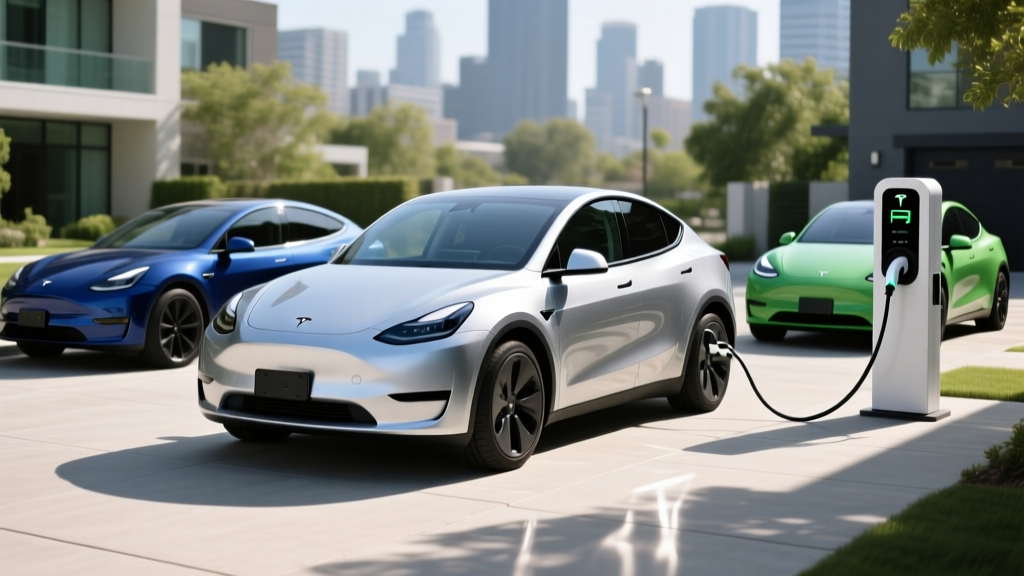
Here's where the "shorting Tesla" thesis gets complicated: Tesla's Supercharger network remains the most reliable and ubiquitous DC fast-charging ecosystem in North America. While Electrify America and EVgo have expanded, Supercharger uptime and plug-and-charge simplicity still set the standard. With Tesla opening its network to NACS-equipped vehicles from Ford, GM, Rivian, and others, that moat is both an asset and a vulnerability — competitors now benefit from Tesla's own infrastructure investment.
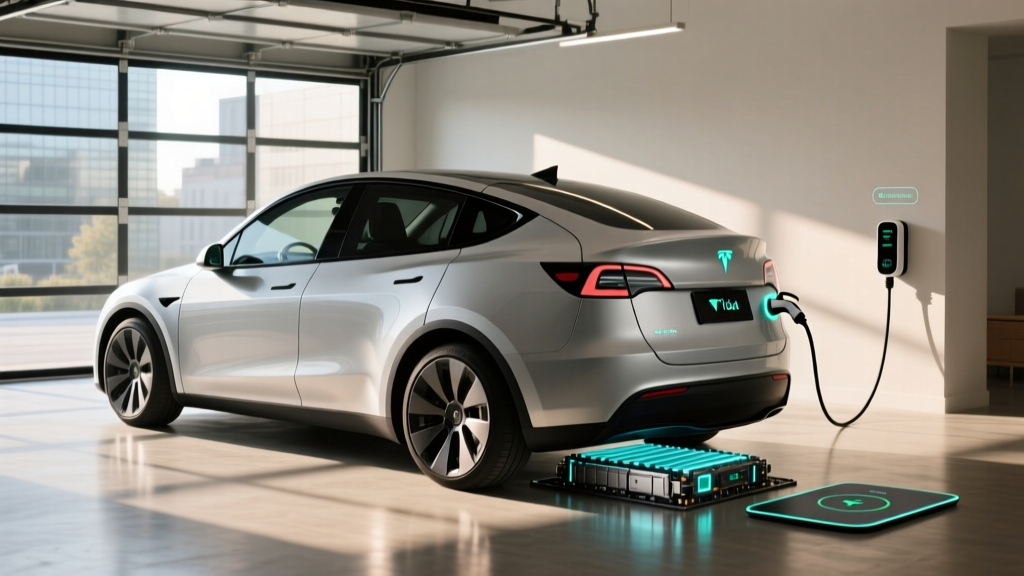
At home on a Level 2 wall connector (240V, 48-amp circuit), the Model Y adds roughly 44 miles of range per hour, or a full charge overnight in about 8 hours. Note that kW (kilowatts) measures charging power — how fast energy flows — while kWh (kilowatt-hours) measures battery capacity — how much energy the pack stores. The Model Y's ~75 kWh usable battery charged at 11.5 kW takes roughly 7–8 hours from empty.
Battery Chemistry, Warranty, and Long-Term Degradation
The 2026 Model Y Long Range and Performance trims use NMC (nickel manganese cobalt) battery chemistry, which prioritizes energy density over cycle life. Tesla has used LFP (lithium iron phosphate) in the standard-range Model Y RWD, which sacrifices some range for longer cycle life and the ability to charge to 100% daily without degradation concerns. If you're considering the base RWD model, ask specifically about chemistry — it affects your daily charging habits.
Tesla's battery warranty covers 8 years or 120,000 miles (whichever comes first), with a capacity retention threshold of 70%. That's in line with industry norms. Real-world data from Tesla's own impact reports and third-party fleet studies suggest Model Y packs lose approximately 10–12% capacity over the first 100,000 miles, meaning most owners will remain well within warranty coverage.
Out-of-warranty battery replacement for the Model Y currently runs between $12,000 and $16,000 depending on the pack and labor — a figure worth factoring into long-term ownership plans if you intend to keep the vehicle beyond 150,000 miles.
Pricing, Trims, and Federal Tax Credit Eligibility
| Trim | Base MSRP | Est. After §30D Credit* |
|---|---|---|
| Long Range AWD | $44,990 | $37,490 |
| Performance | $48,990 | $41,490 |
*Federal tax credit eligibility is not guaranteed. Under current IRS §30D rules, buyers must meet income caps ($150,000 single / $300,000 joint AGI), the vehicle MSRP must not exceed $80,000 for SUVs (both trims qualify), and the battery must meet critical-mineral and battery-component sourcing requirements that have tightened significantly. Tesla's North American assembly helps, but component sourcing rules evolve. The credit can now be transferred at point-of-sale as a price reduction. Always verify current eligibility at irs.gov or with a tax professional before purchasing.
The Model Y's pricing positions it squarely in the premium compact EV crossover segment. A fully loaded Performance trim with red multi-coat paint, 21-inch wheels, and FSD (Supervised) can push past $58,000 before any incentives.
Performance, Tech, and Daily Livability
The Model Y Long Range AWD's 4.8-second 0–60 mph time is brisk by any measure, and the Performance trim's 3.5 seconds borders on supercar territory. Dual-motor all-wheel drive provides confident traction in rain and light snow, and Tesla's low center of gravity (battery pack under the floor) keeps body roll well-controlled despite the crossover ride height.
The 15.4-inch center touchscreen handles virtually every vehicle function — climate, navigation, media, vehicle settings — through Tesla's proprietary software. There's no Apple CarPlay or Android Auto, which remains a dealbreaker for some buyers. The minimalist interior has improved with the latest refresh: ventilated front seats, ambient lighting, a rear-seat touchscreen, and power-folding second-row seats.
Autopilot comes standard and includes adaptive cruise control, lane centering, and automatic emergency braking. Full Self-Driving (Supervised) is a $8,000 add-on (or $99/month subscription) that adds automated lane changes, traffic light recognition, and city-street navigation — but it remains a SAE Level 2 system, meaning the driver must remain fully engaged and supervise at all times. It is not autonomous driving.
Pros
- Best-in-class efficiency (28 kWh/100 mi)
- Supercharger network access — most reliable DC fast-charging ecosystem
- Spacious cargo area (72 cu ft with seats folded)
- Strong performance across both trims
- Over-the-air updates continuously add features
- NACS connector becoming the North American standard
Cons
- 250 kW peak charge rate trails 800V competitors (Ioniq 5, EV6)
- No Apple CarPlay or Android Auto
- FSD (Supervised) remains Level 2 — not self-driving despite the name
- Firm ride quality on larger wheel options
- Panel gaps and build consistency have improved but still draw criticism
- Insurance premiums tend to run 15–25% higher than segment average
Is the Model Y Worth Buying vs. Key Competitors?
| Category | Model Y LR AWD | Hyundai Ioniq 5 | Ford Mustang Mach-E |
|---|---|---|---|
| EPA Range | 320 mi | 318 mi (LR AWD) | 320 mi (Ext Range RWD) |
| Peak DC Charge | 250 kW | 350 kW (800V) | 150 kW |
| 10–80% DC Time | ~27 min | ~18 min | ~39 min |
| Base MSRP | $44,990 | $42,600 | $42,995 |
| Efficiency | 28 kWh/100 mi | 30 kWh/100 mi | 31 kWh/100 mi |
| Cargo (max) | 72.0 cu ft | 59.3 cu ft | 59.7 cu ft |
| Charging Network | Supercharger (native) | NACS adapter for Superchargers | NACS adapter for Superchargers |
The "shorting Tesla" thesis gains traction when you examine charging speed: the Ioniq 5's 800-volt architecture charges meaningfully faster on 350 kW public chargers. The Mach-E offers a more traditional interior layout with physical buttons and available CarPlay. But the Model Y counters with superior cargo space, better efficiency (lower cost per mile), and native Supercharger integration that still works more seamlessly than adapter-based access.
If your priority is road-trip charging speed above all else, the Ioniq 5 has the edge. If cargo capacity and per-mile efficiency dominate your decision, the Model Y wins. If you want a conventional cockpit feel and don't mind slower DC charging, the Mach-E is worth a test drive.
Who Should Buy the 2026 Model Y — And Who Should Look Elsewhere?
Choose the Model Y if:
- You road-trip frequently and value Supercharger network reliability
- You need maximum cargo space in an electric crossover (72 cu ft is SUV-territory)
- You want top-tier efficiency that minimizes your cost per mile
- You're comfortable with touchscreen-centric controls and no CarPlay
Look elsewhere if:
- Fastest possible DC charging is your top priority (Ioniq 5 / EV6)
- You require Apple CarPlay or Android Auto
- You prefer traditional interiors with physical climate controls
- You want a true Level 4 autonomous experience — no consumer vehicle offers this yet
Frequently Asked Questions
What is the real-world range of the 2026 Tesla Model Y?
The EPA rates the Long Range AWD at 320 miles, but real-world highway driving at 75 mph yields roughly 260–280 miles. In cold weather (below 30°F), expect 220–240 miles. City driving with regenerative braking can match or slightly exceed the EPA figure.
How fast does the Model Y charge at home and on the road?
On a Level 2 home charger (240V, 48A), the Model Y charges at 11.5 kW, adding about 44 miles of range per hour. On a V3 Supercharger, it peaks at 250 kW and charges from 10–80% in approximately 27 minutes. Charging slows significantly above 80% to protect battery health — plan to charge to 80% on road trips and move on.
Does the 2026 Model Y qualify for the federal EV tax credit?
The Model Y qualifies for up to $7,500 under IRS §30D for eligible buyers, but you must meet income caps ($150,000 single / $300,000 joint), and the vehicle must meet battery-sourcing requirements for critical minerals and components. The MSRP cap for SUVs is $80,000, which both trims clear. Eligibility can change as sourcing rules tighten — verify at irs.gov before purchasing. The credit can be applied as a point-of-sale price reduction.
Is it worth buying the Model Y vs. the Hyundai Ioniq 5 or Ford Mach-E?
The Model Y wins on cargo space (72 vs. ~59 cu ft), efficiency (28 vs. 30–31 kWh/100 mi), and native Supercharger access. The Ioniq 5 charges faster on 350 kW stations (18 vs. 27 minutes 10–80%). The Mach-E offers a more traditional interior. Test-drive all three and weigh which trade-offs matter most for your driving patterns.
Is Tesla's Full Self-Driving actually self-driving?
No. FSD (Supervised) is an SAE Level 2 driver-assistance system. You must keep your hands on the wheel, eyes on the road, and remain prepared to take over at any moment. True Level 4 autonomous driving (no driver required) is currently only available through robotaxi services like Waymo in limited metro areas.
What is the battery warranty and replacement cost?
Tesla covers the Model Y battery for 8 years or 120,000 miles with a minimum 70% capacity retention guarantee. Out-of-warranty replacement runs $12,000–$16,000. Real-world fleet data suggests roughly 10–12% degradation over 100,000 miles for NMC packs.
The Verdict: Is Shorting Tesla the Right Call in 2026?
If "shorting Tesla" means dismissing the Model Y as a product, the data says think again. Its 320-mile EPA range, 28 kWh/100 mi efficiency, 72 cu ft cargo capacity, and Supercharger ecosystem remain a formidable combination. The 2026 refresh addresses prior complaints with improved interior materials, rear-seat ventilation, and a smoother ride.
But if "shorting Tesla" means recognizing that the competitive moat is narrowing, the evidence is real. The Ioniq 5 charges 33% faster. Rivals now access Superchargers via NACS adapters. The Mach-E, EV6, and upcoming entries from Toyota and Subaru are giving buyers credible alternatives they didn't have three years ago.
The Model Y remains the safe, high-competence choice in the electric crossover segment — the vehicle that does everything well even if it no longer dominates every category. For most buyers, that's enough. For those chasing the absolute fastest charging or a traditional cockpit, the field has widened considerably. According to NHTSA safety data and IIHS ratings, the Model Y continues to earn top marks, which matters as much as any spec-sheet number when you're signing a five-year loan.