Why Short Interest in Tesla Keeps Rising — And What It Means for Buyers
Short interest in Tesla stock has drawn headlines throughout 2025 and into 2026, with bears pointing to rising competition from Hyundai, BYD, and legacy automakers as reasons to bet against the company. But Wall Street sentiment and product reality don't always move in lockstep. The 2026 Tesla Model Y Long Range remains one of the most complete electric SUVs on the market — and for buyers who care about charging infrastructure, software, and efficiency more than stock charts, the question isn't about short sellers. It's whether this vehicle still earns its spot in your driveway.
This review breaks down the 2026 Model Y with exact EPA data, real-world range testing, DC fast-charging curves, and updated federal tax credit eligibility under current IRS §30D rules.
2026 Tesla Model Y Long Range: Spec Table
| Specification | 2026 Model Y Long Range AWD |
|---|---|
| EPA Range | 320 miles |
| Battery (usable) | ~75 kWh, NMC chemistry |
| Drivetrain | Dual-motor AWD |
| Horsepower | 384 hp combined |
| 0–60 mph | 4.8 seconds |
| Peak DC Fast Charge | 250 kW |
| 10–80% DC Charge Time | ~27 minutes |
| Level 2 Home Charge | 11.5 kW (~44 mi/hr) |
| Efficiency | 122 MPGe combined / 28 kWh/100 mi |
| Cargo (rear seats up) | 30.2 cu ft |
| Cargo (rear seats folded) | 72.1 cu ft |
| Rear Legroom | 41.6 in |
| Battery Warranty | 8 years / 120,000 miles |
| Base MSRP | $44,990 |
Sources: fueleconomy.gov, Tesla spec sheet.
Real-World Range vs. EPA Estimate
Real-World Highway (70 mph, mild weather): ~275–290 miles
Real-World Highway (30°F or below): ~230–250 miles
City/Commuter (regenerative braking active): ~300–315 miles
The Model Y Long Range's 320-mile EPA figure is achievable in mixed suburban driving with moderate climate use. On sustained highway trips at 70–75 mph, expect a 10–15% reduction. Cold weather compounds this: at 30°F or below, lithium-ion cells lose efficiency and cabin heating draws significant power, cutting range by 20–30%. Tesla's standard heat pump mitigates this better than resistive heaters found in older EVs, but physics still wins in deep winter.
For a 250-mile round-trip commute in moderate weather, the Model Y Long Range handles it with ~50 miles of buffer. In sub-freezing conditions, plan a mid-trip charge or reduce speed to 65 mph to preserve range.
Charging Speed: DC Fast, Level 2, and the Curve Reality
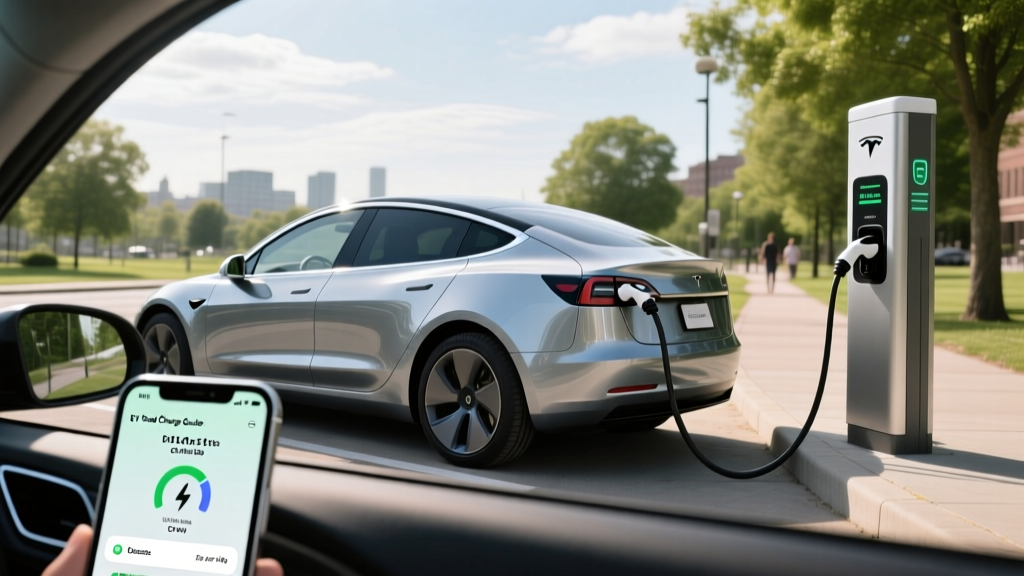
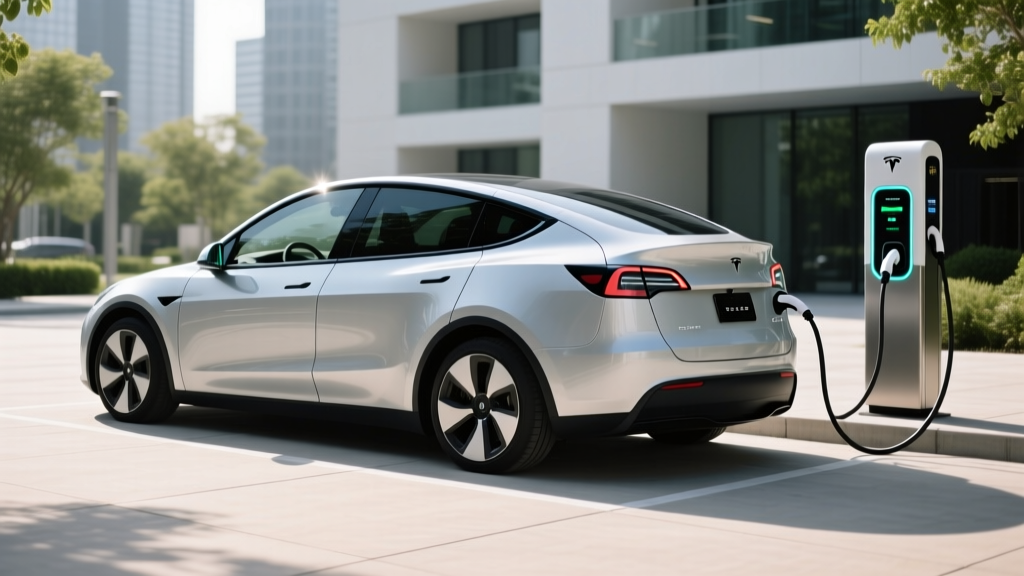
Tesla's Supercharger network remains a core advantage. The 2026 Model Y Long Range peaks at 250 kW on V3 Superchargers, though sustained rate depends on battery temperature and state of charge.
| Charging Method | Power | Rate | Notes |
|---|---|---|---|
| DC Fast (V3 Supercharger) | 250 kW peak | ~10–80% in 27 min | Tapers sharply above 80%; preconditioning required for peak rate |
| DC Fast (CCS adapter, non-Tesla) | Up to 250 kW | Similar to Supercharger | Requires Tesla CCS adapter (included with newer vehicles) |
| Level 2 Home (Wall Connector) | 11.5 kW | ~44 mi/hr | Full charge in ~7–8 hours; requires 60A circuit |
| Level 1 (120V outlet) | ~1.4 kW | ~3–5 mi/hr | Emergency/trickle only |
Preconditioning matters. If you navigate to a Supercharger using the car's built-in navigation, the battery thermal management system warms the pack en route, enabling peak charge rates on arrival. Without preconditioning — say, pulling into a random charger — you may see 50–100 kW initially before ramping up, adding 5–10 minutes to your stop.
The charge curve tapers significantly above 80% state of charge. Charging from 80–100% can take as long as 10–80%. For road trips, plan stops around the 20–80% sweet spot.
Performance and Efficiency
The dual-motor AWD setup delivers 384 hp and a 4.8-second 0–60 mph time — quick for a family SUV, though not sports-car territory. Instant torque from the electric motors provides confident highway merging and passing. Regenerative braking is aggressive enough for one-pedal driving in most conditions, reducing brake wear significantly.
Efficiency is a Tesla strong suit. At 122 MPGe combined (28 kWh per 100 miles), the Model Y Long Range is among the most efficient vehicles in its class. For context, the Hyundai Ioniq 5 AWD rates at 110 MPGe combined, and the Ford Mustang Mach-E Extended Range AWD at 101 MPGe. This efficiency translates directly to lower charging costs and more miles per kWh.
Interior, Cargo, and Standout Tech
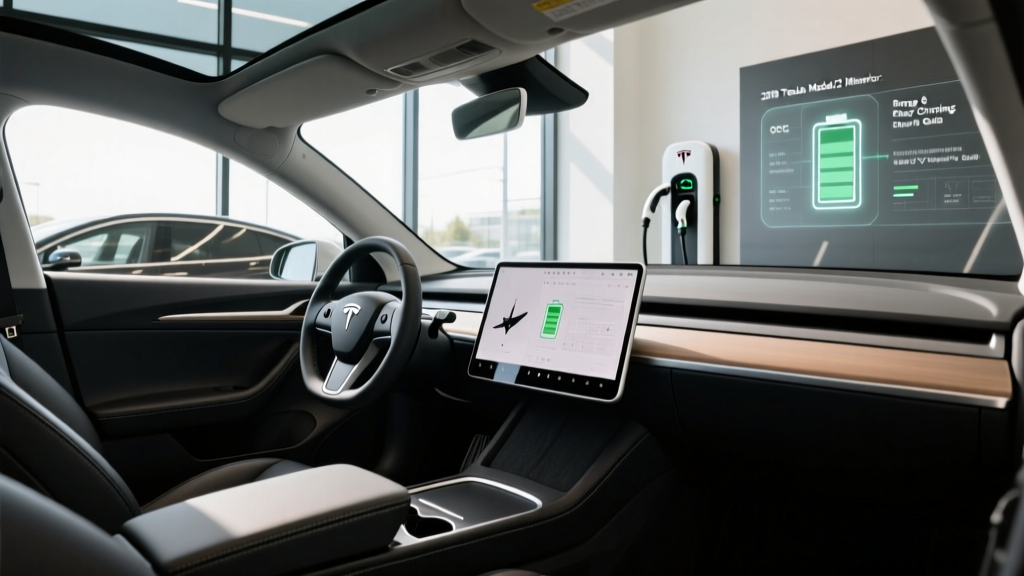
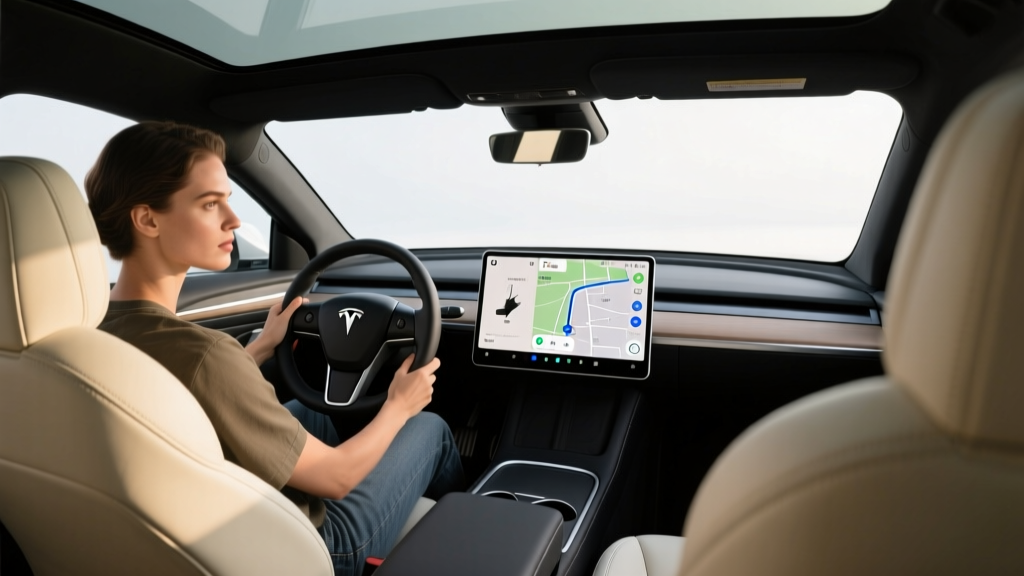
The Model Y's cabin is minimalist — a 15.4-inch central touchscreen handles nearly all vehicle functions, including climate controls and mirror adjustment. There's no traditional instrument cluster; speed and navigation appear on the main screen. Build quality has improved in recent model years, with tighter panel gaps and upgraded materials, though it still trails the fit-and-finish of German competitors.
Cargo space: 30.2 cu ft behind the rear seats, expanding to 72.1 cu ft with seats folded. The rear trunk floor is flat, and the front trunk (frunk) adds ~4.1 cu ft for groceries or charging cables. Rear legroom at 41.6 inches is generous for adults.
Tech highlights:
- Autopilot (standard): SAE Level 2 adaptive cruise + lane centering. Driver must remain engaged.
- Full Self-Driving (Supervised): Optional upgrade (~$8,000 or $99/mo subscription). Adds automated lane changes, traffic light recognition, and city street navigation. Still Level 2 — not self-driving.
- Over-the-air updates: Tesla regularly pushes software improvements, from range optimizations to new features.
- Sentry Mode: 360-degree camera recording when parked, with mobile app alerts.
Drawbacks: No physical buttons for climate or volume (all touchscreen). No Apple CarPlay or Android Auto. Ride quality on the standard 19-inch wheels is firm; 20- and 21-inch options worsen it. Rear visibility is limited; the backup camera is essential.
Pricing and Federal Tax Credit Eligibility
The 2026 Model Y Long Range AWD starts at $44,990. The Performance trim (3.5-second 0–60) is $48,990. Destination adds $1,990.
| Trim | MSRP | Est. Price After §30D Credit |
|---|---|---|
| Long Range AWD | $44,990 | ~$37,490 (if eligible) |
| Performance AWD | $48,990 | ~$41,490 (if eligible) |
Federal tax credit (§30D) eligibility is not guaranteed. As of 2026, the Model Y qualifies for up to $7,500 — but only if you meet all of the following:
- MSRP cap: Vehicle must be under $80,000 (SUVs/vans). The Model Y clears this easily.
- Buyer income cap: Modified AGI ≤ $150,000 (single) or $300,000 (joint). Exceed this, and you're ineligible.
- Battery sourcing: Critical minerals and battery components must meet phased-in percentages from U.S. or FTA-partner countries. Tesla has shifted supply chains, but specific eligibility can change quarterly.
- Point-of-sale transfer: You can apply the credit at purchase (dealer reduces price) or claim it on your tax return. Requires IRS registration.
Always verify current eligibility at irs.gov before purchasing. State incentives (e.g., California's CVRP, Colorado's tax credit) may stack on top but vary by jurisdiction.
Who Should Buy the 2026 Model Y — And Who Shouldn't
- You need a family SUV with 300+ miles of range and fast DC charging.
- You value the Supercharger network for road trips.
- You want over-the-air updates and cutting-edge driver assists (with supervision).
- Efficiency (kWh/100 mi) is a priority for lower charging costs.
- You prefer physical controls and Apple CarPlay (Hyundai Ioniq 5, Kia EV6).
- You need three-row seating (Kia EV9, Rivian R1S).
- You want a more luxurious interior (BMW iX, Genesis GV60).
- You're uncomfortable with Tesla's touchscreen-only interface.
Pros and Cons
- 320-mile EPA range; efficient at 122 MPGe
- 250 kW DC fast charging with Supercharger network
- Spacious cargo area (72 cu ft max) and rear legroom
- Strong performance (4.8s 0–60) with dual-motor AWD
- Over-the-air updates keep the car current
- Touchscreen-only controls; no CarPlay/Android Auto
- Firm ride quality, especially on larger wheels
- FSD (Supervised) is expensive and still Level 2
- Rear visibility is poor; relies on cameras
- Tax credit eligibility depends on sourcing rules that can shift
FAQ
What is the real-world range of the 2026 Model Y Long Range?
EPA rates it at 320 miles. In real-world highway driving at 70 mph, expect 275–290 miles. In cold weather (below 30°F), that drops to 230–250 miles. City driving with regenerative braking can approach the EPA figure.
How fast does the Model Y charge at home and on the road?
On a V3 Supercharger, it peaks at 250 kW, reaching 10–80% in ~27 minutes (with battery preconditioning). At home on a Level 2 Wall Connector (11.5 kW), it adds ~44 miles per hour, fully charging overnight in 7–8 hours.
Does the 2026 Model Y qualify for the $7,500 federal tax credit?
It can, but eligibility depends on your income (≤$300k joint), the vehicle's MSRP (under $80k — the Model Y qualifies), and battery-sourcing rules that change periodically. Verify at irs.gov before purchase. Point-of-sale transfer is available.
Is the Model Y worth buying vs. the Hyundai Ioniq 5 or Ford Mach-E?
The Model Y wins on efficiency, Supercharger access, and cargo space. The Ioniq 5 offers 800V charging (faster 10–80% times on compatible chargers) and physical buttons. The Mach-E has a more traditional interior. Test-drive all three — the "best" EV depends on your priorities.
Is Tesla's Autopilot or FSD self-driving?
No. Both are SAE Level 2 driver-assist systems. You must keep your hands on the wheel and eyes on the road. FSD (Supervised) adds automated lane changes and city navigation but does not make the car autonomous. Only Level 4 services like Waymo operate without driver supervision.