Quick Answer: Shell Electric for EV Owners
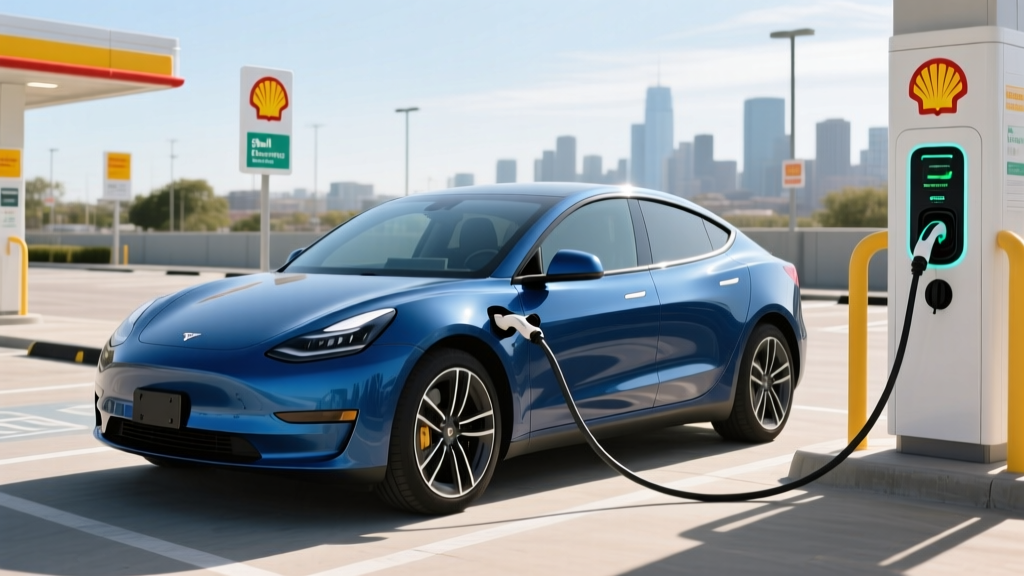
Shell operates EV charging through its Shell Recharge brand, offering a mix of Level 2 destination chargers and DC fast chargers across the U.S. and Europe. As of 2026, Shell Recharge has roughly 5,000 public charging points in North America, with DC fast chargers peaking at 150–180 kW. Pricing averages $0.39–$0.55/kWh depending on location and peak hours. Shell's network is smaller and less consistent than Electrify America or Tesla Superchargers, but it's expanding at former gas station sites and through its acquisition of Volta Charging (free, ad-supported Level 2 stations). For daily EV owners, Shell Recharge works as a supplemental network — not a primary one.
What Is Shell Recharge and How Does It Fit Into the EV Charging Landscape?
Shell, one of the world's largest oil and gas companies, has been building its electric vehicle charging arm under the Shell Recharge banner since the late 2010s. The strategy is twofold: install DC fast chargers at select Shell gas station locations and acquire existing charging companies. The biggest move came in 2023 when Shell acquired Volta Charging, a network known for free, advertising-supported Level 2 chargers placed at retail locations like grocery stores and shopping centers.
In practice, "Shell electric" charging means you'll encounter three types of infrastructure:
- Shell Recharge DC Fast Chargers: 50–180 kW units at Shell-branded fuel stations, primarily along highway corridors in the Northeast, California, and Texas.
- Volta stations (now Shell-owned): Free or low-cost Level 2 chargers (typically 7.2 kW, delivering ~25 miles of range per hour) at retail locations. These are popular for topping off while shopping.
- Shell Recharge at Home: Shell sells a Level 2 home charging unit (the Shell Recharge Home, a 48-amp, 11.5 kW Wi-Fi-connected charger) through retail partners. Pricing typically runs $500–$650 for the unit before installation.
Shell's approach is distinctly different from dedicated charging networks. Rather than building destination charging hubs, Shell is leveraging its existing real estate — gas stations — and converting portions of them to serve EVs. This means you'll often find Shell Recharge DC fast chargers alongside fuel pumps, with the same convenience store amenities but sometimes limited dedicated EV parking.
Shell Recharge Speeds, Pricing, and Real-World Charging Times
Charging speed is where the rubber meets the road for EV owners. Here's what Shell Recharge actually delivers in 2026:
| Charger Type | Max Power (kW) | Miles Added per Hour | Typical Cost | Best For |
|---|---|---|---|---|
| Volta Level 2 (Shell-owned) | 7.2 kW | ~25 mi/hr | Free (ad-supported) | Top-off while shopping |
| Shell Recharge Level 2 | 11.5 kW | ~37 mi/hr | $0.20–$0.35/kWh | Destination / workplace |
| Shell Recharge DC Fast (50 kW) | 50 kW | ~150 mi/hr | $0.39–$0.49/kWh | Older EVs, short stops |
| Shell Recharge DC Fast (150–180 kW) | 180 kW | ~500+ mi/hr (peak) | $0.45–$0.55/kWh | Road trip fast charging |
A note on kW vs. kWh: kW (kilowatts) measures the rate of charging — like the flow rate of a gas pump nozzle. kWh (kilowatt-hours) measures the energy that goes into your battery — like gallons pumped. A 150 kW charger doesn't deliver 150 kWh in an hour to your car; it delivers energy at a rate up to 150 kW, and your car's battery management system controls how much it can actually accept. Most EVs can only sustain peak charge rates up to about 50–60% state of charge (SoC), after which the charge curve tapers significantly.
For a real-world example: charging a 2026 Hyundai Ioniq 5 (84 kWh usable battery, NMC chemistry) from 10% to 80% on a Shell Recharge 180 kW DC fast charger takes approximately 22–26 minutes under ideal conditions. However, in cold weather (below 40°F) without battery preconditioning, expect that same session to stretch to 30–38 minutes. The Ioniq 5's peak charge rate is 240 kW, so Shell's 180 kW units won't unlock the car's full charging potential — you'd need a Tesla Supercharger V4 or Electrify America 350 kW station for that.
Charging Cost Showdown: Shell Recharge vs. Home vs. Gas
| Fueling Method | Cost per "Fill" | Cost per Mile | Time Required |
|---|---|---|---|
| Home Level 2 (national avg. $0.16/kWh) | $13.44 (84 kWh battery) | $0.04–$0.05 | 7–8 hours (overnight) |
| Shell Recharge DC Fast ($0.50/kWh avg.) | $29.40 (10–80% session, ~59 kWh) | $0.12–$0.15 | 22–26 minutes |
| Gas car (28 MPG combined, $3.40/gal) | $48.57 (14.3-gal tank) | $0.12 | 5 minutes |
Based on 2026 national averages. Electricity rates vary significantly by state — California averages $0.30/kWh residential, while Washington state averages $0.11/kWh. Source: U.S. EIA.
Shell Recharge vs. Electrify America, Tesla, and ChargePoint: Network Comparison
Shell Recharge doesn't exist in a vacuum. Here's how it stacks up against the major U.S. charging networks in 2026:
| Network | U.S. DC Fast Chargers (approx.) | Peak Speed | Avg. Pricing | Reliability Rating |
|---|---|---|---|---|
| Tesla Supercharger (now open to NACS-equipped non-Tesla EVs) | ~6,500 stalls | 250 kW (V3), 325+ kW (V4) | $0.25–$0.40/kWh | Highest (J.D. Power 2025) |
| Electrify America | ~4,500 chargers | 350 kW | $0.43–$0.56/kWh | Moderate (improving) |
| Shell Recharge | ~1,200 DC fast chargers | 180 kW | $0.39–$0.55/kWh | Moderate |
| ChargePoint (DC fast) | ~2,500 chargers | 400 kW (select sites) | $0.35–$0.52/kWh | Varies by site host |
| EVgo | ~3,200 chargers | 350 kW | $0.36–$0.50/kWh | Moderate-High |
Shell's DC fast charging footprint is noticeably smaller than Tesla or Electrify America. Where Shell gains ground is through its Volta acquisition — Volta's ~900 Level 2 locations offer free charging that no other network matches at scale. If your routine includes regular stops at retailers that host Volta stations, that's genuine value.
For road trips, though, Shell Recharge alone won't cut it. You'll want to rely on apps like PlugShare or the vehicle's built-in navigation to route through a mix of networks. Shell is a piece of the puzzle, not the whole picture.
Shell Recharge Home Charger: Is It Worth Installing?
Shell also competes in the home Level 2 charging market with the Shell Recharge Home charger. Here's what you need to know:
- Power output: 48 amps / 11.5 kW (requires a 60-amp dedicated circuit)
- Connector: J1772 (standard for all non-Tesla EVs; Tesla owners use an adapter or the Tesla Wall Connector)
- Wi-Fi connected: Yes, with app-based scheduling and energy tracking
- Unit cost: $500–$650
- Installation cost: $600–$2,000+ depending on your electrical panel's capacity and the distance from panel to garage
The Shell Recharge Home is a competent charger, but it competes in a crowded field. The ChargePoint Home Flex ($550, up to 50 amps), Emporia Level 2 ($400, 48 amps), and Tesla Wall Connector ($475, 48 amps) all offer similar or better features at comparable prices. Shell doesn't bring a compelling differentiator here unless you're bundling it with a Shell energy plan (available in select deregulated electricity markets in the Northeast and Texas).
Panel upgrade warning: If your home has a 100-amp electrical panel (common in homes built before 2000), adding a 60-amp circuit for a Level 2 charger may require a panel upgrade to 200 amps. This costs $1,500–$3,500 on top of the charger and basic installation. Always get an assessment from a licensed electrician before purchasing any Level 2 home charger.
Shell's Gas Station EV Charging: The Real-World Experience
Charging at a Shell station is a different experience from a purpose-built EV charging hub. Here's what to expect based on real-world use at Shell Recharge DC fast charger locations:
The good:
- Convenience store amenities (restrooms, food, coffee) are already in place — a genuine advantage over remote charging-only locations
- Shell stations are well-lit and typically staffed, which matters for evening charging sessions
- Familiar locations along major highways make them easy to spot
The limitations:
- Only 2–4 charging stalls per location on average — if they're occupied or out of service, you're out of luck with no backup at that site
- Chargers are sometimes placed in spots still marked for gas car parking, leading to ICE-ing (gas cars blocking EV spots)
- Cable management and stall maintenance varies significantly by location — some Shell Recharge sites are pristine, others show wear
- No dedicated EV canopies at most locations, meaning you're charging in the elements
Shell has acknowledged these issues and has been rolling out its "Shell Recharge Hub" concept — larger, dedicated EV charging areas with canopies, more stalls, and better signage — at select high-traffic locations. As of early 2026, these hubs remain limited to a few dozen sites.
Myths vs. Facts About Shell Electric Charging
| Myth | Fact |
|---|---|
| "Shell doesn't really support EVs — it's just greenwashing." | Shell has invested over $3 billion in EV charging infrastructure globally since 2019, acquired Volta and NewMotion, and operates thousands of chargers. The commitment is real, even if the network is smaller than dedicated players. |
| "You can charge any EV at Shell Recharge." | Most Shell DC fast chargers use CCS1 connectors. Tesla owners need a NACS-to-CCS adapter (or must use Tesla Superchargers). CHAdeMO-equipped EVs (like the older Nissan Leaf) may find limited compatibility at newer Shell sites. |
| "Shell's free Volta chargers are a scam." | Volta stations are genuinely free — the business model is advertising revenue from large screens on the charger. However, charge speed is limited to Level 2 (7.2 kW), so plan for 30–60 minutes to add meaningful range. |
| "Charging at Shell is cheaper than other networks." | Shell's DC fast charging pricing ($0.39–$0.55/kWh) is in the same range as Electrify America and EVgo. It's not a discount network. The value play is the free Volta Level 2 stations. |
| "Shell Recharge works with all EV apps." | Shell Recharge is accessible via the Shell Recharge app and is listed on PlugShare and the U.S. DOE Alternative Fuels Station Locator. However, plug-and-charge (automatic payment when you plug in) is only available on select vehicles and locations. |
Decision Framework: Should You Rely on Shell Recharge?
If-Then Guide for Shell Electric Charging
- If you have reliable home Level 2 charging and only need public chargers for road trips: Shell Recharge can be one of several networks in your rotation, but don't make it your only road-trip plan. Download PlugShare and use your vehicle's route planner as primary tools.
- If you live near Shell Recharge DC fast chargers and lack home charging: Shell's pricing ($0.39–$0.55/kWh) means you'll spend $1,400–$2,200/year on charging for 12,000 miles of driving — roughly comparable to gas. Explore whether your utility offers off-peak public charging discounts or workplace charging.
- If you regularly shop at retailers with Volta (Shell-owned) Level 2 stations: Take advantage of free charging while you run errands. Even 45 minutes on a 7.2 kW Volta charger adds ~20 miles — enough to offset daily commuting for many drivers.
- If you're planning a cross-country road trip: Rely on Tesla Superchargers (if your EV has NACS access) or Electrify America as your primary network, with Shell Recharge as a backup option. Shell's limited stall count per site makes it risky as a sole road-trip network.
- If you're considering the Shell Recharge Home charger for your garage: Compare it against the ChargePoint Home Flex, Emporia Level 2, and Tesla Wall Connector on price, amperage, and smart features. Shell's charger is solid but not class-leading.
Frequently Asked Questions
Does Shell Recharge support Tesla vehicles?
Most Shell Recharge DC fast chargers use CCS1 connectors. Tesla vehicles sold from 2025 onward come with the NACS port natively, so you'll need a NACS-to-CCS adapter to use Shell's chargers. Tesla owners will generally find better speed and reliability on the Tesla Supercharger network, which now exceeds 6,500 stalls in the U.S.
How does Shell Recharge pricing compare to charging at home?
Home charging at the national average residential rate of $0.16/kWh costs roughly $0.04–$0.05 per mile for an efficient EV. Shell Recharge DC fast charging at $0.50/kWh averages $0.12–$0.15 per mile — about 3x the cost of home charging. Per the IRS §30D guidelines, home charger installation may qualify for a federal tax credit of up to $1,000 (30% of equipment and installation costs), which helps offset the upfront investment.
Are Volta free chargers still operating after the Shell acquisition?
Yes. As of 2026, Volta stations continue to operate under Shell ownership with the same free, ad-supported model. Shell has not announced plans to convert Volta stations to paid charging. These remain some of the best-value public charging options available, though the Level 2 speed (7.2 kW) means they're best for topping off rather than full charges.
Is Shell Recharge reliable for daily EV charging needs?
For daily charging, home Level 2 is the gold standard — it's cheaper, faster overnight, and eliminates the need to detour to a public station. Shell Recharge works as a supplement for drivers without home charging access, but with only ~1,200 DC fast chargers nationwide, coverage is inconsistent. Check the DOE station locator to see what's available in your specific area before relying on any single network.
What should a first-time EV buyer know about public charging networks like Shell?
First, install home Level 2 charging if at all possible — it transforms the EV ownership experience and eliminates most public charging needs. Second, download PlugShare and your vehicle's native charging app before your first road trip to understand station locations, real-time availability, and connector types. Third, understand that no single network covers every route — plan to use 2–3 networks. Fourth, always check whether a station is operational before driving to it; out-of-service chargers remain an industry-wide issue that NHTSA and the DOE are actively monitoring through reliability reporting requirements for federally funded stations.