The Tesla Cybertruck has been the most polarizing electric vehicle on the road since deliveries began, and few celebrity owners have amplified the spotlight quite like Shaquille O'Neal. The former NBA center's Cybertruck appearances on social media and in drive-throughs have driven a persistent search trend around what fans call the shaq tesla truck. But beyond the viral moments, the Cybertruck is a serious full-size electric pickup competing against the Ford F-150 Lightning, Rivian R1T, and Chevrolet Silverado EV. This review strips away the hype and evaluates the Cybertruck on the metrics that matter to real buyers: EPA range, charging speed, towing capability, tax credit eligibility, and total ownership cost.
Quick Verdict: Is the Cybertruck More Than a Celebrity Flex?
The 2026 Tesla Cybertruck lineup offers three trims — AWD, Cyberbeast, and Rear-Wheel Drive — with EPA range spanning from roughly 250 to 340 miles depending on configuration. Its stainless-steel exoskeleton, 48-volt architecture, and steer-by-wire system make it genuinely unique in the truck segment. For buyers who need a daily-drivable electric pickup with strong Supercharger network access, the Cybertruck AWD is the sweet spot. For those who prioritize range above all else, the Long Range variant is compelling. For towing-heavy users or fleet buyers, competitors like the F-150 Lightning Extended Range still offer advantages in payload predictability and dealer service networks.
Range, Battery, and Real-World Efficiency
The Cybertruck's battery pack uses a structural 4680-cell NMC (nickel manganese cobalt) architecture integrated into the vehicle floor. Tesla has not published an official usable kWh figure, but independent teardowns and EPA filing data indicate a usable capacity of approximately 123 kWh for the AWD and Cyberbeast trims.
EPA Range vs. Real-World Expectations
| Trim | EPA Range | Real-World Highway (70 mph) | Cold Weather (20°F) |
|---|---|---|---|
| Rear-Wheel Drive | ~250 mi | ~210–225 mi | ~175–195 mi |
| AWD | ~340 mi | ~280–300 mi | ~230–255 mi |
| Cyberbeast | ~320 mi | ~265–285 mi | ~215–240 mi |
The Cybertruck's angular stainless-steel body creates more aerodynamic drag than curved-body competitors. Expect 15–20% range reduction at sustained highway speeds and 25–30% loss in freezing temperatures, consistent with NMC pack behavior. According to fueleconomy.gov, the AWD Cybertruck achieves approximately 67 MPGe combined (roughly 49 kWh/100 mi).
Charging Speed: DC Fast Charge and Home Level 2
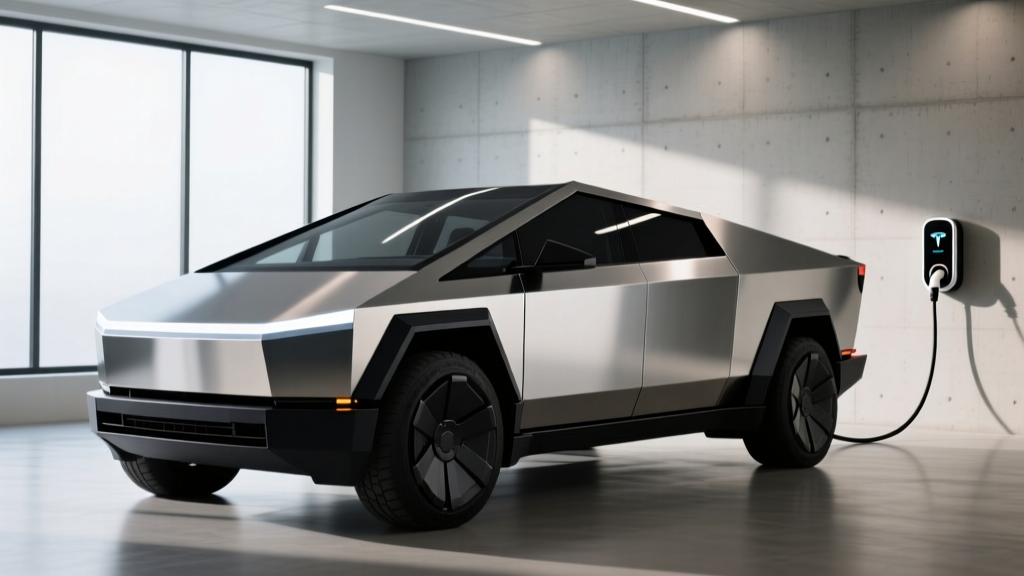
The Cybertruck supports NACS (North American Charging Standard) natively — no adapter needed for Tesla Superchargers. The 48-volt electrical architecture and 4680 cells allow strong charge acceptance at V4 Supercharger stations.
| Charging Level | Power / Rate | Time / Gain |
|---|---|---|
| DC Fast Charge (Peak) | ~350 kW (V4 Supercharger) | 10–80% in ~18 minutes |
| DC Fast Charge (Sustained) | ~120–150 kW avg (10–80%) | Charge curve tapers significantly above 80% |
| Level 2 Home (Tesla Wall Connector) | 11.5 kW / 48A | ~34–37 miles of range per hour |
| Level 1 (120V outlet) | ~1.4 kW | ~3–4 miles per hour |
Real-world DC charging at a 250 kW V3 Supercharger typically yields a 10–80% session in roughly 22–25 minutes. The charge curve peaks early and tapers hard past 60% SoC — a characteristic of the 4680 cell design optimized for thermal management. Always precondition the battery via the Tesla app or navigation before arriving at a charger to achieve peak kW rates.
Performance, Towing, and Drivetrain
| Spec | RWD | AWD | Cyberbeast |
|---|---|---|---|
| 0–60 mph | ~6.5 sec | ~4.1 sec | ~2.6 sec |
| Horsepower | ~315 hp | ~600 hp | ~845 hp |
| Drivetrain | Single motor RWD | Dual motor AWD | Tri-motor AWD |
| Max Towing | 7,500 lbs | 11,000 lbs | 11,000 lbs |
| Payload | ~2,500 lbs | ~2,500 lbs | ~2,500 lbs |
The Cyberbeast's 2.6-second 0–60 time makes it the quickest production pickup ever sold, though that performance comes at the cost of roughly 20 miles of EPA range versus the AWD. The steer-by-wire system and rear-wheel steering give the 6,800+ lb truck a surprisingly tight turning radius of approximately 40 feet. Towing at max capacity reduces range by 40–50%, which is typical for electric pickups but worth budgeting for on long hauls.
Pricing, Trims, and Federal Tax Credit Eligibility
| Trim | Base MSRP | Federal §30D Credit | Effective Price* |
|---|---|---|---|
| Rear-Wheel Drive | ~$60,990 | Up to $7,500 | ~$53,490 |
| AWD | ~$79,990 | Up to $7,500 | ~$72,490 |
| Cyberbeast | ~$99,990 | Up to $7,500 | ~$92,490 |
*Effective price assumes full §30D credit eligibility. Per IRS guidelines, eligibility depends on:
- MSRP Cap: Trucks/vans/SUVs must have an MSRP at or below $80,000 — the Cyberbeast exceeds this cap and is ineligible for the federal credit.
- Income Cap: Modified AGI must not exceed $150,000 (single), $225,000 (head of household), or $300,000 (joint filers).
- Battery Sourcing: Critical minerals and battery components must meet phased-in domestic-content and free-trade-agreement thresholds that tighten annually through 2029.
- Point-of-Sale Transfer: As of 2024+, buyers can transfer the credit to the dealer at purchase for an immediate price reduction rather than waiting to claim it on their tax return.
Because the Cyberbeast's MSRP exceeds $80,000, only the RWD and AWD trims are eligible for the full credit, and even then, battery-sourcing compliance may reduce the credit to $3,750 depending on the production quarter. Always verify current eligibility on fueleconomy.gov before purchasing.
Interior, Cargo Space, and Technology
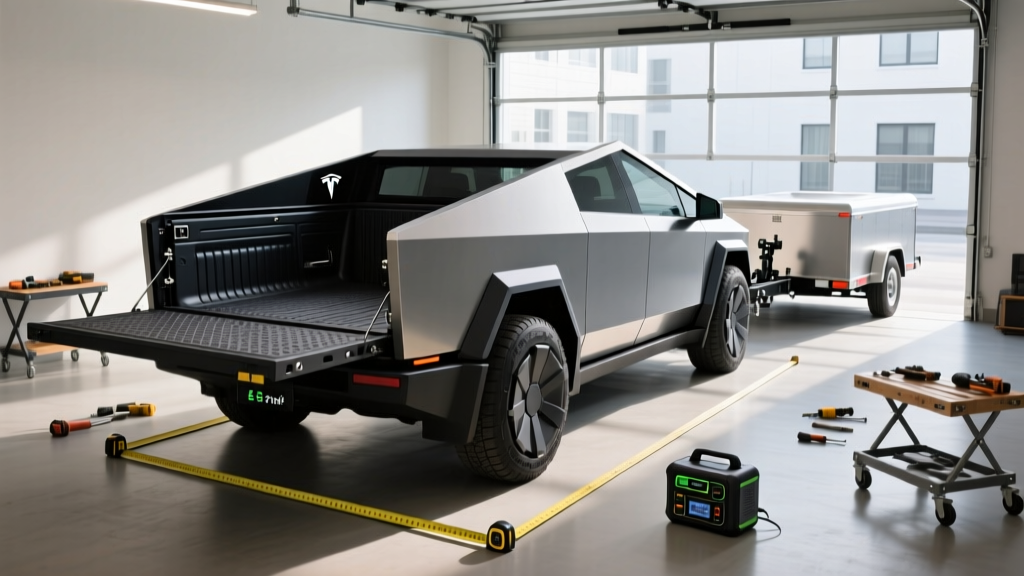
The Cybertruck seats five with a 6.5-foot bed and a front trunk (frunk) that adds meaningful enclosed storage. Key dimensions:
- Bed length: 72 inches (6 ft) with a powered tonneau cover
- Bed width: ~48 inches between wheel wells
- Frunk volume: ~7 cu ft
- Front legroom: ~41.5 inches
- Rear legroom: ~38.2 inches
- Towing: Integrated 240V outlet in the bed for job-site power (V2L capability)
The 18.5-inch front touchscreen runs Tesla's latest software with native navigation, streaming, and over-the-air updates. A rear 9.4-inch touchscreen handles climate and entertainment for back-seat passengers. Standard features include Tesla's Autopilot (SAE Level 2 driver assistance — not self-driving), while Full Self-Driving (Supervised) remains an optional add-on that still requires active driver attention at all times.
⚠️ Autopilot & FSD Are Not Self-Driving
Tesla Autopilot and FSD (Supervised) are SAE Level 2 systems. The driver must keep hands on the wheel and eyes on the road at all times. Tesla's steering-wheel torque monitoring and cabin camera enforce this. Only Level 4 systems like Waymo's robotaxi operate without a human driver.
Battery Warranty, Degradation, and Long-Term Ownership
Tesla covers the Cybertruck's battery and drive units with an 8-year / 120,000-mile warranty (whichever comes first), with a guaranteed minimum 70% capacity retention over that period. The 4680 NMC cells are expected to follow degradation patterns similar to other Tesla NMC packs: roughly 5–8% loss in the first year, then a slower linear decline of ~1–2% per year thereafter.
For owners who charge primarily at home on Level 2 and avoid frequent 100% charges, real-world data from Tesla's fleet suggests 85–90% State of Health at 100,000 miles is achievable. The structural battery pack design means replacement would be costly — estimated at $15,000–$20,000+ out of warranty — but the 8-year coverage window protects against premature degradation.
Pros and Cons
✅ Pros
- Best-in-class Supercharger network access (NACS native)
- Cyberbeast's 2.6-sec 0–60 is the fastest of any pickup
- Stainless-steel exoskeleton eliminates paint costs and resists dents
- Steer-by-wire + rear-wheel steering = tight turning radius
- 48V architecture reduces wiring harness weight
- Strong V2L / bed outlet for job-site and camping use
❌ Cons
- Highway range loss is significant due to poor aerodynamics
- Cyberbeast exceeds $80K MSRP cap — no federal tax credit
- Stainless steel panels show fingerprints and are difficult to repair
- Limited service center capacity; body repair requires specialized shops
- Bed is shorter than full-size truck competitors (72 in vs 78–96 in)
- Steer-by-wire learning curve for traditional truck buyers
Who Should Buy the Cybertruck?
- Choose the Cybertruck AWD if: You want 340 miles of EPA range, access to the Supercharger network, and daily-drivable performance without the Cyberbeast price tag.
- Choose the Cyberbeast if: Straight-line performance is a priority and you accept the $99K+ price without a federal credit.
- Choose the RWD if: You want the lowest entry price (~$53K after credit) and primarily drive in urban/suburban environments.
- Look at the Ford F-150 Lightning or Rivian R1T instead if: You need a longer bed, a traditional dealer service network, or more predictable towing range.
Frequently Asked Questions
Does Shaq actually own a Tesla Cybertruck?
Yes. Shaquille O'Neal has been photographed and filmed with a Tesla Cybertruck on multiple occasions, and his ownership has driven significant search interest. However, the "shaq tesla truck" is not a special edition — it's a standard Cybertruck, likely the Cyberbeast or AWD trim given his preference for high-performance vehicles.
What is the real-world range of the Cybertruck on a road trip?
On a 70-mph highway drive in moderate temperatures (65–75°F), expect the AWD Cybertruck to deliver approximately 280–300 miles before needing a charge. In cold weather (below 30°F), that drops to roughly 230–255 miles. Plan Supercharger stops every 220–250 miles for a comfortable buffer.
How fast does the Cybertruck charge at a Supercharger?
At a V4 Supercharger, the Cybertruck can peak at approximately 350 kW, achieving a 10–80% charge in about 18 minutes. At the more common V3 (250 kW) stations, expect 22–25 minutes for the same session. Charging past 80% slows dramatically — plan to leave at 80% for efficiency.
Does the Cybertruck qualify for the $7,500 federal tax credit?
The RWD (~$60,990 MSRP) and AWD (~$79,990 MSRP) trims fall under the $80,000 truck MSRP cap and may qualify for up to $7,500, depending on battery-sourcing compliance and buyer income limits. The Cyberbeast (~$99,990 MSRP) exceeds the cap and is not eligible for the §30D credit.
Is the Cybertruck worth it vs. the Ford F-150 Lightning?
The Cybertruck wins on performance, Supercharger network access, and technology. The F-150 Lightning wins on bed size, dealer service infrastructure, and more predictable towing behavior. If you tow frequently or live far from a Tesla service center, the Lightning may be the more practical choice. If daily driving, tech, and charging infrastructure matter more, the Cybertruck has the edge.