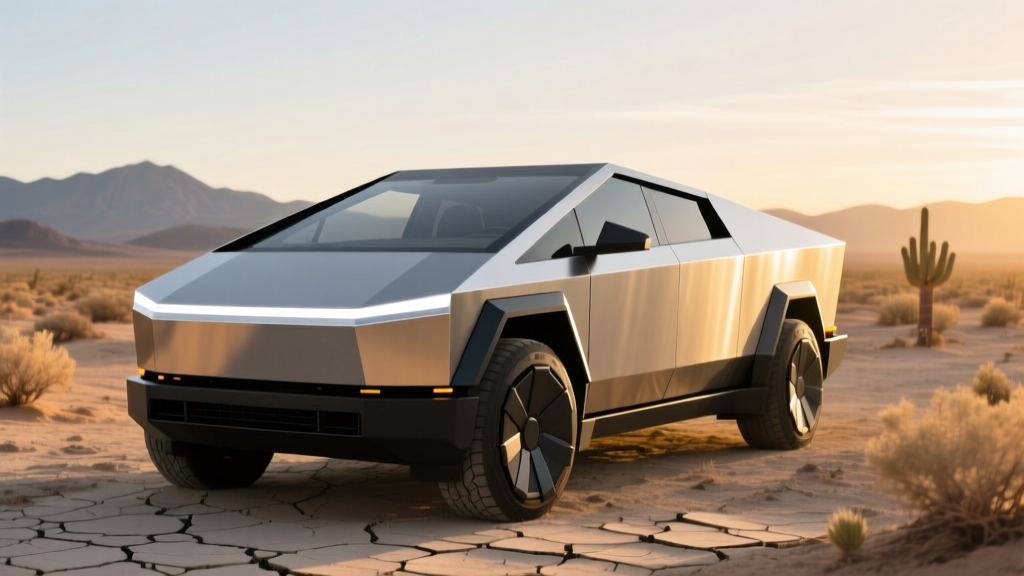
When Shaquille O'Neal posted his Tesla Cybertruck on social media, search interest exploded. But beyond the celebrity hype, the Cybertruck remains one of the most polarizing and technically ambitious electric pickups on the market. For 2026, Tesla continues to refine the platform with the Dual Motor All-Wheel Drive and the range-topping Cyberbeast, while the long-promised Rear-Wheel Drive base model has yet to materialize at scale. This review cuts through the noise to give you the exact numbers — EPA range, charging curves, real-world efficiency, and tax credit reality — so you can decide if the Cybertruck earns a spot in your driveway.
2026 Tesla Cybertruck: Quick Verdict
The Cybertruck is an engineering showcase wrapped in stainless steel. Its 800-volt-class architecture delivers class-leading DC fast-charge speeds, and its tri-motor Cyberbeast variant produces supercar-rivaling acceleration. However, its angular bed limits cargo versatility, panel gaps and build quality remain inconsistent, and the base RWD model is still largely unavailable. If you want an EV truck that charges fast, accelerates harder than anything in its class, and turns every parking lot into a car show, the Cybertruck delivers. If you need a workhorse with a flat-load floor and proven build consistency, the Ford F-150 Lightning or Rivian R1T may serve you better.
| Spec | AWD (Dual Motor) | Cyberbeast (Tri-Motor) |
|---|---|---|
| EPA Range | 340 miles | 320 miles |
| Battery (usable, est.) | ~123 kWh (NMC) | ~123 kWh (NMC) |
| Peak DC Fast Charge | 250 kW (Supercharger V3/V4) | 250 kW |
| 10–80% DCFC Time | ~28 minutes | ~28 minutes |
| Level 2 Home Charge (11.5 kW) | ~37 mi/hr | ~37 mi/hr |
| 0–60 mph | 4.1 seconds | 2.6 seconds |
| Horsepower | 600 hp | 845 hp |
| Drivetrain | Dual Motor AWD | Tri-Motor AWD |
| MPGe (combined) | 79 MPGe | 74 MPGe |
| Towing Capacity | 11,000 lbs | 11,000 lbs |
| Base MSRP | $79,990 | $99,990 |
| Battery/Powertrain Warranty | 8 yr / 150,000 mi | 8 yr / 150,000 mi |
Range and Real-World Efficiency
Tesla's energy management software is among the best in the industry, and the heat pump comes standard, which helps mitigate winter range loss compared to resistive heating systems. Efficiency for the AWD model sits at approximately 48 kWh/100mi (79 MPGe combined per fueleconomy.gov). The Cyberbeast's extra motor and performance tuning drop it to around 51 kWh/100mi.
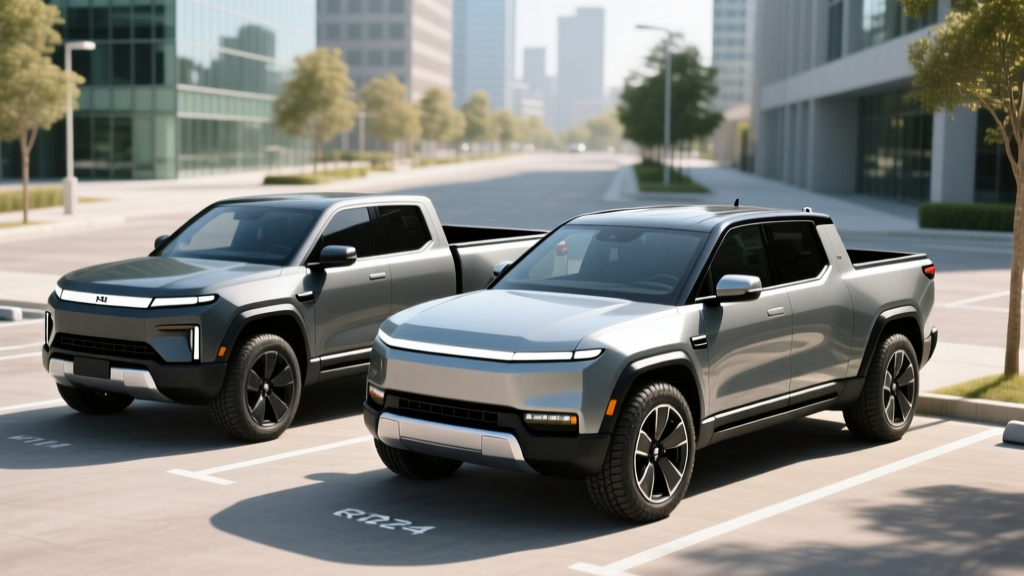
For context, the Ford F-150 Lightning Extended Range achieves 320 miles EPA with a 131 kWh pack, while the Rivian R1T Dual-Motor Max Pack reaches 352 miles. The Cybertruck's range is competitive, but its poor aerodynamic profile — despite Tesla's claims — means highway efficiency suffers more than sedans or crossovers.
Charging: DC Fast, Level 2, and the NACS Advantage
The Cybertruck uses the North American Charging Standard (NACS) connector natively — no adapter needed at Tesla Superchargers. This is a significant practical advantage in 2026, as the Supercharger network remains the most reliable and geographically complete DC fast-charging system in the U.S.
| Charging Level | Power / Rate | Miles Added per Hour | Notes |
|---|---|---|---|
| Level 1 (120V, 12A) | ~1.4 kW | ~3 mi/hr | Emergency/trickle only |
| Level 2 (240V, 48A) | 11.5 kW | ~37 mi/hr | Full charge in ~10.5 hours |
| DC Fast (Supercharger V3/V4) | Peak 250 kW | ~180 mi in 15 min | 10–80% in ~28 min; tapers sharply above 85% |
Charging curve reality: The Cybertruck peaks near 250 kW only between approximately 10–30% State of Charge (SoC). By 50% SoC, power drops to roughly 170 kW, and above 80% it falls below 60 kW. This is typical for large NMC packs, but it means the advertised 250 kW figure is a peak, not a sustained average. Plan road-trip stops to charge from 10–80% and move on — lingering past 80% wastes time.
At home, a 48-amp Level 2 wall connector on a 60-amp circuit delivers 11.5 kW, adding roughly 37 miles of range per hour. Most owners who charge overnight from 20–80% (the recommended daily range for NMC chemistry) will wake up fully replenished. Home installation costs typically run $800–$2,500 depending on panel capacity and conduit distance — consult a licensed electrician for your specific setup.
Performance and Driving Dynamics
The Cyberbeast's 2.6-second 0–60 mph time is absurd for a vehicle weighing over three tons. The tri-motor setup (one front, two rear) provides torque vectoring that makes the truck feel surprisingly agile in corners, though the steering is heavily assisted and lacks the feedback of a traditional performance vehicle. The AWD Dual Motor model's 4.1-second 0–60 is still quicker than nearly every gas pickup on the market.
Ride quality benefits from the adaptive air suspension, which can adjust ride height from 5.9 inches (for highway efficiency) up to 17.4 inches of ground clearance in Extract mode for off-road use. The steer-by-wire system — which eliminates a mechanical connection between the yoke and the wheels — takes adjustment. Some drivers love the variable ratio; others find it disconnected at low speeds. There is no conventional round steering wheel option.
Towing capacity maxes out at 11,000 lbs, matching the F-150 Lightning. However, towing any significant load will cut range by 40–60%, bringing real-world towing range to roughly 130–170 miles. Tesla's integrated trailer brake controller and tow-assist camera views are well-implemented, but Supercharger stalls are not universally designed for pull-through towing — a persistent pain point for EV truck owners on road trips.
Interior, Tech, and Cargo Practicality
The Cybertruck's interior is minimalist even by Tesla standards. A single 18.5-inch touchscreen dominates the dash, controlling everything from climate to glove-box release. The yoke steering wheel is standard (no round wheel available). Build materials are a step up from early Model 3s but still fall short of Rivian's R1T in perceived quality — hard plastics and occasional panel misalignment persist in some 2025–2026 builds.
Passenger space: Front legroom is generous at 41.2 inches; rear legroom measures 38.4 inches — adequate for adults but tighter than the F-150 Lightning's rear seat. The rear bench seats three, but the center position is compromised by a raised floor section.
Cargo bed: The 6-foot bed offers 67 cu ft of volume with the tonneau cover closed. The powered retractable cover is sturdy enough to support 300 lbs of distributed weight (useful for rooftop tent camping). However, the angled bed sides and wheel-well intrusion limit flat-load width. The bed width between wheel wells is approximately 43 inches — a standard 4×8 sheet of plywood will not lie flat. The front trunk (frunk) adds 7.1 cu ft of lockable storage.
Standout tech features:
- Steer-by-wire with variable steering ratio
- Adaptive air suspension with Extract mode (17.4" clearance)
- Bioweapon Defense Mode (HEPA cabin filtration)
- Powered tonneau cover with integrated bed lighting
- 120V and 240V bed outlets (Powershare — up to 11.5 kW output)
- Autopilot standard; FSD (Supervised) available as add-on or subscription
Notable drawbacks:
- No round steering wheel option — yoke only
- Bed width between wheel wells cannot accommodate a flat plywood sheet
- No Apple CarPlay or Android Auto
- Build quality inconsistency (panel gaps, trim alignment)
- Rear visibility is compromised by the angular sail pillars and small rear window; camera mirror helps but takes acclimation
Pricing, Trims, and Federal Tax Credit Reality
| Trim | Base MSRP | Est. As-Tested* | §30D Federal Credit | Effective Price (if eligible) |
|---|---|---|---|---|
| AWD (Dual Motor) | $79,990 | $84,000–$88,000 | $0 (exceeds $80K truck cap) | $79,990–$88,000 |
| Cyberbeast (Tri-Motor) | $99,990 | $104,000–$115,000 | $0 (exceeds $80K truck cap) | $99,990–$115,000 |
*As-tested includes destination, common options (FSD, foundation series packages).
Without the federal credit, the Cybertruck's value proposition rests entirely on its performance, charging infrastructure access, and tech. Some states offer additional incentives (California's CVRP, Colorado's innovative motor vehicle credits) that may partially offset cost — check your state energy office for details.
How It Stacks Up: Cybertruck vs. F-150 Lightning vs. Rivian R1T
- Fastest DC charging in the pickup class (250 kW peak)
- Unmatched acceleration (Cyberbeast: 2.6s 0–60)
- Native NACS / Supercharger network access
- Stainless-steel exoskeleton resists dents and corrosion
- 240V bed outlet (Powershare) for job-site or camping power
- Air suspension with class-leading ground clearance in Extract mode
- No federal tax credit due to MSRP cap
- Bed width cannot fit a flat plywood sheet
- Yoke-only steering; no round wheel option
- Build quality inconsistency across deliveries
- High insurance premiums (specialty body panels, repair costs)
- No Apple CarPlay / Android Auto
Choose the Cybertruck if: You prioritize charging speed, performance, and Supercharger network reliability. You value the stainless-steel exterior and want a conversation piece that also tows 11,000 lbs. You rarely need to haul flat sheet goods.
Choose the F-150 Lightning if: You need a conventional truck layout with a flat-load bed, Pro Power Onboard, and a starting price that can qualify for the federal credit (Lariat Extended Range at ~$79K MSRP is borderline). You prefer a traditional steering wheel and cab controls.
Choose the Rivian R1T if: You want the best blend of off-road capability, interior quality, and practicality (gear tunnel, quad-motor option). The R1T Max Pack achieves 352 miles EPA and offers a more refined cabin, though at a similar or higher price point and without native NACS (CCS with adapter).
Ownership Costs and Warranty
Tesla covers the Cybertruck's battery and drive units for 8 years or 150,000 miles (whichever comes first), with a minimum 70% capacity retention guarantee over that period. The limited vehicle warranty is 4 years / 50,000 miles — standard for the luxury EV segment.
Real-world battery degradation data for Tesla's structural battery pack (4680 cells, NMC chemistry) is still accumulating given the Cybertruck's late-2023 launch. Early owner reports suggest degradation curves similar to the Model S/X — approximately 8–10% loss in the first 30,000 miles, then a gradual linear decline. The structural pack integrates cells into the vehicle frame, which improves rigidity but makes out-of-warranty replacement expensive: industry estimates put a full pack replacement at $18,000–$25,000+ if needed beyond warranty coverage.
Insurance costs are notably high. Multiple insurers quote Cybertruck premiums 30–50% above comparable gas pickups due to repair complexity (stainless-steel panel replacement requires specialized training) and high parts costs. Get quotes before purchasing — this can add $1,500–$3,000+ per year depending on your profile.
Maintenance costs are low relative to gas trucks: no oil changes, no transmission fluid, and regenerative braking extends pad life significantly. Tesla recommends cabin air filter replacement every 2–3 years, brake fluid checks every 2 years, and tire rotation every 6,250 miles. Budget for tires — the Cyberbeast's 35-inch all-terrains and heavy torque can wear through a set in 20,000–25,000 miles.
Who the Cybertruck Is Really For
The Cybertruck makes the most sense for:
- Tech-forward buyers who want the latest in EV powertrain, steer-by-wire, and integrated software — and accept the learning curve.
- Performance enthusiasts who want a daily-drivable truck that hits 60 mph in 2.6 seconds (Cyberbeast) without sacrificing towing or utility.
- Tesla ecosystem loyalists who already use Solar/Powerwall and value seamless Supercharger integration.
- Light-duty truck users who tow boats or trailers on weekends but don't need a conventional bed for construction materials daily.
It is not ideal for:
- Commercial fleet buyers who need predictable build quality and easy body repair.
- Buyers who require the full $7,500 federal tax credit to justify the purchase.
- Those who frequently haul 4×8 sheets, ATVs, or wide cargo that requires a flat, wide bed floor.
- Drivers who dislike yoke steering or prefer physical controls and Apple CarPlay.
Frequently Asked Questions
What is the real-world range of the Tesla Cybertruck?
The EPA rates the AWD at 340 miles and the Cyberbeast at 320 miles. In real-world highway driving at 70+ mph, expect 260–290 miles. Cold weather (below freezing) can reduce range to 220–250 miles. Towing cuts range by 40–60%.
How fast does the Cybertruck charge at home and on the road?
On a Level 2 home charger (11.5 kW / 48A), it adds roughly 37 miles per hour, fully charging in about 10.5 hours. On a V3/V4 Supercharger, it peaks at 250 kW and charges from 10–80% in approximately 28 minutes, though the charge curve tapers significantly above 80%.
Does the Cybertruck qualify for the $7,500 federal EV tax credit?
No. Under IRS §30D rules, pickup trucks must have an MSRP at or below $80,000. The AWD starts at $79,990 but exceeds the cap with destination and options. The Cyberbeast at $99,990 is well above. Buyer income limits and battery sourcing rules also apply. Verify at IRS.gov.
Is the Cybertruck worth buying over the F-150 Lightning or Rivian R1T?
The Cybertruck wins on DC fast-charging speed, acceleration, and Supercharger network access. The F-150 Lightning offers a more practical bed, available tax credit eligibility, and conventional controls. The R1T leads in interior quality, off-road versatility, and cargo innovation (gear tunnel). Your priorities determine the winner.
What are the biggest Cybertruck pros and cons?
Pros: 250 kW peak charging, 2.6s 0–60 (Cyberbeast), Supercharger access, stainless-steel body, 240V bed outlet, air suspension. Cons: No federal tax credit, narrow bed width, yoke-only steering, build-quality inconsistency, high insurance, no CarPlay.
Is the Cybertruck's steer-by-wire safe?
Tesla's steer-by-wire system uses redundant electronic controllers — if one fails, a backup takes over. It meets FMVSS safety standards. However, the yoke steering takes practice for low-speed maneuvers and roundabouts. There is no mechanical fallback linkage, which concerns some engineers, though Tesla reports no systemic failures in production vehicles to date.
What battery chemistry does the Cybertruck use?
The Cybertruck uses Tesla's 4680-format cells with NMC (nickel-manganese-cobalt) chemistry in a structural battery pack. NMC offers higher energy density than LFP, which is necessary given the truck's weight and range targets. For daily use, Tesla recommends charging to 80% and only charging to 100% for road trips to preserve long-term battery health.