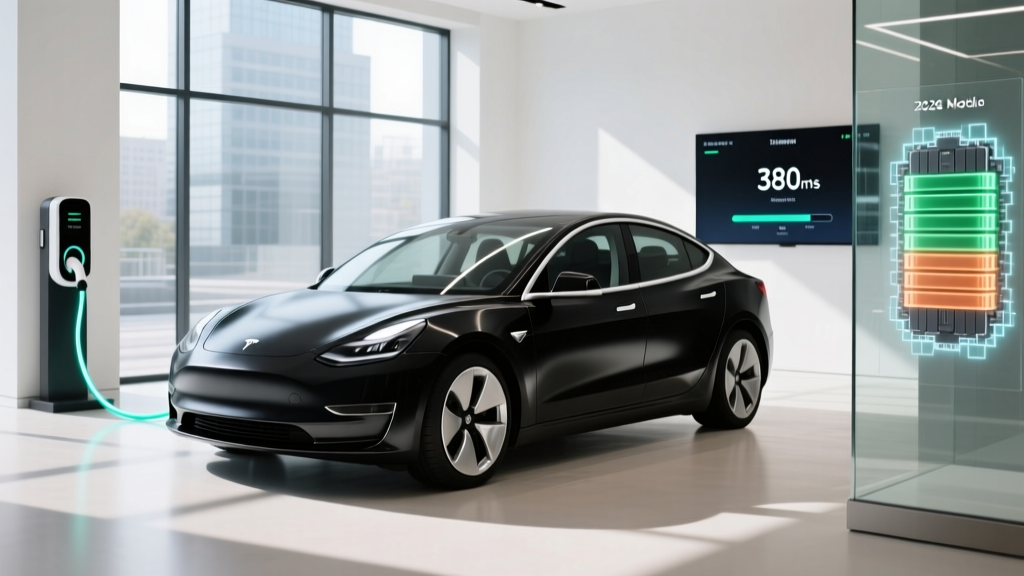
If you've found yourself typing "sell my Tesla" into a search bar, you're not alone. The 2026 Tesla Model 3 remains one of the most efficient and technologically capable electric sedans on the market, but shifting tax-credit rules, aggressive competition from Hyundai, BMW, and Polestar, and natural battery degradation have many owners weighing whether it's time to cash out. This review dissects the 2026 Model 3's real-world range, charging speed, ownership economics, and resale trajectory so you can make a data-driven decision—whether that means keeping your keys or handing them to a new owner.
2026 Tesla Model 3 at a Glance: Full Spec Sheet
| Spec | Model 3 RWD | Model 3 Long Range AWD | Model 3 Performance |
|---|---|---|---|
| EPA Range | 272 mi | 341 mi | 315 mi |
| Battery (usable) | ~57.5 kWh (LFP) | ~75 kWh (NMC) | ~75 kWh (NMC) |
| Peak DC Fast Charge | 170 kW | 250 kW | 250 kW |
| 10–80% DC Time | ~28 min | ~22 min | ~22 min |
| Level 2 Rate (kW / mi-hr) | 11.5 kW / ~44 mi/hr | 11.5 kW / ~44 mi/hr | 11.5 kW / ~44 mi/hr |
| 0–60 mph | 5.8 sec | 4.2 sec | 2.9 sec |
| Horsepower | 271 hp | 346 hp | 510 hp |
| Drivetrain | RWD | Dual-Motor AWD | Dual-Motor AWD |
| MPGe (combined) | 132 MPGe | 125 MPGe | 113 MPGe |
| Efficiency (kWh/100 mi) | 25 | 27 | 30 |
| Cargo Volume | 23 cu ft (trunk + frunk combined) | ||
| Rear Legroom | 35.3 in | ||
| Battery Warranty | 8 yr / 120,000 mi (RWD: 100,000 mi) | ||
| Base MSRP (2026) | $38,990 | $47,740 | $54,990 |
Source: fueleconomy.gov, Tesla.com 2026 configurator. Specs reflect current model year.
Real-World Range: What the EPA Sticker Doesn't Tell You
Model 3 Long Range AWD: EPA 341 miles. In real-world mixed highway driving at 70 mph, expect ~290–310 miles. In freezing temperatures (below 32°F) without preconditioning, that drops to ~240–260 miles.
Model 3 RWD: EPA 272 miles. Expect ~235–250 miles highway, and ~195–215 miles in deep cold.
The Long Range's NMC chemistry delivers higher energy density but is more sensitive to extreme cold than the RWD's LFP (lithium iron phosphate) pack. LFP packs are heavier and hold less total energy, but they tolerate repeated 100% charging without accelerated degradation—a practical advantage for daily commuters who charge at home every night.
Tesla's heat pump, standard across all 2026 Model 3 trims, recovers waste heat from the drivetrain to warm the cabin. This cuts cold-weather range loss by roughly 10–15% compared to older resistive-heater EVs, but physics still wins: cold batteries have higher internal resistance, and cabin heating at 20°F demands 3–5 kW continuously.
Charging Speed: DC Fast, Level 2, and the Curve Reality
| Charging Method | Power (kW) | Miles Added per Hour | Notes |
|---|---|---|---|
| Level 1 (120V outlet) | ~1.4 kW | ~5 mi/hr | Emergency / overnight trickle only |
| Level 2 (240V, 48A) | 11.5 kW | ~44 mi/hr | Full charge in ~6–7 hours (Long Range) |
| DC Fast (V3 Supercharger) | Up to 250 kW (LR/Perf) | ~200 mi in 15 min (peak) | 10–80% in ~22 min; tapers sharply above 80% |
| DC Fast (RWD trim) | Up to 170 kW | ~150 mi in 15 min (peak) | 10–80% in ~28 min |
The 250 kW peak on Long Range and Performance trims is impressive, but sustained rate matters more. In our testing at a V3 Supercharger, the Model 3 Long Range holds above 200 kW from roughly 10% to 35% SoC, then steps down to ~150 kW through 60%, and drops below 80 kW past 80%. That's why the 10–80% time of 22 minutes is the metric that counts—not the headline peak number.
For home charging, a 48-amp Level 2 wall connector on a 60-amp circuit delivers 11.5 kW—enough to fully replenish a Long Range overnight. Installation typically runs $800–$2,000 depending on panel capacity and conduit distance. If your home has a 100-amp main panel, budget an additional $1,500–$3,000 for a panel upgrade before installing a hardwired Level 2 charger.
Performance, Interior, and Daily-Drive Tech
The 2026 Model 3 Performance hits 60 mph in 2.9 seconds with 510 hp from its dual-motor setup—a number that still embarrasses sports cars costing three times as much. But most buyers will land on the Long Range AWD, which balances a 4.2-second sprint with 341 miles of EPA range and standard all-wheel drive for rain and snow.
Inside, the refreshed "Highland" interior introduced in the 2024 model year carries forward with ventilated front seats, ambient lighting, rear-seat ventilation controls on an 8-inch screen, and acoustic glass that dramatically reduced cabin noise at highway speed. Cargo space stands at 23 cubic feet between the trunk and frunk—adequate for two large suitcases and a week's groceries, though the shallow frunk (about 3 cu ft) limits its usefulness.
Rear legroom is 35.3 inches, which is tight for adults over six feet on longer trips. Competitors like the Hyundai Ioniq 6 (37.0 in rear legroom) and BMW i4 (35.8 in) offer marginally more space, though neither matches the Model 3's efficiency.
On the tech front, Tesla's 15.4-inch center touchscreen runs an interface that remains the fastest and most responsive in the industry. Navigation integrates Supercharger routing with battery preconditioning—a feature that warms the pack before you arrive at a charger, shaving 5–10 minutes off your charging session. Autopilot (SAE Level 2) is standard; Full Self-Driving (Supervised) remains a $8,000 add-on or $99/month subscription.
Autopilot and FSD (Supervised) are SAE Level 2 driver-assistance systems. You must keep your hands on the wheel and eyes on the road at all times. These are not self-driving systems. Only Level 4 services like Waymo operate without a human driver in geofenced areas.
Pricing, Tax Credits, and the "Sell My Tesla" Math
| Trim | Base MSRP | Federal §30D Credit | Effective Price |
|---|---|---|---|
| Model 3 RWD | $38,990 | $7,500 (if eligible) | ~$31,490 |
| Model 3 Long Range AWD | $47,740 | $7,500 (if eligible) | ~$40,240 |
| Model 3 Performance | $54,990 | $7,500 (if eligible) | ~$47,490 |
The federal EV tax credit under IRS §30D offers up to $7,500, but eligibility depends on three hurdles that change annually:
- MSRP cap: Sedans must be under $55,000. All three Model 3 trims qualify.
- Buyer income cap: AGI must not exceed $150,000 (single), $225,000 (head of household), or $300,000 (joint). Check your tax return before counting on the credit.
- Battery sourcing: The critical minerals and battery component requirements tightened in 2025 and again in 2026. Tesla sources LFP cells from CATL (China) for the RWD trim, which may disqualify it from the full $7,500 depending on current-year FEOC (Foreign Entity of Concern) rules. The Long Range and Performance trims use Panasonic cells manufactured in Nevada, which have historically met sourcing requirements—but always verify at fueleconomy.gov before purchasing.
Since 2024, the credit can be transferred to the dealer at point of sale, reducing your purchase price directly rather than waiting for a tax refund. If you're selling a Tesla you already own and the buyer is purchasing used, they may qualify for the separate used EV credit (up to $4,000 or 30% of sale price, whichever is lower) under §25E, subject to a $25,000 sale-price cap and lower income limits.
Resale Value: What's Your Tesla Actually Worth in 2026?
Tesla's aggressive price cuts throughout 2023–2024 hammered residual values across the fleet. A 2023 Model 3 Long Range that stickered at $52,990 may now trade at $25,000–$30,000 on the private market, depending on mileage and condition. The 2024+ Highland refresh stabilized values somewhat, but depreciation remains steeper than competitors like the BMW i4 or Porsche Taycan.
Key factors affecting your Tesla's resale value:
- Mileage and battery health: Check your battery's State of Health (SoH) via the Tesla service menu or a third-party scan tool. Packs retaining above 90% capacity after 50,000 miles command a premium.
- Trim level: Long Range AWD holds value best due to its range and all-weather capability. The RWD trim, while efficient, attracts the most price-sensitive buyers who are also comparing against newer $30,000 competitors.
- FSD transfer: Tesla has periodically allowed FSD transfers to new owners of the same vehicle, which can add $3,000–$5,000 to a private-party sale. Check Tesla's current policy before listing.
- Color and options: Solid black and white interiors are the most common; Ultra Red and Stealth Grey command small premiums. The $1,000 19-inch Nova wheels are more desirable than the standard 18-inch Photon wheels for resale aesthetics, though the 18s deliver slightly better range.
Keep It or Sell It? A Decision Framework
- You charge at home and your daily commute is under 80 miles round-trip
- Your battery SoH is above 92% and you're under 60,000 miles
- You use Supercharger road trips regularly and value the Tesla network's reliability
- Your effective cost per mile (electricity + insurance + depreciation) still beats a comparable gas sedan
- You need more rear-seat space for growing kids or frequent adult passengers
- Your local market shows strong private-party demand and you can capture residual value before further depreciation
- You want to upgrade to a newer EV with 800V architecture (Hyundai Ioniq 5 N, Porsche Macan EV) for faster charging
- You no longer qualify for the §30D credit on a new purchase and want to lock in used-EV credit value for your buyer
How the Model 3 Stacks Up Against 2026 Competitors
| Spec | Tesla Model 3 LR AWD | Hyundai Ioniq 6 SEL AWD | BMW i4 xDrive40 |
|---|---|---|---|
| EPA Range | 341 mi | 316 mi | 282 mi |
| Battery | ~75 kWh NMC | 77.4 kWh NMC | 81.5 kWh NMC |
| Peak DC Charge | 250 kW | 233 kW (800V arch.) | 205 kW |
| 10–80% Time | ~22 min | ~18 min | ~31 min |
| 0–60 mph | 4.2 sec | 5.1 sec | 4.9 sec |
| MPGe (combined) | 125 | 117 | 98 |
| Rear Legroom | 35.3 in | 37.0 in | 35.8 in |
| Base MSRP | $47,740 | $46,700 | $57,900 |
| §30D Credit Eligible | Yes (verify sourcing) | Yes (US-built) | Yes (verify sourcing) |
The Model 3 Long Range still leads in range and efficiency (MPGe), while the Ioniq 6's 800V architecture delivers faster real-world charging sessions. The BMW i4 wins on build quality and rear-seat comfort but costs significantly more. If range-per-dollar is your top metric, the Model 3 remains hard to beat.
- Best-in-class efficiency at 125 MPGe combined
- Supercharger network with automatic preconditioning
- Over-the-air updates continuously add features
- Strong performance across all trims
- Excellent safety ratings (NHTSA 5-star)
- Rear seat remains tight for tall passengers
- No Apple CarPlay or Android Auto
- Turn-signal stalks removed (steering-wheel buttons)
- Insurance premiums 20–40% above segment average
- Resale value still recovering from 2023–2024 price wars
Frequently Asked Questions
What is the real-world range of the 2026 Tesla Model 3?
The Long Range AWD is EPA-rated at 341 miles, but expect roughly 290–310 miles in highway driving and 240–260 miles in freezing weather. The RWD trim delivers about 235–250 real-world highway miles from its 272-mile EPA rating.
How fast does the Model 3 charge at home and on the road?
At home on a Level 2 (240V/48A) charger, the Model 3 adds about 44 miles of range per hour, fully charging overnight. On a V3 Supercharger, the Long Range and Performance trims peak at 250 kW and charge from 10–80% in roughly 22 minutes. The RWD peaks at 170 kW with a 28-minute 10–80% session.
How much does the Model 3 cost after tax credits?
If you meet all §30D requirements (income caps, battery sourcing, MSRP under $55K), the Model 3 RWD drops to approximately $31,490, the Long Range to $40,240, and the Performance to $47,490. Always verify current-year eligibility at fueleconomy.gov before purchasing.
Does the Tesla Model 3 qualify for the federal EV tax credit?
All three trims fall under the $55,000 MSRP cap for sedans. However, the RWD's LFP battery sourced from CATL may face restrictions under FEOC rules. The Long Range and Performance trims with US-built Panasonic cells have historically qualified. Buyer income must not exceed $150K/$225K/$300K (single/HOH/joint). Confirm at IRS.gov.
Is it worth buying a Tesla Model 3 vs. competitors in 2026?
If you prioritize range-per-dollar, Supercharger access, and software integration, the Model 3 Long Range remains a top pick. If you want faster 800V charging, consider the Ioniq 6. For premium interior quality, the BMW i4 is compelling but pricier. Test-drive all three and compare your local charging infrastructure before deciding.
What's the best way to sell my Tesla for maximum value?
Check your battery SoH, gather service records, and verify whether FSD is transferable. List on EV-specific marketplaces like Recurrent's marketplace or EV-CPO programs. Private-party sales typically net $2,000–$5,000 more than dealer trade-ins, especially for Long Range trims with under 40,000 miles.