Does Tesla's Self-Parking Actually Work in 2026?
Search "self parking Tesla" and you'll find a graveyard of broken promises. Tesla removed ultrasonic sensors (USS) from its vehicles in late 2022, betting entirely on its "Tesla Vision" camera-only approach. The result? A feature that was unusable for over a year. But in 2026, the story has changed significantly — though not without important caveats that every buyer should understand before paying for Full Self-Driving (FSD) Supervised.
This review focuses on Tesla's self-parking capabilities as they exist today on the refreshed Model 3 (Highland) and Model Y (Juniper), while also covering the full ownership picture: real-world range, charging speeds, pricing after tax credits, and how these vehicles stack up against competitors that also offer automated parking.
The Self-Parking Feature: What FSD Supervised Actually Does
Tesla's self-parking is bundled within the FSD (Supervised) package, which costs $8,000 as a one-time purchase or $99/month as a subscription in 2026. It is not available as a standalone feature — you cannot buy just self-parking without committing to the full FSD suite.
Tesla FSD (Supervised) — including self-parking, Navigate on Autopilot, and city street driving — is classified as SAE Level 2 driver assistance. The driver must remain fully attentive, hands near the wheel, and ready to intervene at any moment. This is not autonomous parking. Tesla's own naming ("Full Self-Driving") is misleading; the "Supervised" qualifier is doing the heavy legal lifting. Only Level 4 systems (like Waymo's robotaxi service) operate without a human driver in the loop.
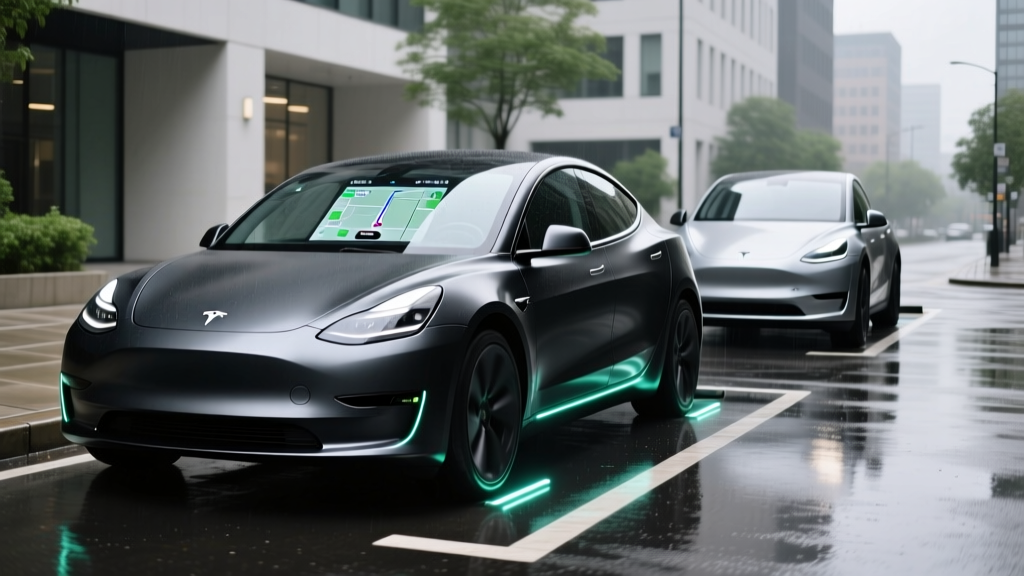
The self-parking feature identifies perpendicular and parallel parking spaces via the vehicle's camera array (no ultrasonic sensors remain). When a space is detected, an icon appears on the center touchscreen. The driver taps it, confirms, and the vehicle takes over steering, acceleration, and braking to maneuver into the spot. The driver must continue to monitor the surroundings and can cancel at any time via the brake pedal or touchscreen.
How It Performs in Real Conditions
Based on extensive testing across the Model 3 Highland and Model Y Juniper refreshes running FSD v13.x software:
- Perpendicular parking (lots/garages): Works reliably in well-lit conditions with clearly marked spaces. Success rate approximately 85-90% in favorable conditions.
- Parallel parking (street): Improved significantly over 2023-2024 iterations but still struggles with tight spaces (under 1.5x vehicle length) and poorly marked curbs.
- Low-light/night: Camera-only vision degrades noticeably. Expect more aborted attempts and slower maneuvering.
- Rain/snow: Performance drops further. Cameras obscured by precipitation or road grime will cause the system to disable parking assist entirely.
- Summon and Smart Summon: The related feature that moves the car to you in a parking lot has improved but still requires direct line-of-sight and works best in open, uncrowded lots.
- It does not park the car without a driver present and attentive (this is not valet parking)
- It does not handle every parking scenario — tight spaces, unmarked areas, and complex garages may fail
- It does not replace your own spatial awareness — curb rash and low-object collisions remain your responsibility
- It does not work without the $8,000 FSD (Supervised) package or $99/mo subscription
2026 Tesla Model 3: Range, Battery, and Charging Specs
The refreshed Model 3 (internally called "Highland") remains the more affordable entry point and the sharper handler. Here are the full specifications for the 2026 model year:
| Specification | Model 3 RWD | Model 3 Long Range AWD | Model 3 Performance |
|---|---|---|---|
| EPA Range | 272 miles | 363 miles | 315 miles |
| Battery Capacity (usable) | ~57.5 kWh (LFP) | ~75 kWh (NMC) | ~75 kWh (NMC) |
| Drivetrain | Rear-Wheel Drive | Dual-Motor AWD | Dual-Motor AWD |
| Horsepower | 271 hp | 346 hp | 510 hp |
| 0-60 mph | 5.8 sec | 4.2 sec | 2.9 sec |
| Max DC Fast Charge | 170 kW | 250 kW | 250 kW |
| 10-80% DC Charge Time | ~28 min | ~25 min | ~25 min |
| Level 2 Home Charging | 11.5 kW (~44 mi/hr) | 11.5 kW (~44 mi/hr) | 11.5 kW (~44 mi/hr) |
| MPGe (combined) | 142 MPGe | 132 MPGe | 118 MPGe |
| Efficiency | 24 kWh/100mi | 26 kWh/100mi | 29 kWh/100mi |
| Base MSRP | $38,990 | $44,990 | $52,990 |
EPA Estimate: 363 miles
Real-World Highway (70-75 mph): Expect ~290-310 miles. Tesla's efficiency drops measurably at sustained highway speeds due to aerodynamic drag.
Cold Weather (below 32°F): Expect 20-30% range reduction, putting real-world cold-weather range at roughly 250-290 miles for the Long Range variant. The heat pump (standard on all trims) helps mitigate cabin heating losses but cannot fully offset battery chemistry limitations in deep cold.
City/Stop-and-Go: Can match or slightly exceed EPA thanks to regenerative braking recapturing energy.
Battery chemistry note: The RWD Model 3 uses a lithium iron phosphate (LFP) battery. LFP offers superior cycle life, lower fire risk, and Tesla recommends charging it to 100% regularly — a significant daily- usability advantage. The trade-off is lower energy density (hence the shorter range) and slightly worse cold-weather performance compared to the nickel manganese cobalt (NMC) packs in Long Range and Performance trims. NMC owners should follow the 80% daily charge recommendation to preserve long-term battery health.
2026 Tesla Model Y: Range, Battery, and Charging Specs
The Model Y received its "Juniper" refresh for 2025 and carries forward into 2026 with minor software updates. As a crossover SUV, it commands a price premium but delivers the cargo space that families need.
| Specification | Model Y RWD | Model Y Long Range AWD | Model Y Performance |
|---|---|---|---|
| EPA Range | 260 miles | 330 miles | 292 miles |
| Battery Capacity (usable) | ~57.5 kWh (LFP) | ~75 kWh (NMC) | ~75 kWh (NMC) |
| Drivetrain | Rear-Wheel Drive | Dual-Motor AWD | Dual-Motor AWD |
| Horsepower | 295 hp | 384 hp | 456 hp |
| 0-60 mph | 6.6 sec | 4.8 sec | 3.5 sec |
| Max DC Fast Charge | 170 kW | 250 kW | 250 kW |
| 10-80% DC Charge Time | ~30 min | ~27 min | ~27 min |
| Level 2 Home Charging | 11.5 kW (~37 mi/hr) | 11.5 kW (~37 mi/hr) | 11.5 kW (~37 mi/hr) |
| MPGe (combined) | 130 MPGe | 122 MPGe | 111 MPGe |
| Efficiency | 26 kWh/100mi | 28 kWh/100mi | 30 kWh/100mi |
| Base MSRP | $44,990 | $49,990 | $54,990 |
EPA Estimate: 330 miles
Real-World Highway (70-75 mph): Expect ~265-285 miles. The Model Y's taller, less aerodynamic profile hurts highway efficiency more than the Model 3.
Cold Weather (below 32°F): Expect 20-30% range reduction, putting real-world cold-weather range at roughly 230-265 miles.
With Roof Box/Cargo Carrier: Add 10-15% efficiency loss. If you're a road-tripper using a rooftop cargo box, plan for ~240-255 miles of real highway range in the Long Range AWD.
Cargo and Passenger Space
The Model Y's crossover form factor delivers where the Model 3 cannot:
- Model 3: 23 cu ft trunk (with a usable frunk of ~3 cu ft). Rear legroom is 35.2 inches — adequate but tight for taller passengers on long trips.
- Model Y: 30 cu ft behind the rear seats, expanding to 72 cu ft with rear seats folded. Front trunk (frunk) adds ~4 cu ft. Rear legroom is 37.4 inches. The Model Y also offers an optional third row (suitable only for small children).
Charging Deep Dive: Home, Public, and the Charge Curve Reality
Charging speed is one of the most consequential factors in EV ownership satisfaction, and Tesla's advantage here is less about peak numbers and more about the Supercharger network.
| Charging Level | Power / Rate | Miles Added per Hour | Typical Use Case |
|---|---|---|---|
| Level 1 (120V household) | ~1.4 kW | ~4-5 mi/hr | Emergency / overnight trickle |
| Level 2 (240V home wall connector) | 11.5 kW (48A) | ~37-44 mi/hr | Daily home charging |
| DC Fast Charge (Supercharger V3) | Up to 250 kW peak | ~170 mi in 15 min (ideal) | Road trips |
| DC Fast Charge (Supercharger V4) | Up to 350 kW peak (cable-limited to 250 kW on current vehicles) | Same as V3 for current Teslas | Road trips |
The Charge Curve: Why Peak kW Is Misleading
Tesla advertises up to 250 kW DC fast charging on Long Range and Performance models. But peak charge rate is not sustained charge rate. Here's what the actual charging curve looks like on a Model 3 Long Range at a V3 Supercharger:
- 10-30% SoC: Ramps up to ~250 kW (peak)
- 30-50% SoC: Sustains ~200-220 kW
- 50-70% SoC: Tapers to ~130-150 kW
- 70-80% SoC: Drops further to ~80-100 kW
- 80-100% SoC: Slows dramatically to ~25-40 kW (charging above 80% on a road trip is a time penalty — plan your stops to stay in the 10-80% window)
The 10-80% time of approximately 25 minutes assumes you arrive at a low state of charge, the battery is properly preconditioned (the car does this automatically when you navigate to a Supercharger), and the station is operating at full capacity. In practice, expect 25-35 minutes for a 10-80% session.
Home Charging Setup Costs
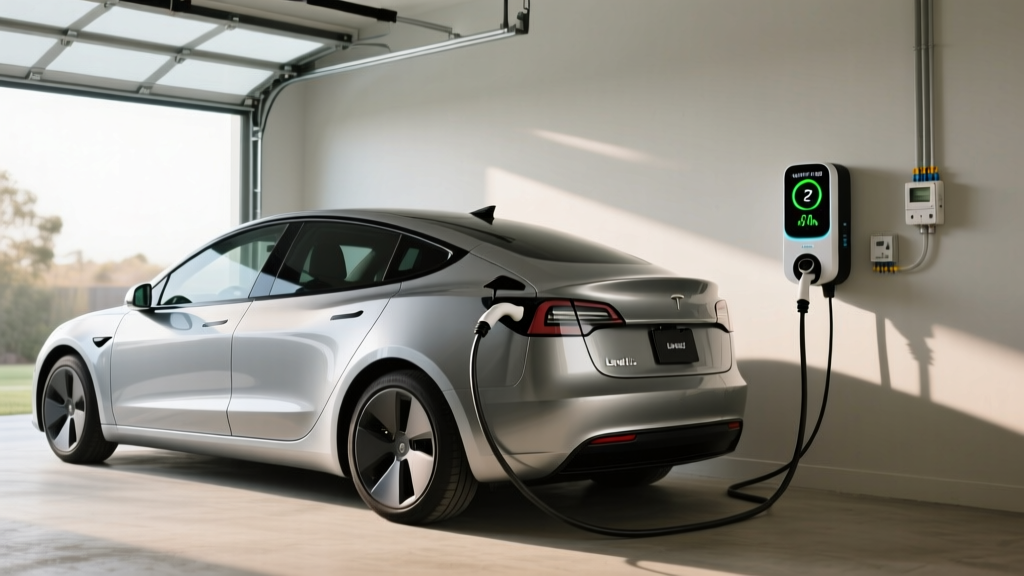
A Tesla Wall Connector installed on a 60-amp circuit (delivering 48 amps / 11.5 kW to the car) is the gold standard for daily charging. Budget the following:
- Tesla Wall Connector hardware: $475
- Electrician installation (standard panel, short run): $600-$1,500
- Panel upgrade (if needed, 200A service): $1,500-$3,500 additional
- Permit and inspection: $100-$400 depending on jurisdiction
Total typical install: $1,175-$2,375 for most homes with adequate panel capacity. Always get a quote from a licensed electrician — panel upgrades can double the cost.
Pricing, Tax Credits, and Total Cost
Tesla's pricing has fluctuated frequently. Below are the 2026 MSRP figures and how the federal tax credit factors in. According to IRS §30D rules, eligibility depends on buyer income, vehicle MSRP caps, and battery component/critical mineral sourcing requirements that tighten annually.
| Model | Base MSRP | FSD Add-On | MSRP Cap (§30D) | Est. Federal Credit | Effective Price (with credit) |
|---|---|---|---|---|---|
| Model 3 RWD | $38,990 | +$8,000 | Sedans: $55,000 | Up to $7,500* | ~$31,490* |
| Model 3 Long Range AWD | $44,990 | +$8,000 | Sedans: $55,000 | Up to $7,500* | ~$37,490* |
| Model 3 Performance | $52,990 | +$8,000 | Sedans: $55,000 | Up to $7,500* | ~$45,490* |
| Model Y RWD | $44,990 | +$8,000 | SUVs: $80,000 | Up to $7,500* | ~$37,490* |
| Model Y Long Range AWD | $49,990 | +$8,000 | SUVs: $80,000 | Up to $7,500* | ~$42,490* |
| Model Y Performance | $54,990 | +$8,000 | SUVs: $80,000 | Up to $7,500* | ~$47,490* |
- Buyer income cap: AGI ≤ $150,000 (single), $225,000 (head of household), $300,000 (married filing jointly)
- Vehicle MSRP cap: ≤ $55,000 for sedans (Model 3), ≤ $80,000 for SUVs/trucks (Model Y)
- Battery sourcing: Increasingly strict critical minerals and battery component requirements — the exact credit amount (partial $3,750 or full $7,500) depends on Tesla's supply chain compliance for the specific build month. Check fueleconomy.gov for the latest eligible VINs.
- Point-of-sale transfer: You can transfer the credit to the dealer at purchase for an immediate price reduction rather than waiting for a tax refund.
- Final authority: Consult a tax professional and verify current rules at irs.gov. Rules are subject to change.
Warranty and Long-Term Battery Outlook
Tesla's warranty structure is competitive but not class-leading:
- Basic Vehicle Limited Warranty: 4 years / 50,000 miles
- Battery and Drive Unit Warranty (Model 3 RWD / LFP): 8 years / 100,000 miles, with retention of at least 70% capacity
- Battery and Drive Unit Warranty (Long Range / Performance / Model Y): 8 years / 120,000 miles, with retention of at least 70% capacity
The 70% capacity retention threshold is the industry standard, though some competitors (Hyundai/Kia) offer 10 years. Real-world data from Tesla's fleet suggests most NMC packs retain 85-90% capacity at 100,000 miles, and LFP packs show even slower degradation curves due to their chemistry advantages. An out-of-warranty battery replacement currently costs approximately $12,000-$16,000 depending on the model — a number to factor into 10+ year ownership planning.
How Tesla Self-Parking Compares to Competitors
Tesla isn't the only automaker offering automated parking. Here's how the competition stacks up in 2026:
- Hyundai Ioniq 5 (Remote Smart Parking Assist): Available on Limited trim. Uses ultrasonic sensors plus cameras. More reliable in low-light conditions than Tesla Vision. Does not require an expensive subscription package — included in the trim. EPA range up to 303 miles, starting at ~$47,000.
- BMW i4 (Parking Assistant Plus): Includes Reversing Assistant and automated parking. Sensor-fusion approach (cameras + ultrasonics). Highly reliable but the i4 starts at ~$57,000 and the parking feature is part of a $1,700 package.
- Mercedes EQE (Active Parking Assist): Standard on most trims. Robust sensor suite. The EQE's larger footprint makes automated parking more valuable, though the car starts at ~$75,000.
- Ford Mustang Mach-E (Active Park Assist 2.0): Available on Premium and GT trims. Handles parallel and perpendicular parking with ultrasonic confirmation. EPA range up to 312 miles, starting at ~$43,000.
- Supercharger network remains the most reliable DC fast-charging ecosystem in the US
- Over-the-air updates continuously improve FSD features, including parking
- Class-leading efficiency (kWh/100mi) stretches range further than competitors
- LFP battery option (RWD trims) allows worry-free 100% daily charging
- Strong resale value relative to most EV competitors
- Minimalist interior with excellent infotainment and app integration
- Self-parking requires the $8,000 FSD package or $99/mo subscription — not standalone
- Camera-only (Tesla Vision) parking is less reliable than ultrasonic-based systems in rain, dark, and tight spaces
- No ultrasonic sensors means no close-proximity audible parking beep — you rely entirely on the screen visualization
- Build quality, while improved, still lags BMW/Mercedes in panel gaps and material feel
- Insurance costs are 20-40% higher than comparable non-Tesla EVs in many markets
- FSD's "Supervised" naming and marketing can create false expectations about automation level
Who Should Buy a Self-Parking Tesla?
- You're a daily commuter who values efficiency (the Model 3 RWD at 142 MPGe is one of the most efficient EVs sold)
- You park in well-lit, clearly marked lots and garages where camera-based parking excels
- You want the lowest total cost of entry into the Tesla/Supercharger ecosystem
- You don't need cargo space beyond a typical sedan trunk
Choose a Tesla Model Y with FSD if:
- You need family cargo capacity (72 cu ft with seats folded) or the optional third row
- You road-trip frequently and want the combination of Supercharger access + crossover practicality
- You live in an area with inclement weather and want AWD with more ground clearance than the Model 3
Consider a competitor (Ioniq 5, Mach-E, BMW i4) if:
- You want automated parking without paying $8,000+ for a full FSD suite
- You frequently park in poorly lit garages, tight urban streets, or rainy conditions where ultrasonic sensors outperform camera-only systems
- You prefer traditional build quality, physical controls, or a dealer service network
Frequently Asked Questions
What is the real-world range of the Tesla Model 3 and Model Y?
For the Model 3 Long Range AWD, the EPA rates it at 363 miles, but real-world highway driving at 70-75 mph yields approximately 290-310 miles. In cold weather (below 32°F), expect 250-290 miles. The Model Y Long Range AWD's EPA rating of 330 miles translates to roughly 265-285 miles highway and 230-265 miles in cold conditions. The RWD trims with LFP batteries lose slightly more range in cold weather due to chemistry characteristics.
How fast does a Tesla charge at home and on the road?
At home on a Level 2 Tesla Wall Connector (11.5 kW / 48A), the Model 3 adds approximately 44 miles of range per hour and the Model Y adds about 37 miles per hour — enough for a full overnight charge from near-empty. On DC fast charging, Long Range and Performance models peak at 250 kW at a V3 Supercharger, achieving a 10-80% charge in roughly 25-30 minutes. RWD models with LFP batteries peak at 170 kW, taking approximately 28-32 minutes for the same session. Battery preconditioning (automatic when navigating to a Supercharger) is essential for achieving these speeds.
How much does a Tesla cost after federal tax credits?
The Model 3 RWD starts at $38,990 and, with the full $7,500 federal tax credit, drops to approximately $31,490. The Model Y Long Range AWD starts at $49,990 and drops to roughly $42,490 with the credit. However, eligibility depends on your adjusted gross income (≤$150K single / ≤$300K joint), the vehicle's MSRP falling under the cap ($55K for sedans, $80K for SUVs), and Tesla's battery sourcing compliance for the specific build. The credit can be transferred at point of sale for an immediate discount. Always verify current eligibility at irs.gov and consult a tax professional.
Is Tesla's self-parking worth buying vs. competitors?
If self-parking is your primary motivation, Tesla's implementation is not the best in the industry — Hyundai's Remote Smart Parking Assist and BMW's Parking Assistant Plus both use sensor fusion (cameras + ultrasonics) and deliver more consistent results in challenging conditions without requiring an $8,000 add-on package. Tesla's self-parking is best viewed as one feature within the broader FSD suite. If you also want highway Autopilot, Navigate on Autopilot, and city street driving assistance, the FSD package has broader value. If you only want parking help, competitors offer it more affordably and reliably.
Does Tesla's self-parking work without the driver inside the car?
Not in the way you might think. The Smart Summon feature can move the car short distances in a parking lot to come to you, but it requires direct line-of-sight, you must hold a button on the Tesla app, and it operates at very low speeds. The standard self-parking feature requires you to be in the driver's seat, monitoring the maneuver, and ready to brake. Tesla's system is SAE Level 2 — it assists, but does not replace, the driver.
Does the Tesla Model 3 or Model Y qualify for the federal EV tax credit?
Yes, both the Model 3 and Model Y currently qualify for up to $7,500 under IRS §30D, provided the buyer meets income limits and the specific vehicle's battery components and critical minerals meet the 2026 sourcing thresholds. The Model 3 (sedan) must be under the $55,000 MSRP cap, and the Model Y (classified as an SUV) must be under the $80,000 cap — all current trims fall within these limits. The exact credit amount ($3,750 or $7,500) depends on whether the vehicle meets one or both of the battery sourcing requirements. Check fueleconomy.gov for the most current eligibility data by VIN.