The Quick Answer on the Scout Terra EV Truck
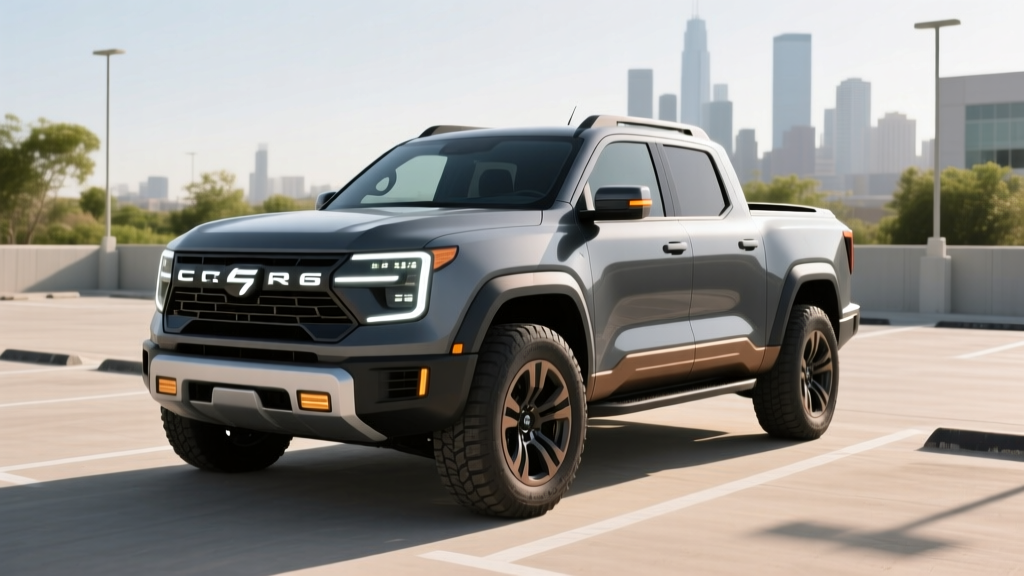
The Scout Terra is an all-electric pickup from the revived International Harvester brand (backed by the Volkswagen Group) targeting a late-2027 production start with reservations already open. Preliminary specs point to a dual-motor AWD platform with an estimated 350+ miles of EPA range, an 800-volt architecture targeting 350 kW peak DC fast charging, and a starting MSRP around $50,000 before incentives. An optional Range Extender (RERAN) gasoline generator pushes total range past 500 miles for buyers who tow or drive in charging deserts. Federal §30D tax credit eligibility remains unconfirmed until battery sourcing and final MSRP are locked — treat any "$7,500" claims as speculative until Scout certifies compliance with current IRS rules.
What the Scout Terra Actually Is (and Isn't)
Scout Motors is an American brand reincarnated by Volkswagen Group, positioning the Terra pickup and the Traveler SUV as rugged, body-on-frame EVs built in a new South Carolina plant. The Terra is aimed squarely at the Ford F-150 Lightning, Rivian R1T, Chevrolet Silverado EV, and the upcoming Ram 1500 REV buyer — people who want truck utility with lower running costs but aren't willing to sacrifice payload or range confidence.
Because production hasn't started, every spec below is preliminary or estimated based on Scout's published targets and industry analysis. Final EPA certification figures will arrive closer to launch.
| Attribute | Target / Estimate |
|---|---|
| Powertrain | Dual-motor AWD (BEV), optional RERAN range extender |
| Horsepower | Estimated 600+ hp |
| 0–60 mph | ~6.5 seconds (est.) |
| Battery Chemistry | NMC (likely), 800V architecture |
| Battery Capacity (usable) | Est. 120–140 kWh |
| EPA Range (BEV) | 350+ miles (Scout target) |
| Range with RERAN Extender | 500+ miles total |
| Peak DC Fast Charge | Up to 350 kW |
| 10–80% DC Charge Time | ~20 minutes (target at 350 kW station) |
| Level 2 AC Charge | Est. 11.5–19.2 kW |
| Towing Capacity | 10,000+ lbs (target) |
| Payload | ~1,800 lbs (est.) |
| Bed Length | 5.5 ft (with midgate open) |
| Base MSRP (est.) | ~$50,000 |
| Battery / Powertrain Warranty | Expected 8 yr / 100,000 mi (federal minimum) |
Range Reality: EPA Sticker vs. Real-World Driving
EPA target: 350+ miles (BEV). Real-world expectation: plan on 270–310 miles at sustained 75 mph highway speeds, and 220–260 miles in sub-freezing weather. Towing a 5,000-lb trailer can cut range by 40–50%.
The 800V architecture is a genuine engineering advantage — it reduces heat during high-power charging and allows the Terra to use the fastest 350 kW chargers from Electrify America and IONITY-class networks. But remember the charging curve reality: peak kW is only sustained between roughly 10–40% State of Charge. Above 80%, the rate tapers sharply to protect the cells, so a "10–80%" time is a more honest metric than "0–100%."
For buyers in the Mountain West, rural Great Plains, or Alaska, the optional RERAN (a small gasoline generator that charges the battery, not a traditional hybrid drivetrain) is the practical hedge. It adds weight and complexity but eliminates range anxiety on routes where DC fast chargers are 100+ miles apart.
Scout Terra vs. Gas Truck: 5-Year Cost Breakdown
Comparing the Terra to a similarly equipped Ford F-150 XLT SuperCrew 4x4 (3.5L EcoBoost, ~$55,000 MSRP, 20 MPG combined) reveals where EV ownership pays off — and where it doesn't. Numbers below assume 15,000 miles/year, $0.16/kWh home electricity, $3.50/gallon gas, and mixed 80% home / 20% public DC charging.
| Category | Scout Terra (est.) | Gas F-150 |
|---|---|---|
| Purchase Price (base) | $50,000 | $55,000 |
| Estimated Federal Tax Credit | $0–$7,500 (TBD) | $0 |
| Fuel / Energy | ~$4,200 (electricity) | ~$13,125 (gasoline) |
| Maintenance (oil, filters, brakes) | ~$1,200 | ~$3,800 |
| Insurance (avg. premium) | ~$12,500 | ~$9,500 |
| Home Level 2 Charger Install | $1,200–$2,500 | $0 |
| Estimated Depreciation | ~$22,000 | ~$20,000 |
| 5-Year Net Cost (est.) | ~$64,600–$67,900 | ~$91,425 |
The Terra wins on fuel and maintenance — electric drivetrains eliminate oil changes, transmission fluid, and spark plugs, and regenerative braking extends pad life. But insurance premiums for EV pickups currently run 20–35% higher than gas equivalents due to repair-cost data from early claims. Depreciation remains the largest unknown; EV resale values have been volatile since 2023.
Charging at Home vs. On the Road
Most Terra owners will do 80%+ of their charging at home on a Level 2 (240V) circuit. At 11.5 kW, expect roughly 35 miles of range added per hour; at 19.2 kW (requires a 100-amp circuit and compatible onboard charger), that climbs to about 55 miles per hour. A full overnight charge from 20% to 100% takes 9–11 hours on a typical 48-amp Level 2 station.
| Level | Power | Miles of Range Per Hour | Typical Use |
|---|---|---|---|
| Level 1 (120V) | ~1.4 kW | ~4 mi/hr | Emergency / trickle |
| Level 2 (240V, 48A) | 11.5 kW | ~35 mi/hr | Daily home charging |
| Level 2 (240V, 80A) | 19.2 kW | ~55 mi/hr | Heavy-use home / fleet |
| DC Fast (peak) | Up to 350 kW | ~1,000 mi/hr (peak) | Road trips, 10–80% in ~20 min |
Home installation costs vary wildly. Expect $1,200–$2,500 for a straightforward run from a 200-amp panel to a garage-mounted Level 2 EVSE. Older homes with 100-amp service may need a $2,500–$5,000 panel upgrade — a reality many buyers overlook until the electrician's quote arrives. Always have a licensed electrician confirm your panel's spare capacity before committing to an EVSE purchase.
Federal Tax Credit: What You Can Actually Count On
The §30D Clean Vehicle Credit offers up to $7,500, but eligibility hinges on four moving targets that Scout must certify at launch:
- MSRP cap: Pickup trucks must be under $80,000 MSRP. Terra's ~$50K base clears this easily, but loaded trims could approach the limit.
- Buyer income cap: AGI ≤ $300,000 (joint), $225,000 (head of household), $150,000 (single).
- Battery component sourcing: Increasing percentages must be manufactured or assembled in North America (rules tighten annually through 2029).
- Critical minerals: Lithium, nickel, cobalt must be sourced from the U.S. or free-trade-agreement partners.
- Foreign Entity of Concern (FEOC) ban: Battery components and minerals cannot come from prohibited Chinese, Russian, North Korean, or Iranian entities.
Scout benefits from VW Group's North American supply chain investments, including the PowerCo battery cell plants. But final credit eligibility will be listed on the Monroney label and the IRS's official vehicle eligibility page at irs.gov — verify there before signing a purchase agreement. If eligible, the credit can be transferred to the dealer as a point-of-sale discount as of 2024, reducing your out-of-pocket at delivery.
Common Misconceptions About the Scout Terra
| Myth | Fact |
|---|---|
| "The Terra is available to order and drive today." | Reservations are open with a refundable deposit, but production is targeted for late 2027. No customer vehicles have been delivered. |
| "It will definitely get the $7,500 tax credit." | Likely, but not guaranteed — Scout must certify battery sourcing and MSRP compliance at launch. Confirm on IRS.gov. |
| "350 miles means I'll get 350 miles no matter what." | EPA is a lab test. Highway driving, cold weather, and towing reduce range by 15–50%. Plan conservatively. |
| "I can charge from any public station." | The Terra will use NACS (Tesla-style) connectors. CCS-only stations will require an adapter, though NACS has become the dominant North American standard. |
| "EVs cost more to own long-term." | Upfront cost and insurance are higher; fuel and maintenance are dramatically lower. The crossover point is typically 3–5 years for high-mileage drivers. |
| "The battery will need replacing in 5 years." | Modern NMC packs are engineered for 1,500–2,500 full cycles before hitting 70–80% State of Health. Federal law mandates an 8-year / 100,000-mile battery warranty minimum. |
Decision Framework: Is the Scout Terra Right for You?
Reserve the Terra if:
- You can charge at home (garage or driveway with 240V access) and drive under 250 miles most days.
- You want a mid-size electric pickup with real towing and off-road capability, and don't need it before late 2027.
- You live in a region with growing NACS Supercharger or Electrify America coverage, or you'll spec the RERAN extender for rural flexibility.
- You're cross-shopping the Rivian R1T and F-150 Lightning but want a fresh platform with 800V charging.
Look elsewhere (or wait) if:
- You need a truck this year — the F-150 Lightning, Rivian R1T, and Silverado EV are in production now.
- You live in an apartment with no charging access and no reliable public DC network nearby.
- Your budget is under $45,000 — even after incentives, the Terra will likely land in the $50K–$70K transaction range.
- You tow over 8,000 lbs regularly — EV range while towing remains a real limitation, and the RERAN adds weight.
First-Time EV Buyer Checklist for the Terra
- Confirm home charging feasibility. A licensed electrician should verify your panel has 40–60 amps of spare capacity on a 240V circuit.
- Map your longest monthly drive. If it exceeds 80% of the Terra's real-world range (~280 miles highway), plan a DC fast-charging stop or consider the RERAN.
- Download PlugShare or the NACS network app and check coverage on your common routes before committing.
- Get an insurance quote early. EV pickup premiums can surprise — shop three carriers.
- Verify §30D eligibility at delivery — don't assume the credit applies until Scout's final certification posts on IRS.gov.
- Understand battery care: daily charging to 80% (not 100%) extends NMC battery life; 100% is fine for road-trip days.
Frequently Asked Questions
When will the Scout Terra actually ship?
Scout Motors targets late 2027 for first customer deliveries from its Blythewood, South Carolina plant. Timeline has slipped once already, so treat it as optimistic.
Is the RERAN range extender a hybrid?
Not in the traditional sense. The gasoline generator charges the battery pack; it does not drive the wheels directly. It's a series hybrid architecture (sometimes called an EREV — Extended Range Electric Vehicle), similar in concept to the original Chevy Volt but scaled for a pickup.
What connector does the Scout Terra use?
NACS (the Tesla-style standard adopted by most automakers for 2025+). This gives access to the Tesla Supercharger network plus Electrify America's NACS-equipped stations.
Can the Scout Terra power my home in an outage?
Scout has indicated V2L (vehicle-to-load) capability for job-site and camping use. Full V2H (vehicle-to-home) bidirectional capability has not been confirmed — watch for this in final specs, as Ford and GM offer it on their electric trucks.
How much is the reservation deposit?
Scout opened reservations with a refundable $100 deposit — one of the lowest in the industry. It holds your place in line but is not a binding purchase commitment.
Will the Terra qualify for the §30D tax credit?
It's structurally well-positioned (American brand, VW's U.S. battery investments, sub-$80K MSRP), but final certification depends on battery sourcing rules in effect at delivery. Check fueleconomy.gov and the IRS site at launch.