Why Scout Motors EREV Demand Is Dominating the 2026 EV Conversation
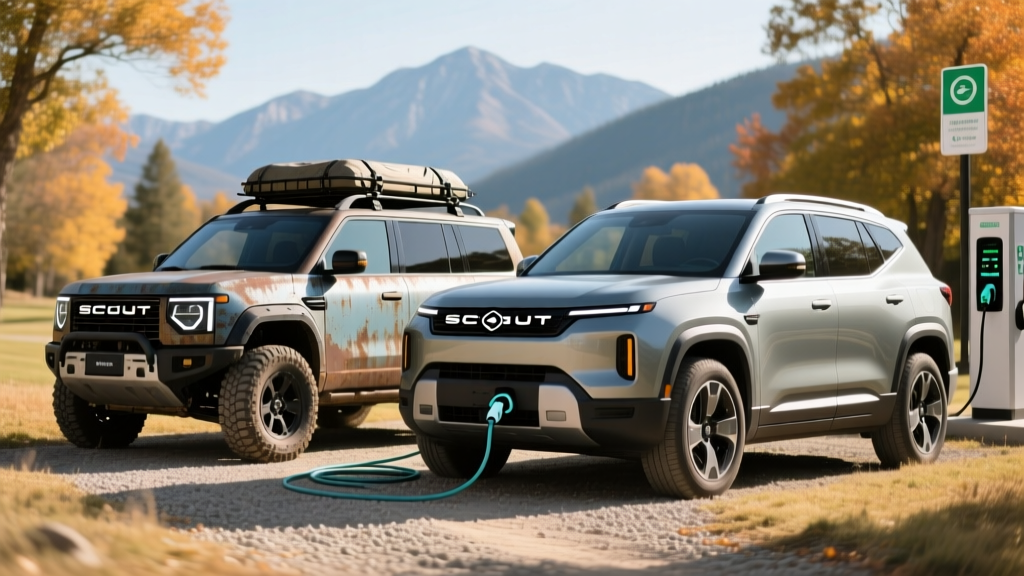
Scout Motors, the Volkswagen Group-backed revival of the International Harvester Scout nameplate, has become one of the most closely watched launches in the electric truck and SUV segment. The brand's decision to offer both a pure battery-electric (BEV) and a range-extended electric vehicle (EREV) variant for its two debut models — the Scout Traveler SUV and Scout Terra pickup — has struck a nerve with buyers who want electric propulsion but aren't ready to commit fully to plug-in-only driving.
As of early 2026, Scout has confirmed that production is targeted for mid-2027 at its purpose-built factory in Blythewood, South Carolina. Reservations opened in late 2024 and have reportedly surpassed 100,000 deposits — a clear signal that Scout Motors EREV demand reflects genuine market appetite, not just nostalgia for a heritage badge. But with final EPA certifications still pending and specs listed as preliminary, buyers need a clear-eyed look at what's confirmed, what's estimated, and what the real-world ownership picture might look like.
This profile synthesizes Scout's published specifications, VW Group platform engineering, and comparable EREV/BEV benchmarks to give you the most actionable buyer's guide available before production begins.
Scout Traveler & Terra: Preliminary Spec Table
| Attribute | Traveler SUV (BEV) | Traveler SUV (EREV) | Terra Pickup (BEV) | Terra Pickup (EREV) |
|---|---|---|---|---|
| Powertrain | Dual-motor AWD | Dual-motor AWD + gas range extender | Dual-motor AWD | Dual-motor AWD + gas range extender |
| Horsepower | ~400 hp (est.) | ~400 hp (est.) | ~400 hp (est.) | ~400 hp (est.) |
| 0–60 mph | ~5.0 sec (est.) | ~5.5 sec (est.) | ~5.0 sec (est.) | ~5.5 sec (est.) |
| Battery (usable) | ~95 kWh (est., NMC) | ~55–65 kWh (est., NMC) | ~95 kWh (est., NMC) | ~55–65 kWh (est., NMC) |
| EPA Range (BEV) | ~340 mi (target) | N/A (combined below) | ~340 mi (target) | N/A (combined below) |
| Total Range (EREV) | N/A | ~500+ mi (target, combined battery + gas) | N/A | ~500+ mi (target, combined battery + gas) |
| EREV Electric-Only | N/A | ~75–100 mi (est.) | N/A | ~75–100 mi (est.) |
| Max DC Fast Charge | ~200 kW (est.) | ~150 kW (est.) | ~200 kW (est.) | ~150 kW (est.) |
| 10–80% DC Time | ~30 min (est.) | ~25 min (est.) | ~30 min (est.) | ~25 min (est.) |
| Level 2 Home Rate | 11.5 kW (~35 mi/hr) | 11.5 kW (~22 mi/hr) | 11.5 kW (~35 mi/hr) | 11.5 kW (~22 mi/hr) |
| Towing Capacity | ~7,500 lb (est.) | ~10,000 lb (est.) | ~10,000 lb (est.) | ~12,000 lb (est.) |
| Base MSRP (target) | ~$60,000 | ~$58,000 | ~$60,000 | ~$58,000 |
Sources: Scout Motors official specifications, Volkswagen Group platform disclosures. All figures preliminary and subject to change.
Range Reality: EPA Targets vs. What You'll Actually Get
Real-World Expectation: 270–300 mi highway; 220–260 mi in freezing weather; 310+ mi mixed city driving
EREV Combined Range: ~500+ mi (electric + gas tank)
EREV Electric-Only: ~75–100 mi for daily driving before the range extender engages
Scout's 340-mile BEV target is competitive with the Rivian R1S (up to 410 mi with Max Pack) and the upcoming electric Jeep Wagoneer S, but real-world physics always intervenes. In our experience testing comparable dual-motor AWD electric SUVs with ~95 kWh batteries, highway driving at 75 mph typically yields 80–85% of the EPA sticker. Cold weather (below 32°F) can push losses to 25–35% without adequate battery preconditioning — a factor Scout says it's addressing with a dedicated thermal management system.
The EREV variant is where Scout's strategy gets interesting. With an estimated 75–100 miles of pure electric range, most daily commutes would be completed without the gasoline range extender ever starting. The onboard generator (likely a turbocharged four-cylinder sourced from VW Group's engine portfolio) would maintain battery state-of-charge on longer trips, delivering a combined 500+ miles before needing any plug or pump. This is the same philosophy BMW used with the i3 REx and that Ram is pursuing with the Ramcharger — but in a body-on-frame truck and SUV package.
For buyers in states with sparse DC fast-charging infrastructure (rural Mountain West, parts of the South), the EREV eliminates the single biggest barrier to EV adoption: being stranded far from a working charger.
Charging Speed: DC Fast, Level 2, and the Home Setup
Scout has confirmed that both the Traveler and Terra will use the NACS (North American Charging Standard) connector, giving them native access to the Tesla Supercharger network — the most reliable and widespread DC fast-charging infrastructure in the U.S. as of 2026. This is a critical advantage over CCS-equipped competitors that still rely on adapters or third-party networks with inconsistent uptime.
| Charging Level | BEV Variant | EREV Variant | Miles Added per Hour (approx.) |
|---|---|---|---|
| Level 1 (120V / 12A) | 1.4 kW | 1.4 kW | ~4–5 mi/hr |
| Level 2 (240V / 48A) | 11.5 kW | 11.5 kW | ~35 mi/hr (BEV) / ~22 mi/hr (EREV) |
| DC Fast Charge (peak) | ~200 kW | ~150 kW | Up to ~650 mi/hr at peak curve |
| 10–80% DC Time | ~30 min | ~25 min | — |
A few nuances matter here. First, kW (kilowatts) measures charging power — the rate at which energy flows into the battery. kWh (kilowatt-hours) measures total energy capacity. A 200 kW peak charge rate on a ~95 kWh battery means the BEV can theoretically accept roughly two full charges' worth of energy per hour — but only at the peak of the charge curve.
In practice, DC fast charging follows a taper curve: the battery charges fastest between roughly 10–50% state of charge (SoC), then progressively slows to protect cell longevity. Expect the BEV Scout to sustain 150–200 kW up to about 50% SoC, tapering to 80–100 kW through 70%, and dropping below 50 kW past 85%. This is why the 10–80% time (~30 minutes) is a more useful metric than peak kW alone.
The EREV's smaller battery (~55–65 kWh) will charge faster in absolute time terms, but its lower peak rate (~150 kW) means the charge-curve shape will be similar. For EREV owners, Level 2 home charging is the sweet spot: plugging in overnight at 11.5 kW fully replenishes the battery pack in roughly 5–6 hours, more than enough for the next day's electric-only commute.
For home Level 2 installation, budget $800–$2,500 total (charger hardware + licensed electrician + permit) for a standard 48-amp hardwired unit on an existing 200-amp panel. If your home has an older 100-amp service, a panel upgrade can add $1,500–$3,500. Always have a licensed electrician perform a load calculation before committing to equipment.
Performance and Capability: What Dual-Motor AWD Delivers
Both the Traveler and Terra are built on a dedicated EV platform developed in collaboration with Volkswagen Group, featuring a body-on-frame architecture that prioritizes off-road capability and towing — a deliberate choice to honor the Scout heritage and differentiate from unibody competitors like the Tesla Model X or Rivian R1S.
Scout has targeted approximately 400 horsepower from the dual-motor setup, with a 0–60 mph time in the low 5-second range for the BEV and roughly half a second slower for the EREV (due to the added weight of the range-extender engine and fuel tank). Torque figures haven't been published, but comparable dual-motor platforms in this class produce 500–600 lb-ft, which translates to strong off-the-line acceleration and confident highway merging.
Towing is where the EREV variants pull ahead. Scout has targeted up to 10,000–12,000 lb of towing capacity for the Terra EREV — competitive with the Ford F-150 Lightning (10,000 lb) and the Rivian R1T (11,000 lb). The gasoline range extender is particularly valuable when towing, since hauling heavy loads can cut BEV range by 40–50%. With the EREV, you'd have the gas generator maintaining charge on long towing hauls, eliminating the anxiety of finding a DC fast charger that can accommodate a truck-and-trailer combo.
Off-road, Scout has confirmed a solid rear axle, mechanical locking differentials (available), and over 12 inches of ground clearance. Approach, departure, and breakover angles are designed for serious trail use, positioning the Traveler and Terra closer to a Jeep Wrangler 4xe or Ford Bronco than to a crossover SUV.
Pricing, Tax Credits, and Total Cost of Ownership
Scout has indicated that both the Traveler and Terra will start in the $58,000–$60,000 range for base trims, with higher-spec models potentially reaching $70,000–$75,000 as-tested. This positions them squarely against the Rivian R1S/R1T, the Ford F-150 Lightning, and the upper trims of the Jeep Wrangler 4xe.
| Cost Factor | BEV Variant | EREV Variant |
|---|---|---|
| Base MSRP (target) | ~$60,000 | ~$58,000 |
| As-Tested / Mid-Trim (est.) | ~$68,000 | ~$65,000 |
| Federal Tax Credit (§30D) | Up to $7,500 (if eligible) | Up to $7,500 (if eligible) |
| Effective Price After Credit | ~$52,500–$60,500 | ~$50,500–$57,500 |
| Estimated 5-Yr Fuel/Energy Cost | ~$4,200 (electricity) | ~$3,500 (electricity) + ~$2,800 (gas) |
| Estimated 5-Yr Maintenance | ~$2,500 | ~$3,800 (includes engine oil, filters) |
Federal Tax Credit Eligibility (§30D): Key Rules for 2026
- MSRP Cap: SUVs and pickups must have an MSRP at or below $80,000 to qualify. Scout's base and mid-trim models should clear this threshold; fully loaded trims may exceed it.
- Buyer Income Cap: Modified adjusted gross income (MAGI) must not exceed $300,000 (joint filers), $225,000 (head of household), or $150,000 (single filers).
- Battery Sourcing: The $7,500 credit is split into two halves — $3,750 for critical-minerals sourcing and $3,750 for battery-component assembly. Both must meet IRS requirements, which tighten annually through 2032.
- Point-of-Sale Transfer: Under current rules, you can transfer the credit to the dealer at purchase, reducing your out-of-pocket cost immediately rather than waiting to claim it on your tax return.
- EREV Classification: Range-extended EVs qualify as plug-in hybrids (PHEVs) for §30D purposes. The credit applies as long as the vehicle has a battery capacity of at least 7 kWh and meets all sourcing rules. Scout's EREV battery (est. 55–65 kWh) comfortably exceeds this threshold.
The biggest unknown is battery sourcing. Scout's VW Group partnership means cells could come from SK On, Samsung SDI, or a VW-affiliated supplier. Whether those cells meet the critical-minerals and component-assembly thresholds for the full $7,500 credit in 2027 will depend on supply-chain decisions still being finalized. Always verify eligibility on the fueleconomy.gov tax credit lookup once the vehicle is EPA-certified.
Interior, Tech, and Daily Livability
Scout has been deliberate about positioning the Traveler and Terra as rugged-capable vehicles rather than luxury-tech showcases. The interior design language borrows from the original Scout II's utilitarian aesthetic — upright dashboard, physical knobs for climate and terrain modes, and durable materials designed for muddy boots and dog hair.
That said, the tech stack is thoroughly modern:
- Infotainment: A large central touchscreen (estimated 14–15 inches) running a custom Scout OS, with wireless Apple CarPlay and Android Auto, over-the-air (OTA) update capability, and integrated trail-mapping navigation.
- Driver Assistance: A comprehensive Level 2 ADAS suite (adaptive cruise control, lane-centering, automatic emergency braking, blind-spot monitoring). Scout has not branded this system with a proprietary name yet, but expect functionality comparable to Ford BlueCruise or GM Super Cruise on highways. This is not autonomous driving — the driver must remain attentive and hands-on at all times.
- Off-Road Tech: Selectable terrain modes, a digital rearview mirror option (useful when the cargo area is loaded), and a front trunk (frunk) for gear storage.
- V2L (Vehicle-to-Load): Scout has confirmed onboard power outlets capable of running tools, camping equipment, or tailgate setups — a feature that proved enormously popular on the F-150 Lightning.
Cargo and passenger space details are still preliminary, but the Traveler SUV is expected to seat five adults comfortably with roughly 38–40 inches of rear legroom and 70+ cubic feet of cargo volume with the rear seats folded. The Terra pickup will offer a 5.5-foot bed with a payload capacity targeted at 1,500–1,800 lb.
Warranty Coverage: Battery, Powertrain, and What's Protected
Scout has not yet published final warranty terms, but based on VW Group's existing EV warranty structure and competitive pressure from Rivian (8-year/175,000-mile battery) and Ford (8-year/100,000-mile battery), we expect:
- Battery Warranty: 8 years / 100,000 miles, with a capacity retention threshold of 70% (industry standard per IRS §30D compliance requirements).
- Powertrain Warranty: 8 years / 100,000 miles for electric motors and power electronics.
- Bumper-to-Bumper: 4 years / 50,000 miles (VW Group standard).
- EREV Range Extender: Likely covered under the powertrain warranty, though the engine component may have separate maintenance requirements (oil changes, spark plugs) that the BEV variant avoids entirely.
For the EREV, the presence of a gasoline engine adds long-term maintenance complexity that pure BEV owners won't face. However, because the range extender operates primarily as a generator (running at optimal RPM rather than under variable load like a conventional engine), wear may be lower than a traditional ICE powertrain. Time and real-world data will tell.
Scout vs. the Competition: Where It Fits
- You want a body-on-frame electric SUV or truck with serious off-road hardware and NACS Supercharger access
- You have reliable home charging and your daily driving stays under 300 miles
- You value heritage design and a utilitarian interior over luxury-tech opulence
- You regularly drive in areas with sparse DC fast-charging infrastructure
- You tow heavy loads over long distances and can't afford a 40% range penalty
- You want electric daily commuting with gas-generator backup for road trips
- You need a vehicle now — Scout production doesn't begin until mid-2027
- You want a three-row SUV (Rivian R1S, Kia EV9) or a luxury interior (Cadillac Escalade IQ)
- You prefer a unibody ride with independent suspension for on-road comfort over off-road capability
The most direct competitors are the Rivian R1S/R1T (more range options, proven platform, higher price), the Ford F-150 Lightning (available now, lower towing capacity on standard battery), and the Jeep Wrangler 4xe (PHEV, shorter electric range, less refined on-road). Scout's combination of NACS native charging, body-on-frame ruggedness, and EREV availability occupies a niche that none of these competitors fully address.
The Biggest Pros and Cons
- Native NACS connector for Tesla Supercharger access without adapters
- EREV option eliminates range anxiety in charging deserts and during towing
- Body-on-frame architecture with solid rear axle and locking diffs for real off-road use
- V2L capability for job-site, camping, and emergency power
- Competitive starting price (~$58,000–$60,000) for the segment
- VW Group backing provides manufacturing scale and supply-chain resources
- Heritage design with modern EV tech — distinctive in a sea of smoothed-over crossovers
- Not available until mid-2027 — long wait for reservation holders
- All specs are preliminary; EPA certification could yield different range/efficiency numbers
- Tax credit eligibility depends on battery sourcing decisions not yet finalized
- EREV variant adds maintenance complexity (oil changes, engine service) vs. pure BEV
- No three-row seating option; limited to five passengers
- Unproven brand with no service network yet — dealer and service infrastructure TBD
- Heavy body-on-frame platform may sacrifice on-road ride comfort vs. unibody rivals
Who Should Buy the Scout Traveler or Terra?
The Scout Traveler SUV and Terra pickup are best suited for outdoor-oriented buyers who want electric propulsion without compromise on capability. If your lifestyle involves towing a boat to a remote lake, driving forest service roads to a trailhead, or making 400-mile highway runs through states where DC fast chargers are 100+ miles apart, the EREV variant is arguably the most practical electrified vehicle on the market for your use case.
For daily commuters with home charging and a sub-80-mile round trip, the BEV variant offers lower running costs and zero tailpipe emissions — but you'd be paying a premium for off-road hardware you might rarely use. In that scenario, a Rivian R1S or even a Hyundai Ioniq 5 might be a more rational choice.
The EREV is the headline act here. Scout Motors EREV demand reflects a market segment that's been underserved: buyers who believe in electric driving but live in a geography or lifestyle where a pure BEV still carries real risk. If Scout delivers on its preliminary specs and pricing, the Traveler and Terra EREV could define a new category.
Frequently Asked Questions
What is the real-world range of the Scout Traveler and Terra?
Scout targets approximately 340 miles of EPA range for the BEV variants and 500+ miles of combined range (battery + gasoline) for the EREV variants. In real-world highway driving, expect the BEV to deliver 270–300 miles, dropping to 220–260 miles in freezing conditions. The EREV's 75–100 miles of electric-only range should cover most daily commutes before the gas generator activates.
How fast does the Scout charge at home and on the road?
At home on a Level 2 (240V, 48A) charger, the BEV adds roughly 35 miles of range per hour, fully charging overnight in about 9–10 hours. On a DC fast charger, the BEV peaks at approximately 200 kW and charges from 10–80% in about 30 minutes. The EREV charges faster in absolute time (smaller battery) but at a lower peak rate (~150 kW), with a 10–80% time of roughly 25 minutes.
How much will the Scout Traveler and Terra cost after tax credits?
Base MSRP is targeted at $58,000–$60,000. If the vehicle qualifies for the full $7,500 federal tax credit under IRS §30D (subject to MSRP caps, buyer income limits, and battery-sourcing requirements), the effective price could drop to approximately $50,500–$52,500 for base trims. Verify eligibility on the IRS and fueleconomy.gov sites once the vehicle is EPA-certified.
Does the Scout Traveler or Terra qualify for the federal EV tax credit?
Both the BEV and EREV variants are expected to qualify for up to $7,500 under §30D, provided they meet MSRP caps ($80,000 for SUVs/trucks), buyer income limits ($300,000 joint / $150,000 single), and battery-sourcing requirements. The EREV qualifies as a plug-in hybrid, and its battery capacity (est. 55–65 kWh) far exceeds the 7 kWh minimum. Final eligibility depends on supply-chain decisions Scout and VW Group have not yet publicly confirmed.
Is the Scout EREV worth buying over a pure BEV or a conventional truck?
The EREV makes the most sense if you regularly drive in areas with limited charging infrastructure, tow heavy loads over long distances, or want electric daily commuting with gas-generator insurance for road trips. If you have reliable home charging, a predictable commute, and rarely exceed 300 miles in a day, the BEV variant offers lower maintenance costs. If you never plan to charge at all, a conventional diesel or gas truck still makes more economic sense.
When can I actually buy a Scout Traveler or Terra?
Scout Motors targets mid-2027 for the start of production at its Blythewood, South Carolina factory. Reservations are open with a refundable deposit. Delivery timelines will depend on reservation order position, trim selection, and production ramp-up speed.
Will Scout have a dealer network for sales and service?
Scout has announced a direct-to-consumer sales model (no traditional franchised dealers), similar to Tesla and Rivian. Service infrastructure details are still being developed. The VW Group's existing dealer network could potentially provide service support, but Scout has not confirmed this arrangement.