If you've been following the revival of the International Harvester Scout nameplate, you likely have questions about when these trucks will actually hit the road — and whether they're worth the wait. Scout Motors, a Volkswagen Group-backed startup, has announced two electric vehicles: the Scout Traveler SUV and the Scout Terra pickup truck. As of early 2026, both remain in pre-production, with customer deliveries targeted for late 2027 from a new assembly plant in Blythewood, South Carolina. Reservations are open with a refundable deposit, but final EPA range, battery specs, and pricing are not yet confirmed. What Scout has shared points to a body-on-frame, dual-motor platform targeting 350+ miles of EPA range, 800-volt architecture for fast DC charging, and a starting price in the mid-$50,000s before incentives.
What Are Scout EV Trucks — And Who's Behind Them?
Scout Motors is not a legacy automaker pivoting to electric — it's a purpose-built EV company created by Volkswagen Group in 2022 to target the North American truck and SUV market. The brand resurrects the Scout name, last seen on the International Harvester Scout II in 1980. VW is investing approximately $2 billion into the venture, including a ground-up manufacturing facility in Blythewood, South Carolina, designed to produce up to 200,000 vehicles annually at full capacity.
The two announced models share a common platform:
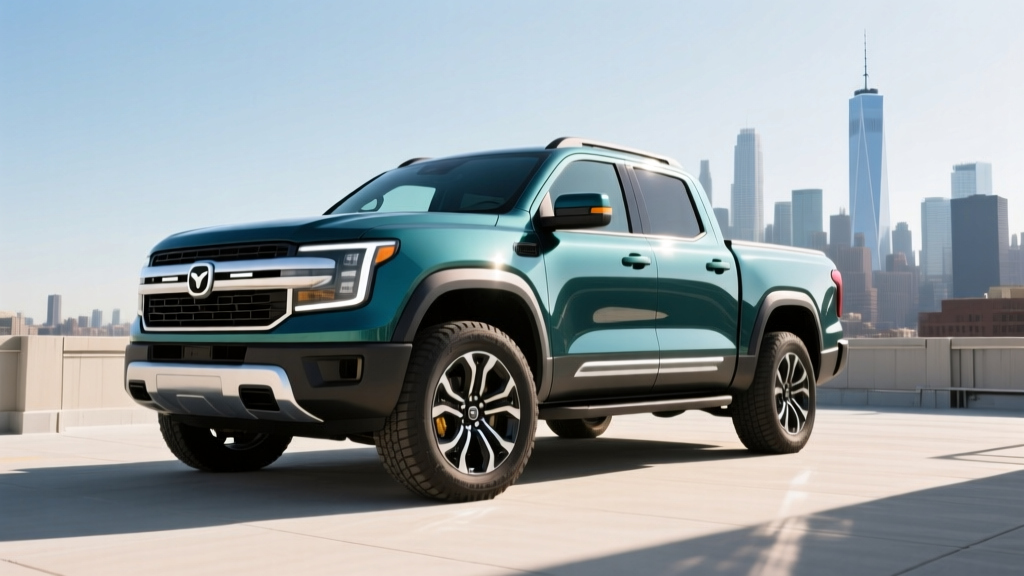
- Scout Terra — A midsize electric pickup truck, positioned to compete with the Rivian R1T and Ford F-150 Lightning.
- Scout Traveler — A two-row electric SUV sharing the Terra's underpinnings, aimed at the Jeep Wrangler 4xe and Rivian R1S buyer.
Both vehicles are being engineered as body-on-frame, dual-motor all-wheel-drive platforms. Scout has emphasized off-road capability as a core brand pillar, with approach/departure/breakover angles designed to match or exceed the Jeep Wrangler Rubicon. This is a deliberate differentiation strategy — most current electric trucks prioritize on-road comfort and efficiency over trail capability.
Preliminary Specs: Range, Battery, and Charging
Because Scout EV trucks have not entered production, the numbers below are based on manufacturer announcements and industry analysis. Treat them as targets, not guarantees — final EPA certification will come closer to launch.
| Specification | Target / Estimate |
|---|---|
| EPA Range (est.) | ~350 miles (standard pack); ~500 miles with range extender option |
| Battery Chemistry | Not confirmed; likely NMC for energy density |
| Battery Capacity (usable) | Est. 100-120 kWh |
| Platform Voltage | 800V architecture |
| Peak DC Fast Charge | Est. 250-350 kW |
| 10-80% Charge Time (est.) | ~20 minutes (at peak rate) |
| Drivetrain | Dual-motor AWD |
| Horsepower (est.) | 400-600 HP depending on trim |
| 0-60 mph (est.) | ~5.0 seconds |
| Towing Capacity (est.) | 7,500-10,000 lbs |
| Starting MSRP (est.) | $55,000-$60,000 |
The Range Extender Question: EREV vs. Pure BEV
Scout has confirmed it will offer a range-extender option — a small gasoline engine that acts as a generator to recharge the battery, never directly driving the wheels. This makes the extended-range variant an EREV (Extended-Range Electric Vehicle), similar to the original Chevrolet Volt's architecture but applied to a full-size truck.
With the range extender, Scout targets approximately 500 total miles of driving range. This is a strategic move to address two real buyer concerns:
- Towing range collapse: Electric trucks lose 40-50% of range when towing at highway speeds. An F-150 Lightning rated at 320 miles EPA may deliver only 150-180 miles with a 6,000-lb trailer. An EREV can run the generator to extend that significantly.
- Charging desert anxiety: Rural areas, national parks, and cross-country routes still have gaps in DC fast-charging infrastructure. A gas generator provides a fallback.
The trade-off: EREV variants will require oil changes, spark plug replacements, and emissions maintenance on the generator engine. They also add weight and mechanical complexity. If you have reliable home charging and rarely tow long distances, the pure BEV version will have lower lifetime maintenance costs.
How Do Scout EV Trucks Compare to What's Available Now?
Since you can't buy a Scout Terra today, here's how the announced specs compare to electric trucks currently on the market:
| Metric | Scout Terra (Est.) | Rivian R1T (Dual Max) | Ford F-150 Lightning (Ext. Range) | Chevy Silverado EV (4WT) |
|---|---|---|---|---|
| EPA Range | ~350 mi | 410 mi | 320 mi | 450 mi |
| Battery (usable) | ~100-120 kWh | 149 kWh | 131 kWh | 200+ kWh |
| Peak DC Charge | ~300 kW | 220 kW | 150 kW | 350 kW |
| 0-60 mph | ~5.0 sec | 3.5 sec | 3.8 sec | ~4.5 sec |
| Max Towing | ~10,000 lbs | 11,000 lbs | 10,000 lbs | 10,000 lbs |
| Starting MSRP | ~$55,000 | $79,900 | $59,995 | $57,495 |
| Availability | 2027 (est.) | Now | Now | Now |
Sources: fueleconomy.gov, Rivian, Ford, Chevrolet. Scout specs are manufacturer-announced estimates and subject to change.
Scout's primary competitive advantage, if the pricing holds, is the entry price. At an estimated $55,000-$60,000 starting MSRP, the Terra undercuts the Rivian R1T significantly and matches the F-150 Lightning and Silverado EV base trims — while offering competitive range and 800V charging that neither the Lightning nor the current R1T can match.
Tax Credits, Pricing, and the True Cost of Ownership
Under the current IRS §30D federal tax credit rules, a new electric pickup truck may qualify for up to $7,500 — but only if it meets several strict requirements:
- MSRP Cap: Trucks/vans/SUVs must have an MSRP ≤ $80,000 to qualify. Scout's estimated pricing should clear this threshold.
- Buyer Income Limits: AGI must not exceed $150,000 (single), $225,000 (head of household), or $300,000 (joint filers).
- Battery Sourcing: A percentage of critical minerals and battery components must be sourced from the U.S. or FTA partners. These thresholds increase annually — 2027 requirements will be stricter than 2026.
- Final Assembly: Must occur in North America. Scout's South Carolina plant satisfies this.
- Point-of-Sale Transfer: Eligible buyers can apply the credit as an immediate price reduction at the dealer, rather than waiting for a tax refund.
Eligibility rules change frequently. Consult a tax professional and verify current requirements at irs.gov before purchasing.
Here's a realistic five-year cost comparison for a Scout Terra BEV versus a comparable gas-powered midsize truck (e.g., Toyota Tacoma TRD Off-Road at ~$45,000 MSRP):
| Category | Scout Terra (BEV, Est.) | Gas Midsize Truck |
|---|---|---|
| Purchase Price (after credit) | $47,500-$52,500 | $45,000 |
| Fuel / Energy (75k mi) | $3,000-$4,500 | $9,000-$11,000 |
| Maintenance | $800-$1,200 | $2,500-$3,500 |
| Insurance (est.) | $9,000-$12,000 | $7,500-$10,000 |
| 5-Year Total (est.) | $60,300-$70,200 | $64,000-$69,500 |
The EV's higher insurance premiums (typically 15-25% more for electric trucks due to battery replacement costs in collision claims) partially offset the fuel and maintenance savings. Home charging at residential electricity rates ($0.12-$0.18/kWh) drives the energy cost advantage; relying exclusively on DC fast charging at $0.35-$0.48/kWh narrows the gap considerably.
Real-World Ownership: What First-Time EV Truck Buyers Should Know
Buying an electric truck is not the same as buying a gas truck. Here are the practical realities that spec sheets don't highlight:
Home Charging Is Non-Negotiable for Most Owners
A Level 2 home charger (240V, 40-48 amps / 9.6-11.5 kW) will add roughly 25-35 miles of range per hour of charging. A full overnight charge (10 hours) replenishes 250-350 miles — enough for most daily driving. Installation costs range from $500-$2,500 depending on your electrical panel's capacity. If you need a panel upgrade from 100A to 200A service, add $1,500-$3,000. Without home charging, daily EV truck ownership becomes significantly less convenient.
Charging Speed Matters More Than Peak Numbers
Scout's 800V architecture suggests peak charging around 300+ kW. But peak rate is not sustained rate. A typical DC fast-charge curve holds peak speed from roughly 10-40% State of Charge, then tapers progressively. The "10-80% in ~20 minutes" estimate assumes ideal conditions: preconditioned battery, a 350 kW-capable charger, and moderate ambient temperature. Expect real-world 10-80% sessions to take 25-30 minutes on average.
Towing Will Test Your Patience
Any electric truck loses massive range when towing. Aerodynamic drag and rolling resistance increase dramatically with a trailer. Plan for 40-50% range reduction at highway speeds with a loaded trailer. The EREV range-extender variant is specifically designed for buyers who tow frequently — the gas generator eliminates the need for multiple charging stops on long hauls.
Cold Weather Hits Trucks Harder
Trucks have larger cabin volumes to heat and typically use less aerodynamic shapes. In sub-freezing temperatures, expect 20-30% range loss. Scout's thermal management system details haven't been released, but a heat pump (standard on most modern EVs) will help mitigate cabin-heating energy draw. Battery preconditioning before DC fast charging is essential in cold weather — without it, charging speeds can be cut in half.
Common Misconceptions About Scout EV Trucks
| Myth | Fact |
|---|---|
| "Scout is just a VW in disguise." | Scout is a separate legal entity backed by VW Group funding, but it's developing its own platform, design, and software. It is not a rebadged VW ID. vehicle. |
| "The $7,500 tax credit is guaranteed." | The credit depends on battery-sourcing rules that tighten yearly, buyer income caps, and MSRP limits. By the time Scout ships in 2027, sourcing requirements will be even stricter than today's. |
| "500 miles with the range extender means I never need to charge." | The gas generator extends range but still requires fuel stops. It also adds weight, maintenance, and complexity. EREVs are a bridge solution, not a replacement for charging infrastructure. |
| "Scout will be cheaper than a Rivian." | The base MSRP will likely undercut the R1T by $20,000+, but well-equipped trims could push into the $70,000s. The real comparison is against F-150 Lightning and Silverado EV pricing. |
| "I can reserve one and get it next year." | Production is targeted for 2027. Early reservation holders may receive vehicles first, but widespread availability could extend into 2028 depending on ramp-up speed. |
Should You Reserve a Scout — Or Buy What's Available Now?
- Reserve a Scout Terra if: You don't need a truck until 2027-2028, you want competitive range at a potentially lower price point than Rivian, you value off-road capability as a priority, and you're comfortable with a startup's first-generation product (potential software bugs, service network gaps, early-production recalls).
- Buy a Rivian R1T now if: You need a truck immediately, you want a proven platform with an established service network, you prioritize acceleration and tech features, and budget is less of a constraint ($70,000-$100,000+ depending on configuration).
- Buy a Ford F-150 Lightning now if: You want a full-size truck with a dealer network you trust, you need maximum towing and payload today, and you prefer a proven manufacturer with widespread service access. The Lightning's 150 kW peak charging is slower than competitors, however.
- Buy a Chevy Silverado EV now if: You prioritize maximum range (up to 450 EPA miles on the 4WT) and 350 kW DC fast charging. The Silverado EV's pricing starts competitively but climbs quickly on higher trims.
- Wait on Scout entirely if: You cannot charge at home, you live in an area with sparse DC fast-charging infrastructure, or you are risk-averse about first-year production vehicles from a new manufacturer.
Frequently Asked Questions
How much does it cost to reserve a Scout Terra?
Scout Motors has opened reservations with a refundable deposit (typically $100-$500 depending on the reservation tier). This is not a binding purchase commitment — it holds your place in line. Final pricing and configuration will be confirmed closer to production.
Will Scout EV trucks qualify for the federal $7,500 tax credit?
They are designed to qualify — U.S. assembly in South Carolina, expected MSRP under the $80,000 truck cap, and a battery supply chain being built to meet critical-mineral sourcing rules. However, §30D requirements tighten each year, and final eligibility depends on the specific battery sourcing at time of delivery in 2027. Always verify current rules at irs.gov.
What charging connector will Scout trucks use?
Scout has not officially confirmed the connector, but the industry has broadly adopted the NACS (North American Charging Standard, used by Tesla Superchargers) as the de facto standard. Given Scout's 2027 launch timeline, NACS is the most likely choice, which would grant access to Tesla's Supercharger network — the most extensive DC fast-charging infrastructure in North America with over 25,000 stalls.
How does the EREV range extender work?
The range-extender variant includes a small gasoline engine connected to a generator. This engine never drives the wheels directly — it only produces electricity to recharge the battery pack when it drops below a certain threshold. Think of it as a portable generator built into the truck. You'll still need to fill it with gasoline, and it will require standard engine maintenance (oil, filters, spark plugs), but the driving experience remains purely electric.
Is Scout Motors a reliable company to buy from?
Scout is backed by Volkswagen Group, one of the world's largest automakers, with a $2 billion investment and a purpose-built factory. This is not a fly-by-night startup. However, it is a new brand with no production history, no service network, and no track record for reliability or resale value. Early adopters accept higher risk in exchange for first-mover access. The VW backing provides significant financial stability compared to independent startups, but first-year production vehicles from any manufacturer often have more issues than later model years.
When will I actually be able to drive a Scout Terra?
Scout targets the start of production in 2027, with customer deliveries beginning after initial manufacturing ramp-up. Realistically, only early reservation holders are likely to receive vehicles in 2027. Broader availability through a dealer or direct-to-consumer model will likely extend into 2028. If you need a truck within 12 months, Scout is not the right choice.