What We Know About the Scout EV Interior So Far
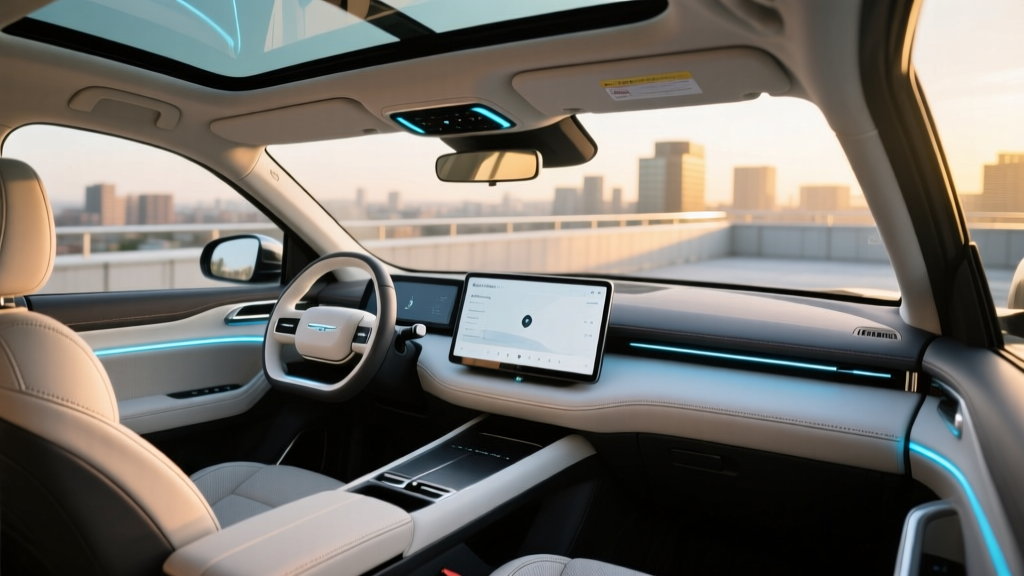
The short answer: The Scout Terra (pickup) and Scout Traveler (SUV) are expected to feature a rugged, utilitarian interior with a large central touchscreen (estimated 12–15 inches), a digital instrument cluster, physical controls for off-road functions, durable wipeable surfaces, and a focus on modular storage. Both models ride on VW Group's new RBE (Rugged Body Electric) skateboard platform. Production begins in 2028 at a new plant in Blythewood, South Carolina, with reservations open and deliveries targeted for late 2028. Because the vehicles are not yet in production, all specs below are preliminary estimates based on Scout's official previews, VW Group platform data, and industry analysis. Final EPA range, pricing, and interior materials will be confirmed closer to launch.
Scout Motors — a standalone brand under the Volkswagen Group, not to be confused with the original International Harvester Scout — has been deliberately quiet about full interior reveals. What we've seen through official teaser images and prototype spy shots points to a cabin designed for the Jeep Wrangler / Rivian R1T / Ford Bronco buyer: functional over luxurious, with an emphasis on durability, visibility, and tech integration for trail use. If you're researching the Scout EV interior to decide whether to hold a reservation, this guide breaks down what's confirmed, what's estimated, and what ownership will actually look like when these trucks hit the road.
Scout Terra vs. Traveler: Interior Layout & Cabin Estimates
Scout is launching two body styles simultaneously. Both share the RBE platform and will use similar interior architecture, but the use cases diverge.
| Feature | Scout Terra (Pickup) | Scout Traveler (SUV) |
|---|---|---|
| Seating | 5 (estimated, crew cab) | 5 (estimated) |
| Central Display | ~12–15" touchscreen (est.) | ~12–15" touchscreen (est.) |
| Instrument Cluster | Digital (est. 10–12") | Digital (est. 10–12") |
| Physical Off-Road Controls | Confirmed (diff lock, terrain modes) | Confirmed (diff lock, terrain modes) |
| Cargo (behind rear seats) | ~5-ft bed | Enclosed cargo area, est. 35–45 cu ft |
| Front Trunk (Frunk) | Expected, size TBD | Expected, size TBD |
| Materials | Durable/wipeable surfaces (est.) | Durable/wipeable surfaces (est.) |
| Harvester™ Range Extender | Available (EREV option) | Available (EREV option) |
The RBE platform is a body-on-frame EV architecture — unusual in an industry trending toward unibody skateboards. This choice signals Scout's commitment to genuine off-road capability, towing, and payload, which directly impacts interior packaging: expect a higher floor, more upright seating position, and a cabin that prioritizes headroom and ingress/egress over sedan-like refinement.
Estimated Powertrain, Range & Charging Specs
Scout has confirmed dual-motor all-wheel drive as standard on both models. The optional Harvester™ range extender is a gasoline engine that acts solely as a generator to recharge the battery — it does not drive the wheels directly, making the Terra and Traveler extended-range EVs (EREVs) when so equipped, similar in concept to the original BMW i3 REx or the upcoming Ram Ramcharger.
| Spec | BEV (Est.) | EREV w/ Harvester™ (Est.) |
|---|---|---|
| Battery Chemistry | NMC (likely) | NMC (likely) |
| Battery Capacity (usable) | ~100–120 kWh (est.) | ~80–100 kWh + gas generator |
| EPA Range (BEV only) | ~300–350 miles (target) | ~200–250 mi electric + ~300+ mi gas |
| Horsepower | ~400–600 HP (est.) | ~400–600 HP (est.) |
| 0–60 mph | ~4.5–6.0 sec (est.) | ~4.5–6.0 sec (est.) |
| Peak DC Fast Charge | ~150–200 kW (est.) | ~150–200 kW (est.) |
| 10–80% DC Charge Time | ~25–35 min (est.) | ~25–35 min (est.) |
| Level 2 Charge Rate | ~11–19 kW (est.) | ~11–19 kW (est.) |
| Towing Capacity | ~7,500–10,000 lbs (target) | ~7,500–10,000 lbs (target) |
| NACS Connector | Confirmed | Confirmed |
Real-world range reality: Scout targets 350 miles EPA for the BEV. In real-world highway driving at 70+ mph, expect roughly 270–300 miles. In cold weather (below 30°F), plan for 20–30% reduction, putting effective range closer to 220–260 miles. The EREV Harvester™ option solves this for road-trip and cold-climate buyers by extending total range significantly, though you'll need to fuel up in addition to charging.
Projected Pricing, Tax Credits & How It Compares to Gas Trucks
Scout has not released official MSRP figures. Based on positioning against the Rivian R1T, Ford F-150 Lightning, and Jeep Wrangler 4xe, and accounting for VW Group's scale advantages, here are informed estimates:
| Trim (Est.) | Scout Terra Est. MSRP | Scout Traveler Est. MSRP |
|---|---|---|
| Base | $55,000–$60,000 | $50,000–$55,000 |
| Mid | $65,000–$72,000 | $60,000–$67,000 |
| Top/Off-Road | $75,000–$85,000 | $70,000–$80,000 |
Federal tax credit (§30D) outlook for 2028: Current IRS rules cap the new clean vehicle credit at $7,500, with an MSRP cap of $80,000 for pickups and SUVs. Buyer income caps apply ($150K single / $300K joint). Battery sourcing and critical-mineral requirements must also be met. Scout, as a VW Group subsidiary, will need to demonstrate North American battery component and critical-mineral compliance — which is uncertain given VW's supply chain. The credit can be transferred to the dealer as a point-of-sale discount. Check IRS §30D guidelines for current-year rules closer to launch.
Cost Comparison: Scout Terra (BEV) vs. Gas Half-Ton Pickup (5-Year)
| Category | Scout Terra BEV (Est.) | Gas Pickup (e.g., F-150 4x4) |
|---|---|---|
| Purchase Price | $62,000 | $52,000 |
| Tax Credit | –$7,500 (if eligible) | $0 |
| Net Purchase | $54,500 | $52,000 |
| Fuel/Energy (5 yr, 75K mi) | $4,500 (home + public DC) | $11,250 ($3.50/gal, 18 MPG) |
| Maintenance (5 yr) | $1,500 | $4,000 |
| Insurance (5 yr) | $12,000 | $9,000 |
| 5-Year Total Cost | $72,500 | $76,250 |
The EV wins on fuel and maintenance, but insurance for new EV trucks runs 20–35% higher than gas equivalents (per IIHS data on EV repair costs). Your actual savings depend heavily on electricity rates, driving patterns, and whether you qualify for the full tax credit.
Home Charging, Infrastructure & Ownership Realities
Scout has confirmed the NACS (Tesla-style) connector, which means native access to the Tesla Supercharger network — a major advantage for road-trip charging reliability. For daily ownership, here's what to budget:
| Charging Level | Power | Miles Added/Hour | Cost Estimate |
|---|---|---|---|
| Level 1 (120V outlet) | ~1.4 kW | ~3–5 mi/hr | $0 (existing outlet) |
| Level 2 (240V home) | ~11.5 kW | ~30–40 mi/hr | $500–$2,000 install |
| DC Fast (public) | ~150–200 kW peak | ~500–800 mi/hr (peak) | $0.30–$0.55/kWh |
Home charging is the make-or-break factor. A Level 2 home charger (like a ChargePoint Home Flex or Tesla Wall Connector) is essentially mandatory for truck owners who plan to use their vehicle daily. If your home electrical panel is older or maxed out, a panel upgrade can add $1,500–$3,500 to installation. Consult a licensed electrician for a site assessment before committing to a reservation.
If you live in an apartment, rely on street parking, or are in a charging desert (common in rural areas where Scout buyers may live), the EREV Harvester™ option becomes far more practical — you can gas up like a conventional truck and use electric mode for shorter daily drives.
Decision Framework: Should You Reserve a Scout?
Reserve the Scout Terra or Traveler if:
- You want genuine off-road EV capability and the Rivian R1T's $73K+ starting price is too high
- You need a pickup bed (Terra) or enclosed SUV cargo (Traveler) with EV torque for towing
- You have home Level 2 charging or can install it
- You're willing to wait until late 2028 for delivery
- The EREV option appeals for road trips, cold climates, or rural driving
Look elsewhere if:
- You need a vehicle now — the Ford F-150 Lightning, Rivian R1T, and Chevrolet Silverado EV are available today
- You cannot charge at home and public charging infrastructure in your area is sparse
- You want a proven platform with multi-year reliability data (Scout is a brand-new manufacturer)
- Final pricing above $80K would disqualify you from the §30D tax credit
Common Misconceptions About Scout EVs
| Myth | Fact |
|---|---|
| "Scout is made by the original International Harvester company" | Scout Motors is a wholly-owned subsidiary of Volkswagen Group. The brand name was acquired by VW; there is no connection to Navistar/International Harvester's current operations. |
| "It's just a rebadged VW ID.4" | Scout uses an entirely new RBE platform developed specifically for rugged, body-on-frame trucks. It shares no architecture with VW's MEB-based ID vehicles. |
| "EREV means it's a hybrid" | The Harvester™ range extender is a generator only — it never drives the wheels. The truck is always electrically propelled. This is an EREV, not a conventional PHEV like the Wrangler 4xe. |
| "I'll get $7,500 tax credit automatically" | Eligibility depends on your income, the vehicle's MSRP, and battery-sourcing compliance. Scout's credit status won't be confirmed until closer to production. |
| "350-mile range means 350 miles no matter what" | Highway speeds, cold weather, towing, and terrain can reduce real-world range by 20–40%. Plan conservatively for trips. |
Frequently Asked Questions
When will the Scout Terra and Traveler actually be available?
Production is targeted for late 2028 at Scout's new facility in Blythewood, South Carolina. Reservations are currently open with a refundable deposit. Expect final specs, pricing, and EPA certification in 2027 or early 2028.
Will Scout EVs qualify for the federal tax credit?
It's too early to confirm. Eligibility under IRS §30D requires final assembly in North America (confirmed — South Carolina), MSRP below $80K for pickups/SUVs, buyer income under the cap, and battery component/critical-mineral sourcing compliance. Scout's VW Group supply chain will determine the sourcing requirement.
How does the Scout interior compare to the Rivian R1T or Jeep Wrangler?
Scout targets a middle ground: more rugged and utilitarian than the Rivian R1T's premium-minimalist cabin, but more tech-forward and refined than a base Wrangler. Expect durable materials, large screens, physical off-road controls, and modular storage — closer to a well-equipped Bronco than a luxury pickup.
Is the NACS connector confirmed for Scout?
Yes. Scout has confirmed the NACS (North American Charging Standard) connector, providing native access to Tesla Superchargers without an adapter. This is a significant advantage for long-distance travel charging.
Can I tow with a Scout EV without destroying my range?
Towing at max capacity (est. 7,500–10,000 lbs) will reduce range by roughly 40–50%, consistent with all EV trucks. A 350-mile EPA range drops to ~175–210 miles while towing heavy. The EREV Harvester™ option mitigates this substantially for trailer users.