Quick Answer: Is a Scout Electric SUV Right for You?
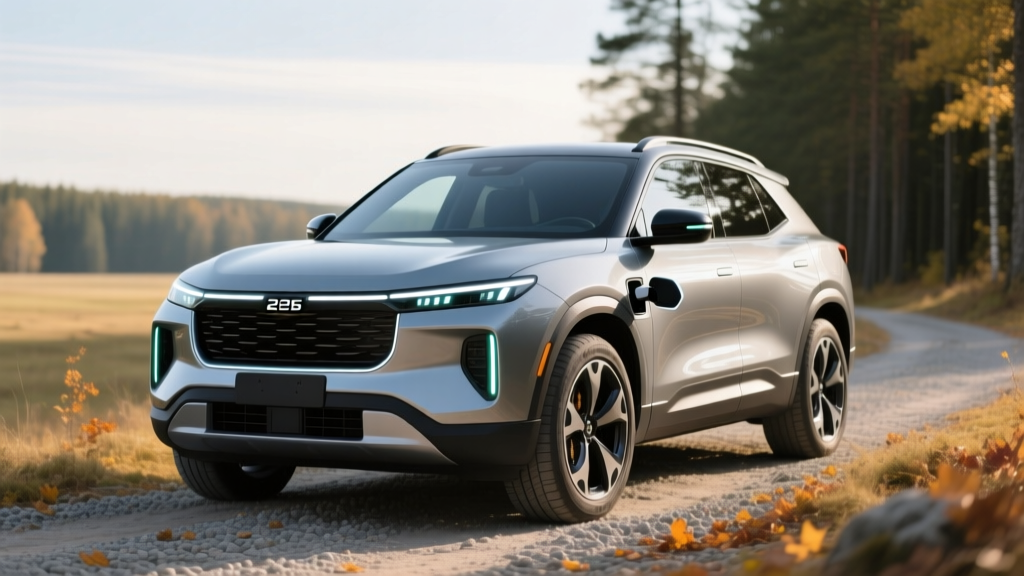
Scout Motors (a Volkswagen Group subsidiary reviving the International Harvester Scout nameplate) is launching two electric vehicles for the 2027 model year, with reservations open and production targeted for late 2027 at its new Blythewood, South Carolina factory. The Scout Terra is a body-on-frame electric pickup; the Scout Traveler is the two-row electric SUV. Both are built for rugged off-road use with an estimated 350+ miles of EPA range, available four-wheel drive, and a starting price expected around $60,000 before incentives. A range-extender variant (a small gas engine that charges the battery but never drives the wheels) has been confirmed, which could push total range past 500 miles. If you want a capable, adventure-oriented electric SUV with real towing ability and don't need delivery before late 2027, Scout is worth a reservation deposit. If you need a vehicle now or rely exclusively on urban charging, established models like the Rivian R1S or Ford Bronco (gas/hybrid) may serve you better today.
Scout Traveler and Terra: What We Know So Far
Scout Motors officially unveiled the Terra pickup and Traveler SUV in October 2024, with detailed specifications rolling out through 2025 and into 2026. Both vehicles ride on a dedicated skateboard platform developed in-house, featuring a body-on-frame architecture unusual for modern EVs but purpose-built for durability and off-road articulation.
Here are the preliminary specifications Scout has published. Because production hasn't begun, treat these as announced/estimated targets subject to change before EPA certification:
| Spec | Scout Traveler (SUV) | Scout Terra (Pickup) |
|---|---|---|
| Estimated EPA Range (BEV) | Up to 350 miles | Up to 350 miles |
| Range-Extender Option | Confirmed; 500+ mi total expected | Confirmed; 500+ mi total expected |
| Battery Chemistry | Not yet disclosed (likely NMC) | Not yet disclosed (likely NMC) |
| Drivetrain | RWD standard; AWD available | RWD standard; 4WD available |
| Estimated 0–60 mph | ~6.5 sec (AWD est.) | ~6.5 sec (4WD est.) |
| Towing Capacity | ~7,500 lbs (target) | ~10,000 lbs (target) |
| Ground Clearance | ~11+ inches (target) | ~11+ inches (target) |
| DC Fast Charge Rate | ~200+ kW (target) | ~200+ kW (target) |
| Starting MSRP (est.) | ~$60,000 | ~$60,000 |
| Production Start | Late 2027 (2028 MY) | Late 2027 (2028 MY) |
Scout has confirmed an 800-volt electrical architecture, which enables faster DC charging and more efficient power delivery compared to older 400V systems. The company also plans over-the-air software updates, a large central touchscreen, and a physical button interface for climate and off-road controls — a nod to buyers frustrated by touchscreen-only interiors.
How the Scout Traveler Compares to Gas and Hybrid SUVs
The Scout Traveler enters a segment dominated by rugged, body-on-frame SUVs that have historically been gas-powered. Here's how the math works when comparing the all-electric Scout against its most direct rivals:
| Metric | Scout Traveler (BEV est.) | Ford Bronco (Gas, 2026) | Toyota 4Runner Hybrid (2026) | Rivian R1S (BEV, 2026) |
|---|---|---|---|---|
| Base MSRP | ~$60,000 | ~$39,690 | ~$42,220 | ~$75,900 |
| EPA Range / Fuel Economy | ~350 mi / ~90 MPGe | ~17 MPG combined | ~28 MPG combined | ~352 mi / ~86 MPGe |
| Cost per Mile (fuel/energy)* | ~$0.04–$0.06 | ~$0.19 | ~$0.12 | ~$0.04–$0.06 |
| Annual Fuel/Energy Cost** | ~$500–$720 | ~$2,280 | ~$1,440 | ~$500–$720 |
| Federal Tax Credit (§30D) | Up to $7,500 (TBD) | $0 | Up to $3,750 (HEV—N/A; PHEV TBD) | Up to $7,500 |
| Maintenance (5-yr est.) | ~$1,500 | ~$3,500 | ~$3,000 | ~$1,500 |
*Assumes $0.15/kWh home charging and $3.40/gal gas. Public DC fast charging costs $0.30–$0.50/kWh, raising per-mile cost to ~$0.10–$0.14.
**Based on 12,000 miles/year. Source: fueleconomy.gov and manufacturer data.
The key takeaway: the Scout Traveler's higher upfront cost is offset by dramatically lower per-mile energy costs and reduced maintenance (no oil changes, fewer moving parts, regenerative braking extends pad life). Over five years and 60,000 miles, the fuel and maintenance savings versus a gas Bronco could total $8,000–$12,000, partially closing the MSRP gap.
Real-World Ownership: What to Expect Beyond the Spec Sheet
Range in Practice
Scout's 350-mile EPA target is promising, but real-world range will vary. Based on testing patterns from similar body-on-frame EVs (Rivian R1T, Hummer EV), expect:
- Highway driving at 75 mph: ~280–310 miles (aerodynamic drag hits boxy SUVs hard)
- Cold weather (below 30°F): ~240–280 miles (battery chemistry slows, cabin heating draws energy)
- Off-road / towing: ~180–250 miles depending on terrain and load — towing near max capacity can cut range by 40–50%
- Mixed suburban/commuting: ~330–350 miles (closest to EPA sticker)
Charging Speed and the 800V Advantage
Scout's confirmed 800-volt architecture means faster DC charging. At a compatible 350 kW charger (like Electrify America's latest stations), Scout targets a 10–80% charge in roughly 20–25 minutes. However, real-world charging curves taper significantly above 80% — a full 10–100% session will take closer to 40–45 minutes. On Level 2 home charging (11.5 kW / 48-amp), expect roughly 30–35 miles of range added per hour, meaning a full overnight charge from 20% to 100% takes about 10–12 hours.
Home Charging Access
Like any EV, the Scout Traveler's economics depend heavily on home charging. A Level 2 home charger installation typically costs $800–$2,500 (equipment + licensed electrician + permit), assuming your electrical panel has capacity. Homes with older 100-amp panels may need a $2,000–$5,000 panel upgrade. If you lack home charging access (apartment, street parking), you'll rely on public DC fast charging, which costs roughly 3–5× more per kWh and adds time to your routine.
The Range-Extender Option: A Unique Differentiator
Scout has confirmed a Harvester range-extender variant — a small gasoline engine that acts as a generator to charge the battery but never mechanically drives the wheels. This is a series-hybrid configuration (similar in concept to the Chevy Volt's extended-range mode). Scout estimates this could push total range past 500 miles, making it a compelling option for buyers in rural areas or those who frequently tow. The trade-off: added weight, gasoline maintenance, and likely ineligibility for the full §30D federal EV tax credit (the IRS classifies range-extenders as PHEVs, not BEVs, which changes credit calculations). Confirm eligibility with a tax professional before ordering.
Cost Breakdown: 5-Year Ownership Estimate
| Cost Category | Scout Traveler (BEV est.) | Ford Bronco (Gas) |
|---|---|---|
| Purchase Price (base MSRP) | $60,000 | $39,690 |
| Federal Tax Credit (§30D) | –$7,500 (if eligible) | $0 |
| Net Purchase Price | $52,500 | $39,690 |
| Home Charger Install | $1,500 | $0 |
| Energy/Fuel (5 yr) | $3,000 | $11,400 |
| Maintenance (5 yr) | $1,500 | $3,500 |
| Insurance (5 yr est.) | $9,000 | $7,500 |
| Estimated Depreciation | $18,000 | $14,000 |
| 5-Year Total | ~$85,500 | ~$76,090 |
The Scout Traveler still costs more over five years, primarily due to the higher purchase price and EV insurance premiums (typically 15–25% higher than gas equivalents). However, the gap narrows significantly if you factor in state incentives (varies by jurisdiction — check your state's energy office), employer or utility rebates, and the value of home-charging convenience. For high-mileage drivers (15,000+ miles/year), the fuel savings tilt the math further in Scout's favor.
Federal Tax Credit: What Scout Buyers Need to Know
The IRS §30D clean vehicle credit offers up to $7,500 for qualifying new EVs, but eligibility hinges on several rules that change frequently:
- MSRP cap: SUVs must have an MSRP at or below $80,000 (Scout Traveler should qualify at ~$60K base)
- Buyer income cap: Modified AGI must not exceed $150K (single), $225K (head of household), or $300K (joint)
- Battery sourcing: Critical minerals and battery components must meet escalating domestic-content thresholds — Scout's VW Group supply chain compliance is not yet confirmed
- Point-of-sale transfer: As of 2024, you can transfer the credit to the dealer at purchase, reducing your out-of-pocket cost immediately rather than waiting for tax filing
- Assembly: Final assembly must occur in North America (Scout's South Carolina plant qualifies)
Because battery-sourcing rules tighten annually and Scout hasn't published supply-chain details, do not assume the full $7,500 credit until the IRS confirms the specific trim's eligibility closer to delivery. Consult a tax professional before making financial decisions based on the credit.
Common Misconceptions About Scout's Electric SUVs
| Myth | Fact |
|---|---|
| "It's available to buy now." | Reservations are open (refundable deposit), but production is targeted for late 2027. First deliveries likely in early 2028. |
| "350 miles means I'll always get 350 miles." | EPA estimates assume mixed driving at moderate temperatures. Highway, cold-weather, and towing scenarios reduce range by 15–50%. |
| "The range extender makes it a hybrid, so no EV credit." | Partially true. The range-extender variant will likely be classified as a PHEV, which changes §30D eligibility. The pure BEV version is the credit-eligible candidate. |
| "I don't need home charging; public chargers are everywhere." | Public DC charging costs 3–5× more per kWh, takes 20–45 minutes per session, and reliability varies by network. Home charging is the economic foundation of EV ownership. |
| "EV batteries need replacing every few years." | Modern EV batteries (NMC/LFP) are warrantied for 8 years/100,000 miles and typically retain 70–85% capacity after a decade. Replacement is rare and covered if degradation exceeds the warranty threshold (usually 30% loss). |
| "It'll tow just as far on a charge as a gas Bronco tows on a tank." | Towing cuts EV range dramatically — expect 40–50% reduction near max capacity. A gas Bronco towing gets poor MPG too, but refueling takes 5 minutes vs. 30+ minutes for an EV. |
Decision Framework: Should You Reserve a Scout Electric SUV?
Reserve the Scout Traveler if:
- You want a rugged, off-road-capable electric SUV and can wait until late 2027/early 2028 for delivery
- You have (or can install) Level 2 home charging
- You value the range-extender option for long towing trips or rural driving
- You prefer a body-on-frame platform with real ground clearance and articulation over a unibody crossover
- Your budget accommodates a ~$60,000+ vehicle after incentives
Look elsewhere if:
- You need a vehicle in 2026 — consider the Rivian R1S (352 mi range, ~$75,900), Kia EV9 (304 mi, ~$54,900), or a gas/hybrid Ford Bronco or Toyota 4Runner
- You lack home charging and live in an area with sparse public DC infrastructure
- You frequently tow over 200 miles one-way and don't want to plan charging stops around heavy loads
- Your budget is under $45,000 — the Scout's MSRP puts it out of reach even with the maximum tax credit
Frequently Asked Questions
Can I reserve a Scout electric SUV now?
Yes. Scout Motors is accepting refundable reservation deposits (typically $100) through its website. However, a reservation does not guarantee a specific delivery date, trim, or price. Production is targeted for late 2027, with deliveries expected in early 2028.
Will the Scout Traveler qualify for the $7,500 federal EV tax credit?
The pure battery-electric (BEV) version is a strong candidate: it will be assembled in South Carolina (North American assembly requirement met), and its ~$60,000 MSRP is below the $80,000 SUV cap. However, battery-sourcing and critical-mineral requirements must be confirmed by Scout and validated by the IRS closer to production. The range-extender variant may be classified as a PHEV, which follows different credit rules. Always verify current eligibility at IRS.gov and consult a tax professional.
How does the Scout Traveler compare to the Rivian R1S?
The Rivian R1S is available now (2026 model year) with up to 352 miles of EPA range, a starting price around $75,900, and proven off-road capability. The Scout Traveler targets a lower price (~$60,000) and offers a range-extender option Rivian doesn't have, but won't be available until 2028. If you need a vehicle today, the R1S is the established choice. If you can wait and want a lower entry price or the range-extender option, Scout is worth monitoring.
What is the range-extender, and how does it work?
Scout's "Harvester" range-extender is a small gasoline engine that generates electricity to recharge the battery while driving. It does not mechanically drive the wheels — the vehicle always operates as an electric motor-driven machine. This series-hybrid approach extends total range (Scout estimates 500+ miles combined) and is useful for long trips, towing, or areas with limited charging infrastructure. You'll still need to buy gasoline and maintain the engine (oil changes, filters), but the EV driving experience remains intact.
What charging connector will Scout use?
Scout Motors has confirmed it will adopt the NACS (North American Charging Standard) connector — the Tesla-designed plug now being adopted industry-wide. This means Scout owners will have access to Tesla's Supercharger network (the largest and most reliable DC fast-charging network in the US) as well as other NACS-equipped stations from Electrify America, EVgo, and others.
Is the Scout Traveler a good first EV?
It can be, with caveats. The Traveler's 350-mile range target and NACS charging access reduce range anxiety. However, first-time EV buyers should prioritize home charging installation, understand the cold-weather and highway range reductions, and budget for the higher upfront cost. If you're new to EVs and want something available now with a lower price and established service network, consider starting with a Hyundai Ioniq 5 or Tesla Model Y before committing to a startup brand like Scout.