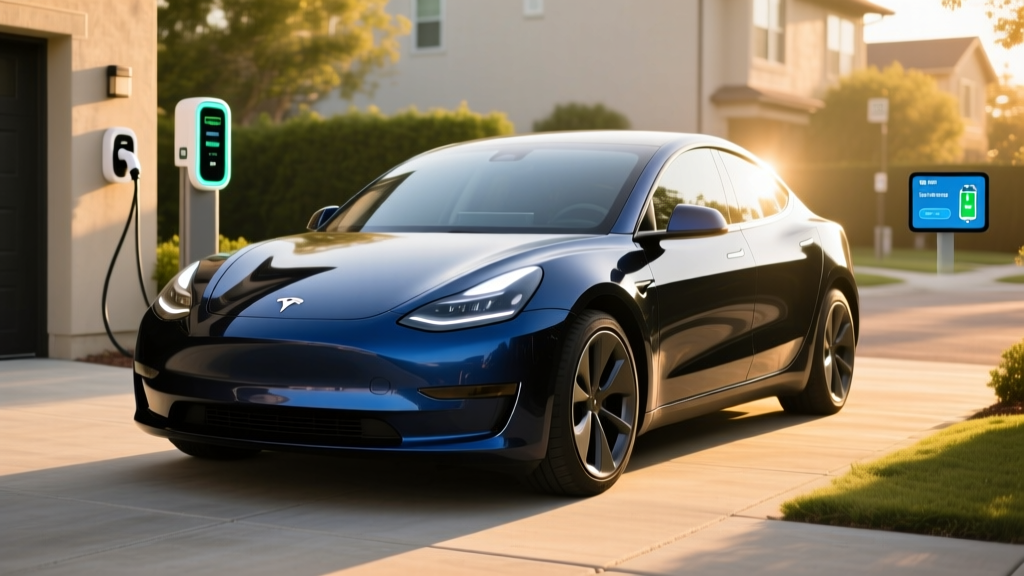
A salvage title Tesla can look like the deal of the century. A 2023 Model 3 Long Range with a rebuilt title might list for $18,000–$24,000 on Facebook Marketplace or Copart, while a clean-title equivalent commands $28,000–$33,000. But before you wire the money, you need to understand exactly what you're inheriting: a voided factory warranty, potential high-voltage battery damage, restricted Supercharger access, and insurance headaches that can erase the discount entirely.
This guide walks through the real ownership math of buying a salvage or rebuilt-title Tesla in 2026 — using the most common models buyers encounter (Model 3 and Model Y from 2021–2024) — so you can decide if the savings justify the risk.
What Does "Salvage Title" Actually Mean for a Tesla?
A vehicle receives a salvage title when an insurance company declares it a total loss — typically when repair costs exceed 70–100% of the vehicle's actual cash value (the threshold varies by state). Common causes for Teslas include:
- Collision damage — especially front-end impacts that crumple the frunk area and damage the 12V system, radiator, or front drive unit (on dual-motor models)
- Flood/water intrusion — devastating for EVs because saltwater or even fresh water can corrode high-voltage bus bars, the battery management system (BMS), and individual cell interconnects inside the pack
- Battery pack damage — underbody strikes from road debris, curbs, or off-road excursions that dent the structural battery enclosure
- Fire damage — thermal events that may have compromised adjacent modules even if the fire was contained
- Theft recovery — sometimes the least damaging scenario, but stripped wiring harnesses and forced-entry damage to the glass roof or doors can total the car on paper
Once a car receives a salvage title, it cannot be legally driven or registered in most states until it passes a rebuilt/salvage inspection and receives a "rebuilt" or "previously salvage" brand. The title brand follows the vehicle permanently — it will never have a clean title again.
Tesla's Basic Vehicle Limited Warranty (4 years/50,000 miles) and Battery & Drive Unit Limited Warranty (8 years/100,000–120,000 miles depending on trim) are voided entirely once a vehicle receives a salvage title. This is explicitly stated in Tesla's warranty documentation. Even if the car is later rebuilt and inspected, Tesla will not reinstate warranty coverage. You are on your own for high-voltage battery replacement ($12,000–$20,000+), drive unit failure ($5,000–$8,000), and any other major repair.
Specs at a Glance: The Most Common Salvage-Title Teslas (2021–2024 Model Years)
The vast majority of salvage-title Teslas on the market in 2026 are Model 3 and Model Y vehicles from the 2021–2024 production window. Here's what you're looking at spec-wise, based on the original factory configurations before the damage occurred:
| Spec | Model 3 Long Range (2023) | Model 3 RWD (2023) | Model Y Long Range (2023) | Model Y Performance (2023) |
|---|---|---|---|---|
| EPA Range | 341 miles | 272 miles | 304 miles | 285 miles |
| Battery (usable) | ~75 kWh (NMC) | ~57.5 kWh (LFP) | ~75 kWh (NMC) | ~75 kWh (NMC) |
| Drivetrain | Dual Motor AWD | RWD (single motor) | Dual Motor AWD | Dual Motor AWD |
| 0–60 mph | 4.2 sec | 5.8 sec | 4.8 sec | 3.5 sec |
| Horsepower | ~346 hp | ~271 hp | ~384 hp | ~456 hp |
| Peak DC Fast Charge | 250 kW | 170 kW | 250 kW | 250 kW |
| 10–80% DC Time | ~28 min | ~32 min | ~28 min | ~28 min |
| Level 2 Home Rate | 11.5 kW (~44 mi/hr) | 11.5 kW (~44 mi/hr) | 11.5 kW (~44 mi/hr) | 11.5 kW (~44 mi/hr) |
| EPA Efficiency | 131 MPGe (25 kWh/100mi) | 132 MPGe (25 kWh/100mi) | 117 MPGe (29 kWh/100mi) | 111 MPGe (30 kWh/100mi) |
| Cargo Volume | 23 cu ft (trunk+frunk) | 23 cu ft | 76 cu ft (seats folded) | 76 cu ft (seats folded) |
| Original MSRP (base) | $47,740 | $38,990 | $52,990 | $54,990 |
Sources: EPA / fueleconomy.gov, Tesla specifications archive.
Real-World Range: What to Expect From a Rebuilt Tesla
EPA Sticker: 341 miles (Model 3 LR) / 272 miles (Model 3 RWD)
Real-World Highway (70–80 mph, moderate temps): Expect ~260–290 miles (Model 3 LR) and ~210–230 miles (Model 3 RWD)
Cold Weather (below 32°F): Add 20–30% range loss, bringing the Model 3 LR down to ~190–230 miles and the Model Y LR to ~170–210 miles
Salvage-Specific Risk: If the battery pack sustained any structural or thermal damage, individual modules may have degraded unevenly. This can reduce usable capacity by 5–15% below what the BMS reports, because the pack is limited by its weakest cell group. Always request a pre-purchase battery health scan showing cell balance data and State of Health (SoH).
Range is where salvage-title Teslas get tricky. A clean-title 2023 Model 3 Long Range will typically show 93–97% State of Health on the battery at 30,000–50,000 miles, depending on charging habits. But a salvage-title vehicle may have:
- Sat in a damaged state for months — if the 12V system died and the high-voltage pack sat at a very low State of Charge (below 10%), lithium plating and copper dissolution can permanently damage cells
- Water intrusion into the pack — even minor moisture inside the battery enclosure causes corrosion on bus bars and cell interconnects, which may not show symptoms for 6–18 months
- Module replacement with mismatched cells — some rebuilders replace individual modules with used units of different ages and chemistries, creating voltage imbalances that accelerate degradation
The LFP (lithium iron phosphate) battery in the Model 3 RWD is more resilient to deep-discharge damage and has a longer cycle life (~3,000+ cycles vs. ~1,500–2,000 for NMC), making it somewhat less risky in a salvage scenario — but it's not immune to water or physical damage.
Charging: Will a Salvage Tesla Still Use Superchargers?
This is one of the biggest questions buyers ask, and the answer has layers.
| Charging Level | Power / Rate | Speed (Model 3 LR) | Salvage-Title Risk |
|---|---|---|---|
| Level 1 (120V household) | 1.0–1.4 kW | ~3–5 miles/hr | Low — minimal stress on system |
| Level 2 (240V home) | 7.2–11.5 kW | ~30–44 miles/hr | Moderate — if onboard charger was damaged, rates may be limited |
| DC Fast (V3 Supercharger) | Up to 250 kW | 10–80% in ~28 min | HIGH — Tesla may disable Supercharger access on salvage vehicles |
| DC Fast (CCS adapter / third-party) | 50–150 kW typical | 10–80% in ~35–50 min | Moderate — works if charge port and BMS are intact |
The Supercharger problem: Tesla has historically restricted or disabled Supercharger access for vehicles with salvage or rebuilt titles. The rationale is safety — Tesla cannot verify that a rebuilt vehicle's high-voltage system meets their safety standards. In practice, some rebuilt-title Teslas retain Supercharger access while others lose it, and the outcome often depends on whether the vehicle was processed through Tesla's own collision repair network or a third-party shop. Before purchasing, verify Supercharger access directly through the Tesla app by having the seller link the car to their account.
If Supercharger access is disabled, you'll rely on third-party DC fast-charging networks like Electrify America, EVgo, and ChargePoint. Teslas with NACS (North American Charging Standard) ports — which became standard on all models from late 2024 onward — can also access an expanding network of NACS-equipped stations. For 2021–2024 models that originally shipped with CCS-compatible ports (in some markets) or that have been fitted with a CCS adapter, third-party charging works but may be slower due to adapter overhead.
Home Level 2 charging is generally unaffected by a salvage title, provided the onboard charger (the unit inside the car that converts AC to DC) wasn't damaged. Tesla's onboard charger handles up to 11.5 kW on a 48-amp circuit, adding roughly 44 miles of range per hour — enough for a full overnight charge. Installation of a home Level 2 charger (like a Tesla Wall Connector or ChargePoint Home Flex) typically costs $500–$2,000 including electrical work, depending on your panel capacity and run distance.
The True Cost of Ownership: Salvage vs. Clean Title
The sticker-price discount on a salvage-title Tesla looks compelling until you factor in the downstream costs. Here's a realistic 5-year ownership comparison for a 2023 Model 3 Long Range:
| Cost Category | Clean Title ($30,000) | Salvage/Rebuilt ($20,000) |
|---|---|---|
| Purchase Price | $30,000 | $20,000 |
| Federal Tax Credit (§30D) | Up to $7,500 (if eligible) | $0 — used EV credit (§25E) max $4,000, but salvage title may disqualify |
| Effective Purchase Price | $22,500–$30,000 | $16,000–$20,000 |
| Insurance (annual avg) | $1,800–$2,400/yr | $2,200–$3,200/yr (many carriers surcharge or decline) |
| 5-Year Insurance Total | $9,000–$12,000 | $11,000–$16,000 |
| Home Charging Setup | $500–$2,000 | $500–$2,000 |
| 5-Year Electricity (12k mi/yr) | $2,700–$4,500 | $2,700–$4,500 (same if battery is healthy) |
| Out-of-Warranty Battery Reserve | $0 (still under warranty) | $5,000–$15,000 (recommended reserve) |
| 5-Year Depreciation | ~40–50% ($12,000–$15,000) | ~55–65% ($11,000–$13,000) |
| Est. 5-Year Total Cost | $34,200–$48,500 | $35,200–$57,500 |
The takeaway: the salvage-title discount often evaporates within 3–5 years once you account for higher insurance premiums, zero warranty protection, and the looming risk of a $15,000+ battery replacement. The math only works if you:
- Buy at a steep enough discount (50%+ below clean-title market value)
- Can self-insure or find an affordable carrier willing to cover rebuilt EVs
- Have a trusted EV technician verify battery health pre-purchase
- Plan to drive the car into the ground rather than resell it
Federal Tax Credit Eligibility for Salvage Teslas
- Only available for new vehicles purchased from a dealer
- MSRP caps: $55,000 (sedans) / $80,000 (SUVs/trucks)
- Buyer income caps: $150,000 single / $300,000 joint AGI
- Battery sourcing and critical mineral requirements apply
- Salvage-title vehicles are by definition used — this credit is unavailable
There is a separate §25E Previously-Owned Clean Vehicle Credit that offers up to $4,000 (or 30% of the sale price, whichever is less) for used EVs. However, eligibility requires that the vehicle be purchased from a licensed dealer, the sale price be $25,000 or less, and the buyer's income fall below $75,000 (single) or $150,000 (joint). Many salvage-title Teslas are sold through auctions or private parties, which disqualifies them. Even dealer-sold rebuilt titles may face scrutiny. Always verify current rules at IRS.gov §25E and consult a tax professional before counting on this credit.
Pre-Purchase Inspection: Non-Negotiable Steps
If you're serious about a salvage-title Tesla, these inspections are not optional:
- Full battery health report — Use a tool like TeslaFi, Tessie, or have a mobile Tesla technician pull the BMS log showing State of Health (SoH), cell balance data (voltage delta across modules), and any isolation fault codes. A healthy pack shows less than 5% voltage delta between modules and SoH above 90% for a 2–3 year old vehicle.
- High-voltage isolation test — This checks whether the high-voltage system is properly electrically isolated from the chassis. Water damage or improper repairs can cause isolation faults, which are a serious safety hazard. The car will typically throw a "Vehicle will not drive" error if isolation is compromised, but intermittent faults may not appear during a short test drive.
- Supercharger access verification — Have the seller add the car to their Tesla app and attempt to initiate a Supercharger session. If it's blocked, factor in permanent reliance on third-party chargers.
- Drive unit and CV joint inspection — Front and rear drive units should be checked for fluid leaks, bearing noise, and vibration under hard acceleration. Rebuilt cars sometimes have misaligned half-shafts or damaged CV joints from collision repairs.
- Structural/frame measurement — Tesla's aluminum-intensive unibody requires precise measurements. A shop with Tesla-specific frame data should verify that suspension pickup points, battery rail mounting surfaces, and crumple zones are within spec. A bent battery rail can cause uneven pressure on modules and lead to premature failure.
- Software and Autopilot hardware check — Verify that Autopilot cameras, radar (if equipped), and ultrasonic sensors are fully functional. Salvage repairs often use aftermarket or misaligned camera housings that degrade driver-assist performance. Note: Tesla's Autopilot and Full Self-Driving (Supervised) are SAE Level 2 driver-assist systems — you must remain fully engaged and keep your hands on the wheel at all times.
Tesla's Autopilot, Enhanced Autopilot, and Full Self-Driving (Supervised) are all SAE Level 2 driver-assistance systems. They can manage steering, acceleration, and braking under certain conditions, but the driver must continuously supervise the system and be prepared to take over instantly. These are not self-driving systems. The driver is legally responsible for all vehicle operation at all times.
Pros and Cons: The Honest Verdict
- Significant upfront discount (30–50% below clean-title market)
- Access to Tesla's Supercharger network may remain intact (verify before purchase)
- Over-the-air software updates continue regardless of title status
- Tesla's parts ecosystem is robust — third-party and used parts are widely available
- LFP battery models (Model 3 RWD) are more resilient to deep-discharge damage
- Can be an excellent project car for mechanically inclined buyers with EV experience
- Factory warranty is completely voided — no battery, drive unit, or bumper-to-bumper coverage
- Battery replacement costs $12,000–$20,000+ if the pack is compromised
- Insurance is more expensive and many major carriers will only offer liability coverage
- Resale value is 40–60% below clean-title equivalents; some dealers won't accept trade-ins
- Hidden water or corrosion damage may not surface for 12–24 months
- Supercharger access may be restricted or revoked by Tesla at any time
- No federal §30D tax credit; §25E used credit is difficult to qualify for
- Tesla Service Centers may refuse to work on rebuilt-title vehicles
Who Should (and Shouldn't) Buy a Salvage-Title Tesla?
- You're an EV-savvy buyer who can perform or oversee high-voltage system diagnostics
- The vehicle has documented, minor damage (e.g., rear-end collision with no battery involvement) and was repaired by a Tesla-certified body shop
- You plan to keep the car 7+ years and drive it until it's no longer economical to repair
- You have access to affordable home charging and don't depend on Superchargers for daily use
- The price is at least 50% below the clean-title equivalent and you've budgeted a $5,000–$10,000 repair reserve
- This would be your first EV — the learning curve for troubleshooting high-voltage issues is steep
- The damage involved flood, fire, or direct impact to the battery pack
- You need reliable Supercharger access for frequent road trips
- You're financing the purchase — most lenders won't finance salvage-title vehicles, and those that do charge higher rates
- You need comprehensive insurance coverage (many carriers won't offer it, or the premiums erase your savings)
- You're counting on any federal or state EV tax credit
Competitor Comparison: Salvage Tesla vs. Clean-Title Alternatives
At the $18,000–$25,000 price point of a typical salvage-title Model 3/Y, you're cross-shopping with several compelling clean-title used EVs that still carry remaining factory warranty:
| Factor | Salvage Model 3 LR ($20k) | Clean Chevy Bolt EV ($16–20k) | Clean Hyundai Kona Electric ($18–22k) | Clean VW ID.4 ($20–25k) |
|---|---|---|---|---|
| Warranty Remaining | None | Partial (8yr/100k battery) | Partial (10yr/100k battery) | Partial (8yr/100k battery) |
| EPA Range | 341 mi (if healthy) | 259 mi | 258 mi | 275 mi |
| DC Fast Charge | 250 kW (if enabled) | 55 kW | 100 kW | 125 kW |
| Insurance Difficulty | High | Low | Low | Low |
| Resale Predictability | Very Low | Moderate | Moderate | Moderate |
| Tax Credit Possible | Unlikely | §25E up to $4,000 | §25E up to $4,000 | §25E up to $4,000 |
The Bolt EV's 55 kW DC fast-charging is painfully slow by 2026 standards, and the Kona Electric is similarly limited. But both carry remaining battery warranties, clean titles, easy insurance, and eligibility for the §25E used-EV credit. The ID.4 offers solid range and reasonable charging speed with warranty protection. For most buyers, a clean-title used EV from a mainstream brand is the lower-risk path.
Frequently Asked Questions
Can I still get Tesla software updates on a salvage-title car?
Yes. Tesla's over-the-air (OTA) software updates are tied to the vehicle's VIN and connectivity, not its title status. You'll continue to receive feature updates, security patches, and UI improvements as long as Tesla supports the hardware generation. However, Tesla may restrict certain features or services (like Supercharger access or remote diagnostics) on salvage vehicles.
Will a Tesla Service Center work on my salvage-title car?
This varies by location and service center. Some Tesla Service Centers will perform basic maintenance (tire rotations, cabin air filter replacements, 12V battery swaps) on rebuilt-title vehicles but will decline high-voltage system work. Others may refuse service entirely. Independent EV repair shops are increasingly common and often more willing to work on salvage-title Teslas — search for shops with certified high-voltage technicians.
How do I check if the battery pack was damaged before buying?
Request the vehicle's BMS (Battery Management System) log data, which can be pulled via the Tesla diagnostic port or through third-party apps like Tessie or TeslaFi. Key metrics to check: State of Health percentage (should be 90%+ for a 2–3 year old pack), cell voltage delta (should be under 20–30 mV across all modules), and any historical isolation fault codes. Also visually inspect the battery skid plate for dents, punctures, or signs of resealing.
Is it safe to drive a rebuilt-title Tesla?
A properly rebuilt Tesla that has passed state inspection and had its high-voltage system verified by a qualified technician can be safe to drive. The risk lies in improper repairs — especially to the structural battery pack, which is a stressed member of the unibody. Poorly repaired crash structures may not perform correctly in a subsequent collision. Always insist on documentation of repairs, including which components were replaced and by whom.
Can I get a loan or lease on a salvage-title Tesla?
Most traditional auto lenders (banks, credit unions, captives) will not finance a salvage or rebuilt-title vehicle. A few specialty lenders may offer loans, but expect higher interest rates (often 10–15%+ APR) and shorter terms. Most salvage-title Tesla purchases are cash transactions. If financing is essential, a clean-title used EV is the practical choice.
Does a salvage-title Tesla qualify for any EV incentives?
The §30D new vehicle credit does not apply. The §25E used-EV credit (up to $4,000) theoretically could apply if the car is sold by a licensed dealer for $25,000 or less and the buyer meets income requirements — but the vehicle must have a valid, road-legal title at the time of sale, and some interpretations exclude rebuilt titles. State incentives vary widely; check your state's energy office or AFDC state law database for specifics. Consult a tax professional before counting on any incentive.
Always verify current federal incentive rules at IRS.gov and safety ratings at NHTSA.gov and IIHS.org before making a purchase decision. Prices, tax credit eligibility, and Tesla's policies on salvage vehicles are subject to change.