Quick Answer: Are Sailun EV Tires Worth It?
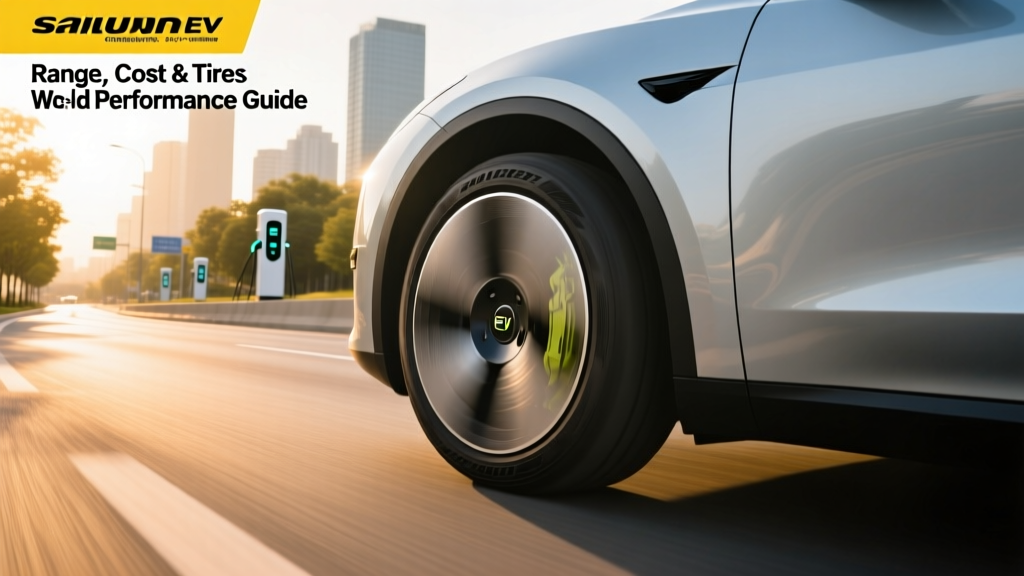
Sailun's EV-specific tire lineup (notably the ERange EV and Atrezzo 4Seasons EV) targets budget-conscious electric vehicle owners with prices roughly 40–55% lower than premium EV tires from Michelin, Continental, or Hankook. A typical set of four Sailun EV tires costs $520–$800 installed, versus $1,100–$1,600 for premium alternatives. The trade-off: Sailun EV tires generally deliver competitive low rolling resistance for range preservation, but may trail premium options in wet braking distances by 5–10 feet and tread longevity by 8,000–12,000 miles. For daily commuters covering under 12,000 miles/year who prioritize upfront savings, Sailun EV tires are a strong value pick. For high-mileage drivers or those in heavy-rain climates, the premium tire gap in safety and lifespan narrows the cost advantage.
Why EV Tires Matter More Than You Think
Electric vehicles are fundamentally harder on tires than gas cars. The reasons are physics, not marketing:
- Weight: EVs carry 500–1,000 lbs more mass than equivalent ICE vehicles due to battery packs. A Tesla Model Y weighs ~4,400 lbs; a comparable gas SUV sits around 3,500 lbs.
- Instant torque: Electric motors deliver peak torque from 0 RPM, accelerating tread wear—especially on the drive axle.
- Regenerative braking: Aggressive regen settings add cyclical loading to tire contact patches.
The result? EV owners typically replace tires every 25,000–35,000 miles versus 40,000–55,000 miles for gas cars. That makes tire cost-per-mile one of the most underappreciated ownership expenses in the EV space.
EV-specific tires address this with three engineering features:
- Higher load index ratings (XL or HL) to handle battery weight
- Low rolling resistance compounds that preserve EPA-rated range (typically 3–7% range recovery vs standard all-season tires)
- Foam-lined or reinforced sidewalls to dampen road noise (since there's no engine noise to mask tire hum)
Sailun EV Tire Lineup: Specs and Pricing
Sailun, a Chinese-headquartered manufacturer with a growing North American presence, offers two primary EV-targeted lines as of the 2025–2026 model year:
| Model | Type | Load Rating | Size Range | Price Per Tire | Key Feature |
|---|---|---|---|---|---|
| ERange EV | All-Season Touring | XL (Extra Load) | 17"–21" | $130–$195 | Low rolling resistance compound, acoustic foam liner |
| Atrezzo 4Seasons EV | All-Weather (3PMSF) | XL | 17"–20" | $145–$210 | Severe snow rated, EV-optimized silica tread |
For comparison, here's how Sailun stacks up against premium EV tire competitors in common sizes (235/45R18, a fitment for Tesla Model 3, Hyundai Ioniq 5, and others):
EV Tire Cost Comparison (Set of 4, Installed)
| Brand / Model | Per Tire | Set of 4 (Installed) | UTQG Treadwear | Estimated Lifespan |
|---|---|---|---|---|
| Sailun ERange EV | $155 | $680–$740 | 400 | 28,000–35,000 mi |
| Hankook iON evo AS | $225 | $980–$1,060 | 500 | 35,000–42,000 mi |
| Michelin Pilot Sport EV | $310 | $1,320–$1,440 | 340 | 28,000–35,000 mi |
| Continental CrossContact RX | $260 | $1,120–$1,220 | 480 | 38,000–45,000 mi |
| Pirelli P Zero Elect | $340 | $1,440–$1,560 | 320 | 25,000–32,000 mi |
Range Impact: Rolling Resistance and Real-World Efficiency
The single biggest question EV owners ask about budget tires: will I lose range?
Tire rolling resistance directly affects energy consumption, measured in Wh/mi (watt-hours per mile) or the inverse efficiency metric, MPGe. According to testing methodologies referenced by fueleconomy.gov, switching from a low-rolling-resistance (LRR) tire to a standard all-season tire can reduce EV range by 3–7%. On a vehicle with an EPA-rated 310 miles, that translates to roughly 9–22 fewer miles per charge.
Sailun's ERange EV line is engineered with a silica-rich tread compound designed for low rolling resistance. Independent testing data is more limited than for Michelin or Continental, but owner reports on EV forums and retailer feedback suggest the ERange EV preserves approximately 95–97% of EPA-rated range when replacing OEM LRR tires—comparable to the Hankook iON and within 1–2% of the Michelin e.Primacy.
Myth vs. Fact: EV Tire Range Impact
| Myth | Fact |
|---|---|
| "All tires give the same range" | Rolling resistance varies significantly. Budget standard tires can cost you 15–22 miles of range vs. LRR EV tires on a 310-mi EPA vehicle. |
| "Budget EV tires always lose range vs. premium" | Not necessarily. Sailun's ERange EV compound tests within 1–2% of premium LRR tires in rolling resistance. The gap is more pronounced in wet grip and treadwear. |
| "I don't need EV-specific tires" | Standard tires lack the load rating (XL/HL) for EV weight, wear 30–50% faster under EV torque, and often increase road noise noticeably. |
| "Tire pressure doesn't affect range much" | Running tires 4 PSI below recommended pressure can reduce range by 2–4%. EVs are more sensitive due to higher curb weight. |
Cost Per Mile: Sailun vs. Premium EV Tires Over 5 Years
The sticker price tells only half the story. Let's calculate the true cost-per-mile across a realistic 5-year, 60,000-mile EV ownership period.
| Metric | Sailun ERange EV | Hankook iON evo AS | Continental CrossContact RX |
|---|---|---|---|
| Set Cost (Installed) | $720 | $1,020 | $1,180 |
| Expected Lifespan | 30,000 mi | 38,000 mi | 42,000 mi |
| Sets Needed Over 60K Miles | 2 | 1.6 (round to 2) | 1.5 (round to 2) |
| Total 60K Tire Cost | $1,440 | $2,040 | $2,360 |
| Cost Per Mile (Tires Only) | $0.024/mi | $0.034/mi | $0.039/mi |
| Estimated Range Impact | ~96% of EPA | ~97% of EPA | ~97% of EPA |
At 12,000 miles per year, the Sailun path saves roughly $600–$920 over five years compared to premium alternatives. However, if Sailun's actual tread life falls toward the lower end (25,000 mi), you'd need a third set by mile 60,000—erasing much of the savings. This is the core risk: budget tire treadwear claims (UTQG 400) don't always translate to real-world EV longevity.
EV vs. Gas Car: Tire Costs in Context
How do EV tire expenses compare to the gas-car tire budget? Let's frame it with a common cross-shop: a Tesla Model Y (EV) versus a Toyota RAV4 (gas).
Annual Tire + Fuel Cost: EV vs. Gas
| Expense | Tesla Model Y (EV) | Toyota RAV4 (Gas) |
|---|---|---|
| Vehicle Curb Weight | ~4,400 lbs | ~3,600 lbs |
| Tire Replacement Interval | ~30,000 mi | ~45,000 mi |
| Annual Tire Cost (12K mi/yr) | $288 (Sailun) / $408 (Hankook) | $200 (mid-range all-season) |
| Annual Fuel/Energy Cost | $540 (home charging at $0.14/kWh) | $1,680 (gas at $3.50/gal, 28 MPG) |
| Combined Tire + Energy/Fuel | $828–$948/yr | $1,880/yr |
Even with higher tire costs, the EV's annual energy savings of $1,100+ over gas more than offsets the tire expense. Sailun tires simply widen that savings gap further by reducing the tire cost line item.
Real-World Ownership: Who Should Buy Sailun EV Tires?
Tire choice isn't purely a spreadsheet exercise. Your driving environment, climate, and habits determine whether the budget-to-premium gap matters for you.
Decision Framework: Sailun EV Tires — Right for You?
Choose Sailun ERange EV if:
- You drive under 12,000 miles per year
- Your climate is predominantly dry or moderate (Southern US, Southwest, coastal California)
- You prioritize lowest upfront tire cost
- You plan to sell or trade your EV within 3–4 years
- You have access to home charging and range preservation matters but isn't mission-critical
Choose Sailun Atrezzo 4Seasons EV if:
- You experience moderate winter conditions (Pacific Northwest, Mid-Atlantic) but not severe ice/snow
- You want 3PMSF-rated all-weather capability without dedicated winter tires
- You want a single tire set year-round
Choose a premium EV tire (Hankook iON, Continental, Michelin) if:
- You drive 15,000+ miles per year (higher tread life pays off)
- You regularly encounter heavy rain, standing water, or severe winter conditions
- Wet braking performance is a top safety priority
- You own a heavy EV (over 5,000 lbs, like the Rivian R1S or GMC Hummer EV) where tire engineering margins matter more
- You plan to keep your EV 5+ years and want predictable long-term cost-per-mile
Common Misconceptions About Budget EV Tires
Several persistent myths cloud the budget EV tire conversation. Here's what the data actually shows:
"Budget tires will void my EV warranty."
This is false. Tire brand choice does not affect your powertrain or battery warranty under the Magnuson-Moss Warranty Act. As long as the tire meets the vehicle's specified size, load index, and speed rating, your warranty is intact. Sailun ERange EV tires carry XL load ratings matching OEM specifications for most popular EVs.
"Cheap tires are unsafe."
All tires sold in the US must meet NHTSA Federal Motor Vehicle Safety Standards (FMVSS). Sailun tires pass these requirements. The gap between budget and premium is measurable in controlled tests—wet braking, hydroplaning resistance, noise—but it's a spectrum, not a cliff. A Sailun EV tire is not "unsafe"; it simply may underperform a Continental by 5–8 feet in 60–0 mph wet braking.
"EV tires are just a marketing gimmick."
The load index and compound differences are real engineering distinctions. An XL-rated tire with an EV-optimized compound genuinely handles the 500+ lb weight penalty and torque delivery differently than a standard SL-rated tire. You can run standard tires on an EV, but expect 30–50% faster wear and measurable range loss.
Installation, Maintenance, and Maximizing Sailun EV Tire Life
To get the most from any budget EV tire, follow these maintenance practices:
- Rotate every 5,000–6,000 miles: EVs wear drive-axle tires faster due to instant torque. Rotation is non-negotiable for even wear.
- Maintain OEM-recommended pressure: Check monthly. Most EVs specify 42–45 PSI cold. Running even 3–4 PSI low accelerates wear and reduces range.
- Align annually: EV weight stresses suspension components. Misalignment accelerates uneven tread wear dramatically.
- Use Chill or Eco drive modes when possible: Reducing torque delivery smoothness extends tire life measurably.
Expect to pay $60–$80 for mounting and balancing per set at most tire retailers, plus $10–$20 per tire for disposal fees on old rubber. Some retailers like Discount Tire or Costco bundle mounting, balancing, and lifetime rotation into the per-tire price—always ask before purchasing.
Frequently Asked Questions
Do Sailun EV tires fit Tesla, Hyundai, Ford, and other popular EVs?
Yes. Sailun offers the ERange EV and Atrezzo 4Seasons EV in sizes covering most popular EVs including Tesla Model 3/Y (18"–20"), Hyundai Ioniq 5 (18"–20"), Ford Mustang Mach-E (18"–20"), Chevrolet Bolt EV/EUV (17"), and Kia EV6 (18"–20"). Verify your exact tire size on the driver's door jamb placard before ordering.
Will Sailun EV tires reduce my EPA-rated range?
Sailun's ERange EV uses a low-rolling-resistance compound that preserves approximately 95–97% of EPA-rated range when replacing OEM LRR tires. This is comparable to mid-tier EV tires and within 1–2% of premium options. You may see a 5–15 mile reduction on a 310-mile EPA vehicle versus the factory tire.
How long do Sailun EV tires last on an electric vehicle?
Expect 28,000–35,000 miles under typical EV driving conditions with proper rotation and inflation. This is 5,000–10,000 miles less than premium options like the Continental CrossContact RX or Hankook iON evo AS, but at a significantly lower per-tire cost. Aggressive acceleration, heavy regen settings, and poor alignment will reduce lifespan.
Are Sailun tires safe for heavy EVs like the Rivian R1T or Ford F-150 Lightning?
Check load ratings carefully. Sailun's XL-rated tires cover most crossover and sedan EVs (up to ~4,800 lbs). For heavier trucks and SUVs exceeding 5,500 lbs, verify that Sailun offers an HL (High Load) rated option in your size. If not, a premium tire with a higher load index is the safer choice for vehicles at the upper weight limit.
Where can I buy Sailun EV tires?
Sailun tires are available through online retailers including Tire Rack, SimpleTire, and Priority Tire, as well as independent tire shops. They are not typically stocked at Costco or Sam's Club. Order online and ship to a local installer for the best pricing—expect to pay $15–$25 per tire for mounting at a local shop if not bundled.