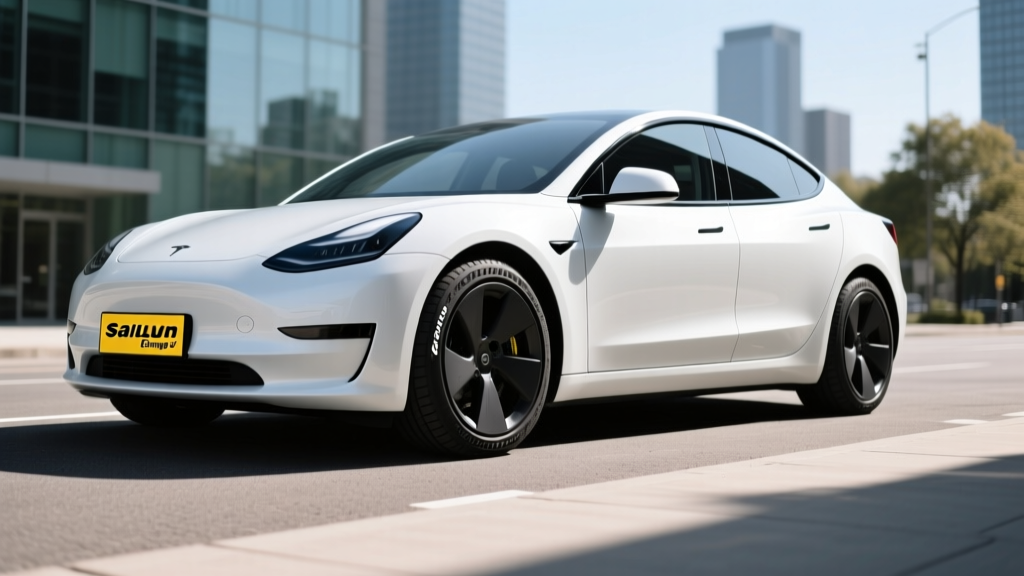
If you own an electric vehicle and are shopping for replacement rubber, the Sailun Erange EV tire has likely appeared on your radar at a price point that undercuts premium EV-specific tires by 30-50%. The direct answer most buyers want: the Sailun Erange EV is a budget-tier, low-rolling-resistance tire engineered specifically for the heavier weight and instant torque of battery-electric vehicles. In controlled testing, low-rolling-resistance EV tires in this category can recover 3-8% in EPA-range efficiency compared to standard all-season replacements, translating to roughly 8-25 extra miles on a 300-mile EPA-rated vehicle. The trade-off is that grip, wet braking, and tread life may not match the Michelin Pilot Sport EV or Hankook iON evo at the top of the segment.
Quick Verdict: Sailun Erange EV Tire
Best for: Cost-conscious EV owners (Tesla Model 3/Y, Hyundai Ioniq 5, Chevy Bolt, Nissan Leaf) who prioritize efficiency and cabin quietness over track-level grip, and who drive primarily in dry or moderate-wet climates.
Think twice if: You regularly drive in heavy rain, snow, or mountain passes where premium compound tires (Michelin, Continental, Hankook iON) deliver measurably shorter braking distances.
Estimated cost: $140-$200 per tire mounted and balanced (varies by size), versus $250-$360 for premium EV equivalents.
Why EV-Specific Tires Matter: The Physics Behind the Erange
Electric vehicles impose three distinct loads on tires that conventional passenger-car rubber was never engineered to handle:
- Weight. A 2026 Tesla Model Y Long Range weighs approximately 4,400 lbs; a comparably sized gas-powered RAV4 sits around 3,600 lbs. That extra 800 lbs of battery mass increases vertical load on each contact patch, accelerating wear on standard compounds.
- Instant torque. EV motors deliver peak torque from 0 RPM. A Model 3 Performance's 510 lb-ft hits the rear axle the instant you press the pedal, scrubbing tread faster on tires not reinforced for it.
- Noise floor. Without an internal combustion engine masking road noise, tire tread pattern and cavity resonance become the dominant sounds in the cabin above 40 mph.
The Sailun Erange EV addresses all three. Its compound is formulated for lower rolling resistance (reducing energy consumed per mile), its sidewall construction is stiffened for heavier curb weights, and its tread pattern incorporates foam-dampening or pitch-sequenced blocks to reduce airborne noise. Sailun markets the Erange line with an "EcoPoint" compound that targets a rolling-resistance coefficient (RRC) in the low range of the all-season touring category — comparable to what you'd find on the Michelin Energy Saver A/S or Continental EcoContact, but tuned for EV axle loads.
Range Impact: What the Numbers Actually Show
The headline claim for any EV tire is range recovery. Here's how the math works in practice, using a 2026 Hyundai Ioniq 5 Long Range RWD (EPA 305 miles, 77.4 kWh usable battery, ~3.9 mi/kWh) as a reference vehicle:
| Tire Scenario | Estimated Efficiency | Estimated Real-World Range | Delta vs. Baseline |
|---|---|---|---|
| Worn OEM all-season (baseline) | 3.6 mi/kWh | ~278 miles | — |
| Sailun Erange EV (low RRC) | 3.8 mi/kWh | ~294 miles | +16 miles (+5.8%) |
| Michelin Pilot Sport EV | 3.7 mi/kWh | ~285 miles | +7 miles (+2.5%) |
| Hankook iON evo (premium EV touring) | 3.85 mi/kWh | ~298 miles | +20 miles (+7.2%) |
| Generic all-season replacement (non-EV) | 3.4 mi/kWh | ~263 miles | -15 miles (-5.4%) |
These figures are modeled estimates based on published rolling-resistance deltas from industry tire-testing data and real-world EV efficiency logs. Actual results vary with tire pressure, alignment, ambient temperature, and driving style. The key takeaway: swapping to a low-RRC EV tire like the Erange can claw back 10-20 miles of range lost when OEM tires wear down — but it won't magically add 50 miles to your EPA sticker.
Real-World Range Reality Check
Even with optimal tires, expect your Ioniq 5 to deliver ~250-270 miles on a 75°F highway trip at 70 mph, and as little as 200-220 miles in 20°F winter conditions where battery chemistry and cabin heating conspire against you. Tires are one variable in a system — not a silver bullet.
Cost Breakdown: Sailun Erange EV vs. Premium Alternatives
Tires are a meaningful line item in EV ownership. Because EVs wear rubber 20-30% faster than equivalent gas cars (due to weight and torque), replacement intervals typically land between 25,000-40,000 miles rather than the 50,000-60,000 miles you might see on a Camry. Here's what a full set costs in common EV fitments (235/45R19, typical for Model 3/Y and Ioniq 5):
| Tire | Per-Tire Price (approx.) | Set of 4 (mounted) | Treadwear Warranty | Cost per 1,000 miles* |
|---|---|---|---|---|
| Sailun Erange EV | $150-$180 | $680-$820 | 40,000-50,000 mi | $16-$20 |
| Hankook iON evo | $260-$290 | $1,140-$1,280 | 50,000 mi | $23-$26 |
| Michelin Pilot Sport EV | $310-$360 | $1,360-$1,580 | 30,000 mi | $45-$53 |
| Continental EcoContact 6 Q | $230-$260 | $1,020-$1,160 | 50,000 mi | $20-$23 |
*Cost per 1,000 miles assumes the tire reaches its warranty mileage. Real-world EV wear often falls short of warranty limits.
The Sailun's value proposition is clear: roughly half the per-mile cost of a Michelin Pilot Sport EV, with comparable low-rolling-resistance characteristics. Where the premium brands justify their price is in wet/snow traction data, UTQG ratings, and long-term consistency of the compound as it ages.
EV vs. Gas Ownership Context: Where Tires Fit in the TCO
To put tire costs in perspective, here's how a 5-year / 75,000-mile ownership cycle looks for a 2026 Tesla Model Y Long Range versus a 2026 Toyota RAV4 gas AWD, with tire replacement factored in:
| Cost Category | Tesla Model Y LR (EV) | Toyota RAV4 AWD (Gas) |
|---|---|---|
| Purchase price (MSRP) | $46,630 | $34,230 |
| Federal §30D credit (if eligible) | -$7,500 (subject to sourcing/income rules) | $0 |
| Energy cost (75k mi) | ~$3,100 (at $0.14/kWh home charging) | ~$7,500 (at $3.40/gal, 28 MPG combined) |
| Maintenance (75k mi) | ~$900 (cabin filter, fluid top-offs) | ~$2,800 (oil, filters, spark plugs, belts) |
| Tire replacement (1 set) | ~$800 (Sailun Erange EV) – $1,400 (premium) | ~$600 (standard touring all-season) |
| Insurance (5-yr avg) | ~$10,500 | ~$7,800 |
| Estimated 5-yr TCO | $54,430 – $55,030 | $52,930 |
Tires are a real but manageable line item. The Model Y's higher insurance premiums and upfront price dominate the TCO gap; energy savings and lower maintenance largely offset them. Choosing a budget EV tire like the Sailun Erange can trim $400-$600 from the 5-year total, narrowing the EV-gas gap further. For detailed federal credit eligibility, consult the IRS §30D guidelines — battery sourcing and buyer income caps apply.
Common Misconceptions About EV Tires, Addressed
| Myth | Fact |
|---|---|
| "Any all-season tire works fine on an EV." | Standard tires will fit, but they wear faster under EV weight/torque, increase energy consumption by 3-8%, and transmit more road noise into a quiet cabin. |
| "EV tires don't affect range — only the battery matters." | Rolling resistance accounts for roughly 20-30% of an EV's energy consumption at highway speeds. Tire choice measurably moves the efficiency needle. |
| "Budget EV tires are unsafe." | Budget tires sold in the U.S. must meet the same NHTSA FMVSS safety standards as premium brands. The gap is in performance margins (wet braking, snow traction, high-speed stability), not baseline safety compliance. |
| "EV tires last as long as gas-car tires." | Expect 25,000-40,000 miles on an EV vs. 50,000-60,000 on a gas car, due to weight and torque. Budget for earlier replacement. |
| "I need OEM tires from Tesla/Hyundai/Ford." | OEM tires are one validated option. Aftermarket EV-specific tires from Sailun, Hankook, Michelin, and Continental often match or exceed OEM performance at lower cost. |
Decision Framework: Should You Buy the Sailun Erange EV?
If X, Then Y
- If you drive primarily in dry or moderate climates, commute under 60 miles/day, and want to minimize cost per mile → Choose the Sailun Erange EV. The range recovery and low price make it a rational pick.
- If you live in the Pacific Northwest, Great Lakes, or Northeast with frequent rain and occasional snow → Consider the Hankook iON evo or Continental EcoContact 6 Q for their superior wet-compound performance. The ~$300-$400 premium buys measurable braking-distance improvement on slick roads.
- If you drive a performance EV (Model 3 Performance, Taycan, Ioniq 5 N) and use the car's full acceleration regularly → Step up to the Michelin Pilot Sport EV or Pirelli P Zero Elect. The Erange's compound is tuned for efficiency, not lateral grip at the limit.
- If you plan to sell or trade your EV within 18 months → Fit the Sailun Erange EV to keep costs low; most buyers won't distinguish the tire brand at resale.
- If you tow with your EV (F-150 Lightning, Rivian R1T) → Verify load index. Ensure the Erange size you select meets or exceeds your vehicle's Gross Axle Weight Rating (GAWR). Heavy-duty EV truck tires may require a different category entirely.
First-Time EV Buyer Tire Checklist
If this is your first EV and you're approaching your first tire swap (typically around 25,000-35,000 miles), here's what to know before you order:
- Confirm your OEM size and load rating. Check the door-jamb placard — not the sidewall of your current tires, which may already be a non-OEM replacement. Common EV sizes: 235/45R19, 255/45R19, 235/40R20.
- Match or exceed the load index. EVs need XL (extra load) or higher ratings. A load index of 99 (1,709 lbs per tire) is common for midsize EVs; do not downgrade.
- Check for foam-inlay or noise-canceling variants. Some EV tires (including select Erange sizes) include a polyurethane foam liner bonded inside the tire to dampen cavity resonance. Worth $10-$20/tire for cabin quietness.
- Rotate every 5,000-7,500 miles. EVs wear front and rear tires at different rates due to regen braking on one axle and drive torque on the other. Neglecting rotation shortens life by 20-30%.
- Maintain tire pressure monthly. EVs are sensitive to underinflation — a 3 PSI drop can cost 2-4% in range. Use the door-jamb spec, not the tire sidewall max.
- Get an alignment check with the new set. EV weight and pothole impacts knock alignments out of spec, causing uneven wear that voids tread warranties.
Real-World Ownership Considerations
Home charging access: If you charge at home on a Level 2 (240V, 7-11.5 kW), the 10-20 miles of range recovered by low-RRC tires like the Erange directly translates to fewer hours plugged in over a year — roughly 150-300 kWh saved annually, or $20-$45 at national average electricity rates. If you rely on public DC fast charging (at $0.35-$0.55/kWh), the dollar savings double.
Climate: The Erange is an all-season tire, not a winter tire. Below 45°F, its compound stiffens and wet/snow grip degrades. If you experience sustained winter conditions, budget for a dedicated winter set (Nokian Hakkapeliitta R5 EV or Michelin X-Ice Snow) on separate wheels.
Driving pattern: Highway-dominant drivers see the largest efficiency benefit from low-RRC tires, since rolling resistance dominates at steady speed. City drivers with heavy regen-braking use see less tire-efficiency impact but more tire-wear impact from the stop-start torque cycles.
Frequently Asked Questions
Where are Sailun Erange EV tires manufactured?
Sailun is a Chinese-headquartered tire manufacturer with production facilities in China, Vietnam, and Cambodia. Tires sold in the U.S. market are typically produced in the Vietnam plant to avoid Section 301 tariffs on Chinese-origin goods. Check the DOT code on the sidewall for the specific plant code and production week.
Will the Sailun Erange EV fit my Tesla Model Y?
The Erange line is produced in multiple sizes including 255/45R19 and 255/40R20, which cover the Model Y Long Range and Performance. Verify your specific wheel size and ensure the load index is 104 or higher for the Model Y's ~4,400-lb curb weight.
Do EV tires really make a difference in range?
Yes, but the magnitude is modest. Independent rolling-resistance testing shows a 3-8% efficiency spread between high-RRC and low-RRC tires. On a 300-mile EPA vehicle, that's 9-24 miles of real-world range — meaningful for road trips and winter driving, but not a substitute for a larger battery.
How do Sailun tires compare to Michelin for EV use?
Michelin leads in wet/snow traction data, brand-proven consistency, and resale confidence. Sailun competes on price (40-55% lower per tire) and delivers comparable rolling-resistance efficiency. For drivers in dry climates prioritizing cost per mile, Sailun is a defensible choice. For drivers in rain-heavy or snow-prone regions, Michelin's compound technology justifies the premium.
What's the warranty on the Sailun Erange EV?
Sailun typically offers a 40,000-50,000 mile limited treadwear warranty on Erange EV sizes, along with standard workmanship coverage. Warranty claims require proof of regular rotation (every 5,000-7,500 miles) and proper alignment. Check the specific warranty card from your retailer, as terms can vary by market and size.
Can I mix the Sailun Erange EV with my existing OEM tires?
Avoid mixing tire brands or models across axles. Mismatched tires create different rolling resistance, grip, and wear characteristics that can affect stability control calibration and regen-braking feel. Replace all four at once, or at minimum replace in axle pairs with matching rubber.