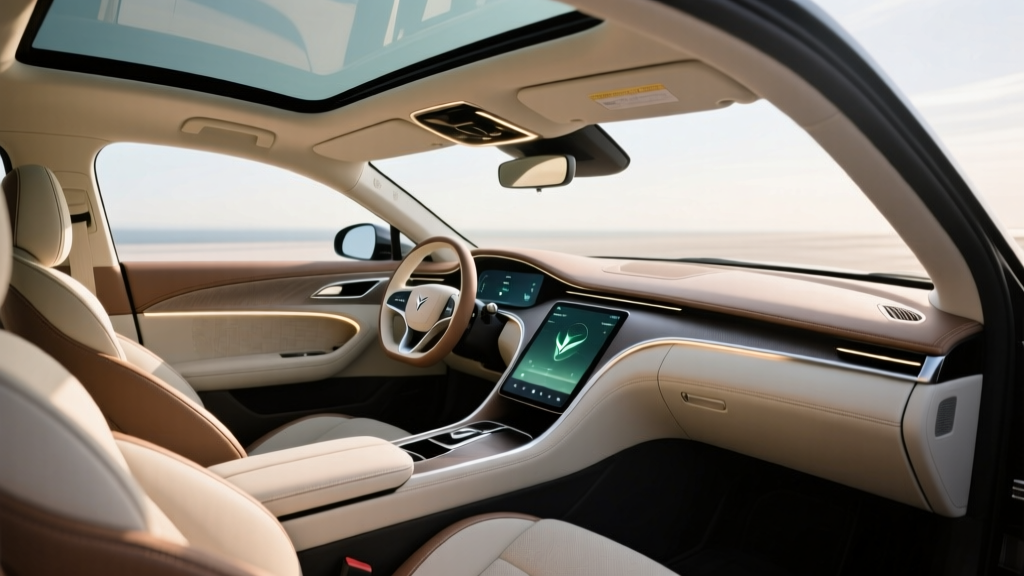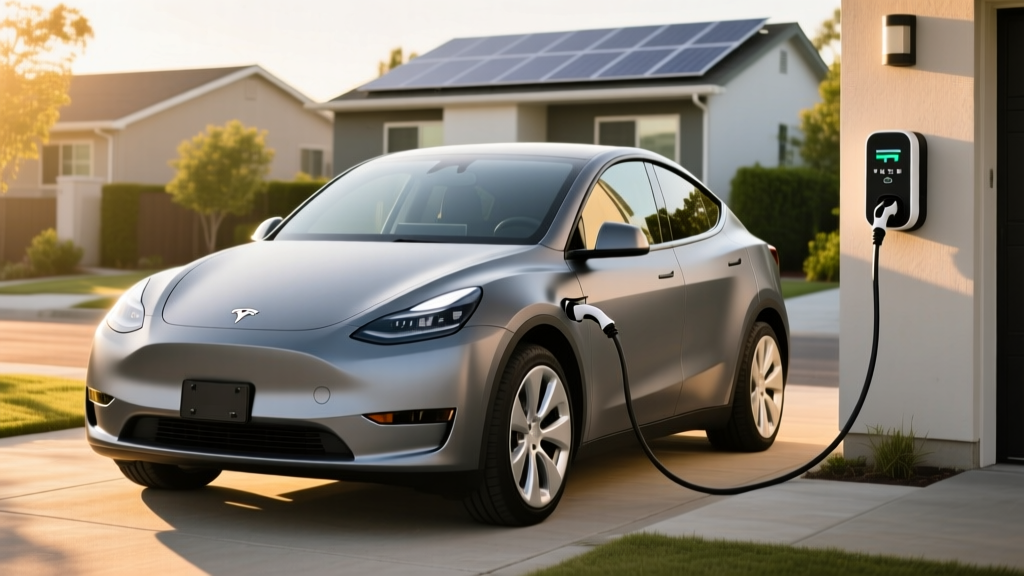
The Quick Answer: Which EVs Are Actually the Safest?
If you're searching for the safest EV cars in 2026, the shortlist comes down to models that earned both the IIHS Top Safety Pick+ designation and a 5-star overall rating from NHTSA. As of early 2026, the standouts include the Tesla Model Y, Hyundai Ioniq 5, Volvo EX30, Genesis Electrified GV70, and BMW iX. These vehicles combine exceptional structural crash protection with advanced driver-assistance systems (ADAS) that meet or exceed current SAE Level 2 benchmarks.
Key takeaway: EV battery packs sit low in the chassis, lowering the center of gravity and reducing rollover risk — a structural safety advantage over comparable gas vehicles. However, "safest" means more than crash scores: it includes ADAS reliability, emergency response access, battery fire risk data, and real-world crash outcomes. We break down all of it below.
Why EVs Have a Structural Safety Advantage
Electric vehicles carry their heaviest component — the battery pack — along the floor pan. This design choice, dictated by packaging efficiency, yields an unintended safety benefit: a dramatically lower center of gravity compared to gas-powered equivalents.
Consider the numbers:
- The Hyundai Ioniq 5 has a rollover risk rating of 6.7% per NHTSA testing — compared to roughly 12-15% for a similarly sized gas crossover like the Hyundai Tucson.
- The Tesla Model Y achieved one of the lowest rollover probabilities ever recorded by NHTSA at 7.9%.
- The BMW iX xDrive50 posts a rollover risk of just 8.2%.
Beyond rollover protection, EV platforms are typically engineered from the ground up with large front crumple zones. Without a heavy engine block in the nose, engineers can design more progressive deformation structures that absorb crash energy before it reaches the passenger cell. The Tesla Model Y and Hyundai Ioniq 5 both earned "Good" ratings across all IIHS crashworthiness tests — small overlap front (driver and passenger side), moderate overlap front, side impact, roof strength, and head restraints.
Top-Rated Safest EV Cars: Spec & Safety Comparison
Below is a side-by-side look at five of the highest-rated EVs for safety in the 2025-2026 model years, with real specifications that matter to buyers.
| Model | EPA Range | Battery (kWh) | IIHS Rating | NHTSA Overall | 0-60 mph | Base MSRP |
|---|---|---|---|---|---|---|
| Tesla Model Y Long Range | 320 mi | 75 kWh (NMC) | Top Safety Pick+ | 5 Stars | 4.8 sec | $44,990 |
| Hyundai Ioniq 5 SEL AWD | 290 mi | 77.4 kWh (NMC) | Top Safety Pick+ | 5 Stars | 5.1 sec | $47,600 |
| Volvo EX30 Plus | 265 mi | 69 kWh (NMC) | Top Safety Pick+ | 5 Stars | 6.2 sec | $44,900 |
| Genesis Electrified GV70 | 236 mi | 77.4 kWh (NMC) | Top Safety Pick+ | 5 Stars | 4.5 sec | $67,450 |
| BMW iX xDrive50 | 324 mi | 111.5 kWh (NMC) | Top Safety Pick+ | 5 Stars | 4.4 sec | $87,250 |
Real-world range caveat: EPA figures assume mixed driving at moderate temperatures. Expect 15-25% range reduction in sustained highway driving at 75+ mph, and 20-35% loss in sub-30°F winter conditions. The Ioniq 5's 290-mile EPA rating, for instance, translates to roughly 220-240 miles on a cold-weather highway trip.
ADAS Breakdown: What Each System Actually Does
Safety isn't just about surviving a crash — it's about preventing one. Every vehicle above ships with SAE Level 2 driver-assistance systems, meaning the car can manage steering and acceleration/braking simultaneously, but the driver must remain fully engaged at all times.
SAE Automation Level reminder: All consumer ADAS — including Tesla Autopilot, Hyundai Highway Driving Assist, BMW Driving Assistant Professional, and Volvo Pilot Assist — are Level 2. They are not self-driving. You are the driver. Only Level 4 robotaxi services like Waymo operate without a human driver, and those are limited to geofenced urban areas.
| Brand / System | Adaptive Cruise | Lane Centering | Auto Lane Change | Hands-Free (Eyes-On) | Automatic Emergency Braking |
|---|---|---|---|---|---|
| Tesla Autopilot | Yes | Yes | Yes (w/ FSD Supervised) | No | Yes, standard |
| Hyundai HDA 2 | Yes | Yes | Yes | No | Yes, standard |
| Volvo Pilot Assist | Yes | Yes | No | No | Yes, standard |
| Genesis HDA 2 | Yes | Yes | Yes | No | Yes, standard |
| BMW Driving Assistant Pro | Yes | Yes | Yes | Yes (highway, eyes-on) | Yes, standard |
What ADAS does NOT do: These systems do not detect all pedestrians in low light, do not reliably handle construction zones or faded lane markings, and do not replace attentive driving. NHTSA's AEB research shows these systems reduce rear-end collisions by roughly 50% — significant, but not a guarantee. Treat them as a co-pilot, not an autopilot.
EV Safety vs. Gas Cars: The Data
How do the safest EV cars stack up against their gasoline counterparts? The comparison is more favorable than many buyers assume.
| Safety Metric | EVs (Top-Rated) | Comparable Gas Vehicles |
|---|---|---|
| Rollover Risk (NHTSA) | 6.7% – 8.2% | 12% – 18% |
| IIHS Small Overlap Front | Good (all top picks) | Good to Acceptable (varies) |
| Fire Incidents per 100K Vehicles | ~25 (NFPA estimates) | ~1,530 (NFPA estimates) |
| Automatic Emergency Braking | Standard on all listed | Standard on most 2024+ models |
| Front Crumple Zone Design | Optimized (no engine block) | Constrained by engine packaging |
The fire statistic deserves context: gas vehicle fires are overwhelmingly caused by fuel system leaks, electrical shorts in aging wiring, and collision-related ruptures. EV battery fires, while rarer per vehicle, can be more difficult to extinguish and may require specialized firefighting protocols. However, modern EV battery packs are housed in reinforced enclosures with thermal management systems and cell-level fusing that dramatically limit propagation risk.
Charging Specs for the Safest Picks
Safety gets you to the shortlist; charging practicality determines whether you'll enjoy living with the car daily. Here's what each model delivers at a DC fast charger and on Level 2 home charging.
| Model | Max DC Fast Charge (kW) | 10–80% Time | Level 2 Rate (kW) | Miles per Hour (L2) | Connector |
|---|---|---|---|---|---|
| Tesla Model Y LR | 250 kW | ~25 min | 11.5 kW | ~44 mi/hr | NACS |
| Hyundai Ioniq 5 SEL AWD | 235 kW | ~18 min | 10.9 kW | ~38 mi/hr | CCS (NACS adapter avail.) |
| Volvo EX30 Plus | 153 kW | ~28 min | 11 kW | ~36 mi/hr | CCS (NACS adapter avail.) |
| Genesis Electrified GV70 | 235 kW | ~18 min | 10.9 kW | ~32 mi/hr | CCS (NACS adapter avail.) |
| BMW iX xDrive50 | 200 kW | ~31 min | 11 kW | ~35 mi/hr | CCS (NACS adapter avail.) |
Charging curve reality check: The "peak" kW figure is exactly that — a peak, typically achieved between 10-30% state of charge. As the battery fills past 50%, charging speed tapers significantly. The Ioniq 5's 235 kW peak may sustain for only 5-8 minutes before stepping down to 150 kW, then 100 kW, then 50 kW above 80%. This is normal lithium-ion behavior driven by cell voltage limits and thermal management — not a defect.
Real Costs: Purchase, Charging, Insurance & Maintenance
Safety ratings don't exist in a vacuum — buyers need to understand the full financial picture. Here's a 5-year cost breakdown for the Hyundai Ioniq 5 SEL AWD versus its gas sibling, the Hyundai Tucson SEL AWD, driven 15,000 miles/year.
| Cost Category (5 Years) | Ioniq 5 SEL AWD (EV) | Tucson SEL AWD (Gas) |
|---|---|---|
| Purchase Price (MSRP) | $47,600 | $33,250 |
| Federal Tax Credit (§30D)* | -$3,750 to $7,500 | $0 |
| Home Charger Install (Level 2) | $800 – $2,000 | $0 |
| Fuel / Electricity (5 yrs) | $3,200 – $4,800 | $8,500 – $10,500 |
| Maintenance (5 yrs) | $1,200 – $1,800 | $3,000 – $4,200 |
| Insurance (5 yrs avg) | $9,500 – $11,500 | $7,200 – $9,000 |
| Estimated 5-Year Total | $47,550 – $58,150 | $51,950 – $56,950 |
*Federal EV tax credit eligibility under IRS §30D rules depends on buyer income caps ($150K single / $300K joint), vehicle MSRP caps ($55K sedans / $80K SUVs/trucks), and battery critical-mineral sourcing requirements that tighten annually. The Ioniq 5's credit amount varies by model year and build date — verify current eligibility at purchase. Point-of-sale transfer is available, reducing your dealer price directly.
Common EV Safety Myths — Corrected
| Myth | Fact |
|---|---|
| "EV batteries explode in crashes." | Battery fires occur at roughly 1/60th the rate of gas vehicle fires (NFPA data). Modern packs use cell-level thermal barriers. |
| "EVs are too heavy to be safe in collisions with lighter cars." | Greater mass actually benefits occupants in multi-vehicle crashes (physics of momentum). IIHS tests confirm top EVs protect their occupants exceptionally well. |
| "Autopilot and FSD mean the car drives itself." | All consumer ADAS is SAE Level 2. The driver must remain engaged, hands on or near the wheel, eyes on the road, at all times. |
| "EVs can't be driven in heavy rain or floods." | EV battery packs are sealed to IP67 or IP68 standards. They handle rain and puddles without issue. However, no passenger vehicle should drive through deep floodwater — this applies equally to gas cars. |
| "You'll be stranded with a dead battery." | With home Level 2 charging, most owners start every day with a full battery. The real risk is on road trips in charging deserts — plan routes with PlugShare or A Better Routeplanner. |
Real-World Ownership: What First-Time EV Buyers Must Know
Safety ratings tell you how a car performs in a worst-case scenario. Daily ownership tells you whether you'll enjoy the best-case scenario. Here are the practical realities that shape the EV safety and ownership experience:
Home charging access is the single biggest factor. If you can install a Level 2 charger (240V, 32-48A circuit), an EV becomes dramatically more convenient than a gas car — you "refuel" while sleeping, every night. Installation typically costs $800-$2,000 for a straightforward setup (panel has capacity, short run to garage). If your electrical panel needs a 200A upgrade, budget $2,000-$4,000 additional. Always get a quote from a licensed electrician before committing to a vehicle.
Cold climate buyers: preconditioning matters. All five vehicles above support battery preconditioning — warming the pack before you arrive at a DC fast charger. Use it. A cold battery may accept only 40-60 kW at a 250 kW station, doubling your charge time. Preconditioning typically restores peak charging speeds.
Insurance costs more for EVs — plan for it. Average EV insurance premiums run 15-25% higher than comparable gas vehicles, driven by higher repair costs for battery-adjacent damage and specialized parts. Get quotes from your insurer before purchasing. Some companies (like Tesla Insurance in eligible states) offer usage-based rates that can narrow the gap.
Battery degradation is slow but real. Expect roughly 5-10% capacity loss over 8 years / 100,000 miles for NMC packs like those in these five vehicles. All carry battery warranties of at least 8 years / 100,000 miles (10 years / 100,000 miles in California and CARB states), with a guaranteed capacity retention threshold of 70%.
Decision Framework: Which Safest EV Is Right for You?
- Choose the Tesla Model Y if you want the longest range (320 mi EPA), the most extensive fast-charging network (Superchargers), and don't mind the minimalist interior. Best for: road-trip-heavy families.
- Choose the Hyundai Ioniq 5 if you want the fastest DC charging (10-80% in ~18 min), a more conventional cabin layout, and strong value at ~$47K. Best for: daily commuters who take occasional road trips.
- Choose the Volvo EX30 if you want a compact luxury EV with Scandinavian safety engineering and a lower entry price (~$44.9K). Best for: urban drivers and smaller households.
- Choose the Genesis Electrified GV70 if you want luxury materials, a smooth ride, and don't mind the 236-mile range limitation. Best for: luxury buyers with predictable daily routes under 150 miles.
- Choose the BMW iX if budget is flexible (~$87K+), you want 324 miles of range, and premium technology. Best for: buyers who want maximum range and refinement in a luxury SUV.
Frequently Asked Questions
Are electric vehicles safer than gas cars in a crash?
Top-rated EVs like the Model Y and Ioniq 5 earn equivalent or superior crash test scores compared to gas counterparts. The low center of gravity from the floor-mounted battery pack significantly reduces rollover risk (6.7-8.2% vs. 12-18% for gas crossovers). However, safety varies by model — not every EV is a Top Safety Pick+.
Can an EV battery catch fire in a collision?
It's possible but statistically rare. NFPA data estimates roughly 25 EV fires per 100,000 vehicles versus approximately 1,530 per 100,000 gas vehicles. Modern packs use reinforced enclosures, cell-level fusing, and thermal barriers to prevent fire propagation.
Is Tesla Autopilot or FSD self-driving?
No. Both are SAE Level 2 driver-assistance systems. Tesla's own documentation states the driver must remain attentive and keep hands on the steering wheel. "Full Self-Driving (Supervised)" adds features like auto lane change and traffic light recognition, but the human driver is always responsible.
Do I qualify for the federal EV tax credit?
Under current IRS §30D rules, eligibility requires: buyer AGI under $150K (single) or $300K (joint), vehicle MSRP under $55K (sedans) or $80K (SUVs/trucks), and the vehicle must meet battery critical-mineral and component sourcing thresholds that tighten each year. Credits can now be transferred at the point of sale, reducing your purchase price directly. Consult a tax professional for your specific situation.
What happens to an EV's safety systems if the 12V battery dies?
All modern EVs maintain a separate 12V auxiliary battery that powers door locks, hazard lights, and safety systems. If the 12V battery fails, most EVs can still be unlocked and towed using manual overrides detailed in the owner's manual. The high-voltage traction battery is independent and is not affected by 12V failure for crash safety systems.
How do I check the latest safety ratings before buying?
Visit IIHS.org for crash test results and Top Safety Pick designations, and NHTSA.gov/ratings for the federal 5-star safety scores. Both databases are searchable by make, model, and year.