Quick Answer: The Safest Electric Cars Right Now
The safest electric cars you can buy today combine top crash-test ratings with advanced driver-assistance systems. Based on 2026 model-year data from the Insurance Institute for Highway Safety (IIHS) and the National Highway Traffic Safety Administration (NHTSA), the top-rated EVs for safety include the Tesla Model Y, Hyundai Ioniq 5, Genesis Electrified GV70, Volvo EX90, and BMW i5. These vehicles have earned either IIHS Top Safety Pick+ or NHTSA 5-Star Overall ratings — and several hold both. EVs tend to score exceptionally well in crash tests because their heavy battery packs sit low in the chassis, lowering the center of gravity and reducing rollover risk, while the absence of a front engine block creates larger front crumple zones.
Why EVs Excel in Crash Testing
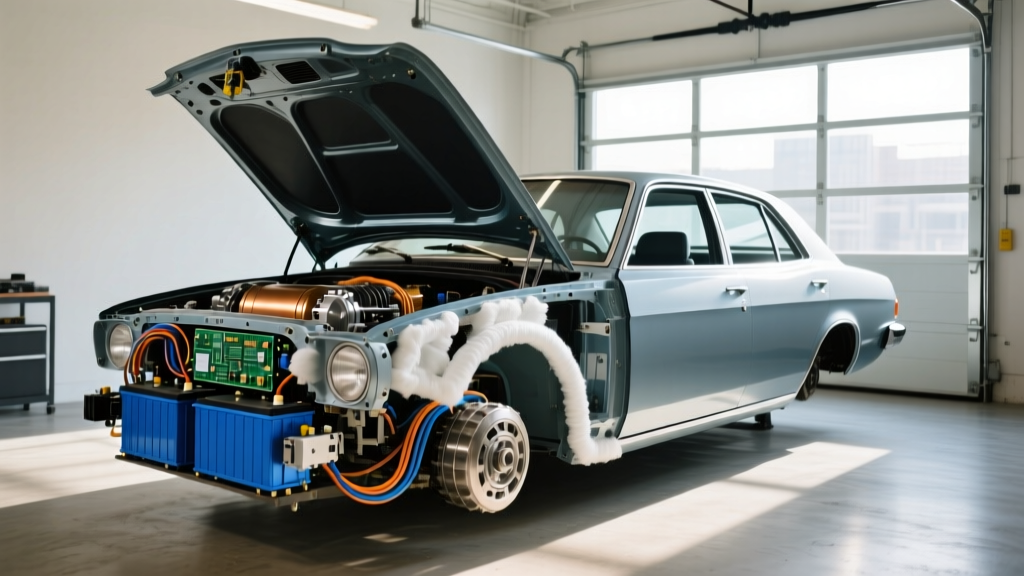
Electric vehicles carry structural advantages that directly translate to higher crash-test scores. The battery pack, typically weighing 800–1,200 lbs and mounted along the floor pan, acts as a structural reinforcement element. This gives EVs superior torsional rigidity compared to equivalent internal-combustion vehicles, meaning the passenger cell deforms less during impacts.
The front trunk (frunk) area replaces the engine bay, providing engineers with a longer, unobstructed crush zone that absorbs more energy before it reaches occupants. In NHTSA's frontal-offset crash tests, this advantage consistently shows up as lower dummy injury measurements for head, chest, and femur forces.
Rollover resistance is another EV strength. The NHTSA assigns a Rollover Risk percentage based on a vehicle's Static Stability Factor (SSF). Most EVs achieve rollover risk ratings between 5.9% and 8.5%, compared to 12–18% for comparable gas-powered crossovers. The Tesla Model Y, for example, posts a 7.9% rollover risk — among the lowest of any SUV the NHTSA has tested.
Top-Rated Safest Electric Cars: Spec & Safety Comparison
| Model | IIHS Rating | NHTSA Overall | EPA Range | Battery (kWh) | 0–60 mph | Base MSRP |
|---|---|---|---|---|---|---|
| Tesla Model Y Long Range | Top Safety Pick+ | 5 Stars | 320 mi | 75 kWh (NMC) | 4.8 sec | $44,990 |
| Hyundai Ioniq 5 Limited AWD | Top Safety Pick+ | 5 Stars | 290 mi | 77.4 kWh (NMC) | 5.0 sec | $52,600 |
| Genesis Electrified GV70 | Top Safety Pick+ | 5 Stars | 236 mi | 77.4 kWh (NMC) | 4.5 sec | $68,350 |
| Volvo EX90 Twin Motor | Top Safety Pick+ | 5 Stars | 300 mi | 111 kWh (NMC) | 4.7 sec | $79,990 |
| BMW i5 eDrive40 | Top Safety Pick+ | 5 Stars | 295 mi | 84.3 kWh (NMC) | 5.7 sec | $58,900 |
Sources: IIHS ratings database, NHTSA 5-Star Safety Ratings, fueleconomy.gov, manufacturer press sites. MSRP reflects 2026 model year before destination fees and incentives.
Breaking Down Safety Scores: What the Ratings Actually Mean
Not all 5-star ratings are identical, and understanding the difference between IIHS and NHTSA methodologies helps you make a more informed choice.
NHTSA 5-Star Safety Ratings
NHTSA conducts frontal crash, side barrier, side pole, and rollover tests. Each test earns 1–5 stars, and the Overall score is a weighted composite. NHTSA also publishes detailed injury-criteria data — Head Injury Criterion (HIC), chest deflection, and femur load — so you can see exactly how much force the dummies experienced. Look for vehicles scoring 5 stars in every subcategory, not just the overall.
IIHS Top Safety Pick+
IIHS testing is more granular and often more demanding. The Top Safety Pick+ designation requires:
- Good ratings in all crashworthiness tests (driver-side small overlap, passenger-side small overlap, moderate overlap front, side, roof strength, head restraints)
- Advanced or Superior front crash prevention (vehicle-to-vehicle and vehicle-to-pedestrian)
- Acceptable or Good headlights across all trim levels
The headlight requirement is where many vehicles fail. IIHS measures actual illumination distance on straightaways and curves, and a surprising number of luxury EVs ship with headlights that earn only a Marginal rating on lower trims. Always verify the rating for the specific trim you're buying.
Active Safety and ADAS: What Comes Standard
Crash avoidance technology is as important as crash protection. Every vehicle on our safest list includes standard automatic emergency braking (AEB) with pedestrian detection, lane-keeping assist, blind-spot monitoring, and rear cross-traffic alert. But the sophistication varies significantly.
⚠️ Level 2 Driver-Assist ≠ Self-Driving
All current consumer EV driver-assistance systems — Tesla Autopilot/FSD (Supervised), Hyundai Highway Driving Assist 2, GM Super Cruise, Ford BlueCruise, BMW Driving Assistant Professional — are SAE Level 2 systems. This means the driver must remain fully engaged, hands on or near the wheel, and eyes on the road at all times. These systems can steer, accelerate, and brake within their operational limits, but they cannot handle all scenarios and are not autonomous. Only Level 4 robotaxi services like Waymo operate without a human driver, and those are geofenced ride-hail services, not consumer vehicles.
Tesla Model Y includes basic Autopilot (traffic-aware cruise control + autosteer) standard. FSD (Supervised) adds automatic lane changes, traffic-light recognition, and autosteer on city streets for $8,000 or $99/month — but remains a Level 2 system requiring full driver attention.
Hyundai Ioniq 5 includes Highway Driving Assist 2 (HDA2) standard on SEL and above trims, providing lane-centering and adaptive cruise with machine-learning-based curve speed adaptation. It's one of the smoothest Level 2 systems available, and it's included in the vehicle price.
BMW i5 offers Driving Assistant Professional ($2,500 option) with hands-free driving up to 85 mph on divided highways, with driver eye monitoring via an infrared camera. This is one of the most permissive Level 2 systems for sustained hands-free operation.
EV Safety vs. Gas Cars: Crash Test and Ownership Comparison
| Factor | Top-Rated EVs (e.g., Ioniq 5) | Comparable Gas Vehicle (e.g., Tucson) |
|---|---|---|
| NHTSA Overall Rating | 5 Stars | 5 Stars |
| IIHS Small Overlap (passenger side) | Good | Good |
| Rollover Risk (NHTSA) | ~7–9% | ~13–16% |
| Front Crumple Zone Advantage | Yes (no engine block) | Standard |
| Standard AEB + Pedestrian Detection | Yes (all trims) | Yes (most trims) |
| Fire Risk Post-Crash | Lower frequency, harder to extinguish | Higher frequency, faster suppression |
| 5-Year Fuel/Energy Cost (15k mi/yr) | ~$2,700 (electricity) | ~$7,500 (gasoline at $3.50/gal, 28 MPG) |
| 5-Year Maintenance | ~$1,800 | ~$3,500 |
Energy costs based on national average electricity rate of $0.16/kWh and average EV efficiency of 3.0 mi/kWh. Gas costs at $3.50/gal, 28 MPG combined. Maintenance estimates from AAA Your Driving Costs 2025. Actual costs vary by region and driving pattern.
The data shows that EVs match or exceed their gas counterparts in crashworthiness while offering significantly lower rollover risk. The post-crash fire question deserves nuance: NHTSA and IIHS research confirms that EV battery fires are far less frequent than gas-vehicle fires per vehicle-mile, but when they do occur, lithium-ion thermal runaway requires more water and time for firefighters to suppress.
Real Cost of Owning a Safest-Rated EV
| Cost Category | Tesla Model Y LR ($44,990) | Hyundai Ioniq 5 Ltd AWD ($52,600) |
|---|---|---|
| Purchase Price (MSRP) | $44,990 | $52,600 |
| Federal Tax Credit (§30D) | $0 (exceeds sourcing requirements in 2026) | Up to $3,750–$7,500 (varies by sourcing) |
| Home Charger Install (Level 2, 48A) | $800–$2,200 | $800–$2,200 |
| Annual Energy (15,000 mi) | ~$540/yr | ~$560/yr |
| Annual Insurance | ~$2,400/yr | ~$2,100/yr |
| Annual Maintenance | ~$350/yr | ~$380/yr |
| 5-Year Total Cost (est.) | ~$56,490–$58,890 | ~$59,800–$66,550 |
Federal tax credit eligibility under IRS §30D depends on buyer income caps ($150K single / $300K joint), vehicle MSRP caps ($55K cars / $80K SUVs/trucks), battery critical-mineral and component sourcing requirements, and point-of-sale transfer. Verify current eligibility at irs.gov before purchase. Insurance estimates based on national averages for drivers with clean records; EV insurance premiums run 15–25% higher than comparable gas vehicles in most states.
Real-World Ownership Considerations
Home charging access is the single biggest ownership variable. If you can install a Level 2 charger (240V, 48A circuit), your daily "refueling" cost drops to roughly $1.50–$2.00 for a full overnight charge. Without home charging, you'll rely on public DC fast charging at $0.30–$0.50/kWh, which erases most of the fuel-cost advantage over gasoline.
Cold-weather range loss is real and measurable. In testing at 20°F, most EVs lose 20–35% of their EPA range due to battery chemistry limitations and cabin heating demands. The Tesla Model Y's heat pump system mitigates this better than most, losing roughly 18–22% in cold conditions. The Ioniq 5, which also uses a heat pump, loses approximately 22–28%. If you live in a region with sustained sub-freezing winters, plan your range expectations accordingly — a 320-mile EPA rating becomes roughly 230–260 miles at highway speeds in January.
DC fast charging reality: Peak charge rates (measured in kW — power) are not sustained across the entire session. The Ioniq 5 peaks at 240 kW on an 800V-capable charger and reaches 10–80% in approximately 18 minutes. The Model Y peaks at ~250 kW but typically achieves 10–80% in 25–30 minutes because its charge curve tapers earlier. Always evaluate the 10–80% time, not the peak kW number.
Safety Myths vs. Facts
| Myth | Fact |
|---|---|
| "EVs are more likely to catch fire than gas cars." | NHTSA and Swedish Civil Contingencies Agency (MSB) data show EVs have a fire rate of roughly 25 per 100,000 vehicles vs. 1,530 per 100,000 for gas vehicles. EV fires are rarer but harder to extinguish due to thermal runaway. |
| "Heavy EVs are more dangerous to other drivers in crashes." | Higher mass does increase momentum in multi-vehicle collisions, but IIHS compatibility testing accounts for this. Top-rated EVs score well in both self-protection and partner-protection metrics. The physics trade-off is real but smaller than assumed. |
| "Autopilot and FSD make the car self-driving." | Tesla Autopilot and FSD (Supervised) are SAE Level 2 systems. The driver is legally and physically responsible for the vehicle at all times. NHTSA has opened multiple investigations into Autopilot-related crashes where driver inattention was a factor. |
| "EV batteries will need expensive replacement within a few years." | Modern NMC and LFP batteries are warrantied for 8 years/100,000 miles at 70% minimum capacity retention. Real-world degradation data from fleet operators shows most packs retain 85–92% capacity at 100K miles. Full replacement costs $8,000–$18,000 but is rarely needed within the first decade. |
| "All 5-star safety ratings are equal." | NHTSA and IIHS use different test protocols, speeds, and overlap angles. A vehicle can earn 5 stars from NHTSA but fail to earn IIHS Top Safety Pick+ if its headlights or pedestrian AEB fall short. Check both. |
Decision Framework: Which Safest EV Is Right for You
If / Then Picks
If budget is under $46K and you want the lowest total cost: Choose the Tesla Model Y Long Range ($44,990). It offers the best range-per-dollar (320 mi EPA), lowest 5-year operating costs, access to the Supercharger network (17,000+ stations), and top scores from both IIHS and NHTSA. The trade-off: the interior is minimalist, and the 2026 Model Y may not qualify for the full §30D credit depending on battery sourcing.
If you want the best safety tech bundled into the price: Choose the Hyundai Ioniq 5 Limited AWD ($52,600). HDA2, blind-spot cameras, remote smart parking assist, and 800V fast charging all come standard on the Limited trim — no expensive ADAS add-on packages required. It also has a stronger chance of qualifying for partial or full §30D credit.
If you need three rows and maximum family protection: Choose the Volvo EX90 ($79,990). Volvo's safety-first engineering includes an interior LiDAR sensor (standard) for driver monitoring, a 111 kWh battery for 300 miles of range, and IIHS Top Safety Pick+ across all trims. The MSRP exceeds the $80K SUV cap for §30D eligibility at higher trim levels, so verify before ordering.
If you want luxury sedan safety with driving refinement: Choose the BMW i5 eDrive40 ($58,900). Top Safety Pick+, available hands-free Level 2 driving at highway speeds, and a 295-mile EPA range make this the executive express with the best safety profile in its segment.
If you don't have home charging access: Prioritize vehicles with the fastest DC charging and best public-charger network access. The Ioniq 5 (800V architecture, 10–80% in ~18 min) and Model Y (Supercharger network) are the strongest choices. Without home charging, a PHEV like the Toyota RAV4 Prime (42 mi electric range, then 38 MPG on gas) may be a more practical bridge solution.
What First-Time EV Buyers Should Know About Safety
Buying your first EV involves safety considerations beyond crash-test scores:
- Battery placement and ground clearance: The underfloor battery pack is well-protected by armor plating on most models, but low ground clearance (5.5–6.5 inches typical) means speed bumps and road debris require more caution than in a gas crossover.
- Silent operation: EVs produce almost no noise below 20 mph, which the NHTSA addressed by requiring Acoustic Vehicle Alerting Systems (AVAS). Still, pedestrians and cyclists may not hear you approaching. Drive with extra awareness in parking lots and residential areas.
- Weight and braking distances: EVs are 500–1,000 lbs heavier than gas equivalents. While regenerative braking handles most deceleration, emergency braking distances can be slightly longer due to the added mass. Maintain appropriate following distances.
- Tire wear: The combination of instant torque and higher weight accelerates tire wear by 20–30% vs. gas cars. Choose EV-rated tires (marked with low rolling resistance and high load index) and rotate every 5,000–7,500 miles. Worn tires directly compromise wet-weather braking safety.
- Emergency responder awareness: Make sure your household knows the location of the high-voltage disconnect (usually marked under the hood or in the frunk area). First responders are increasingly trained on EV extrication, but having your vehicle's emergency response guide accessible (most manufacturers publish these online) speeds rescue operations.
Frequently Asked Questions
Are electric cars safer than gas cars in a crash?
Yes, in most measurable ways. EVs consistently earn top scores from both NHTSA and IIHS, benefit from lower rollover risk (5.9–9% vs. 12–18% for gas SUVs), and have larger front crumple zones. The main trade-off is higher vehicle mass, which can increase collision forces on lighter partner vehicles — but modern EV designs mitigate this through compatible crash structures.
Do EV batteries explode in a crash?
"Explode" is inaccurate. Lithium-ion batteries can enter thermal runaway if the cells are punctured or severely deformed, producing intense heat and off-gassing. However, battery packs are encased in structural armor, and NHTSA crash-test data shows battery intrusion is rare in vehicles rated 5 stars. Post-crash fire frequency is significantly lower in EVs than in gas vehicles.
Which EV has the best automatic emergency braking?
In IIHS vehicle-to-vehicle and vehicle-to-pedestrian front crash prevention tests, the Tesla Model Y, Hyundai Ioniq 5, and Volvo EX90 all earn Superior ratings — the highest possible. The Volvo EX90's inclusion of standard LiDAR gives it a sensor-advantage for future OTA improvements to its AEB system.
Does the federal tax credit apply to these safe EVs?
It depends on the specific model, battery sourcing, your income, and the vehicle's MSRP relative to IRS §30D caps ($55K for cars, $80K for SUVs/pickups). As of 2026, the Hyundai Ioniq 5 may qualify for partial or full credit depending on battery component and critical-mineral sourcing. The Tesla Model Y's credit eligibility fluctuates with sourcing changes. Always verify current eligibility at irs.gov and consider consulting a tax professional. The credit can be transferred to the dealer at point of sale, reducing your purchase price directly.
How do I verify a specific EV's safety rating before buying?
Check both databases: search your exact model year and trim at nhtsa.gov/ratings (NHTSA 5-star) and iihs.org/ratings (IIHS Top Safety Pick). Ratings can differ by model year and even by trim level (especially for headlight scores), so confirm the rating matches the exact configuration you're purchasing.