Quick Answer: The 2026 Rolls-Royce Spectre EV is a $420,000+ ultra-luxury electric coupe with an EPA-estimated 264 miles of range, a 102 kWh (usable) battery, and DC fast charging up to 195 kW (10–80% in roughly 34 minutes). It does not qualify for the federal §30D tax credit due to its MSRP far exceeding the $55,000 sedan cap. Real-world highway range drops to approximately 210–230 miles; cold weather can shave another 15–20%. If you already own a Rolls-Royce or are cross-shopping a Phantom or Ghost and want silent, effortless electric drivetrain refinement, the Spectre delivers. If you need maximum range or public-charging convenience, it trails rivals like the Lucid Air Grand Touring (516 mi EPA) and Mercedes-Benz EQS 580 (371 mi EPA).
What the Rolls-Royce Spectre EV Actually Is
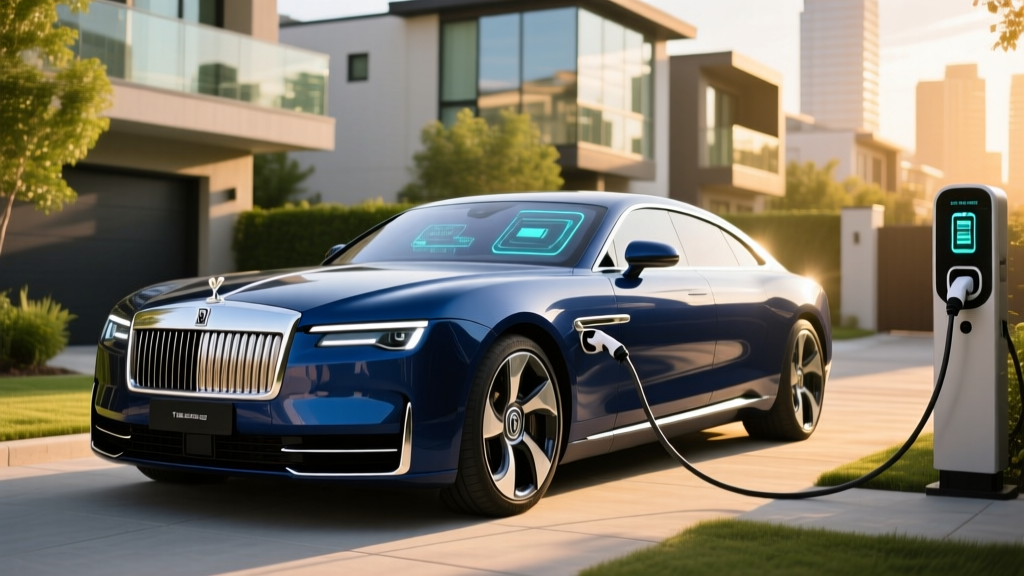
The Rolls-Royce Spectre is the brand's first fully electric production vehicle, riding on BMW Group's aluminum Architecture of Luxury (shared in concept with the Phantom and Cullinan, but heavily reworked for EV duty). It is a two-door, four-seat ultra-luxury coupe positioned above the BMW i7 and Mercedes-Benz EQS in price and exclusivity, but below the coachbuilt Rolls-Royce Droptail. For 2026, the Spectre continues with a dual-motor all-wheel-drive layout producing 577 horsepower and 664 lb-ft of torque, with a 0–60 mph time of 4.4 seconds — brisk, though Rolls-Royce tunes the powertrain for wafting refinement rather than aggression.
The Spectre is not trying to be a Tesla killer. It targets buyers who previously purchased a Wraith or Phantom coupe and want electric silence. That context matters: this is an ownership-cost and buying-decision guide, not a track comparison.
Spectre EV Specifications at a Glance
| Specification | 2026 Rolls-Royce Spectre |
|---|---|
| EPA Range | 264 miles |
| Real-World Range (highway, 70 mph) | ~210–230 miles |
| Real-World Range (cold, 20°F) | ~185–210 miles |
| Battery (usable capacity) | 102 kWh, NMC chemistry |
| Drivetrain | Dual-motor AWD, 577 hp / 664 lb-ft |
| 0–60 mph | 4.4 seconds |
| DC Fast Charge (peak) | 195 kW (10–80% in ~34 min) |
| Level 2 AC Charge | 22 kW onboard (~5.5 hours 0–100%) |
| Efficiency (combined) | 73 MPGe (EPA est.) |
| Energy Consumption | ~46 kWh/100 mi |
| Connector | CCS1 (NACS adapter available) |
| Battery Warranty | 8 years / 100,000 miles (70% capacity retention) |
| Base MSRP | ~$420,000 (before bespoke options) |
| Federal §30D Tax Credit | Not eligible (exceeds $55K sedan MSRP cap) |
Sources: fueleconomy.gov, Rolls-Royce Motor Cars
Range Reality: EPA Sticker vs. What You'll Actually Drive
EPA: 264 miles — but plan for 210–230 miles on a highway road trip and 185–210 miles in freezing weather. The Spectre's 6,100-pound curb weight and 2.6-ton mass demand significant energy to move at speed, resulting in a relatively high 46 kWh/100 mi consumption rate.
Rolls-Royce's 264-mile EPA figure is respectable for a vehicle of this mass, but it trails lighter luxury EVs. The Lucid Air Grand Touring achieves 516 miles EPA from a 112 kWh pack thanks to class-leading aerodynamics and efficiency. The Mercedes-Benz EQS 580 sedan delivers 371 miles EPA. Even the BMW i7 xDrive60 — the Spectre's closest corporate cousin — manages 318 miles from a 101.7 kWh battery.
Why the gap? Physics. The Spectre prioritizes cabin isolation, sound deadening, and a commanding road presence over drag coefficient optimization. Its large frontal area and upright grille design increase aerodynamic drag at highway speeds, where EVs lose range fastest. If your typical drive is city and suburban at under 50 mph, you'll approach or exceed the EPA number. Sustained 75–80 mph interstate driving is where the 264-mile figure compresses to the low 220s.
Charging Speeds and Infrastructure
| Charging Level | Power (kW) | Time | Miles Added per Hour |
|---|---|---|---|
| Level 1 (120V household) | ~1.4 kW | ~72+ hours (0–100%) | ~3 mi/hr |
| Level 2 (240V, 48A) | ~11.5 kW | ~10 hours (0–100%) | ~25 mi/hr |
| Level 2 (240V, max 22 kW) | 22 kW | ~5.5 hours (0–100%) | ~48 mi/hr |
| DC Fast Charge (peak 195 kW) | 195 kW | ~34 min (10–80%) | N/A |
| DC Fast Charge (sustained avg) | ~120–140 kW avg | 10–80% actual curve | ~250 mi/hr at peak |
The Spectre's 195 kW peak DC fast-charging rate is adequate but not class-leading. For comparison, the Hyundai Ioniq 5 peaks at 240 kW (10–80% in ~18 minutes), and the Lucid Air can accept over 300 kW on compatible chargers. The Spectre's charge curve tapers noticeably above 60% state of charge, which is why the 10–80% time stretches to 34 minutes rather than the 20 minutes you'd see from a Porsche Taycan or Audi e-tron GT.
For home charging, the 22 kW onboard charger is a genuine advantage — if your home electrical panel supports a 100-amp dedicated circuit. Most Spectre owners will have a professional electrician install a high-amperage Level 2 charger (such as a ChargePoint Home Flex or FLO Home X8) on a 60- or 100-amp circuit, yielding a full overnight charge in 5.5–10 hours. Expect $1,500–$4,000 for the installation depending on panel capacity and conduit run length.
Connector note: The Spectre ships with a CCS1 connector. As Tesla's NACS standard expands across North America in 2025–2026, Rolls-Royce (via BMW Group) has confirmed NACS adapter availability. If you plan to use Tesla Superchargers, confirm adapter compatibility with your dealer before purchase.
EV vs. Gas: Spectre vs. Rolls-Royce Wraith (V12)
The most natural comparison for the Spectre is the now-discontinued Rolls-Royce Wraith, the brand's previous two-door coupe powered by a 6.7L twin-turbo V12. Here's how the ownership economics stack up over five years and 60,000 miles:
| Cost Category (5 yr / 60K mi) | Spectre EV | Wraith V12 (gas, last MSRP ~$360K) |
|---|---|---|
| Purchase Price (base) | $420,000 | $360,000 |
| Federal Tax Credit | $0 (MSRP cap exceeded) | $0 |
| Fuel / Electricity | $4,800 (at $0.16/kWh avg) | $14,400 (at $4.00/gal, 14 mpg) |
| Maintenance (est.) | $3,500 | $8,500 |
| Insurance (est.) | $42,000 ($8,400/yr avg) | $36,000 ($7,200/yr avg) |
| Depreciation (est. 5-yr) | ~$210,000 (50%) | ~$198,000 (55%) |
| Estimated 5-Yr Total Cost | ~$680,300 | ~$616,900 |
The Spectre saves roughly $9,600 in fuel and $5,000 in maintenance over five years, but those savings are overwhelmed by the $60,000 higher purchase price and $6,000 higher insurance cost. Depreciation is the largest cost factor for either vehicle, and both will lose roughly half their value in five years — typical for ultra-luxury automobiles.
The honest math: Nobody buys a Spectre for the cost savings. The value proposition is the driving experience — near-silent acceleration, instant torque, zero tailpipe emissions, and the prestige of electric Rolls-Royce ownership. If fuel economy is your primary concern, this is the wrong vehicle category entirely.
Real-World Ownership: What First-Time EV Buyers Must Know
If the Spectre is your first electric vehicle, several ownership realities deserve attention before signing the purchase agreement:
Home charging is nearly mandatory. With a 102 kWh battery, relying on public Level 2 chargers (typically 6–19 kW) would mean 6–18 hour charge sessions. The Spectre's ownership experience is designed around waking up to a full battery every morning. Confirm your home's electrical service can support a 60- to 100-amp dedicated circuit. Older homes may require a panel upgrade ($2,000–$5,000) before installation.
Public fast charging works, but plan ahead. The Spectre's 195 kW peak rate means you'll spend 30–40 minutes at a DC fast charger to go from 10% to 80%. On a road trip from New York to Miami, that translates to roughly four charging stops of 35 minutes each. Use apps like PlugShare or A Better Routeplanner to map charger locations along your route. Electrify America and EVgo stations are widely available, but reliability varies — a known pain point across the EV industry that Rolls-Royce's concierge services can help mitigate.
Cold weather is real. NMC battery chemistry loses efficiency in freezing temperatures. Expect 15–20% range reduction at 20°F, dropping effective range to approximately 185–210 miles. The Spectre includes a battery thermal management system with preconditioning — use it. Set your departure time in the infotainment system so the battery warms to optimal temperature before you drive and before you arrive at a fast charger.
Insurance costs are higher. EV insurance premiums run 15–25% above equivalent gas vehicles due to higher repair costs (specialized bodywork, battery replacement risk, and limited repair network). For a $420,000 vehicle, expect annual premiums in the $7,000–$10,000 range depending on your location, driving record, and coverage level. Get quotes before purchasing.
Myths vs. Facts: Common Spectre and EV Misconceptions
| Myth | Fact |
|---|---|
| "The Spectre gets $7,500 in federal tax credits." | It does not. IRS §30D caps the credit for sedans at $55,000 MSRP. The Spectre starts at ~$420,000. No federal purchase incentive applies. Check IRS.gov for current rules. |
| "EVs need no maintenance." | EVs need less maintenance — no oil changes, spark plugs, or transmission fluid — but tires wear 15–25% faster due to instant torque and heavy weight. The Spectre's 6,100-lb mass demands premium tires ($500–$800 each) replaced every 20,000–30,000 miles. Brake fluid, cabin air filters, wiper fluid, and coolant still require service. |
| "The battery will need replacing in 5 years." | Modern NMC batteries degrade roughly 1.5–2.5% per year under normal use. After 8 years, expect 82–88% of original capacity remaining. Rolls-Royce warrants the battery at 70% capacity retention for 8 years / 100,000 miles. A full battery replacement (if ever needed) would cost $25,000–$40,000 — but this is rare within the first decade. |
| "264 miles isn't enough range." | The average American drives 37 miles per day (FHWA data). Even with real-world reduction, the Spectre covers a week of commuting between charges. Range matters most for road trips — and with 34-minute fast-charge stops, a 500-mile day is feasible with two stops. |
| "I can charge on any Tesla Supercharger." | Not without a NACS adapter. The Spectre uses CCS1 natively. As of 2026, BMW Group has confirmed NACS adapter support, but confirm availability with your dealer. Non-Tesla Supercharger access is expanding but not yet universal. |
Decision Framework: Should You Buy the Spectre EV?
Buy the Rolls-Royce Spectre if:
- You want the quietest, most refined luxury coupe available and budget is not a primary constraint
- You have reliable home Level 2 charging (garage or dedicated parking with electrical access)
- Your daily driving is under 150 miles and road trips are occasional or you accept charging stops
- You value instant torque, silent acceleration, and zero tailpipe emissions in an ultra-luxury package
- You are replacing a Wraith, Phantom coupe, or similar V12 grand tourer
Consider an alternative if:
- Maximum range is your top priority → Lucid Air Grand Touring (516 mi EPA, ~$138K)
- You want a luxury EV sedan with four doors and more cargo space → BMW i7 xDrive60 (318 mi EPA, ~$120K) or Mercedes-Benz EQS 580 (371 mi EPA, ~$115K)
- You frequently drive in rural areas with sparse charging infrastructure → a plug-in hybrid like the Range Rover PHEV may offer more flexibility
- You want to offset the purchase with federal tax incentives → the Spectre qualifies for none; look at EVs under $55K MSRP for the §30D credit
- You need the fastest DC charging speeds for frequent road trips → Porsche Taycan Turbo S (270 kW peak, 10–80% in ~20 min) or Hyundai Ioniq 5 N (240 kW)
Frequently Asked Questions
Does the Rolls-Royce Spectre qualify for any tax credits or incentives?
No. The federal §30D clean vehicle credit has an MSRP cap of $55,000 for sedans (and $80,000 for SUVs/pickups/vans). At ~$420,000 base, the Spectre is far above the cap. Buyer income limits ($150K single / $300K joint) and battery critical-mineral sourcing rules also apply to eligible vehicles. Some states offer additional incentives, but these are typically modest relative to the Spectre's price. Consult a tax professional for your specific situation.
How long does it take to charge the Spectre at home?
On a 240V Level 2 charger at 22 kW (the Spectre's maximum onboard rate), a full 0–100% charge takes approximately 5.5 hours. On a more common 48-amp / 11.5 kW Level 2 setup, expect roughly 10 hours. Most owners plug in overnight and wake to a full battery. Level 1 (120V) charging is impractical for daily use at 72+ hours for a full charge.
What is the real-world range of the Spectre on a road trip?
Expect 210–230 miles at sustained highway speeds (70–75 mph) in moderate temperatures. In cold weather (below 30°F), plan for 185–210 miles. Use preconditioning to warm the battery before fast charging, which improves charge speed and protects battery longevity.
How does the Spectre compare to the BMW i7?
Both share BMW Group's platform DNA, but the Spectre is a two-door coupe with bespoke Rolls-Royce tuning, sound insulation, and materials. The BMW i7 xDrive60 is a four-door sedan with 318 miles EPA range, a $120K starting price, and slightly faster DC charging. The i7 is more practical; the Spectre is more exclusive. They serve different buyers.
What happens if the Spectre's battery degrades significantly?
Rolls-Royce warrants the high-voltage battery at 70% capacity retention for 8 years or 100,000 miles. If capacity drops below that threshold under normal use, the warranty covers repair or replacement. In practice, NMC batteries degrade 1.5–2.5% annually, meaning you'd retain roughly 82–88% capacity after 8 years. Avoid routinely charging to 100% or letting the battery sit at 0% for extended periods to maximize longevity.
Is the Spectre self-driving?
No. The Spectre includes advanced driver-assistance features (adaptive cruise control, lane-keeping assist, automated parking) classified as SAE Level 2 — meaning the driver must remain fully engaged and hands on or near the wheel at all times. It is not autonomous. No production vehicle sold to consumers in 2026 is Level 4 or 5 self-driving. Only commercial robotaxi services like Waymo operate at Level 4, and only in geofenced areas.
Editorial note: Pricing, tax credit rules, and specifications reflect 2026 model-year data available at publication. IRS §30D rules are subject to legislative change. Always verify current eligibility at IRS.gov and confirm vehicle specs with your local Rolls-Royce dealer. Real-world range and charging figures are estimates based on testing data and may vary with driving conditions, temperature, and terrain.