Quick Answer: Should You Buy the Rolls-Royce Electric Spectre?
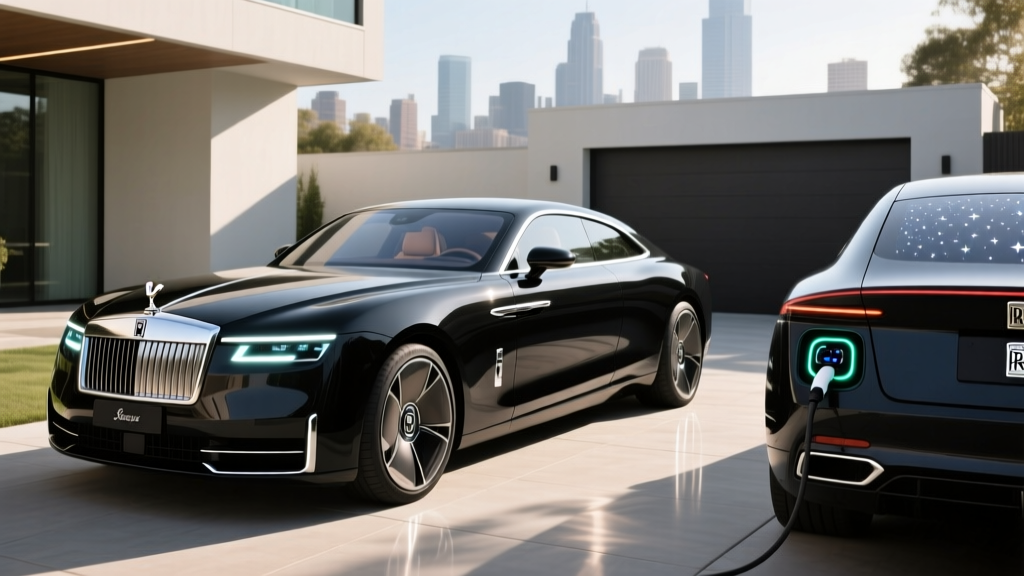
The Rolls-Royce electric offering — the Spectre — is the brand's first battery-electric vehicle and targets ultra-luxury buyers who want silent, effortless propulsion without visiting a gas station. Starting around $420,000 MSRP, the Spectre delivers an EPA-estimated 264 miles of range from a 102 kWh (usable ~100 kWh) NMC battery, peaks at 195 kW DC fast charging (10–80% in approximately 34 minutes), and produces 577 hp with a 0–60 mph time of 4.4 seconds. Federal §30D tax credits do not apply: the Spectre exceeds the IRS MSRP cap for sedans/coupes ($55,000). If you have home Level 2 charging and drive primarily in urban or suburban settings, the Spectre replaces the discontinued gas-powered Wraith with lower running costs and a dramatically smoother powertrain. If you regularly road-trip beyond 200 miles in cold weather or lack reliable home charging access, plan your routes carefully — public DC fast-charger reliability remains inconsistent outside major metro corridors.
What Is the Rolls-Royce Electric Spectre?
The Rolls-Royce Spectre is a two-door, four-seat ultra-luxury electric coupe built on BMW Group's aluminum Architecture of Luxury platform — the same flexible underpinning used by the Phantom and Cullinan, adapted here for a fully electric drivetrain. Rolls-Royce positioned the Spectre as the spiritual successor to the gasoline V12 Wraith (discontinued after the 2023 model year), but with a fundamentally different character: instant torque, near-silent operation, and zero tailpipe emissions.
For 2025 and 2026 model years, the Spectre is available in a single well-equipped configuration. Buyers typically add bespoke options — custom paint, starlight headliner variations, commissioning collections — pushing real transaction prices well above $450,000. A higher-output Spectre Black Badge variant was announced for the 2026 model year, expected to produce approximately 659 hp with a slightly reduced EPA range estimate due to the performance tune.
| Specification | Value |
|---|---|
| EPA Range (est.) | 264 miles (real-world highway: ~220–240 mi; cold weather: ~190–210 mi) |
| Battery (usable) | ~100 kWh, NMC chemistry |
| Drivetrain | Dual-motor AWD |
| Horsepower | 577 hp (Black Badge: ~659 hp, announced) |
| Torque | 664 lb-ft |
| 0–60 mph | 4.4 seconds |
| DC Fast Charge (peak) | 195 kW (10–80% in ~34 min) |
| Level 2 AC Charge | 22 kW onboard charger (~5.5 hours, 0–100%) |
| EPA Efficiency | 73 MPGe combined (est.) |
| Base MSRP | ~$420,000 (before bespoke options) |
| Federal §30D Tax Credit | Not eligible (exceeds $55K MSRP cap for coupes) |
| Battery/Powertrain Warranty | 8 years / 100,000 miles (≥70% capacity retention) |
Range, Charging, and Real-World Expectations
The Spectre's 264-mile EPA estimate is respectable for a 6,500+ pound luxury coupe, but real-world conditions compress that number. In highway driving at 70–80 mph, expect 220 to 240 miles before needing a charge. In cold weather (below 32°F), battery chemistry and cabin heating demands can reduce range by 20–30%, bringing the practical figure to roughly 190–210 miles. The Spectre includes a heat pump for more efficient cabin climate control, which mitigates some cold-weather loss compared to resistive heating systems.
Real-World Range Reality: EPA 264 mi → Highway (70 mph): ~220–240 mi → Cold weather (20°F): ~190–210 mi. Plan road trips with a 30-mile buffer and precondition the battery before DC fast-charging stops.
Charging Speeds and the Curve
At a DC fast charger, the Spectre peaks at 195 kW. However, like all EVs, it doesn't sustain that rate across the full session. The charge curve tapers significantly above 80% state of charge to protect the NMC battery cells. A typical 10–80% session takes approximately 34 minutes at a compatible 200+ kW station (such as Electrify America's 350 kW stalls or Tesla Supercharger V3/V4 with NACS adapter). Charging from 80–100% can add another 20–25 minutes — so for road trips, plan to leave at 80% and move on.
| Level | Power | Time | Miles Added per Hour |
|---|---|---|---|
| Level 1 (120V outlet) | ~1.4 kW | 70+ hours (0–100%) | ~3–4 mi/hr |
| Level 2 (240V, 48A) | 11.5 kW | ~9.5 hours (0–100%) | ~28 mi/hr |
| Level 2 (240V, max 22 kW onboard) | 22 kW | ~5.5 hours (0–100%) | ~48 mi/hr |
| DC Fast Charge (peak 195 kW) | 195 kW peak | ~34 min (10–80%) | ~310 mi/hr (at peak) |
At home, the Spectre's 22 kW onboard AC charger is a standout — most EVs max out at 11.5 kW or 19.2 kW on Level 2. If your home electrical panel supports a 100-amp dedicated circuit (requiring a 240V / 100A line), you can fully replenish the battery overnight in about 5.5 hours. Most Spectre owners will already have — or can easily add — the electrical capacity for this, but consult a licensed electrician to confirm panel headroom and permit requirements. Installation for a high-amperage Level 2 circuit typically runs $2,000–$5,000 depending on panel upgrades and conduit distance.
Spectre vs Gas-Powered Wraith: The Ownership Math
The most natural comparison for the Rolls-Royce electric Spectre is the gasoline V12 Wraith it effectively replaced. Here's how they stack up on key ownership metrics over a 5-year, 50,000-mile horizon:
| Category | Spectre (Electric) | Wraith (6.6L V12 Gas) |
|---|---|---|
| Purchase Price (avg. transaction) | ~$460,000 | ~$380,000 (used/CPO, no longer new) |
| Fuel/Energy Cost (50K mi) | ~$3,750 (home charging at $0.16/kWh avg.) | ~$12,500 (14 MPG combined, $3.50/gal) |
| Annual Maintenance | ~$800–$1,200/yr | ~$3,500–$5,000/yr |
| 5-Year Maintenance Total | ~$5,000–$6,000 | ~$17,500–$25,000 |
| Insurance (annual avg.) | ~$8,500–$12,000/yr | ~$7,000–$10,000/yr |
| 5-Year Fuel + Maintenance Savings | Spectre saves ~$21,000–$27,000 on energy and maintenance | |
The Spectre commands a higher purchase price, but the running-cost advantage is substantial. A gasoline Wraith's 6.6-liter twin-turbo V12 averages roughly 14 MPG combined, meaning 50,000 miles requires about 3,570 gallons — roughly $12,500 at $3.50/gallon. The Spectre, charging primarily at home at the national average of $0.16/kWh and consuming roughly 2.5 kWh/mile, costs about $3,750 for the same distance. That's an energy savings of nearly $8,750 over five years.
Maintenance savings are even more dramatic. The Spectre has no engine oil, no spark plugs, no transmission fluid, no exhaust system, and regenerative braking drastically extends brake pad life. Rolls-Royce maintenance on a V12 Wraith routinely runs $3,500–$5,000 annually; the Spectre's annual service visits typically cost $800–$1,200 (cabin air filter, fluid top-offs, tire rotation, software updates).
Insurance, however, trends higher for the Spectre due to its elevated purchase price and EV-specific repair considerations. Expect premiums 15–25% above a comparable Wraith.
Real-World Ownership: What First-Time EV Buyers Should Know
Buying a $420,000+ electric vehicle is not the same as buying a $45,000 EV. The ownership infrastructure expectations differ, and Spectre buyers should consider the following:
Home Charging Is Essentially Mandatory
The Spectre ownership experience is built around waking up to a full "tank" every morning. Relying solely on public DC fast charging is technically possible but impractical: charger reliability on networks like Electrify America and EVgo remains inconsistent, with industry studies showing 15–20% of public charger sessions encounter issues (broken screens, payment failures, or reduced power output). If you live in a condo, apartment, or area without home-charging access, the Spectre's convenience proposition diminishes significantly.
Climate Matters
If you live in northern-tier states with sustained sub-freezing winters, budget 20–30% range loss into your trip planning. The Spectre's battery preconditioning feature helps mitigate charging-speed loss in cold weather — activate navigation to a DC fast charger, and the car will warm the battery to optimal temperature before you arrive. This is critical for achieving the advertised 195 kW peak rate in winter.
Driving Patterns
The Spectre excels as a grand tourer and daily luxury driver. For owners who drive fewer than 150 miles per day (the vast majority), home charging alone covers all needs. For longer road trips, route planning through apps like A Better Routeplanner or the car's native navigation is essential — identify 150+ kW chargers along your route and plan 25–30 minute stops every 180–200 miles.
Common Misconceptions About the Rolls-Royce Electric Spectre
| Myth | Fact |
|---|---|
| "It qualifies for the $7,500 federal EV tax credit." | The IRS §30D credit caps eligible coupes/sedans at a $55,000 MSRP. The Spectre at ~$420,000 does not qualify. |
| "Electric Rolls-Royces have unreliable batteries." | The Spectre uses proven NMC cell chemistry from a major Tier 1 supplier, backed by an 8-year/100,000-mile warranty guaranteeing ≥70% capacity retention. Real-world degradation for NMC packs averages 8–12% over 8 years. |
| "It charges as fast as a Tesla or Porsche Taycan." | The Spectre peaks at 195 kW — respectable but below the Taycan's 270 kW (800V architecture) or Tesla Model S Plaid's ~250 kW. Expect 34 minutes for 10–80%, not 18–22 minutes. |
| "You can't take it on road trips." | You can, with planning. The CCS connector (NACS adapter available for Tesla Superchargers) gives access to the largest DC fast-charging networks. Plan stops every ~200 miles. |
| "Maintenance is zero." | Maintenance is reduced, not eliminated. Tires (heavy EVs wear tires faster — expect 20,000–30,000 mile tire life), cabin filters, wiper fluid, brake fluid checks, and software updates still require dealer visits. |
Decision Framework: Is the Spectre the Right EV for You?
Choose the Rolls-Royce Spectre If:
- You want the quietest, smoothest luxury coupe available — electric propulsion eliminates V12 vibration and exhaust drone entirely.
- You have reliable home Level 2 charging (ideally 22 kW capable) and drive fewer than 200 miles daily.
- You value lower running costs (~$5,000+ annual savings vs a gas Wraith) alongside the prestige of the Spirit of Ecstasy.
- You live in a temperate or warm climate, or you're willing to plan for cold-weather range reduction.
- You're transitioning from a Wraith, Dawn, or similar ultra-luxury coupe and want to go electric without stepping down in prestige.
Look Elsewhere If:
- You lack home charging access and your area has sparse DC fast-charging infrastructure.
- You regularly drive 300+ miles in a single day and can't accommodate 30-minute charging stops.
- You need rear-seat practicality or cargo space — the Spectre is a two-door coupe with limited trunk volume.
- You're seeking a federal tax credit to offset the purchase — the Spectre does not qualify under current IRS §30D rules.
- Maximum charging speed is a priority — the Porsche Taycan Turbo GT or Lucid Air Sapphire charge faster on DC.
Charging Connector and Network Compatibility
The Spectre ships with a CCS1 (Combined Charging System) port for the North American market. This grants access to Electrify America, EVgo, ChargePoint DC stations, and other CCS-compatible networks. Rolls-Royce has confirmed that a NACS adapter (for Tesla Supercharger access) is available, expanding the usable fast-charging network by over 20,000 additional stalls nationwide. When using the adapter on Tesla V3 Superchargers (250 kW stalls), the Spectre will still be limited to its own 195 kW peak — the car, not the station, is the bottleneck.
For Level 2 home charging, the Spectre uses the standard J1772 connector (or NACS for Tesla Wall Connector with adapter). Given the 22 kW onboard charger, investing in a high-output Level 2 home station like the ChargePoint Home Flex (configured for 80A/19.2 kW) or a hardwired 100A unit is recommended to maximize overnight replenishment speed.
Battery Longevity, Warranty, and Replacement Considerations
The Spectre's NMC battery pack is engineered for longevity, with active liquid thermal management keeping cells in their optimal temperature range during charging and driving. Rolls-Royce backs the battery with an 8-year / 100,000-mile warranty, guaranteeing at least 70% of original capacity retention. Industry data from fueleconomy.gov and third-party fleet studies suggest that modern NMC packs with robust thermal management lose approximately 8–12% capacity over 8 years of typical use — meaning most Spectre batteries should remain well within warranty thresholds.
Out-of-warranty battery replacement is the specter that haunts many prospective EV buyers. For a ~100 kWh NMC pack of this specification, replacement cost (parts + labor) would likely fall in the $25,000–$40,000 range based on current industry pricing for comparable luxury EV battery packs. However, individual cell module replacement (rather than a full pack swap) may be possible at lower cost, depending on the failure mode. Rolls-Royce has not published module-level pricing as of early 2026.
Frequently Asked Questions
Does the Rolls-Royce Spectre qualify for any EV tax credits?
No. The federal §30D clean vehicle credit has an MSRP cap of $55,000 for sedans and coupes. At approximately $420,000, the Spectre far exceeds this limit. Some state-level incentives (such as California's CVRP or Colorado's EV tax credit) may have their own income and price caps — consult your state's energy office or a tax professional for specifics.
How long does it take to charge the Spectre at home?
On a 240V Level 2 circuit delivering the Spectre's maximum 22 kW AC rate, a full 0–100% charge takes approximately 5.5 hours. On a standard 48-amp Level 2 home charger (11.5 kW), expect roughly 9.5 hours. On a standard 120V household outlet (Level 1), a full charge would take over 70 hours — essentially impractical for anything beyond emergency trickle charging.
What is the real-world range on a road trip?
Expect 220–240 miles in mild weather at highway speeds (70 mph). In cold weather or at higher speeds (80+ mph), range may drop to 190–210 miles. Always plan with a buffer and use the car's preconditioning feature before arriving at DC fast chargers.
How does the Spectre compare to the Tesla Model S or Lucid Air?
The Spectre occupies a different segment entirely. The Lucid Air Grand Touring offers 516 miles of EPA range for ~$125,000, and the Tesla Model S Plaid delivers 1,020 hp and 0–60 in 1.99 seconds for ~$90,000. Neither matches the Spectre's bespoke craftsmanship, sound insulation, or brand prestige. Buyers cross-shopping these vehicles are typically prioritizing different values: technology and efficiency (Lucid/Tesla) versus heritage and hand-built luxury (Rolls-Royce).
Is the Spectre self-driving?
No. The Spectre features advanced driver-assistance systems (adaptive cruise control, lane-keeping assist, automated parking) that qualify as SAE Level 2 — meaning the driver must remain fully engaged and responsible for vehicle operation at all times. Rolls-Royce does not currently offer a Level 3 or Level 4 autonomous driving system.
What connector does the Spectre use for public charging?
The Spectre uses the CCS1 connector for DC fast charging and J1772 for Level 2 AC charging. A NACS adapter is available for access to Tesla Supercharger stations. This gives Spectre owners access to essentially all major public charging networks in North America.