The Short Answer on Roads That Charge Electric Cars
Roads that charge electric cars do exist — but only as limited pilot projects, not as publicly available infrastructure you can drive on today. As of 2026, dynamic wireless power transfer (DWPT) test segments operate in places like Detroit, Michigan (a one-mile stretch on Southfield Road), Visby, Sweden (the ERS Gotland project), and select test tracks in Germany and South Korea. These roads use electromagnetic coils embedded beneath the asphalt to beam power to a receiver plate on a specially equipped vehicle. However, no production EV sold in the U.S. currently supports dynamic wireless charging from a roadway, and widespread deployment is realistically a decade or more away. For today's EV buyers, this technology should not factor into your purchase decision.
How Wireless Charging Roads Actually Work
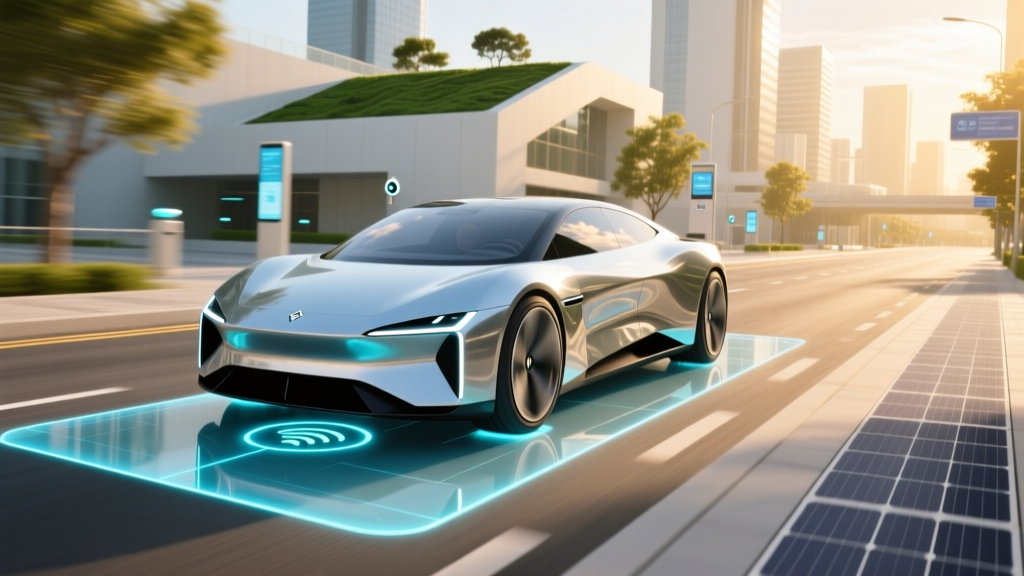
Dynamic wireless charging roads rely on inductive power transfer — the same physics behind your wireless phone charger, scaled up massively. Here's the chain:
- Transmitter coils are embedded in the road surface at intervals (typically every 20–50 meters).
- Each coil connects to a roadside power electronics unit that converts grid AC to high-frequency AC, generating an oscillating magnetic field.
- A receiver coil mounted under the vehicle picks up that magnetic field and converts it back to DC to charge the traction battery.
- Power transfer levels in current pilots range from 20 kW to 200 kW, depending on the system.
The Detroit pilot, developed by Electreon in partnership with the Michigan Department of Transportation, initially tested at 20 kW with a Ford E-Transit van. Electreon has since targeted scaling to 100 kW and beyond for future deployments. Sweden's ERS Gotland project demonstrated wireless charging at up to 45 kW for heavy trucks on a public road.
Critically, the vehicle needs a dedicated receiver module — you can't just drive any EV over these coils and expect charging. This hardware compatibility gap is one of the biggest barriers to consumer adoption.
Where Are These Roads Today? (2026 Status)
Here's what's actually operating or under construction as of 2026:
| Project | Location | Length | Power Level | Status | Vehicles |
|---|---|---|---|---|---|
| Electreon / MDOT | Southfield, Michigan, USA | ~1 mile (Phase 1) | 20 kW (targeting 100 kW) | Operational pilot | Ford E-Transit (equipped) |
| ERS Gotland | Visby, Sweden | ~2 km | Up to 45 kW | Completed pilot | Scania electric trucks |
| ELISA | Balingen, Germany | ~1 km test track | Up to 100 kW | Testing phase | Prototype passenger cars |
| Korea Highway Corp | Sejong, South Korea | ~1 km segments | Up to 100 kW | Research pilot | Prototype buses |
| Indiana DOT / Purdue | Indiana, USA | Planned ~0.25 mile | 200 kW (target) | Under construction | Heavy trucks (planned) |
Notice a pattern: every single deployment is either a pilot or a research project. None are open to the general public with consumer EVs. The Indiana/Purdue project is notable because it targets 200 kW — enough to meaningfully extend range for heavy trucks at highway speeds — but it's focused on commercial freight, not passenger cars.
The Real Cost: Why Charging Roads Aren't Coming Soon
The economics of embedding wireless charging into public roads are staggering, and this is where the technology hits a wall for near-term deployment.
| Infrastructure Option | Estimated Cost | Coverage | Consumer Ready? |
|---|---|---|---|
| Home Level 2 charger (7.7–11.5 kW) | $500–$2,500 (equipment + install) | Your driveway | Yes — today |
| Public DC fast charger (150–350 kW) | $50,000–$150,000 per station | Specific locations | Yes — today |
| Wireless charging road (per lane-mile) | $2M–$5M+ estimated | Continuous highway lane | No — pilot only |
| Vehicle receiver hardware | $1,500–$4,000 estimated per vehicle | N/A | Not available on production EVs |
For context, the U.S. has roughly 4 million miles of public roads. Even if only the Interstate Highway System (~48,000 miles) were equipped, at a conservative $2 million per lane-mile, the cost would approach $96 billion — and that's before the power grid upgrades needed to feed those coils. By comparison, the entire 2021 Bipartisan Infrastructure Law allocated $7.5 billion for EV charging infrastructure nationwide.
EV vs Gas vs Hybrid: What Matters for Your Purchase Today
If you're researching roads that charge electric cars because you're worried about range or charging access, the practical answer is that today's EVs, PHEVs, and HEVs already solve these problems — just through different mechanisms.
| Factor | Battery EV (e.g., 2026 Tesla Model Y LR) | PHEV (e.g., 2026 Toyota RAV4 Prime) | Gas Vehicle (e.g., 2026 Toyota RAV4 Gas) |
|---|---|---|---|
| EPA Range | 320 miles | 42 mi electric + 520 mi total | 449 miles |
| Energy Cost (per mile) | ~$0.04–$0.06 (home L2) | ~$0.04 electric / ~$0.12 gas | ~$0.12–$0.15 |
| "Refuel" Time | 10–80% in ~22 min (250 kW DC) | Full tank in ~5 min | ~5 min |
| Home Charging | Yes — wake up full daily | Yes — overnight L2 | N/A |
| Base MSRP (2026) | ~$44,990 | ~$44,590 | ~$30,090 |
| Federal Tax Credit (§30D) | Up to $7,500 (eligibility varies) | Up to $7,500 (eligibility varies) | None |
| 5-Year Fuel/Energy Cost | ~$2,400–$3,600 | ~$3,000–$4,500 | ~$7,500–$9,500 |
The numbers tell the story: a BEV with home charging already eliminates the need for en-route fueling on 95%+ of daily trips. The average American drives 37 miles per day according to FHWA data — well within any modern EV's range. The "charging road" concept solves a problem that home Level 2 charging and an expanding DC fast-charging network have already addressed for most drivers.
What a First-Time EV Buyer Should Actually Focus On
Rather than waiting for roads that charge electric cars, here's where your attention should go:
Your EV Charging Decision Framework
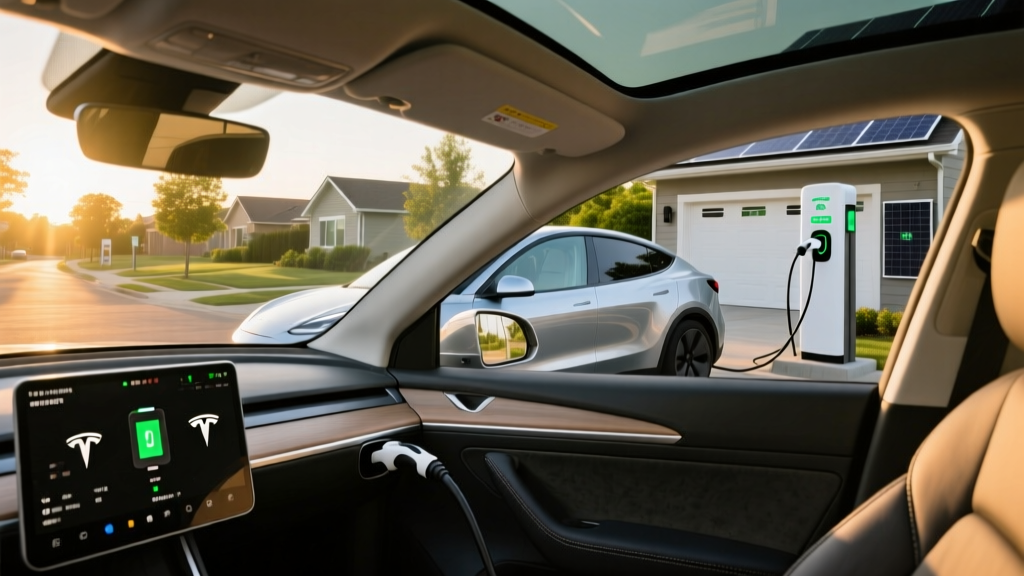
If you have a garage or dedicated parking spot with a 240V outlet (or can install one): A BEV is your strongest play. A Level 2 home charger ($500–$2,500 installed) covers daily driving completely. You'll wake up every morning with 250–350 miles of range. Road trips require planning around DC fast chargers, but networks like Tesla Supercharger, Electrify America, and EVgo now cover major U.S. highway corridors.
If you live in an apartment or lack home charging access: Consider a PHEV first. You get 30–42 miles of electric range for commuting (charge from a standard 120V outlet overnight) plus a gas engine for longer trips. Models like the Toyota RAV4 Prime, Hyundai Tucson PHEV, and Jeep Wrangler 4xe work well here.
If you frequently drive 300+ miles in cold weather or rural areas: A PHEV or a BEV with 320+ miles of EPA range and access to DC fast charging along your route. Check fueleconomy.gov for EPA range estimates and remember: expect 15–30% range loss in freezing temperatures and 10–20% loss at sustained highway speeds above 70 mph.
If you tow regularly: BEV range drops 30–50% when towing. A PHEV or HEV may be more practical until battery energy density improves.
Common Myths About Wireless Charging Roads
| Myth | Fact |
|---|---|
| "I can buy a car today that charges from the road." | No production EV sold in the U.S. in 2026 has a dynamic wireless charging receiver. This is strictly prototype/pilot technology. |
| "Charging roads will replace fast chargers." | Unlikely. Even at 200 kW, wireless road charging can't match the 350–400 kW speeds of next-gen DC fast chargers (like IONITY or Tesla V4). Roads will supplement, not replace, stationary charging. |
| "It's free energy from the road." | The electricity has to come from the grid and someone has to pay for the infrastructure. Expect per-mile or subscription pricing, likely higher than home charging rates. |
| "Wireless charging is inefficient." | Modern inductive systems achieve 85–93% efficiency, which is comparable to wired Level 2 charging (~90–95%). The energy loss is real but manageable. |
| "All EVs will get this feature via software update." | No. Dynamic wireless charging requires a physical receiver coil, power electronics, and thermal management hardware installed under the vehicle. It cannot be added via OTA update. |
The Bottom Line: What This Means for Your 2026 EV Purchase
Wireless charging roads are a legitimate technology with working prototypes, and they may eventually play a role for commercial trucking on fixed freight corridors. For passenger EVs, however, the timeline to meaningful deployment is 10–15+ years, and the infrastructure cost makes ubiquitous coverage economically implausible.
Your 2026 EV buying decision should rest on proven factors:
- EPA range vs. your daily and weekly driving patterns (check fueleconomy.gov for verified numbers)
- Home charging feasibility — a licensed electrician can assess your panel capacity and quote a Level 2 install
- DC fast-charging network access along your most common road-trip routes
- Federal §30D tax credit eligibility — current rules include income caps ($150K single / $300K joint), MSRP caps ($55K cars / $80K SUVs/trucks), and battery critical-mineral sourcing requirements (verify at irs.gov)
- Battery warranty — federal minimum is 8 years / 100,000 miles for capacity retention
Roads that charge electric cars are fascinating engineering. They're just not a reason to wait on buying an EV today.
Do any 2026 production cars support wireless charging from roads?
No. Every vehicle tested on wireless charging roads has been a specially equipped prototype or commercial truck. No automaker currently offers dynamic wireless charging as a consumer option on any production passenger vehicle sold in the United States.
How much would it cost to build wireless charging roads nationwide?
Estimates range from $2 million to $5 million+ per lane-mile for installation alone, not including grid upgrades, maintenance, or the power electronics infrastructure. Equipping even just the U.S. Interstate system would cost tens of billions of dollars.
Will Tesla support wireless charging roads?
Tesla has not announced any plans to integrate dynamic wireless charging receivers into its vehicles. Tesla's charging strategy remains focused on its Supercharger network (now open to NACS-equipped non-Tesla EVs) and home Powerwall/Wall Connector integration.
Is static wireless charging (parking pad) available today?
Static wireless charging — where you park over a pad and charge without plugging in — is closer to consumer availability than dynamic (driving) wireless charging. Companies like WiTricity have demonstrated 11 kW static systems, but as of 2026, no mainstream EV sold in the U.S. includes a factory-installed wireless charging receiver. Aftermarket kits exist but are limited and expensive.
What should I buy if I'm worried about charging on long road trips?
If long-distance charging access is your primary concern and you lack reliable home charging, a PHEV (plug-in hybrid) like the Toyota RAV4 Prime or Hyundai Tucson PHEV gives you 30–42 miles of electric commuting range plus a gas engine for unlimited road-trip distance. If you do have home charging, a BEV with 300+ miles of EPA range and DC fast-charge capability (like the Tesla Model Y, Hyundai Ioniq 5, or Ford Mustang Mach-E) handles road trips well with brief 15–25 minute charging stops every 200–250 miles.