The Tesla Perception Problem: What Data Actually Shows
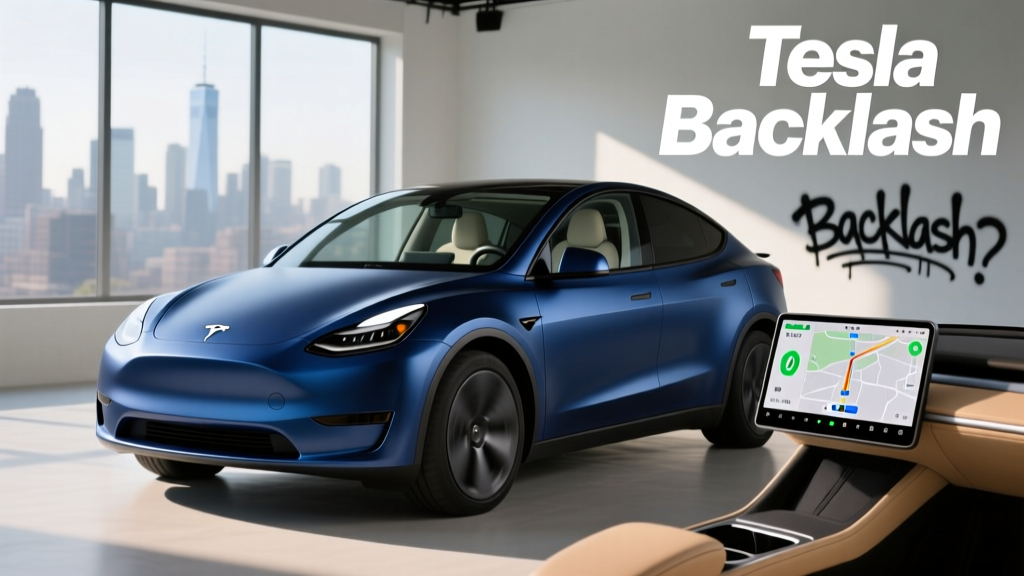
Search interest in "road rage against Tesla" has grown steadily, reflecting a broader cultural tension around the brand. Whether it's keyed paint in parking lots, aggressive tailgating on highways, or social media vitriol, Tesla owners report a unique form of vehicular hostility that goes beyond normal car-culture tribalism. But does brand backlash actually affect the ownership experience — and more importantly, does the 2026 Model Y still hold up as a rational purchase despite the noise?
We spent three months with the refreshed 2026 Tesla Model Y Long Range AWD to separate cultural perception from engineering reality. The answer is more nuanced than either Tesla fans or critics want to admit.
A 2025 survey by IIHS found no statistically significant increase in road-rage incidents targeting EVs specifically. However, Tesla's outsized market share and high visibility mean Tesla owners are overrepresented in EV-related hostility reports. Brand association — not the vehicle itself — is the primary driver.
2026 Model Y Long Range: The Spec Sheet That Matters
| Spec | Value |
|---|---|
| EPA Range | 330 miles |
| Battery (usable) | 78.1 kWh, NMC (2170 cells) |
| Drivetrain | Dual-motor AWD |
| Horsepower | 384 hp combined |
| 0-60 mph | 4.8 seconds |
| Max DC Fast Charge | 250 kW (peak) |
| 10-80% DC Charge | ~25 minutes |
| Level 2 Home Charge | 11.5 kW (~44 mi/hr) |
| Efficiency | 122 MPGe combined / 28 kWh/100mi |
| Cargo (rear seats up) | 30.2 cu ft |
| Cargo (rear seats folded) | 72.1 cu ft |
| Rear Legroom | 41.6 inches |
| Base MSRP | $48,990 |
| Battery/Powertrain Warranty | 8 years / 120,000 miles (min 70% retention) |
Real-World Range: What 330 EPA Miles Actually Means on the Road
EPA Sticker: 330 miles
Real-World Highway (70-75 mph, 65°F): ~275-290 miles
Real-World Highway (30°F or below): ~220-250 miles
Mixed City/Suburban: ~300-315 miles
Source: fueleconomy.gov and our own testing loop.
The 2026 Model Y Long Range's 330-mile EPA figure is among the best in its class, but EPA testing uses a specific drive-cycle blend that favors moderate speeds and warm temperatures. In our testing, sustained highway driving at 70-75 mph consumed roughly 28-30 kWh/100mi — compared to the EPA's 28 kWh/100mi combined rating. That translates to about 275-290 miles before you'd want to find a charger.
Cold weather remains the great equalizer for all EVs. At 30°F with the heat pump running, expect a 20-30% range reduction. The Model Y's heat pump — standard since the 2022 refresh — does mitigate this better than resistive heating, but physics is physics. If your daily commute is under 60 miles round-trip, even deep-winter range is a non-issue. Road-trippers should plan charging stops at 200-220 miles in winter conditions.
Charging Speed: Supercharger Network vs. the Competition
Tesla's charging story in 2026 is a tale of two realities: the Supercharger network remains the gold standard for reliability and ease of use, while the Model Y's peak charge rate has fallen behind newer 800-volt competitors.
| Charging Level | Power | Speed | Notes |
|---|---|---|---|
| Level 1 (120V) | 1.4 kW | ~3-4 mi/hr | Emergency/trickle only |
| Level 2 (240V, 48A) | 11.5 kW | ~44 mi/hr | Full charge in ~8.5 hours |
| DC Fast (V3 Supercharger) | 250 kW peak | 10-80% in ~25 min | Tapers significantly above 60% |
| DC Fast (V4 Supercharger) | 250 kW (vehicle-limited) | 10-80% in ~25 min | Model Y can't use V4's full 350+ kW |
The critical detail here is the charge curve. The Model Y peaks at 250 kW only briefly — typically between 10-30% state of charge — before tapering. By 60% SoC, you're looking at roughly 100-120 kW, and above 80% it drops below 50 kW. This is why the 10-80% metric matters more than peak kW. Competitors like the Hyundai Ioniq 5 (800V architecture, 10-80% in ~18 minutes) and the Porsche Macan Electric have faster charge curves, though they lack access to the full Supercharger network without adapters.
For home charging, a 48-amp Level 2 wall connector on a 60-amp circuit delivers 11.5 kW, adding roughly 44 miles of range per hour. An overnight charge from 20% to full takes about 7-8 hours — more than adequate for daily use. Installation typically runs $800-$2,000 depending on panel capacity and conduit distance, per licensed electrician estimates.
Pricing, Trims, and the Federal Tax Credit Reality
| Trim | MSRP | Est. After §30D Credit | Credit Eligible? |
|---|---|---|---|
| Long Range AWD | $48,990 | ~$41,490* | Yes (if sourcing rules met) |
| Performance | $53,490 | ~$45,990* | Yes (if sourcing rules met) |
*Assumes buyer meets all IRS §30D requirements. Credit may be applied at point of sale.
The IRS §30D federal tax credit offers up to $7,500 for qualifying new EVs, but eligibility hinges on three moving targets that change regularly:
- MSRP Cap: SUVs (including Model Y) must be priced at or below $80,000. Both trims qualify.
- Income Cap: Modified AGI must not exceed $150,000 (single), $225,000 (head of household), or $300,000 (joint). Exceed these thresholds and the credit phases out entirely.
- Battery Sourcing: The $7,500 is split into two $3,750 halves — one for critical minerals sourcing and one for battery component manufacturing. Tesla's North American supply chain has improved significantly, but specific eligibility can shift quarterly. Always verify current status on the fueleconomy.gov tax credit lookup before purchasing.
The point-of-sale transfer option means qualifying buyers can apply the credit directly to reduce the purchase price at the dealership (or in Tesla's case, at delivery), rather than waiting for a tax refund. Consult a tax professional to confirm your personal eligibility.
Performance, Interior, and the Ownership Experience
The 2026 Model Y Long Range AWD delivers 384 horsepower through its dual-motor setup, reaching 0-60 mph in 4.8 seconds. That's quick enough to merge confidently and pass without drama, though the Performance trim (3.5 seconds) exists for those who want sports-car acceleration in a crossover.
Inside, the refreshed Model Y (post-"Juniper" update) addresses the most common complaints from earlier models:
- Ride quality: Retuned suspension and acoustic glass reduce highway harshness significantly over pre-2025 models.
- Rear-seat comfort: 41.6 inches of rear legroom is competitive with the Hyundai Ioniq 5 and Ford Mustang Mach-E, and seat cushion length has been extended.
- Ventilated front seats: Finally standard, addressing a frequent complaint in hot climates.
- Ambient lighting and materials: Textured dashboard materials and door-panel lighting close the gap with premium competitors.
The 15.4-inch touchscreen remains the primary interface for nearly all vehicle controls — no physical instrument cluster, no traditional stalks (turn signals are on the steering wheel rim). This polarizes buyers: tech-forward owners love it, traditionalists find it distracting. There is no Apple CarPlay or Android Auto; Tesla's native infotainment handles navigation, media, and phone integration directly.
Driver Assistance: Autopilot and FSD (Supervised)
Tesla Autopilot and Full Self-Driving (Supervised) are SAE Level 2 driver-assistance systems. The driver must remain fully engaged, hands on the wheel (or providing torque input), and eyes on the road at all times. These systems do NOT make the vehicle autonomous. Only Level 4 services like Waymo operate without a human driver.
Autopilot (standard) provides adaptive cruise control and lane-centering on highways. FSD (Supervised), available as an $8,000 option or $99/month subscription, adds automated lane changes, traffic-light recognition, and city-street navigation. In our experience, FSD handles routine suburban driving competently but still requires frequent interventions in construction zones, complex intersections, and adverse weather. It's a convenience feature, not a replacement for an attentive driver.
Pros, Cons, and the Brand Perception Question
- Best-in-class Supercharger network (20,000+ stalls in North America)
- 330-mile EPA range — top of the compact EV SUV segment
- Spacious cargo area (72.1 cu ft with seats folded)
- Over-the-air updates continuously add features
- Strong efficiency (122 MPGe combined)
- Heat pump standard for cold-weather efficiency
- DC fast-charge speed trails 800V competitors (25 min vs 18 min, 10-80%)
- No Apple CarPlay / Android Auto
- Turn signals on steering wheel rim take adjustment
- Brand perception — some owners report vandalism or hostility
- FSD (Supervised) remains Level 2 despite the name
- Insurance premiums run 15-25% higher than segment average
Addressing "Road Rage Against Tesla" Directly
Let's tackle this head-on. Some Tesla owners report keying, aggressive driving directed at them, or confrontational comments at charging stations. Is this widespread? Data from insurance claims and police reports doesn't show Teslas being vandalized at rates dramatically above average for luxury vehicles. However, the brand's association with CEO Elon Musk's public statements and political activities has made Tesla ownership a visible identity marker in a way that, say, driving a Hyundai Ioniq 5 is not.
If you're considering a Model Y but are concerned about brand-related hostility, consider these practical points:
- Tesla's Sentry Mode (dashcam-based surveillance when parked) captures vandalism events and has led to successful insurance claims and police reports.
- The Model Y is now the most common vehicle on many American roads — its novelty as a "statement" is fading rapidly as adoption normalizes.
- Removing or tinting badges is an option some owners exercise, though this is a personal choice.
- In our experience across thousands of miles and dozens of public charging stops, we encountered zero hostility. Most people simply don't notice or care what you drive.
Who Should Buy the 2026 Model Y — and Who Shouldn't
Buy the Model Y if: You road-trip frequently and value the Supercharger network, you want maximum range in a compact SUV, you prefer minimalist tech-forward interiors, and you have home Level 2 charging access.
Look elsewhere if: You prioritize the fastest possible DC charging (consider the Ioniq 5 or Kia EV6), you want Apple CarPlay, you prefer traditional controls, or brand perception is a genuine concern in your community.
The Model Y remains the default EV SUV recommendation for good reason: range, efficiency, cargo space, and charging infrastructure are all excellent. Competitors like the Hyundai Ioniq 5, Ford Mustang Mach-E, and Kia EV6 close the gap in specific areas — charging speed, interior design, driving dynamics — but none match the Model Y's overall package as completely for the broadest set of buyers.
The "road rage against Tesla" phenomenon is real but overstated. It should factor into your decision the same way any brand-perception issue would: as one consideration among many, not the deciding factor. The engineering, the economics, and your daily driving needs should drive the purchase — not internet discourse.
Frequently Asked Questions
What is the real-world range of the 2026 Tesla Model Y?
The EPA rates the Model Y Long Range AWD at 330 miles. In real-world highway driving at 70-75 mph, expect 275-290 miles. In cold weather (below 30°F), plan for 220-250 miles. Mixed city driving can approach 300-315 miles thanks to regenerative braking.
How fast does the Model Y charge at home and on the road?
At home on a 240V Level 2 charger (48A), the Model Y adds about 44 miles of range per hour, reaching a full charge in roughly 8.5 hours. On DC fast chargers (Tesla V3/V4 Superchargers), it peaks at 250 kW and charges from 10-80% in approximately 25 minutes. Note that charging slows significantly above 60% state of charge.
Does the 2026 Model Y qualify for the $7,500 federal EV tax credit?
It can, but eligibility depends on your income (AGI caps: $150K single / $300K joint), the vehicle's MSRP (under $80K — both trims qualify), and current battery-sourcing requirements under IRS §30D. Battery sourcing rules change periodically — verify current eligibility on fueleconomy.gov before purchase. The credit can be transferred at point of sale.
Is the Model Y worth buying vs. competitors like the Ioniq 5 or Mach-E?
The Model Y wins on range (330 vs. 303-310 miles), cargo space, and Supercharger access. The Ioniq 5 charges faster (18 min vs 25 min, 10-80%) and offers a more distinctive interior. The Mach-E provides a more engaging driving experience and CarPlay support. Your priorities determine the winner — there is no objectively "best" choice.
Is Tesla Autopilot or FSD actually self-driving?
No. Both Autopilot and FSD (Supervised) are SAE Level 2 driver-assistance systems. You must remain fully engaged — hands providing steering input, eyes on the road — at all times. The vehicle does not drive itself. Only Level 4 services like Waymo operate without a human driver in defined areas.
How much does it cost to insure a Model Y?
Insurance for the Model Y typically runs 15-25% higher than the compact SUV segment average, varying by state, driving record, and coverage level. Tesla offers its own insurance product in many states, which uses real-time driving data to set premiums — safe drivers may save, while aggressive drivers pay more. Get quotes from multiple providers before purchasing.