The Short Answer: Yes, But You Can't Buy One Yet
A road that charges electric cars — known as dynamic wireless power transfer (DWPT) or in-road wireless charging — exists in active pilot form as of 2026. Projects in Michigan, Indiana, and parts of Europe have embedded charging coils beneath pavement that transfer energy to specially equipped EVs as they drive. However, no public road in the U.S. currently offers this as a consumer service you can use daily. The technology works, but infrastructure rollout, vehicle compatibility, and cost-per-mile hurdles mean this remains years away from mainstream availability. For now, Level 2 home charging and DC fast-charging networks remain the practical reality for EV owners.
How In-Road Wireless Charging Actually Works
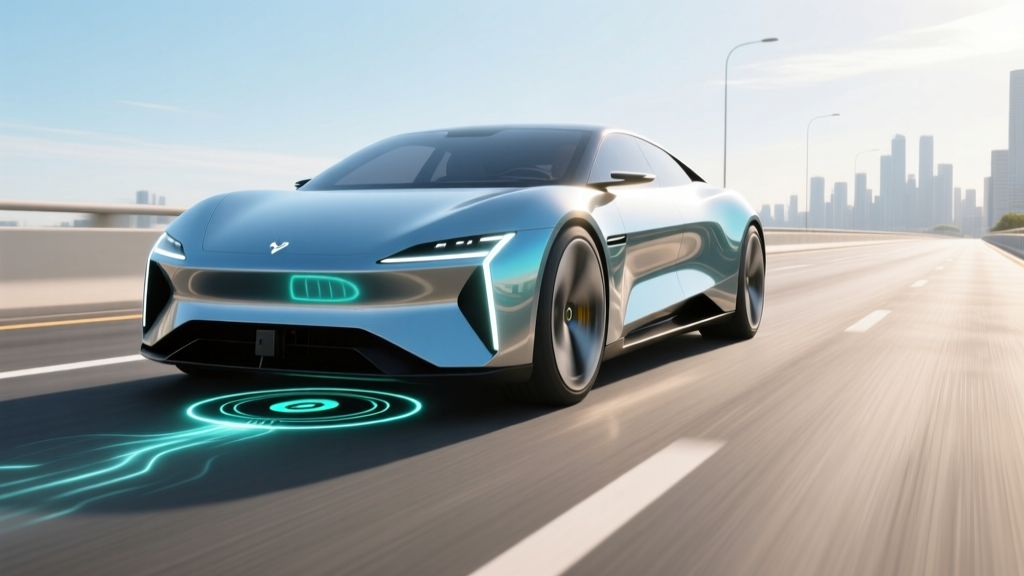
Wireless EV charging roads use electromagnetic induction — the same principle behind wireless phone chargers, scaled up dramatically. Copper coil segments are embedded roughly 2–4 inches beneath the road surface, connected to the electrical grid via roadside power cabinets. A receiver coil mounted on the underside of a compatible vehicle picks up the magnetic field and converts it back into electricity to charge the battery while driving or while stopped at a light.
The key specifications that matter:
- Power transfer rate: Current pilot systems deliver 25–200 kW to a moving vehicle, depending on the system. ENRX (formerly Electreon) has demonstrated up to 25 kW per coil segment in its Detroit pilot, while Qualcomm's Halo technology targets 20–60 kW for passenger vehicles.
- Efficiency: Lab and pilot data show 85–93% end-to-end transfer efficiency — competitive with plug-in Level 2 charging, which typically runs 88–94%.
- Speed tolerance: Most systems function at highway speeds (up to 70+ mph), though power transfer drops slightly at higher velocities due to reduced coil alignment time.
- Gap tolerance: Modern systems work across 6–10 inches of vertical air gap between road surface and vehicle receiver, accommodating most sedan and SUV ride heights.
Where Are the Real-World Pilot Projects?
Several in-road charging installations are operational or under construction as of 2026:
| Project | Location | Length | Power | Status |
|---|---|---|---|---|
| ENRX / Michigan DOT | Detroit, MI (M-140 near Corktown) | ~1 mile | 25 kW per segment | Operational pilot since 2024 |
| Purdue / INDOT | West Lafayette, IN (US-231/US-52) | ~1.25 miles | 200 kW (heavy-duty focus) | Phase 2 testing (2025–2026) |
| AREV / E-road | Auckland, New Zealand | ~1.5 km | ~50 kW | Public road pilot |
| Stellantis / Arena del Futuro | Brescia, Italy (A35 highway) | ~1,050 meters | DWPT, multiple segments | Operational since 2022, ongoing data collection |
| Smart Road Gotland | Visby, Sweden | ~2 km | ~25 kW (ENRX system) | Completed pilot, evaluation phase |
The Michigan DOT project in Detroit was the first publicly accessible wireless-charging road segment in the United States. It uses ENRX's inductive system embedded under a stretch of road near Ford's Michigan Central innovation district. A specially equipped Ford E-Transit van was the test vehicle. The Purdue/INDOT project in Indiana is notable for its higher power targets aimed at heavy-duty trucks, which could reshape freight logistics if scaled.
What Would This Cost — and Who Pays?
This is where the rubber meets the road, literally. The economics of in-road charging are the biggest barrier to widespread deployment.
| Charging Method | Infrastructure Cost | Per-Mile Energy Cost (est.) | Vehicle Hardware Needed |
|---|---|---|---|
| Level 2 home (240V, 48A) | $500–$2,500 (charger + install) | $0.03–$0.05/mi | Standard J1772/NACS port (built-in) |
| DC fast charging (150–350 kW public) | $50,000–$150,000 per station | $0.12–$0.28/mi | Standard CCS/NACS port (built-in) |
| In-road wireless (DWPT) | $1.5M–$4M per lane-mile (est.) | $0.08–$0.15/mi (projected) | Aftermarket receiver coil ($2,000–$5,000+ est.) |
At $1.5–$4 million per lane-mile for installation, plus ongoing maintenance, grid-connection upgrades, and the need for every participating vehicle to carry a receiver pad, the capital requirements are enormous. For comparison, resurfacing a mile of urban highway costs roughly $200,000–$500,000. Embedding electrified coils adds an order of magnitude to that figure.
The likely rollout path, if the technology scales, involves targeted corridors — bus routes, freight lanes, ride-share corridors, and specific highway stretches — rather than blanketing the entire road network. This is how FHWA-funded innovation projects typically progress: prove the concept on high-utilization routes where the per-mile economics make sense before expanding.
Wireless Road Charging vs. What You Can Actually Do Today
Since you can't yet buy a car that charges from the road, here's how current charging infrastructure stacks up for real EV buyers in 2026:
| Factor | Home Level 2 Charging | Public DC Fast Charging | In-Road Wireless (Future) |
|---|---|---|---|
| Availability now | Widely available | Expanding; gaps remain in rural areas | Pilot programs only |
| Charge speed | 7–19.2 kW (~25–70 mi/hr added) | 150–350 kW peak (10–80% in 15–25 min) | 25–200 kW while driving |
| Vehicle compatibility | All EVs (J1772 or NACS) | All EVs (CCS or NACS) | Requires aftermarket receiver; no OEM standard yet |
| Convenience | Plug in at home overnight | Plan stops on road trips | Charge while driving — no stops needed |
| Cost to consumer | Electricity at residential rates | Per-kWh pricing at stations | TBD — likely per-mile toll or subscription |
For context, a 2026 Hyundai Ioniq 5 with its 84 kWh (usable) battery and 240 kW peak DC fast-charging capability can add roughly 180 miles of range in 18 minutes at a 350 kW Electrify America or Tesla Supercharger station. That's the benchmark in-road charging would need to match or beat — not in raw power, but in convenience and total trip time — to justify its infrastructure cost.
Common Misconceptions About Roads That Charge EVs
| Myth | Fact |
|---|---|
| "My Tesla can already charge from the road." | No production EV in 2026 has a wireless road-charging receiver. Tesla Superchargers are plug-in DC stations. Wireless charging requires a separate underbody coil that no OEM currently ships as standard. |
| "Wireless roads mean I never need to plug in." | Even on a DWPT-equipped corridor, you'd still charge at home or at stations for trips outside the network. In-road charging extends range on specific routes; it doesn't replace all other charging. |
| "The electromagnetic fields are dangerous." | Pilot systems comply with ICNIRP guidelines for electromagnetic exposure. Magnetic fields are tightly confined between the road coil and vehicle receiver, with rapid field drop-off beyond a few inches. Independent testing in the Sweden and Italy pilots confirmed compliance. |
| "It'll be everywhere in a couple years." | At $1.5–$4M per lane-mile and no vehicle-side standard, full-scale deployment is likely a 2030s proposition at earliest, and will probably start with commercial fleets on fixed routes. |
What This Means for Your EV Purchase Decision in 2026
If you're shopping for an EV today, in-road wireless charging should not factor into your buying decision. It's real technology with working prototypes, but it won't affect your daily driving experience for years. Here's a practical framework for what should guide your purchase:
Choose a long-range BEV (300+ mi EPA) if: You have access to Level 2 home charging, drive more than 40 miles daily, and take road trips 3+ times per year. Example: 2026 Tesla Model Y Long Range (320 mi EPA, 250 kW peak charge, ~$44,990 MSRP before credits).
Choose a standard-range BEV (220–280 mi EPA) if: You have reliable home charging, your daily commute is under 50 miles, and road trips are occasional. You'll save $3,000–$8,000 on purchase price. Example: 2026 Chevrolet Equinox EV LT (~315 mi EPA, 150 kW peak charge, ~$33,600 MSRP).
Choose a PHEV if: You lack reliable home or workplace charging, frequently drive in extreme cold (where BEV range drops 20–40%), or need guaranteed range for long rural trips. A 2026 Toyota RAV4 Prime (42 mi electric-only, 38 MPG combined after battery depletes) covers most commutes on electricity while eliminating range anxiety.
Wait on in-road wireless charging if: You're hoping this eliminates the need to choose a charging strategy. It won't, not for years. Buy based on today's infrastructure reality.
The Real Costs of EV Ownership Today — With or Without Magic Roads
Setting aside future technology, here's what actual EV ownership costs look like in 2026 for a mainstream model versus a comparable gas vehicle:
| Cost Category (5-Year) | 2026 EV (e.g., Ioniq 5 SEL, ~$45,500 MSRP) | 2026 Gas (e.g., Toyota RAV4 XLE, ~$32,500 MSRP) |
|---|---|---|
| Purchase price (after §30D credit) | ~$38,000 (if eligible for full $7,500 point-of-sale credit) | $32,500 |
| Fuel / electricity (15,000 mi/yr) | ~$3,750 ($0.05/mi at $0.13/kWh home charging) | ~$10,125 ($0.135/mi at $3.30/gal, 28 MPG combined) |
| Maintenance | ~$1,500 (tire rotations, cabin filter, fluid top-offs) | ~$3,500 (oil changes, filters, belts, spark plugs) |
| Insurance (avg) | ~$11,500 (EV premiums typically 15–25% higher) | ~$9,200 |
| 5-Year Total | ~$54,750 | ~$55,325 |
The EV wins on 5-year total cost in this scenario, primarily through fuel and maintenance savings — but only if you qualify for the federal tax credit. Under current IRS §30D rules, the $7,500 credit requires meeting battery sourcing and critical-mineral thresholds, vehicle MSRP caps ($55,000 for sedans, $80,000 for SUVs/trucks), and buyer income limits ($150K single / $300K joint). The credit can now be transferred to the dealer at point of sale, reducing your out-of-pocket cost immediately. Always verify current-year eligibility with a tax professional.
The higher insurance cost for EVs is real and often overlooked. Collision coverage is pricier because EV repair typically involves high-voltage safety protocols and specialized technician training. Factor this into your budget before signing.
Frequently Asked Questions
Can I charge my EV from a regular road today?
No. No production EV in 2026 is equipped with a wireless road-charging receiver coil, and no public U.S. road currently offers dynamic wireless charging as a consumer service. You charge via plug-in Level 1 (120V), Level 2 (240V), or DC fast charging.
Will wireless charging roads work with any EV?
Not as currently designed. A vehicle needs a compatible receiver coil mounted to its underbody. SAE is developing the J2954 standard for wireless EV charging alignment and interoperability, but no OEM has integrated it into a production vehicle for dynamic (in-motion) road charging as of 2026. Static wireless parking chargers (where you park over a pad) are closer to consumer availability.
How much range could a charging road add?
At 25 kW transfer rate and 65 mph, one mile of in-road charging adds roughly 0.38 kWh — about 1.3 miles of range per mile driven in an efficient EV like the Ioniq 5 (which achieves roughly 3.5 mi/kWh). At 200 kW (Purdue's target), that jumps to roughly 10 miles of range per mile driven, meaning the battery actually gains charge while cruising. The higher-power systems could theoretically enable unlimited range on equipped corridors.
Is wireless road charging safe in rain or snow?
Pilot testing in Sweden (Smart Road Gotland) and Michigan has included winter conditions with snow, ice, and road salt. The coils are sealed and buried beneath the pavement surface, so weather exposure is minimal. Efficiency drops are negligible — typically 1–3% in wet conditions versus dry.
What's the biggest obstacle to charging roads becoming mainstream?
Cost and coordination. At $1.5–$4 million per lane-mile, electrifying even 1% of the U.S. Interstate Highway System (~48,000 miles) would cost roughly $720 billion to $1.9 trillion. Additionally, every vehicle needs a receiver, standards need to be agreed upon across OEMs and infrastructure providers, and grid capacity must be upgraded along corridors. It's a systems-level challenge, not just a technology one.
Should I wait for charging roads before buying an EV?
No. The technology is 5–10+ years from meaningful consumer availability, and even then will likely be limited to specific corridors. Current EVs with 250–350 miles of EPA range, paired with home Level 2 charging and the growing DC fast-charging network (over 50,000 public fast-charger ports in the U.S. as of 2026, per the Alternative Fuels Data Center), handle the vast majority of driving needs today.