Rivian Yellow Isn't Just a Color—It's a Statement on the 2026 R1S and R1T
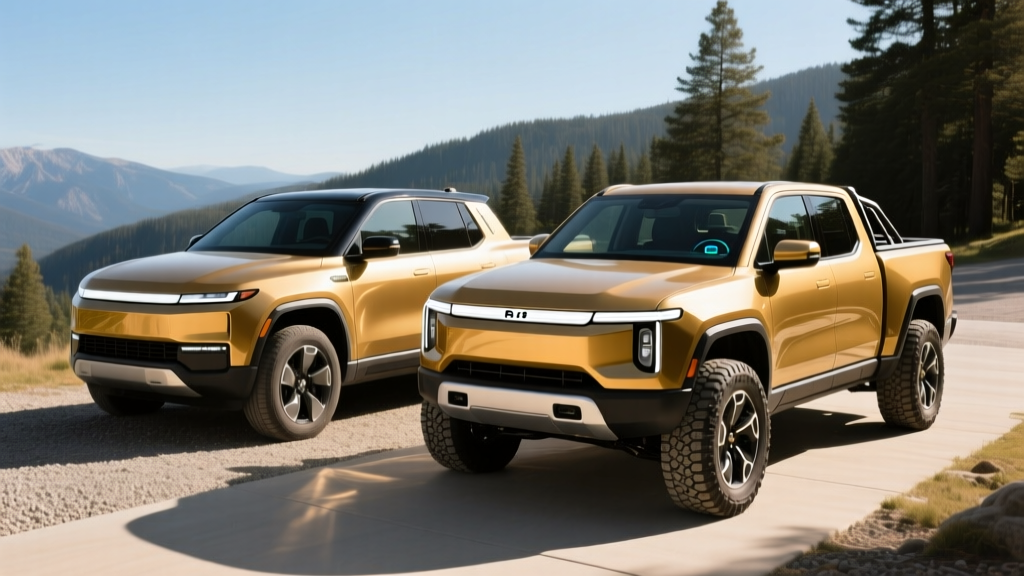
Search "Rivian yellow" and you'll find thousands of photos of R1S SUVs and R1T trucks bathed in a warm, desert-toned gold that looks nothing like the traffic-cone yellow of sports cars past. Rivian officially calls it Elcap Gold, a premium paint option that has become the brand's unofficial signature hue—evoking the sandstone of Utah's national parks and the golden-hour light of Pacific coast highways. But behind that eye-catching finish sits one of the most capable electric platforms on the market in 2026.
This review covers everything a buyer considering a yellow-clad Rivian actually needs to know: real-world range, charging speed, battery chemistry, tax-credit eligibility, and how the R1S and R1T stack up against the Tesla Model X, Ford F-150 Lightning, and Jeep Wagoneer S. Whether you're drawn by the color or the specs, the numbers below will tell you if the premium is worth it.
| Spec | R1S (SUV) | R1T (Truck) |
|---|---|---|
| EPA Range (Max Pack) | 410 mi | 420 mi |
| Battery (usable) | ~141 kWh, NMC | ~141 kWh, NMC |
| Peak DC Fast Charge | 220 kW | 220 kW |
| 10–80% DC Charge Time | ~25 min | ~25 min |
| Level 2 Home Charging | 11.5 kW (~25 mi/hr) | 11.5 kW (~25 mi/hr) |
| 0–60 mph (Dual-Motor) | 4.5 sec | 4.5 sec |
| Horsepower | 533 hp | 533 hp |
| Drivetrain | Dual-Motor AWD | Dual-Motor AWD |
| MPGe (combined) | 69 MPGe | 70 MPGe |
| Base MSRP (Dual-Motor Standard) | $75,900 | $69,900 |
| Elcap Gold Paint Add-On | +$2,500 | |
| Battery Warranty | 8 yr / 175,000 mi (≥70% retention) | |
Real-World Range: What to Expect Beyond the EPA Sticker
EPA Estimate: 410 mi (R1S Max Pack) / 420 mi (R1T Max Pack)
Real-World Highway (70–80 mph): ~320–350 mi
Cold Weather (below 32°F): ~280–310 mi
Mixed Commute (city + suburban): ~370–400 mi
Rivian's Max Pack uses a ~141 kWh usable NMC (nickel-manganese-cobalt) battery—the largest pack in the R1 lineup. The EPA figures are legitimate, but as with every large, boxy EV, real-world efficiency depends heavily on speed and temperature. The R1S and R1T have the aerodynamic profile of, well, an SUV and a pickup. At 75 mph on a flat interstate, expect consumption around 44–48 kWh/100 mi, which translates to roughly 320–350 miles before you're hunting for a charger.
Cold weather compounds the hit. Below freezing, the NMC chemistry loses some available capacity, and cabin heating draws significant power even with Rivian's standard heat pump. Plan for 280–310 miles of usable range in winter highway driving. City and suburban driving, where regenerative braking recovers energy, pushes efficiency closer to the EPA sticker—owners regularly report 370+ miles in stop-and-go conditions.
The Standard Pack (LFP chemistry, ~92 kWh usable) drops EPA range to approximately 270 miles. LFP is more resilient to daily 100% charging and cold-weather degradation over time, but the range trade-off is significant for road-trippers. Fueleconomy.gov lists full EPA efficiency data for all R1 configurations.
Charging Speed: 220 kW Peak, but Watch the Curve
| Charging Level | Power | Speed (approx.) | Notes |
|---|---|---|---|
| Level 1 (120V) | 1.4 kW | ~3 mi/hr | Emergency/trickle only |
| Level 2 (240V, 48A) | 11.5 kW | ~25 mi/hr | Full charge in ~12–14 hr (Max Pack) |
| DC Fast Charge | Up to 220 kW | ~140 mi in 20 min | 10–80% in ~25 min; tapers above 80% |
The Gen 2 Rivian platform (introduced for the 2025 model year and carried into 2026) supports a peak DC fast-charge rate of 220 kW via the NACS port—native access to Tesla Superchargers without an adapter. That's a meaningful upgrade from the Gen 1's 190 kW CCS peak.
However, peak kW is not sustained kW. In real-world DC fast-charging sessions, the R1 Max Pack holds close to 200–220 kW from roughly 10% to 40% state of charge, then gradually tapers to ~150 kW by 60% and drops further to ~90 kW approaching 80%. The 10–80% session takes approximately 25 minutes at a capable 350 kW station. Charging from 80–100% can add another 30+ minutes—plan your road trips around the 10–80% window.
For home charging, the onboard 11.5 kW Level 2 charger means a full Max Pack recharge takes 12–14 hours from near-empty. Most owners who charge nightly from 30–80% will see a full top-up in 5–6 hours. A 48-amp Level 2 home charger on a 60-amp circuit is the recommended setup; installation costs typically range from $800 to $2,500 depending on panel capacity and conduit run, per Rivian's home charging guide.
Performance and Driving Dynamics
The dual-motor AWD configuration delivers 533 horsepower and 610 lb-ft of torque, pushing the R1S to 60 mph in 4.5 seconds and the slightly lighter R1T to the same mark. For a three-row SUV and a midsize truck respectively, those numbers are genuinely quick. The available Quad-Motor setup (with torque vectoring across all four wheels) drops the 0–60 to 3.0 seconds and bumps output to 1,025 hp, though it carries a substantial price premium and reduces range slightly due to weight.
Ride quality benefits from Rivian's adaptive air suspension, which offers 6.5 inches of travel and can lower the vehicle for highway efficiency or raise it to 14.9 inches of ground clearance for off-road use. The R1T's Gear Tunnel—a full-width pass-through behind the cab—remains one of the most clever storage solutions in any vehicle, offering 11.6 cu ft of enclosed, weatherproof space.
Cargo and Passenger Dimensions
| R1S Cargo (behind 3rd row) | 10.6 cu ft |
| R1S Cargo (2nd row folded) | 54.1 cu ft |
| R1S Cargo (all rows folded) | 104.7 cu ft |
| R1T Bed Length | 54.0 in (4.5 ft) |
| R1T Gear Tunnel | 11.6 cu ft |
| R1T Frunk | 11.0 cu ft |
| Front Legroom (both) | 41.3 in |
| 2nd-Row Legroom (R1S) | 38.6 in |
| 3rd-Row Legroom (R1S) | 30.4 in |
| Towing Capacity (R1T) | 11,000 lbs |
Pricing, Trims, and Federal Tax Credit Eligibility
Rivian's 2026 lineup is structured around battery pack size and motor count. Elcap Gold (the "Rivian yellow" everyone searches for) is a $2,500 premium paint option available across all trims.
| Configuration | R1S MSRP | R1T MSRP | §30D Credit Eligibility |
|---|---|---|---|
| Dual-Motor Standard Pack | $75,900 | $69,900 | R1T: Up to $7,500 (subject to sourcing/income); R1S: Eligible (SUV MSRP cap $80,000) |
| Dual-Motor Large Pack | $82,400 | $76,400 | R1T: Eligible; R1S: May exceed $80K cap with options |
| Dual-Motor Max Pack | $89,900 | $83,900 | R1T: Eligible; R1S: Exceeds $80K SUV cap |
| Quad-Motor Max Pack | $99,900 | $93,900 | R1S exceeds cap; R1T eligible (truck cap $80K applies — verify) |
Critical tax-credit caveats: Under IRS §30D rules, the R1S qualifies as an SUV with an $80,000 MSRP cap, while the R1T qualifies as a truck with the same $80,000 cap. Buyer adjusted gross income must not exceed $150,000 (single) / $300,000 (joint). Additionally, the vehicle must meet critical-mineral and battery-component sourcing requirements, which change annually. As of 2026, Rivian has worked to qualify its Standard and Large Pack configurations, but Max Pack eligibility varies by model year and production batch. Always verify current eligibility on the IRS clean vehicle credit page and consult a tax professional before purchasing. The point-of-sale transfer option allows qualified buyers to apply the credit as an immediate price reduction at the dealer.
An R1T Dual-Motor Standard Pack with Elcap Gold paint starts at $72,400 before destination. With the $7,500 credit applied (if eligible), the effective price drops to ~$64,900—competitive with a well-equipped Ford F-150 Lightning Lariat.
Tech, Driver Assistance, and the Rivian Software Experience
The 2026 R1S and R1T run Rivian's latest software stack on a 15.6-inch center touchscreen with a clean, phone-like interface. Wireless Apple CarPlay and Android Auto are standard. The vehicle's 5G connectivity enables over-the-air updates that have meaningfully improved features like navigation routing, charge preconditioning, and driver-assist tuning since launch.
Rivian's Driver+ system is a Level 2 driver-assistance suite (per NHTSA SAE classification) combining adaptive cruise control and lane-centering on divided highways. It is not self-driving—the driver must keep hands on the wheel and eyes on the road. A camera-based monitoring system issues alerts if attention lapses. Compared to GM's Super Cruise or Ford's BlueCruise, Driver+ covers fewer pre-mapped miles but works on a broader range of roads. It's competent for highway commuting but not class-leading in hands-free capability.
Standout tech features include:
- Adventure Network: Rivian's proprietary charging network along popular outdoor routes, supplementing Supercharger and Electrify America access
- Drive Modes: All-Purpose, Sport, Snow, Off-Road, and Towing modes that adjust suspension height, regen, and throttle mapping
- Powered Camp Kitchen (R1T option): A slide-out induction cooktop and sink integrated into the Gear Tunnel—$5,000, but uniquely Rivian
- Vehicle-to-Load (V2L): Power devices and small appliances directly from the vehicle's battery via bed and cabin outlets
Pros, Cons, and the Verdict
Pros
- Class-leading real-world range with Max Pack (320+ mi highway)
- Native NACS / Supercharger access on Gen 2 platform
- Genuine off-road capability with air suspension and 14.9" clearance
- Innovative storage (Gear Tunnel, frunk, R1S 3-row layout)
- 11,000-lb towing capacity (R1T) with integrated trailer brake controller
- 8-year/175,000-mile battery warranty exceeds industry standard
- Elcap Gold is genuinely one of the best EV paint colors on the market
Cons
- MSRP easily exceeds $80K, limiting §30D tax credit eligibility on higher trims
- Third-row legroom in the R1S is tight (30.4 in) for adults
- R1T bed is only 4.5 ft—shorter than most midsize gas trucks
- Driver+ is adequate but trails Super Cruise/BlueCruise in hands-free coverage
- Service center network still expanding; some owners face long wait times
- 220 kW peak DC charge is good but trails Hyundai Ioniq 5's 350 kW capability
Who Should Buy a Rivian in Elcap Gold?
Choose the R1S if: You need three rows for family duty, want a premium electric SUV with genuine off-road chops, and plan road trips to national parks where the Elcap Gold colorway feels right at home. The Standard or Large Pack keeps you under the $80K tax-credit cap.
Choose the R1T if: You want an electric truck with best-in-class storage innovation (Gear Tunnel, frunk), need 11,000-lb towing, and value the R1T's slightly better range and lower starting price. The R1T has an easier path to full §30D credit eligibility across more trims.
Look elsewhere if: You prioritize the fastest possible DC charging (Ioniq 5/Kia EV6 at 350 kW), need a full-size truck bed (F-150 Lightning offers 5.5 or 6.5 ft), or want hands-free highway driving on mapped routes (GM Super Cruise). If budget is paramount and you don't need off-road capability, the Tesla Model Y remains the efficiency-per-dollar benchmark.
Frequently Asked Questions
What is the real-world range of the Rivian R1S and R1T?
The Max Pack R1T achieves an EPA-estimated 420 miles, while the R1S Max Pack is rated at 410 miles. Real-world highway driving at 70–80 mph yields approximately 320–350 miles. In cold weather (below 32°F), expect 280–310 miles. The Standard Pack (LFP, ~92 kWh) delivers around 270 miles EPA, with real-world highway closer to 210–230 miles.
How fast does a Rivian charge at home and on the road?
At a DC fast charger, the 2026 R1 platform peaks at 220 kW and charges from 10–80% in approximately 25 minutes, though the charge curve tapers significantly above 60%. At home on a Level 2 (240V, 48A) charger, the 11.5 kW onboard charger adds roughly 25 miles of range per hour—a full Max Pack charge takes 12–14 hours.
Does the Rivian R1S or R1T qualify for the $7,500 federal EV tax credit?
Eligibility depends on MSRP, buyer income, and battery sourcing. The R1T Dual-Motor Standard Pack ($69,900) and R1S Dual-Motor Standard Pack ($75,900) are under the $80,000 MSRP cap. Buyer AGI must not exceed $150K single / $300K joint. Critical-mineral and battery-component sourcing rules apply and change annually—verify current status on IRS.gov. Higher trims with the Large or Max Pack often exceed the MSRP cap, especially the R1S.
Is Elcap Gold the only yellow available on Rivian vehicles?
Elcap Gold is Rivian's primary yellow/gold exterior color and the one most associated with the brand. Rivian has occasionally offered limited-run colors (such as the early "Yellowstone" hue on launch-edition vehicles), but Elcap Gold is the standard-order yellow available across all 2026 R1S and R1T trims for a $2,500 premium.
How does the Rivian R1T compare to the Ford F-150 Lightning?
The R1T is a midsize truck with a shorter bed (4.5 ft vs. the Lightning's 5.5 ft) but offers more innovative storage (Gear Tunnel, 11 cu ft frunk), better off-road capability, and up to 420 miles of range vs. the Lightning's 320-mile max. The Lightning starts lower in price and offers a more traditional truck experience with a larger bed. The R1T is the adventure-oriented pick; the Lightning is the workhorse value pick.
What is Rivian's battery warranty?
Rivian covers the R1S and R1T battery and drive unit for 8 years or 175,000 miles (whichever comes first), guaranteeing at least 70% capacity retention over that period. This exceeds the federal minimum of 8 years/100,000 miles and is among the longest mileage limits in the EV industry.
Is Rivian's Driver+ system self-driving?
No. Driver+ is an SAE Level 2 driver-assistance system. It combines adaptive cruise control with lane-centering to reduce fatigue on highways, but the driver must remain fully engaged—hands on the wheel, eyes on the road—at all times. It does not handle city streets, construction zones, or unmapped routes autonomously.