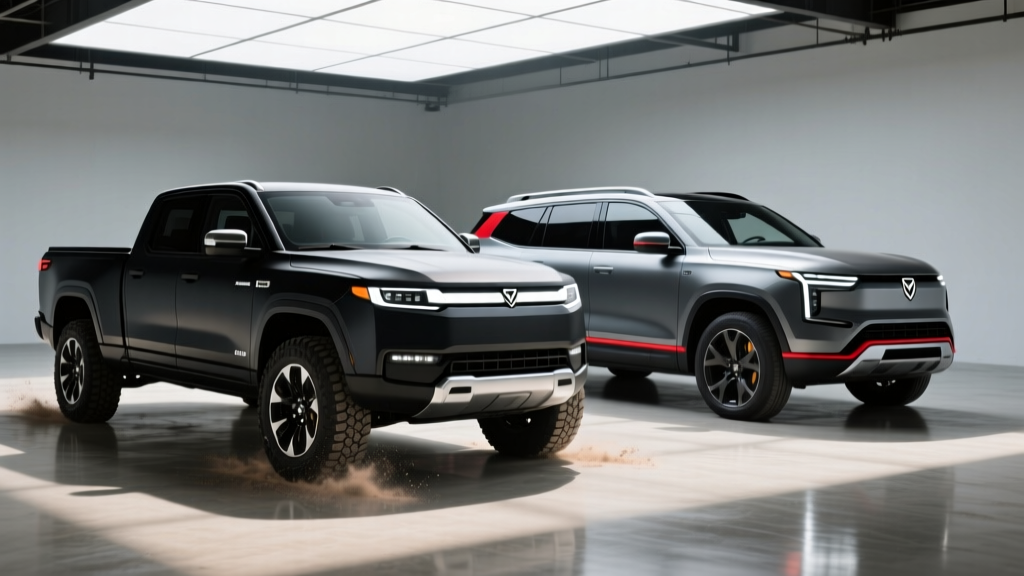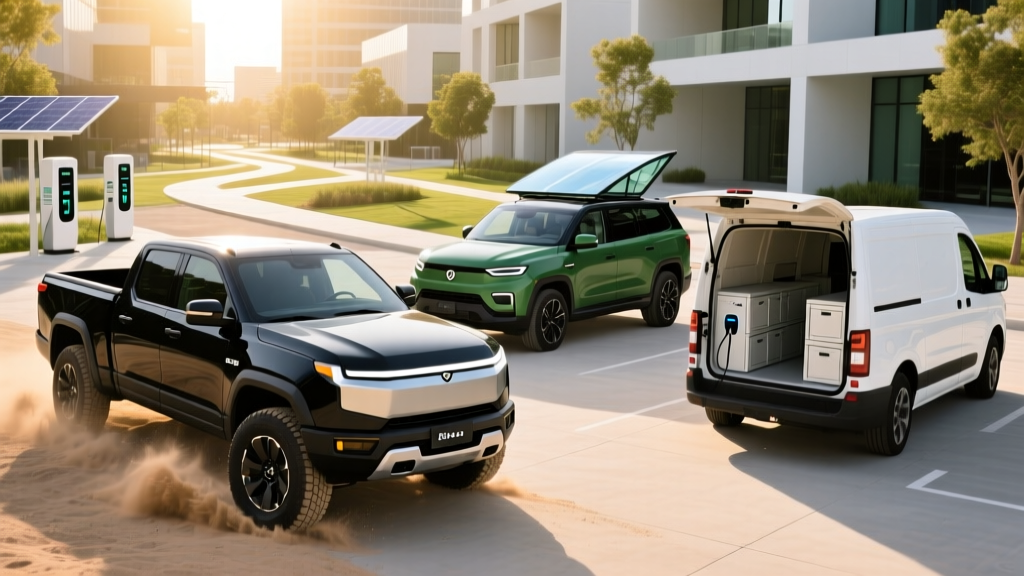
If you've been searching for Rivian who makes them, you're not alone. Rivian Automotive has become one of the most talked-about American EV startups, yet many buyers still aren't sure who's behind the R1T pickup, R1S SUV, and the boxy delivery vans pulling up to their doorsteps. This guide answers the origin question and then gets into what actually matters for buyers: real-world range, charging speeds, pricing after federal tax credits, and whether a Rivian deserves a spot in your garage in 2026.
Who Is Behind Rivian? The Company, Factory, and Backers
Rivian Automotive, Inc. was founded in 2009 by RJ Scaringe, an MIT-trained mechanical engineer who originally launched the company under the name Mainstream Motors before pivoting to electric adventure vehicles. Headquartered in Irvine, California, Rivian designs its vehicles in-house and manufactures them at a converted Mitsubishi plant in Normal, Illinois — a 3.3-million-square-foot facility that has been retooled for dedicated EV production.
The company went public in November 2021 and has attracted significant backing from Amazon (which ordered 100,000 Electric Delivery Vans, or EDVs) and previously from Ford (a stake Ford has since largely divested). Rivian also operates a growing service-center and mobile-service network across the U.S. and is building a second manufacturing facility in Stanton, Georgia, to support future models including the midsize R2 platform expected in 2026.
Unlike legacy automakers retrofitting platforms for electric powertrains, Rivian engineered its "skateboard" chassis — a flat battery-and-drive-unit architecture — from day one. This skateboard underpins both the R1T truck and R1S SUV and allows Rivian to offer multiple motor configurations (dual, tri, and quad-motor) on a single platform.
Rivian Lineup at a Glance: R1T, R1S, and the EDV
For consumer buyers, Rivian's lineup centers on two vehicles that share most mechanicals:
- R1T — a four-door, five-passenger electric pickup (bed length ~54 inches, with the gear tunnel adding enclosed storage)
- R1S — a three-row, seven-passenger electric SUV built on the same skateboard
The EDV (Electric Delivery Van) is built exclusively for Amazon and a few commercial partners — you can't buy one as a consumer, but it's the vehicle putting Rivian's reliability data to the test at massive scale.
Looking ahead, Rivian has announced the R2 — a smaller, more affordable midsize SUV and pickup planned for 2026 production at the Normal plant before the Georgia facility comes online. Pricing and final specs remain preliminary until production begins.
2026 R1T and R1S: Specs, Range, and Battery Chemistry
For the 2026 model year, Rivian offers the R1T and R1S with updated battery packs and motor configurations. Here's what the data looks like:
| Spec | R1T (Dual-Motor Max) | R1S (Dual-Motor Max) |
|---|---|---|
| EPA Est. Range | 420 mi | 410 mi |
| Battery (usable) | ~141 kWh (NMC) | ~141 kWh (NMC) |
| Horsepower | 665 hp | 665 hp |
| 0–60 mph | ~3.5 sec | ~3.6 sec |
| Drivetrain | AWD (dual-motor) | AWD (dual-motor) |
| Max Tow Capacity | 11,000 lbs | 7,700 lbs |
| MPGe (combined) | 73 MPGe | 71 MPGe |
| Efficiency | 46 kWh/100 mi | 48 kWh/100 mi |
| Cargo (behind 2nd row / bed + tunnel) | ~54 cu ft (bed + tunnel) | ~47 cu ft (SUV rear) |
| Battery/Powertrain Warranty | 8 yr / 175,000 mi | 8 yr / 175,000 mi |
Rivian uses NMC (nickel-manganese-cobalt) chemistry in its Large and Max packs, which offers higher energy density than LFP — critical for a heavy truck/SUV platform where range per kilogram matters. The Standard pack (on lower trims) uses a smaller NMC configuration.
The EPA sticker says 420 miles for the R1T Max Pack, but plan for ~320–350 miles on sustained highway driving at 70+ mph, where aerodynamic drag hits a truck-shaped vehicle hard. In cold weather (below 32°F), expect a further 15–25% reduction, bringing effective range to roughly 260–300 miles. City driving with regenerative braking recovers more of the EPA estimate — around 380–400 miles is achievable in mild conditions.
Charging Speed: DC Fast, Level 2, and the NACS Switch
Rivian adopted the NACS (Tesla-style) charge port on new-production vehicles starting in 2025, giving R1T and R1S owners native access to Tesla Supercharger stalls without an adapter. For older CCS-port Rivians, Rivian provides an adapter.
| Charge Level | Max Power | Speed (approx.) | Notes |
|---|---|---|---|
| Level 1 (120V) | ~1.4 kW | ~3–4 mi/hr | Emergency/trickle only |
| Level 2 (240V home) | 11.5 kW (48A) | ~25–28 mi/hr | Full charge in ~13–15 hrs |
| DC Fast (Max Pack) | 220 kW peak | 10–80% in ~30 min | Sustained rate tapers above 70% SoC |
| DC Fast (Large Pack) | 200 kW peak | 10–80% in ~28 min | Similar taper curve |
The Max Pack's 220 kW peak is competitive but not class-leading — vehicles on 800V architectures (like the Hyundai Ioniq 5 or Lucid Air) sustain higher rates longer. Rivian's charge curve is reasonably flat from 10–60% SoC, then tapers noticeably past 70%. On a road trip, plan your stops around the 10–70% sweet spot for fastest throughput.
For home Level 2 charging, Rivian's onboard charger accepts up to 11.5 kW (48 amps), which means you'll want a 60-amp dedicated circuit installed by a licensed electrician. A full overnight charge from 10% to 100% takes roughly 13–15 hours — perfectly fine for daily use where you're topping up 20–30% overnight.
Pricing, Trims, and Federal Tax Credit Eligibility
Rivian positions the R1T and R1S as premium adventure vehicles. Here's the pricing landscape for 2026:
| Trim / Config | R1T MSRP | R1S MSRP | §30D Credit Eligible? |
|---|---|---|---|
| Dual-Motor Standard | $69,900 | $74,900 | See sourcing rules |
| Dual-Motor Large | $75,900 | $79,900 | See sourcing rules |
| Dual-Motor Max | $84,900 | $89,900 | See sourcing rules |
| Tri-Motor (Performance) | $99,900 | $104,900 | Exceeds MSRP cap |
| Quad-Motor | $119,900 | $124,900 | Exceeds MSRP cap |
Federal tax credit (§30D) caveats: The IRS caps the new EV credit at $7,500, but eligibility depends on three moving targets:
- MSRP cap: Trucks (R1T) must be ≤$80,000; SUVs (R1S) must be ≤$80,000. Tri-Motor and Quad-Motor trims exceed this and are not eligible.
- Buyer income cap: AGI must not exceed $150K (single), $225K (head of household), or $300K (joint). Source: IRS §30D.
- Battery sourcing: Critical minerals and battery components must meet escalating domestic/free-trade thresholds each year. Rivian has worked to qualify its Standard and Large packs, but Max Pack eligibility can vary by production batch. Always verify the specific VIN on fueleconomy.gov before purchasing.
The point-of-sale transfer option lets you apply the credit as an immediate discount at the dealer (or Rivian direct), rather than waiting for tax filing — a significant cash-flow advantage.
Performance, Tech, and Daily Livability
Rivian's dual-motor AWD setup delivers 665 hp and a 0–60 time around 3.5 seconds — genuinely quick for a 7,000-pound truck. The available tri-motor (850+ hp) and quad-motor (1,025 hp) variants push into supercar territory, though at a steep price and weight penalty.
Standout tech features:
- Rivian's in-house developed software stack with OTA updates — no CarPlay/Android Auto, but the native UI is well-regarded
- Driver+ (Level 2 ADAS) with hands-on-wheel highway assist on mapped roads — competent but not class-leading vs. GM Super Cruise or Ford BlueCruise
- Gear Tunnel (R1T only): a 11.7-cu-ft pass-through storage compartment between cab and bed, lockable and weatherproof
- Camp Kitchen option: a slide-out kitchen system that integrates into the Gear Tunnel
- Air suspension with adjustable ride height (up to 14.9 inches of ground clearance for off-road use)
- V2H (vehicle-to-home) capability announced for future OTA rollout
Notable drawbacks:
- No Apple CarPlay or Android Auto — a dealbreaker for some buyers accustomed to phone projection
- Service center footprint is still growing; mobile service covers many areas but isn't universal
- Insurance premiums tend to run 15–25% higher than comparable ICE trucks (check quotes before ordering)
- Efficiency under load: towing at capacity can cut range by 40–50%
How Rivian Stacks Up Against Competitors
The R1T competes most directly with the Ford F-150 Lightning, Chevrolet Silverado EV, and GMC Sierra EV. The R1S faces the Tesla Model X, Jeep Wagoneer S (when available), and large electric SUVs from Hyundai (Ioniq 9). Here's a quick decision framework:
- You want a premium, adventure-oriented pickup with genuine off-road capability (air suspension, wading mode, tank turns on quad-motor)
- The Gear Tunnel storage solution fits your gear-hauling needs
- You value Rivian's software-first approach and OTA improvement trajectory
- You need a full-size truck bed (R1T's ~54-inch bed is midsize)
- Dealer service proximity matters and you don't want to rely on mobile service
- You prefer Apple CarPlay / Android Auto integration
- You want a three-row electric SUV with real off-road chops — the R1S goes places a Model X won't
- Seven-passenger seating in an EV is a priority
Pros and Cons at a Glance
- Class-leading off-road capability (air suspension, 14.9" clearance)
- Gear Tunnel is a genuinely unique storage innovation
- Strong OTA update cadence; vehicles improve over time
- NACS port gives native Supercharger access
- 8-year/175,000-mile battery warranty exceeds the industry-standard 100K
- Impressive 0–60 performance across all motor configs
- No Apple CarPlay or Android Auto
- Highway and cold-weather range falls well short of EPA sticker
- Tri/Quad-Motor trims exceed $80K MSRP cap — no tax credit
- Service network still maturing in rural areas
- Towing cuts range dramatically (~40–50% loss at max load)
- Premium pricing: even the Standard pack starts near $70K
Who Is the Rivian R1T / R1S Best For?
Rivian's vehicles are built for a specific buyer profile:
- Outdoor enthusiasts who need off-road capability, gear storage, and towing for boats or trailers (within range limitations)
- Active families (R1S especially) who want three rows, good safety ratings (IIHS Top Safety Pick+ for the R1T), and the ability to handle ski trips or camping weekends
- Tech-forward buyers who are comfortable without CarPlay and appreciate OTA-driven improvement
- Home-charging owners — the 141 kWh Max Pack is best enjoyed with reliable Level 2 home charging; public-only charging with a pack this large gets expensive and time-consuming
If your primary use case is long-distance highway commuting without access to home charging, or if you need a full-size work truck bed, Rivian may not be the optimal fit. But for the adventure-lifestyle EV buyer, the R1T and R1S remain compelling choices in 2026.
Frequently Asked Questions
Who actually manufactures Rivian vehicles?
Rivian manufactures all its vehicles at its own factory in Normal, Illinois — a facility it purchased from Mitsubishi in 2017 and retooled for EV production. Rivian is an independent, publicly traded company (NASDAQ: RIVN), not a subsidiary of any legacy automaker.
What is the real-world range of the Rivian R1T?
The EPA rates the 2026 R1T Dual-Motor Max at 420 miles, but real-world highway driving at 70+ mph yields approximately 320–350 miles. In sub-freezing temperatures, plan for 260–300 miles. City driving with regenerative braking can approach 380–400 miles.
How fast does the Rivian R1S charge at home and on DC fast chargers?
At home on a Level 2 (240V, 48A) charger, the R1S gains about 25–28 miles of range per hour, with a full charge taking 13–15 hours. On a DC fast charger, the Max Pack peaks at 220 kW and charges from 10–80% in approximately 30 minutes, with taper beginning around 70% state of charge.
Does the Rivian R1T qualify for the $7,500 federal EV tax credit?
The Dual-Motor Standard and Large trims of the R1T (under the $80,000 MSRP cap for trucks) may qualify, depending on battery-sourcing compliance and buyer income limits ($150K single / $300K joint AGI). Tri-Motor and Quad-Motor trims exceed the MSRP cap and are not eligible. Verify your specific VIN on fueleconomy.gov and consult a tax professional.
Is Rivian worth buying over the Ford F-150 Lightning?
It depends on your priorities. The R1T offers superior off-road capability, the unique Gear Tunnel, and a more premium interior experience. The F-150 Lightning provides a full-size bed, broader dealer service network, CarPlay/Android Auto, and lower starting prices. If adventure and tech appeal to you, Rivian wins. If you need a work truck with easy service access, Ford may be the better fit.
Does Rivian offer Apple CarPlay or Android Auto?
No. Rivian uses its own proprietary infotainment system with over-the-air updates. The native interface is well-designed with navigation, media, and vehicle controls, but phone projection is not available. This remains one of the most common complaints from prospective buyers.
Sources: fueleconomy.gov (EPA range and efficiency data), IRS §30D Clean Vehicle Credit, Rivian Automotive official specifications. Pricing and tax credit rules reflect 2026 model year data and are subject to change. Always verify eligibility for your specific VIN and tax situation.