Who Makes Rivian and Where Are These EVs Built?
If you've been searching for rivian who makes the R1T truck and R1S SUV, the answer is straightforward: Rivian Automotive, Inc. is an American electric-vehicle manufacturer founded in 2009 by RJ Scaringe, headquartered in Irvine, California. Unlike legacy automakers that bolted EVs onto existing factory lines, Rivian was built from the ground up as an EV-only company — designing its own skateboard platform, battery packs, motors, and software stack in-house.
All consumer Rivian vehicles are assembled at the company's 3.3-million-square-foot manufacturing plant in Normal, Illinois — a former Mitsubishi factory that Rivian retooled for EV production starting in 2021. Battery packs are assembled on-site. As of 2026, Rivian remains one of only a handful of U.S.-headquartered, publicly traded EV manufacturers (NASDAQ: RIVN) producing vehicles at scale, alongside Tesla and the growing wave of legacy OEM electrification programs.
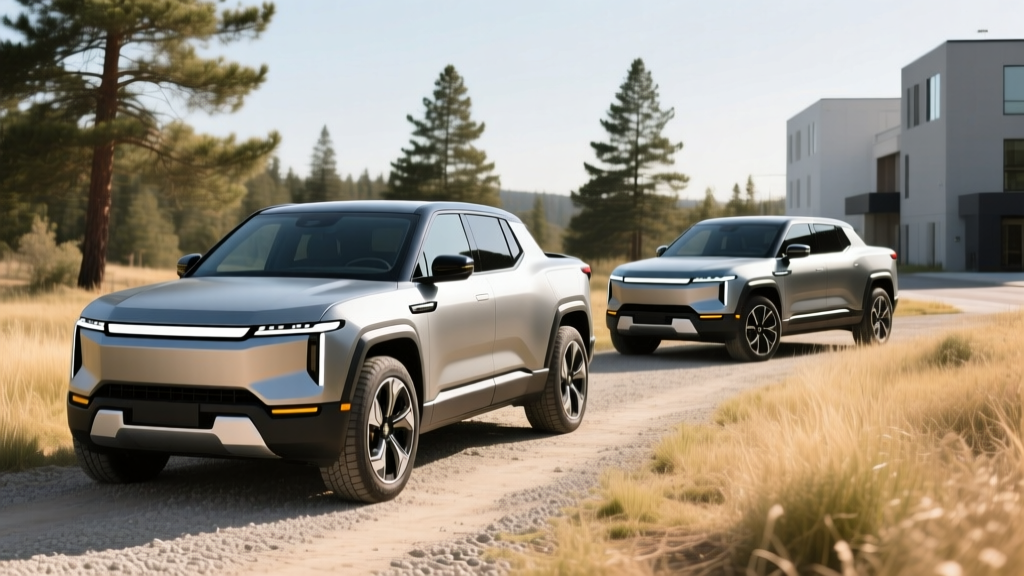
Rivian's current consumer lineup consists of two models sharing the same platform: the R1T (a mid-size, four-door electric pickup) and the R1S (a three-row electric SUV). For 2026, both models ride on Rivian's second-generation architecture, which introduced a new motor controller, a redesigned battery pack with fewer cells and simplified wiring, and the company's in-house-developed dual-motor and tri-motor drive units — replacing the Bosch-supplied motors used in early 2022–2024 models.
R1T and R1S Spec Sheet at a Glance
| Spec | R1T Dual-Motor | R1S Dual-Motor |
|---|---|---|
| EPA Range (Standard Pack) | 270 mi | 261 mi |
| EPA Range (Max Pack) | 420 mi | 402 mi |
| Battery Usable Capacity (Standard) | 92 kWh (LFP) | 92 kWh (LFP) |
| Battery Usable Capacity (Max) | 141 kWh (NMC) | 141 kWh (NMC) |
| Peak DC Fast Charge | 220 kW (Std) / 200 kW (Max) | 220 kW (Std) / 200 kW (Max) |
| 10–80% DC Charge Time | ~21 min (Std) | ~21 min (Std) |
| Level 2 Home Charge Rate | 11.5 kW (~25 mi/hr) | 11.5 kW (~25 mi/hr) |
| 0–60 mph (Dual-Motor) | 4.5 sec | 4.6 sec |
| 0–60 mph (Tri-Motor) | 2.9 sec | 3.1 sec |
| Horsepower (Dual-Motor) | 533 hp | 533 hp |
| Horsepower (Tri-Motor) | 850 hp | 850 hp |
| Drivetrain | AWD (dual- or tri-motor) | AWD (dual- or tri-motor) |
| Towing Capacity | 11,000 lb | 7,700 lb |
| Efficiency (Dual-Motor Std) | 70 MPGe / 48 kWh/100mi | 69 MPGe / 49 kWh/100mi |
| Battery/Powertrain Warranty | 8 yr / 100,000 mi | 8 yr / 100,000 mi |
| Base MSRP (2026) | $69,900 | $75,900 |
Source: EPA / fueleconomy.gov and Rivian official specifications. Real-world results vary by temperature, terrain, and driving style.
Real-World Range: What the EPA Sticker Doesn't Tell You
R1T Dual-Motor Standard Pack: EPA 270 mi — expect ~230–250 mi on a 75°F highway trip at 70 mph; ~185–210 mi in sub-30°F winter conditions.
R1T Tri-Motor Max Pack: EPA 420 mi — expect ~360–385 mi highway; ~290–330 mi in cold weather.
R1S Dual-Motor Standard Pack: EPA 261 mi — expect ~220–240 mi highway; ~180–200 mi cold.
R1S Max Pack: EPA 402 mi — expect ~345–370 mi highway; ~280–310 mi cold.
Rivian's boxy, truck-based aerodynamics (the R1T has a drag coefficient around 0.39) take a noticeable toll at highway speeds. In mixed city/highway driving at moderate temperatures, most owners report landing within 5–8% of the EPA figure. But sustained 75+ mph interstate driving pushes consumption to 52–56 kWh/100mi, cutting effective range by 12–18% versus the sticker.
Cold weather compounds this. Rivian's heat pump (standard on Gen 2 vehicles) mitigates cabin-heating energy draw, but battery chemistry still loses efficiency below freezing. Expect a 20–30% range reduction at 20°F compared to the EPA number. Preconditioning the battery while plugged in — a feature accessible through the Rivian app — recovers some of this loss by warming the pack before departure.
For buyers, the practical takeaway: the Standard Pack's ~92 kWh LFP battery suits daily commutes and weekend trips under 200 miles. The Max Pack's 141 kWh NMC battery is the road-trip and towing spec — but adds roughly 800 pounds and pushes the R1T's MSRP past $90,000.
Charging Speed: Home and DC Fast Charging
| Charging Level | Power | Miles Added per Hour | Notes |
|---|---|---|---|
| Level 1 (120V outlet) | ~1.4 kW | ~3–4 mi/hr | Emergency/trickle only |
| Level 2 (240V, 48A) | 11.5 kW | ~25 mi/hr | Full charge in ~8–12 hr depending on pack |
| DC Fast (Standard Pack) | Peak 220 kW | ~140 mi in 20 min | 10–80% in ~21 min; tapers sharply above 85% |
| DC Fast (Max Pack) | Peak 200 kW | ~125 mi in 20 min | 10–80% in ~30 min; larger pack = longer session |
Rivian uses the CCS1 connector on 2022–2024 models and has transitioned to the NACS (Tesla-style) connector for 2025+ vehicles. All Rivians ship with a J1772/CCS adapter or NACS native plug depending on model year. Rivian owners also have access to the Tesla Supercharger network via the included adapter, significantly expanding DC fast-charging coverage on road trips.
On a 350 kW Electrify America or EVgo station, the Standard Pack's LFP battery sustains peak charge rates longer than the Max Pack's NMC chemistry — LFP cells tolerate higher C-rates at elevated state-of-charge. In practice, the Standard Pack holds close to 200+ kW from 10% to roughly 55%, then tapers. The Max Pack peaks around 200 kW but begins tapering earlier, around 40% SoC. Neither pack will sustain its peak rate for the full session — this is normal charge-curve behavior, not a defect.
For home charging, Rivian recommends a hardwired 60-amp circuit delivering 48 amps continuous to the vehicle. A full Standard Pack charge from 10% takes about 8 hours; the Max Pack needs 12+ hours. Budget $800–$1,500 for a professional Level 2 installation (charger + electrician + permit), plus a potential $1,500–$3,000 panel upgrade if your home still has a 100-amp service panel. Consult a licensed electrician for your specific situation.
Performance, Platform, and Drivetrain
Rivian's Gen 2 platform uses in-house-developed permanent-magnet motors. The Dual-Motor configuration pairs one front and one rear motor for standard AWD, producing 533 hp and 610 lb-ft of torque. The Tri-Motor adds a second rear motor for 850 hp and a 2.9-second 0–60 time in the R1T — making it one of the quickest production pickups ever sold.
The quad-motor configuration was discontinued after the 2024 model year as Rivian simplified its lineup around the dual- and tri-motor options.
Off-road, the R1T and R1S offer up to 14.9 inches of ground clearance via the standard air suspension, 34.4-degree approach and 29.6-degree departure angles, and a wading depth of 3.3 feet. The gear tunnel on the R1T (a lockable, pass-through storage compartment behind the cab) adds 11.7 cubic feet of weatherproof cargo space — a feature no competitor matches.
The R1S offers three rows of seating for up to seven passengers. Second-row legroom measures 36.5 inches; third-row legroom is a tighter 30.4 inches, best suited for children or short trips. Cargo volume behind the third row is 10.4 cu ft; fold both rear rows and you get 91.6 cu ft. The R1T's 4.5-foot bed (54.4 cu ft) is shorter than a mid-size gas truck's, but the lockable tonneau cover and gear tunnel compensate for many use cases.
Pricing, Trims, and Federal Tax Credit Eligibility
| Model / Configuration | Base MSRP | Est. After §30D Credit |
|---|---|---|
| R1T Dual-Motor Standard Pack | $69,900 | $62,400* |
| R1T Dual-Motor Max Pack | $89,900 | $82,400* |
| R1T Tri-Motor Max Pack | $99,900 | $99,900 (exceeds MSRP cap) |
| R1S Dual-Motor Standard Pack | $75,900 | $68,400* |
| R1S Dual-Motor Max Pack | $94,900 | $87,400* |
| R1S Tri-Motor Max Pack | $104,900 | $104,900 (exceeds MSRP cap) |
*Estimated price assumes full $7,500 federal tax credit eligibility. Actual credit depends on IRS §30D requirements. See checklist below.
- MSRP Cap: Vans, SUVs, and pickups qualify up to $80,000 MSRP. R1T Standard and Dual-Motor Max qualify; Tri-Motor trims exceed the cap.
- Buyer Income Cap: Modified AGI must not exceed $150,000 (single), $225,000 (head of household), or $300,000 (joint filers).
- Battery Sourcing: Critical minerals and battery components must meet escalating domestic/free-trade-partner thresholds set by the IRS. Rivian has worked to re-source battery minerals, but eligibility can change quarterly — verify at purchase.
- Point-of-Sale Transfer: As of 2024, buyers can transfer the credit to the dealer for an immediate price reduction rather than waiting for a tax refund.
- Final Assembly: Must occur in North America. Rivian's Normal, Illinois plant satisfies this requirement.
Bottom line: Consult a tax professional and check the latest IRS qualifying vehicle list before purchase. Do not assume the full $7,500 applies to every trim or every buyer.
Tech, Driver Assistance, and Ownership Experience
Rivian's infotainment system runs on a custom 15.6-inch center touchscreen with a secondary 12.3-inch driver display. The UI is clean and responsive, though Rivian does not support Apple CarPlay or Android Auto — a deliberate choice to keep the software stack proprietary. Instead, built-in navigation, Spotify, Tidal, and TuneIn are native. Over-the-air updates are frequent, adding features like enhanced camp kitchen integration, updated drive modes, and new route-planning algorithms.
The Rivian Driver+ system is an SAE Level 2 driver-assistance suite combining adaptive cruise control, lane-centering, and automatic lane changes on divided highways. It is not a hands-free system like GM's Super Cruise or Ford's BlueCruise — the driver must keep hands on the steering wheel. A driver-monitoring camera tracks eye gaze, and the system will issue escalating warnings if attention lapses. Think of it as comparable to Tesla's basic Autopilot in capability, but without the marketing around "full self-driving."
Unique features include:
- Camp Kitchen: An optional slide-out kitchen module that mounts in the gear tunnel, powered by the vehicle's battery ($5,000 option).
- Powered Tonneau Cover: Available on the R1T, retracting into the bed floor for full-length cargo access.
- Vehicle-to-Load (V2L): Built-in 120V and 240V outlets in the bed and gear tunnel can power tools, appliances, or a campsite — up to 9.6 kW output.
- Rivian Waypoints Charger Network: Rivian's own DC fast-charging stations along adventure corridors, supplemented by third-party network access.
Notable drawbacks: The lack of CarPlay/Android Auto frustrates some buyers. Service center availability is still expanding — rural owners may face long tow distances for warranty work. Insurance premiums run 15–25% higher than comparable gas trucks, per industry averages for EVs in this price range.
Who Should Buy a Rivian — and Who Shouldn't
- You need a pickup for weekend towing (boats, trailers up to 11,000 lb) and want EV running costs for daily driving.
- You value off-road capability combined with daily-driver comfort.
- You can charge at home with Level 2 and your typical trips fall under 250 miles.
- You want the gear tunnel and camp kitchen ecosystem for overlanding and camping.
- You need three-row seating for a family but want EV efficiency and AWD traction.
- You want a vehicle that can handle ski trips, trail access, and school runs without switching between a minivan and a truck.
- Your budget is under $60,000 — the R1T/R1S do not reach that price point even with tax credits.
- You need CarPlay/Android Auto integration.
- You regularly tow above 11,000 lb (consider the Ford F-150 Lightning with the Max Tow package or a diesel HD truck).
- You live in a charging desert with no reliable DC fast-charging corridor for road trips.
Rivian vs. Key Competitors
| Spec | Rivian R1T DM | F-150 Lightning Lariat | Tesla Cybertruck AWD |
|---|---|---|---|
| EPA Range | 270 mi (Std) / 420 mi (Max) | 230 mi (Std) / 320 mi (Ext) | 340 mi |
| Starting MSRP | $69,900 | $59,995 | $79,990 |
| 0–60 mph | 4.5 sec | 4.0 sec | 4.1 sec |
| Towing | 11,000 lb | 10,000 lb | 11,000 lb |
| DC Fast Charge Peak | 220 kW | 150 kW | 250 kW |
| Bed Length | 4.5 ft | 5.5 ft | 6.0 ft |
| Front Trunk (Frunk) | 11 cu ft | 14.1 cu ft | None (cargo bed only) |
The F-150 Lightning wins on price and traditional truck utility (longer bed, bigger frunk, broader dealer service network). The Cybertruck leads in DC charge speed and stainless-steel durability. The Rivian R1T earns its premium through off-road sophistication, the unique gear tunnel, and a more refined on-road ride via its adaptive air suspension. It's the most expensive of the three at base, but the Max Pack's 420-mile range is unmatched in the segment.
Frequently Asked Questions
What is the real-world range of the Rivian R1T?
The EPA rates the R1T Dual-Motor Standard Pack at 270 miles and the Max Pack at 420 miles. In real-world highway driving at 70 mph, expect roughly 230–250 miles from the Standard Pack and 360–385 from the Max Pack. Cold weather (below 30°F) cuts these figures by 20–30%.
How fast does the Rivian charge at home and on the road?
On a 48-amp Level 2 home charger (11.5 kW), the R1T adds about 25 miles per hour, reaching a full charge in 8–12 hours. On DC fast charging, the Standard Pack peaks at 220 kW and charges from 10–80% in approximately 21 minutes. The Max Pack peaks at 200 kW and takes about 30 minutes for the same session due to its larger battery.
How much does a Rivian cost after tax credits?
The R1T Dual-Motor Standard Pack starts at $69,900. If you qualify for the full $7,500 federal §30D tax credit (meeting income, MSRP, and battery-sourcing requirements), the effective price drops to approximately $62,400. Tri-Motor trims exceed the $80,000 MSRP cap for trucks and do not qualify for the federal credit.
Does the Rivian R1T qualify for the federal EV tax credit?
It depends on the trim and the buyer's tax situation. The Dual-Motor Standard and Max Pack trims fall under the $80,000 MSRP cap for pickup trucks. The buyer must also meet IRS income thresholds ($300,000 joint / $150,000 single) and the vehicle's battery must satisfy critical-mineral and component sourcing rules, which can change. Always verify current eligibility on the IRS qualifying vehicle list before purchasing.
Is the Rivian worth buying versus the F-150 Lightning or Cybertruck?
If you prioritize off-road capability, a premium interior, the gear tunnel ecosystem, and available 420-mile Max Pack range, the Rivian justifies its price premium. If budget, bed length, or dealer service proximity matter more, the F-150 Lightning is the pragmatic choice. If you want the fastest DC charging and don't need a front trunk, the Cybertruck is competitive — though its polarizing design and limited service centers are real considerations.
What are the biggest pros and cons of owning a Rivian?
- Class-leading 420-mi Max Pack range
- Genuine off-road capability with air suspension
- Unique gear tunnel and camp kitchen ecosystem
- Strong V2L output (9.6 kW) for job sites and camping
- OTA updates continuously add features
- U.S.-built in Illinois
- High starting price; Tri-Motor trims ineligible for tax credit
- No Apple CarPlay or Android Auto
- Short 4.5-ft bed limits traditional truck utility
- Service center network still expanding
- Insurance premiums 15–25% above gas truck averages
- Highway efficiency drops noticeably above 70 mph
What battery chemistry does Rivian use?
Rivian's Standard Pack uses lithium iron phosphate (LFP) cells — known for longer cycle life, lower cost, and better tolerance for frequent 100% charging. The Max Pack uses nickel-manganese-cobalt (NMC) chemistry, which offers higher energy density (more range per pound) but benefits from daily charging limits of 80–90% to maximize longevity. Both packs carry an 8-year/100,000-mile warranty with a minimum 70% capacity retention guarantee.