Rivian Who Makes It: The American EV Automaker Behind the R1S and R1T
If you've searched "Rivian who makes it" and landed here, you're not alone. Rivian Automotive is an independent, U.S.-based electric vehicle manufacturer — not a subsidiary of a legacy automaker. Founded in 2009 by MIT graduate RJ Scaringe, the company is headquartered in Irvine, California, and builds all of its vehicles at a 3.3-million-square-foot factory in Normal, Illinois. Rivian went public on NASDAQ (ticker: RIVN) in November 2021 and remains one of the few American EV startups to reach sustained production volume.
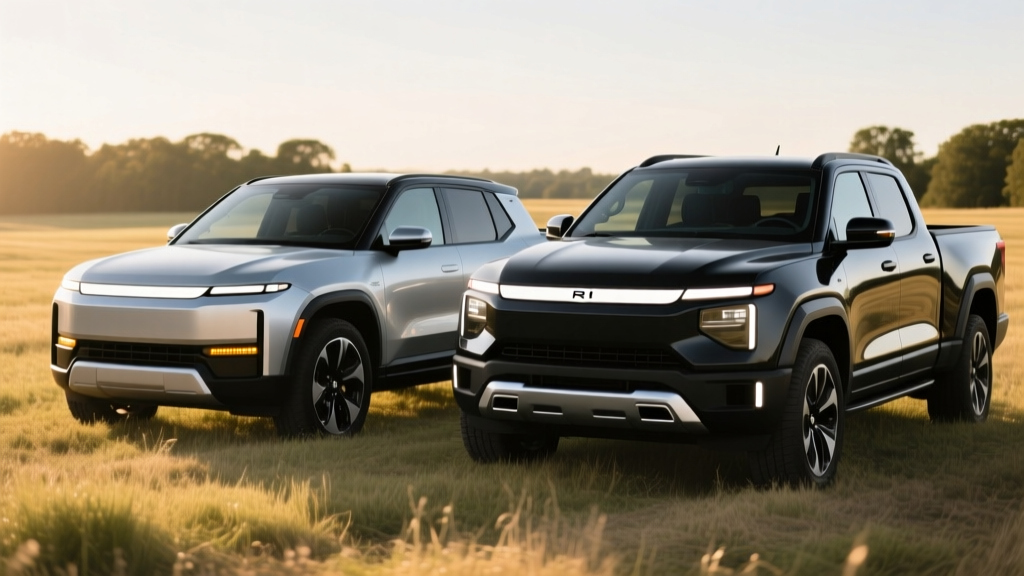
Unlike companies that badge-engineer or outsource manufacturing, Rivian designs, engineers, and assembles its vehicles in-house. The company currently produces three vehicles: the R1S three-row SUV, the R1T pickup truck, and the EDV (Electric Delivery Van) built exclusively for Amazon. A second factory in Stanton, Georgia is under construction and expected to begin production of the more affordable R2 SUV in 2026.
This review focuses on Rivian's consumer vehicles — the 2025/2026 R1S and R1T — covering real-world range, charging speeds, pricing, federal tax credit eligibility, and whether these EVs justify their premium positioning against competitors like the Tesla Model X, Ford F-150 Lightning, and Chevrolet Silverado EV.
2026 Rivian R1S and R1T: Core Specifications at a Glance
| Specification | R1S (Dual-Motor) | R1S (Tri-Motor) | R1T (Dual-Motor) | R1T (Tri-Motor) |
|---|---|---|---|---|
| EPA Range (Max Pack) | ~370 mi | ~320 mi | ~390 mi | ~330 mi |
| Usable Battery | ~141 kWh (Max) | ~141 kWh (Max) | ~141 kWh (Max) | ~141 kWh (Max) |
| Battery Chemistry | NMC (LG Energy) | NMC (LG Energy) | NMC (LG Energy) | NMC (LG Energy) |
| Drivetrain | AWD (Dual-Motor) | AWD (Tri-Motor) | AWD (Dual-Motor) | AWD (Tri-Motor) |
| Horsepower | 533 hp | 850 hp | 533 hp | 850 hp |
| 0–60 mph | 4.5 sec | 2.9 sec | 4.5 sec | 2.9 sec |
| Max DC Fast Charge | ~220 kW | ~220 kW | ~220 kW | ~220 kW |
| 10–80% DC Charge | ~30 min | ~30 min | ~30 min | ~30 min |
| Level 2 Charge Rate | 11.5 kW (~25 mi/hr) | 11.5 kW (~25 mi/hr) | 11.5 kW (~25 mi/hr) | 11.5 kW (~25 mi/hr) |
| MPGe (Combined) | ~73 MPGe | ~70 MPGe | ~73 MPGe | ~70 MPGe |
| Base MSRP | $79,900 | $99,900 | $73,000 | $93,000 |
Source: Rivian Specifications and EPA fueleconomy.gov. Figures reflect latest available model-year data; confirm exact specs at purchase.
Real-World Range: What the EPA Sticker Doesn't Tell You
EPA Estimated: ~370 miles
Real-World Highway (70 mph, moderate temps): ~300–320 miles
Real-World Cold Weather (below 32°F): ~240–270 miles
Towing (5,000 lb trailer): ~160–190 miles
Rivian's EPA range figures are competitive, but real-world results depend heavily on driving style, speed, and climate. The R1S and R1T are heavy vehicles — the R1S tips the scales at roughly 6,800 lbs — and that mass consumes energy rapidly at sustained highway speeds. In independent testing, highway-only driving at 70–75 mph typically yields 80–85% of the EPA sticker. That means a 370-mile EPA rating translates to roughly 300–320 miles of usable highway range in fair weather.
Cold weather compounds the hit. Lithium-ion batteries lose efficiency in low temperatures, and cabin heating (even with Rivian's heat pump) draws significant energy. Expect a 25–35% range reduction in sub-freezing conditions. If you live in the Upper Midwest or Northeast and plan winter road trips, budget for 250 miles or fewer between charges on the Max Pack.
Towing is where range contracts most dramatically. The R1T's maximum towing capacity is 11,000 lbs (R1S: 7,700 lbs), but pulling even a moderate 5,000-lb travel trailer cuts range roughly in half. For buyers who tow frequently, the Rivian is capable — but plan charging stops every 150–180 miles under load.
Charging Speed: DC Fast Charging and Home Level 2
| Charging Level | Power (kW) | Speed (mi/hr added) | Notes |
|---|---|---|---|
| Level 1 (120V household) | ~1.4 kW | ~3 mi/hr | Emergency/trickle only; 141 kWh pack takes 100+ hours |
| Level 2 (240V home) | 11.5 kW | ~25 mi/hr | Full overnight charge in ~12 hours; recommended home setup |
| DC Fast Charge (peak) | ~220 kW | ~140 mi in 20 min | Peak rate to ~30% SoC; tapers significantly above 80% |
Rivian's peak DC fast-charge rate of approximately 220 kW places it in the middle of the premium EV pack — behind Hyundai/Kia's 350 kW E-GMP platform but ahead of many competitors. The key metric for road trips is the 10–80% charge time of roughly 30 minutes, which aligns with a typical rest stop.
However, the charging curve matters. Rivian's NMC battery sustains strong charging speeds between 10–60% State of Charge, then tapers progressively. Charging from 80–100% can add another 30–40 minutes — so for road trips, plan to charge to 80% and move on rather than topping off.
Rivian uses the NACS (North American Charging Standard) connector on current-production vehicles, granting access to the Tesla Supercharger network — the most reliable and expansive DC fast-charging network in North America. This is a significant advantage over CCS-only vehicles, which depend on Electrify America, EVgo, or ChargePoint stations that have historically suffered from lower uptime rates.
For home charging, Rivian recommends a 60-amp circuit with a 48-amp Wall Charger, delivering 11.5 kW. This adds roughly 25 miles of range per hour, meaning a depleted Max Pack recharges fully in about 12 hours. Most owners who plug in nightly never need the full charge — a daily 40–60 mile commute requires only 2–3 hours on Level 2.
Pricing, Trims, and Federal Tax Credit Eligibility
| Model / Trim | Base MSRP | Federal §30D Credit | Effective Price (if eligible) |
|---|---|---|---|
| R1T Dual-Motor (Standard Pack) | $73,000 | Up to $7,500 | ~$65,500 |
| R1T Dual-Motor (Max Pack) | $83,000 | Up to $7,500 | ~$75,500 |
| R1S Dual-Motor (Standard Pack) | $79,900 | Up to $7,500 | ~$72,400 |
| R1S Tri-Motor (Max Pack) | $99,900 | $0 (MSRP cap exceeded) | $99,900 |
- Vehicle MSRP cap: Vans, SUVs, and pickups capped at $80,000. Sedans capped at $55,000. (R1T qualifies as a pickup; R1S as an SUV — both subject to the $80,000 ceiling.)
- Buyer income cap: Modified AGI must not exceed $300,000 (married filing jointly), $225,000 (head of household), or $150,000 (single).
- Battery sourcing: Increasing percentages of critical minerals and battery components must be sourced from the U.S. or free-trade-agreement countries. Rivian's LG Energy cells use supply chains that have been progressively qualifying, but exact eligibility varies by production batch.
- Point-of-sale transfer: As of 2024, qualifying buyers can transfer the credit to the dealer at purchase for an immediate price reduction rather than waiting to claim it on their tax return.
Source: IRS Clean Vehicle Credits. Eligibility rules change — verify with a tax professional before purchasing.
The critical takeaway: most R1T configurations qualify for the full $7,500 credit because the base and mid-tier trims fall under the $80,000 MSRP cap for pickups. The R1S is trickier — Dual-Motor Standard and Large Pack trims generally stay under $80,000, but adding options or stepping up to the Tri-Motor pushes MSRP past the cap, eliminating credit eligibility entirely.
Always confirm the exact MSRP of your configured vehicle (including destination fees and mandatory options) against the current IRS threshold before assuming credit eligibility.
Interior Space, Cargo, and Practicality
The R1S is a genuine three-row SUV with seating for seven. Interior dimensions are generous:
- R1S Cargo (behind 3rd row): ~11 cu ft
- R1S Cargo (3rd row folded): ~47 cu ft
- R1S Cargo (all rows folded): ~88 cu ft
- R1S Front trunk (frunk): ~11 cu ft
- R1T Bed length: 4.5 ft (54 in) with gate up; extends with mid-gate open
- R1T Gear Tunnel: ~11 cu ft lockable pass-through (unique to Rivian)
- R1T Frunk: ~11 cu ft
The R1T's Gear Tunnel — a full-width, lockable storage compartment running behind the rear seats — is a standout feature that no competitor offers. It's ideal for skis, camping gear, or groceries and keeps items secured and out of sight. Combined with the frunk and the bed, the R1T offers more total enclosed storage than most full-size pickups.
The R1S third row is best suited for children or short-trip adult passengers; legroom is tight at ~30 inches. For families needing regular seven-adult seating, the Tesla Model X or the upcoming three-row Kia EV9 may offer more rear-row comfort. But for families with younger kids who fold the third row frequently for cargo, the R1S is well proportioned.
Technology, Driver Assistance, and Software
Rivian runs its own proprietary software stack — there's no Android Automotive or Apple CarPlay/Android Auto integration. Instead, the 15.6-inch center touchscreen handles navigation, media, climate, and vehicle settings through Rivian's custom interface. The system is responsive and well designed, but the lack of smartphone mirroring frustrates some buyers who prefer their familiar apps.
Driver assistance comes via Rivian Driver+, a Level 2 system combining adaptive cruise control, lane-centering, and automatic lane changes on divided highways. Per SAE automation levels, this is a driver-supervision-required system — not self-driving. You must keep your hands on or near the wheel and your eyes on the road. It performs competently on highways but is not as assertive or feature-rich as Tesla's FSD (Supervised) or GM's Super Cruise.
Over-the-air (OTA) updates are frequent and substantive. Rivian has added features like improved regen profiles, new drive modes, and enhanced navigation routing through software updates — a hallmark of modern EV ownership that keeps vehicles improving post-purchase.
Warranty Coverage
- Basic Vehicle Warranty: 5 years / 60,000 miles
- Battery & Drive Unit Warranty: 8 years / 175,000 miles (retains ≥70% capacity)
- Corrosion Warranty: 5 years / unlimited miles
Rivian's battery warranty threshold of 175,000 miles is among the most generous in the industry — exceeding Tesla's 120,000–150,000-mile coverage and matching or beating most competitors. The 70% capacity retention guarantee is standard for the segment, though some buyers wish for an 80% threshold. Given that Rivian uses NMC chemistry from LG Energy Solution, long-term degradation data is still maturing — early owners report roughly 3–5% degradation over the first 30,000 miles, which is within expected norms for a liquid-cooled NMC pack.
Rivian vs. Key Competitors: Is It Worth Buying?
| Category | Rivian R1T (Dual-Motor) | Ford F-150 Lightning (Ext. Range) | Chevy Silverado EV (4WT) | Tesla Cybertruck (AWD) |
|---|---|---|---|---|
| EPA Range | ~390 mi | ~320 mi | ~380 mi | ~340 mi |
| Base MSRP | $73,000 | $62,995 | $72,900 | $79,990 |
| Max Tow Capacity | 11,000 lbs | 10,000 lbs | 10,000 lbs | 11,000 lbs |
| DC Fast Charge Peak | ~220 kW | ~150 kW | ~200 kW | ~250 kW |
| NACS / Supercharger | Yes (native) | Adapter required | Yes (native) | Yes (native) |
| Unique Feature | Gear Tunnel | Pro Power Onboard | 4-Wheel Steer | Stainless Exoskeleton |
- You want the best combination of range, performance, and adventure-oriented design in an EV truck/SUV
- You value native NACS/Supercharger access without adapters
- The Gear Tunnel and frunk storage solve real cargo needs for your lifestyle
- You prefer a premium, boutique brand experience over a mass-market dealer network
- Budget is paramount — the F-150 Lightning starts ~$10K lower and offers strong value
- You need a full-size truck bed (6.5+ ft) — the R1T bed is compact at 4.5 ft
- You want Apple CarPlay/Android Auto (available on Ford and GM, not Rivian)
- You prefer a large dealer service network over Rivian's growing but still limited service centers
Pros and Cons
Pros
- Class-leading range on Max Pack (370–390 mi EPA)
- Native NACS connector = full Tesla Supercharger access
- Gear Tunnel and frunk offer unmatched enclosed storage
- Tri-Motor performance: 850 hp, 2.9-sec 0–60
- Excellent build quality and interior materials
- Generous 8-yr/175,000-mi battery warranty
- Strong OTA update cadence adds features post-purchase
- Federal tax credit eligible on most trims under $80K MSRP
Cons
- High starting price — $73K–$100K before options
- No Apple CarPlay or Android Auto
- Service center network still expanding; wait times reported in some regions
- Heavy vehicle — cold weather and towing cut range significantly
- R1T bed is short (4.5 ft) compared to traditional pickups
- Driver+ is competent but trails Tesla FSD and GM Super Cruise in capability
- Tri-Motor and high-option trims exceed $80K MSRP cap, losing tax credit
Frequently Asked Questions
Who makes Rivian vehicles?
Rivian Automotive, Inc. is an independent American EV company founded in 2009 by RJ Scaringe. It is publicly traded on NASDAQ (RIVN), headquartered in Irvine, California, and manufactures vehicles at its own factory in Normal, Illinois. Rivian is not owned by or affiliated with any legacy automaker. Amazon holds a significant minority stake and is a major customer for Rivian's delivery van.
What is the real-world range of a Rivian?
The EPA rates the R1S Dual-Motor Max Pack at approximately 370 miles and the R1T Dual-Motor Max Pack at about 390 miles. In real-world highway driving at 70 mph, expect 300–320 miles. In cold weather (below freezing), plan for 240–270 miles. Towing reduces range to roughly 160–190 miles depending on trailer weight and conditions.
How fast does a Rivian charge?
On a DC fast charger, Rivian vehicles peak at approximately 220 kW and charge from 10–80% in about 30 minutes. At home on a Level 2 (240V, 48-amp) charger, the rate is 11.5 kW, adding roughly 25 miles of range per hour. A full home charge of the Max Pack takes approximately 12 hours.
Does Rivian qualify for the federal EV tax credit?
Yes — most R1T configurations and lower-trim R1S models qualify for up to $7,500 under IRS §30D, provided the MSRP stays under $80,000 (the cap for pickups and SUVs), the buyer's income is within limits ($300K joint / $150K single), and battery-sourcing requirements are met. Tri-Motor and highly optioned trims that exceed $80,000 MSRP do not qualify. Always verify with the IRS or a tax professional before purchase.
Is Rivian worth buying over the F-150 Lightning or Cybertruck?
Rivian excels in range, adventure-oriented design, native Supercharger access, and build quality. The F-150 Lightning wins on price and dealer service accessibility. The Cybertruck offers polarizing design and strong performance but has limited availability and an unproven service track record. If you prioritize range, storage innovation (Gear Tunnel), and a premium experience, the Rivian is compelling. If budget and traditional truck utility matter more, the Lightning is hard to beat.
Where can I get a Rivian serviced?
Rivian operates its own service centers and a mobile service fleet in major metropolitan areas. As of 2026, the network covers most U.S. states but is still denser in coastal and urban regions. Buyers in rural areas should check Rivian's service locator before purchasing to confirm coverage in their area.