Rivian: What Country Builds These Electric Trucks and SUVs?
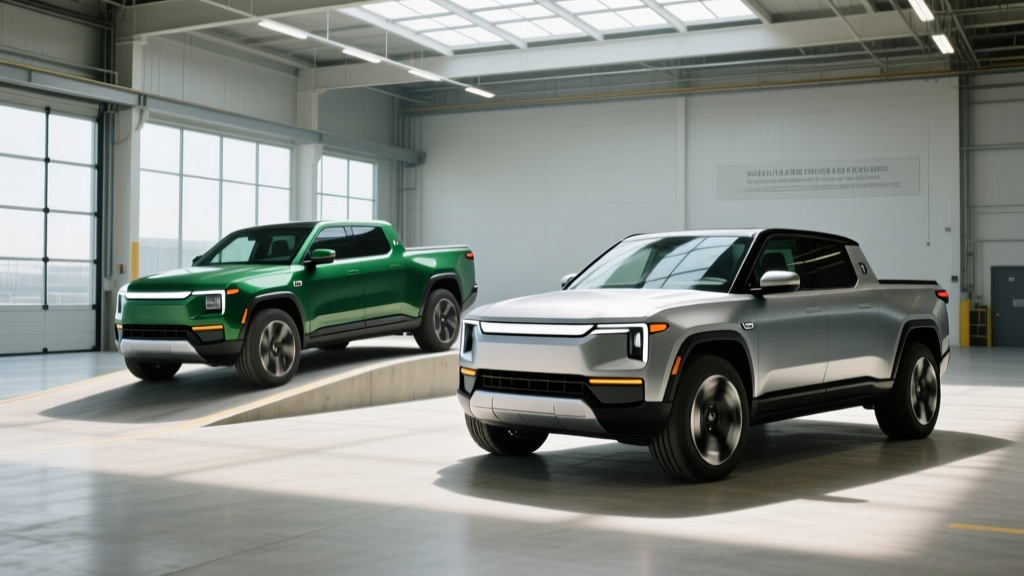
Rivian is an American electric-vehicle company headquartered in Irvine, California, with its primary manufacturing plant in Normal, Illinois. Every Rivian R1T pickup and R1S SUV sold to date rolls off an assembly line in the United States, using a mix of domestically sourced and globally sourced components. The Normal, Illinois facility — a former Mitsubishi plant that Rivian acquired in 2017 — handles stamping, body-in-white, paint, battery pack assembly, and final vehicle assembly under one roof.
Founded in 2009 by RJ Scaringe, Rivian Automotive, Inc. is a publicly traded U.S. corporation (NASDAQ: RIVN). While the company sources battery cells and certain electronic components from international suppliers — including Samsung SDI and, more recently, LG Energy Solution — the vehicle integration, pack assembly, and manufacturing all happen on American soil. This matters for buyers tracking the federal §30D EV tax credit, because North American final assembly is a prerequisite for eligibility at the point of sale.
2026 Rivian R1T at a Glance: Specs, Range, and Pricing
| Attribute | R1T Dual-Motor Standard | R1T Dual-Motor Max | R1T Tri-Motor Max |
|---|---|---|---|
| Drivetrain | AWD (Dual-Motor) | AWD (Dual-Motor) | AWD (Tri-Motor) |
| Horsepower | 533 hp | 533 hp | 850 hp |
| 0-60 mph | 4.5 sec | 4.5 sec | ~3.0 sec |
| Battery Usable (kWh) | ~92 kWh (NMC) | ~128 kWh (NMC) | ~128 kWh (NMC) |
| EPA Range | ~270 mi | ~352 mi | ~328 mi |
| MPGe (Combined) | ~73 MPGe | ~73 MPGe | ~65 MPGe |
| Efficiency | ~46 kWh/100mi | ~46 kWh/100mi | ~52 kWh/100mi |
| Max DC Charge Rate | ~200 kW peak | ~200 kW peak | ~200 kW peak |
| 10-80% DC Time | ~21 min (Standard) | ~36 min (Max) | ~36 min (Max) |
| Level 2 Home Charge | 11.5 kW (~25 mi/hr) | 11.5 kW (~25 mi/hr) | 11.5 kW (~25 mi/hr) |
| Max Towing | 11,000 lbs | 11,000 lbs | 11,000 lbs |
| Base MSRP (est.) | $71,700 | $80,200 | $100,900 |
Note: Specs reflect the Gen 2 R1T platform introduced for the 2025 model year and carried into 2026. Tri-Motor configurations are limited. Always verify final specs on Rivian's official R1T page.
Real-World Range: What the EPA Number Doesn't Tell You
Real-World Highway (70-75 mph): Expect ~280-300 miles
Cold Weather (below 30°F): Expect ~240-270 miles with heat pump active
Towing a 5,000-lb Trailer: Range roughly halves to ~160-180 miles
The Rivian R1T and R1S are large, heavy, boxy vehicles. Aerodynamic drag scales with the square of speed, which means highway efficiency takes a noticeable hit compared to city driving where regenerative braking recovers energy. On a flat, 65-mph route in mild weather, owners report coming close to the EPA window-sticker figure. Push speeds to 75-80 mph on the interstate and the effective range drops 15-20%.
Cold weather compounds the loss. Rivian's Gen 2 platform includes a heat pump for cabin and battery thermal management, which mitigates some of the winter penalty seen in earlier EVs without heat pumps. Still, lithium-ion chemistry inherently loses throughput in freezing temperatures, and cabin heating (even via heat pump) draws from the same pack. Plan conservatively for winter road trips.
If you tow frequently, treat the EPA range as a theoretical maximum. Towing a mid-weight camper or boat trailer (5,000-7,000 lbs) roughly doubles energy consumption. For a 352-mile Max Pack truck, real towing range lands around 160-180 miles before you need a charger — a critical planning factor for trailer-hauling owners.
Charging Speed: DC Fast Charging and Home Level 2
| Charging Level | Power | Miles Added per Hour | Notes |
|---|---|---|---|
| Level 1 (120V outlet) | ~1.4 kW | ~3 mi/hr | Emergency/trickle only |
| Level 2 (240V home) | 11.5 kW (48A) | ~25 mi/hr | Full overnight charge in ~10-13 hrs |
| DC Fast Charge | ~200 kW peak | ~140 mi in 20 min (Standard) | Peak rate sustained ~10-40% SoC, then tapers |
Rivian's Gen 2 battery architecture supports peak DC fast-charge rates around 200 kW. The Standard Pack (~92 kWh usable) charges from 10-80% in roughly 21 minutes, while the larger Max Pack (~128 kWh usable) takes approximately 36 minutes. As with all EVs, the charge curve tapers significantly above 80% State of Charge (SoC) — pushing from 80-100% can take nearly as long as the 10-80% session. For road-trip efficiency, plan stops around the 10-80% window.
At home, the R1T and R1S accept up to 11.5 kW on a Level 2 charger (48 amps on a 60-amp circuit). This adds roughly 25 miles of range per hour of charging. A full charge from near-empty to 100% on the Max Pack takes about 12-13 hours — easily accomplished overnight. Rivian's Wall Charger is rated for 11.5 kW and integrates with the Rivian app for scheduling and preconditioning. A licensed electrician will typically need a 60-amp dedicated circuit; panel upgrades may be necessary in older homes.
Rivian also provides access to the Rivian Adventure Network, its own DC fast-charging stations located near popular outdoor destinations, and the R1T/R1S use the NACS (North American Charging Standard) connector, granting access to Tesla Superchargers with an adapter or natively on newer builds.
Pricing, Trims, and Federal Tax Credit Eligibility
| Trim / Config | Base MSRP | Est. As-Tested | §30D Credit Eligible? |
|---|---|---|---|
| R1T Dual-Motor Standard | $71,700 | $76,000-$82,000 | No (exceeds $80K MSRP cap for trucks) |
| R1T Dual-Motor Max | $80,200 | $86,000-$95,000 | No (exceeds $80K MSRP cap) |
| R1S Dual-Motor Standard | $77,700 | $82,000-$88,000 | No (exceeds $80K MSRP cap for SUVs) |
| R1T Tri-Motor Max | $100,900 | $105,000+ | No (exceeds cap) |
Under IRS §30D rules, the federal EV tax credit of up to $7,500 applies only to new electric vehicles with an MSRP at or below $80,000 for trucks, vans, and SUVs (or $55,000 for sedans). Most Rivian configurations exceed this cap once you add the Max Pack battery, premium paint, or the Tri-Motor powertrain. Some base Dual-Motor Standard R1T configurations may fall at or just under the $80K threshold, but options and destination charges often push them over. Additionally, §30D has buyer income limits ($300K joint / $150K single modified AGI) and battery critical-mineral and component sourcing requirements that change annually.
Because Rivian assembles vehicles in the U.S., the North American final assembly requirement is satisfied. However, battery sourcing rules remain the variable. Always check the latest eligibility list on fueleconomy.gov and consult a tax professional before assuming credit eligibility. The point-of-sale transfer option allows eligible buyers to apply the credit as an instant discount at purchase, but only if all requirements are met at the time of delivery.
Interior, Cargo, Technology, and Driver Assistance
The R1T is a crew-cab, four-door pickup with seating for five. The R1S is a three-row SUV accommodating up to seven passengers. Both share the Gen 2 interior architecture:
- R1T Cargo: 54-inch bed (with bed extender option), ~11 cu ft lockable Gear Tunnel (standard on Dual-Motor, removed on some Max/Tri configs to accommodate larger battery), front trunk (frunk) ~11 cu ft
- R1S Cargo: ~104 cu ft max with second and third rows folded; ~46 cu ft behind second row; ~10 cu ft frunk
- Rear Legroom (R1T): ~38.5 inches
- Infotainment: 15.6-inch center touchscreen running Rivian's custom OS, over-the-air (OTA) updateable, integrated navigation with charging-route planning
- Audio: Available premium Meridian or Rivian-designed sound system with up to 18 speakers
- Driver Assistance: Rivian's Driver+ system is a SAE Level 2 driver-assist suite — it includes adaptive cruise control, lane-centering, and highway assist on compatible roads. The driver must remain attentive with hands on or near the wheel at all times. This is not autonomous driving.
Standout tech features include OTA software updates that have added range-optimizing algorithms, new drive modes, and UI improvements post-delivery; the Gear Tunnel on the R1T (a pass-through storage compartment between the cab and bed unique to Rivian); a built-in air compressor in the bed; and integrated camp kitchen accessories available as dealer-installed options.
Pros, Cons, and Who Should Buy a Rivian
Pros
- Class-leading electric pickup capability: 11,000-lb towing, serious off-road chops with available air suspension
- Unique storage solutions (Gear Tunnel, frunk, bed integrations) unavailable on competitors
- Strong real-world range with Max Pack (~280-300 mi highway)
- U.S.-built, supporting domestic manufacturing
- Active OTA update program improves the vehicle over time
- NACS connector enables Tesla Supercharger access
Cons
- Premium pricing: most configs $80K+, eliminating federal tax credit eligibility
- Heavy and boxy — highway efficiency drops noticeably at speed
- Towing range roughly halves under load (common to all EV trucks, but painful)
- Third row in R1S is tight for adults on long trips
- Charging speed (~200 kW peak) trails Hyundai/Kia's 800V architecture (~240-350 kW)
- Service center footprint still growing — rural owners may face long drives for warranty work
Who Is the Rivian R1T / R1S For?
Choose the R1T if: You need a capable, adventure-oriented electric pickup with real towing capacity, off-road ability, and unique storage like the Gear Tunnel — and your budget accommodates $75K-$100K+ without relying on the federal tax credit.
Choose the R1S if: You want a three-row electric SUV that can handle family duty, light off-roading, and road trips with up to seven passengers, and you value a premium, tech-forward interior.
Look elsewhere if: You need the lowest possible cost of ownership, maximum DC fast-charging speed for frequent road trips, or you require the $7,500 federal credit to make the math work. The Ford F-150 Lightning (lower trims), Chevrolet Silverado EV, or Hyundai Ioniq 5 (for non-truck buyers) may fit tighter budgets or faster-charging priorities.
Battery Warranty, Longevity, and Ownership Costs
Rivian provides a 8-year / 175,000-mile battery and drive unit warranty on Gen 2 vehicles, with a capacity retention threshold of 70% over that period. The bumper-to-bumper limited warranty covers 5 years / 60,000 miles. Rivian uses NMC (nickel-manganese-cobalt) lithium-ion chemistry in both the Standard and Max packs, sourced primarily from Samsung SDI and LG Energy Solution.
NMC cells offer higher energy density than LFP (lithium iron phosphate), which is why Rivian can pack up to ~128 kWh usable into the Max configuration while keeping the vehicle's physical footprint manageable. The trade-off is that NMC chemistry benefits from daily charging limits of 80-90% for longevity — only charge to 100% when you need the full range for a trip. Rivian's app allows you to set charge limits and preconditioning schedules to optimize battery health.
Insurance costs for the R1T and R1S tend to run higher than average for the segment, reflecting the vehicle's price, repair complexity, and limited aftermarket parts availability. Expect annual premiums in the $2,200-$3,500 range depending on your state, driving record, and coverage levels. Get quotes before ordering.
Rivian vs. the Competition: F-150 Lightning, Silverado EV, Cybertruck
The R1T competes in the growing electric pickup segment against the Ford F-150 Lightning, Chevrolet Silverado EV, and Tesla Cybertruck. The F-150 Lightning undercuts the R1T significantly in price (starting around $55K for base trims that qualify for the §30D credit) and offers a more traditional truck experience, but with less range and less off-road sophistication. The Silverado EV (built on GM's Ultium platform) offers competitive range and a lower entry price on work-truck trims. The Cybertruck brings polarizing styling, stainless-steel construction, and a starting price around $80K, with similar range and faster peak charging capability.
Rivian's differentiator is the adventure-lifestyle integration: the Gear Tunnel, camp kitchen options, air suspension with up to 14.9 inches of ground clearance, and a software experience that feels closer to a tech product than a legacy automaker's offering. If you prioritize off-road capability and unique utility over lowest price, the R1T stands apart. If budget and tax-credit eligibility are paramount, the F-150 Lightning XLT or Lariat is the more financially pragmatic choice.
Frequently Asked Questions
What country is Rivian from?
Rivian is an American company, founded in 2009 and headquartered in Irvine, California. All Rivian vehicles are manufactured in Normal, Illinois, USA.
What is the real-world range of the Rivian R1T?
The EPA rates the Dual-Motor Max Pack R1T at approximately 352 miles. In real-world highway driving at 70-75 mph, expect 280-300 miles. In cold weather (below 30°F), plan for 240-270 miles. Towing a 5,000-lb trailer cuts range roughly in half.
How fast does the Rivian R1T charge?
On a DC fast charger, the R1T peaks at approximately 200 kW. The Standard Pack charges 10-80% in about 21 minutes; the Max Pack takes roughly 36 minutes. At home on Level 2 (11.5 kW), expect about 25 miles of range per hour.
Does the Rivian R1T qualify for the $7,500 federal EV tax credit?
Most configurations do not. The §30D credit caps eligible trucks and SUVs at $80,000 MSRP. While a base Dual-Motor Standard R1T may start near the threshold, options and destination fees often push it over. Additionally, buyer income limits and battery-sourcing requirements apply. Verify current eligibility on fueleconomy.gov and consult a tax professional.
Is the Rivian R1T worth buying over the Ford F-150 Lightning?
If you want superior off-road capability, unique storage (Gear Tunnel, frunk), a more premium interior, and don't mind paying $75K-$100K+ without a federal tax credit, the R1T offers an experience the Lightning can't match. If budget, tax-credit eligibility, and conventional truck familiarity are priorities, the F-150 Lightning is the more practical choice.
What battery chemistry does Rivian use?
Rivian uses NMC (nickel-manganese-cobalt) lithium-ion cells in both the Standard and Max battery packs. NMC offers higher energy density than LFP, enabling the Max Pack's ~128 kWh usable capacity. For longevity, Rivian recommends daily charging to 80-90% and reserving 100% charges for trips.
Can Rivian vehicles use Tesla Superchargers?
Yes. Rivian vehicles built with the NACS connector can access Tesla Supercharger stations natively. Earlier CCS-equipped models can use an approved adapter. Rivian's onboard navigation routes through Supercharger and Rivian Adventure Network stations automatically.
What is Rivian's battery warranty?
Gen 2 Rivian vehicles carry an 8-year / 175,000-mile battery and drive unit warranty, guaranteeing at least 70% capacity retention over that period. The bumper-to-bumper warranty covers 5 years / 60,000 miles.