Rivian Warranties: What You Need to Know Before Buying
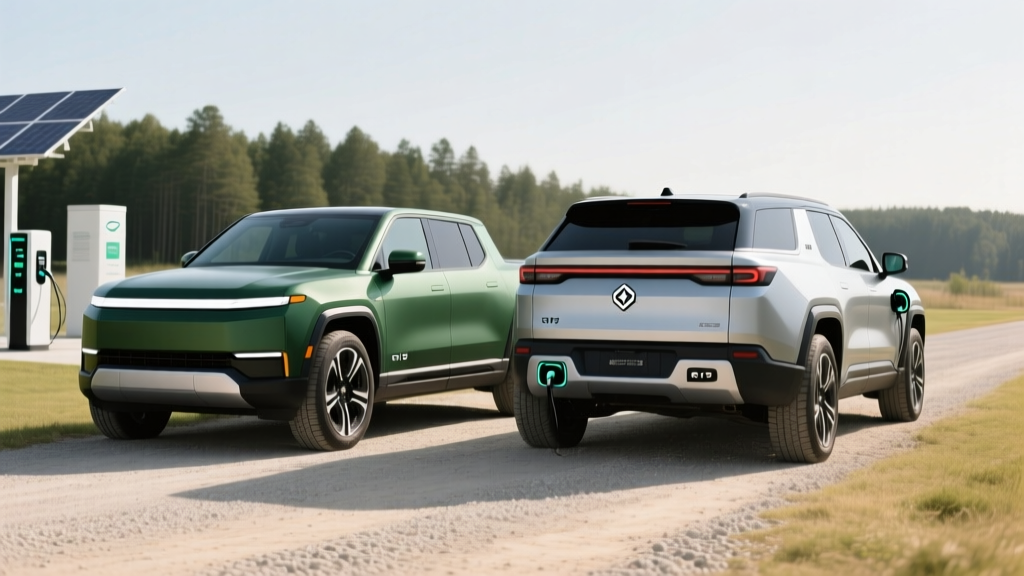
Rivian has carved out a unique niche in the EV market with its adventure-focused R1T pickup and R1S SUV. But beyond the impressive specs and off-road capability, buyers need to understand the long-term protection offered by Rivian warranties. This guide breaks down every layer of coverage, from the basic bumper-to-bumper to the critical battery and powertrain terms, helping you assess the true cost of ownership for these premium electric vehicles.
2026 Rivian R1T and R1S: Quick Specs and Warranty Overview
Before diving into the fine print, here is a snapshot of the current 2026 model-year specifications for the dual-motor and quad-motor configurations, alongside the core warranty terms that define the ownership experience.
| Specification | R1T (Dual-Motor) | R1S (Quad-Motor) |
|---|---|---|
| EPA Range | ~330 miles (Max Pack) | ~321 miles (Max Pack) |
| Battery Capacity | ~149 kWh (NMC) | ~149 kWh (NMC) |
| 0-60 mph | 4.5 seconds | 3.0 seconds |
| Horsepower | 533 hp | 835 hp |
| Max DC Charging | 220 kW | 220 kW |
| Base MSRP | $71,700 | $79,900 |
| Basic Warranty | 5 years / 60,000 miles | 5 years / 60,000 miles |
| Battery/Powertrain | 8 years / 120,000 miles | 8 years / 120,000 miles |
Real-World Range and Efficiency: Beyond the EPA Sticker
Rivian advertises impressive EPA-estimated ranges, particularly with the Max Pack battery option. However, the boxy aerodynamics and substantial weight of these vehicles mean real-world efficiency can vary significantly based on driving conditions.
Range Reality Check
EPA Estimate: Up to 330 miles (R1T Max Pack)
Real-World Expectation: Expect ~260–280 miles at sustained highway speeds (75+ mph). In cold weather (below freezing), range can drop by 20–30%, potentially reducing the Max Pack to ~210–230 miles. For city driving with regenerative braking, you may see numbers closer to the EPA sticker.
Efficiency for the R1T Dual-Motor typically hovers around 70–75 MPGe (approx. 48–50 kWh/100mi), which is lower than more aerodynamic crossovers like the Tesla Model X or Lucid Gravity. This is the trade-off for the R1T's rugged utility and off-road hardware.
Charging Speed and Network Access
Rivian’s charging architecture has evolved, with the 2026 models now featuring native NACS (Tesla Supercharger) ports, eliminating the need for adapters on the fastest networks. The charge curve is respectable, though not class-leading compared to 800-volt architectures found in Hyundai/Kia or Lucid.
| Charging Level | Power / Rate | Time / Range Added |
|---|---|---|
| Level 1 (120V) | ~1.4 kW | ~3–4 miles per hour |
| Level 2 (240V) | 11.5 kW (48A) | ~25–30 miles per hour; 10–100% in ~13 hours |
| DC Fast Charge | Peak 220 kW | 10–80% in ~30 minutes; 140 miles in 20 min |
Note: Peak 220 kW is typically sustained between 10–40% State of Charge (SoC). Above 80%, charging slows significantly to protect battery health, a common trait in NMC chemistries.
Deconstructing Rivian Warranties: The Fine Print
The core of this guide focuses on the specific terms of Rivian warranties. Rivian provides a comprehensive package that is competitive with legacy luxury automakers, though it differs slightly from some mainstream EV competitors.
1. Basic Vehicle Limited Warranty (Bumper-to-Bumper)
Rivian covers the vehicle for 5 years or 60,000 miles, whichever comes first. This includes most components not subject to normal wear and tear, such as the infotainment system, suspension, and interior electronics. This is slightly better than the industry-standard 3-year/36,000-mile basic warranty found on many non-luxury vehicles.
2. Battery and Drive Unit Warranty
The high-voltage battery and drive units are covered for 8 years or 120,000 miles. Crucially, this warranty covers defects and excessive degradation. While Rivian has not published a specific "degradation threshold" (e.g., replacement if capacity falls below 70%), industry standards and consumer protection laws generally require the manufacturer to address significant capacity loss that renders the vehicle unusable for its intended purpose.
3. Corrosion and Restraint Systems
- Corrosion Perforation: 5 years / unlimited miles.
- Seat Belts & Airbags: 5 years / 60,000 miles.
Federal Tax Credit Eligibility and Pricing
For 2026, the Rivian R1T and R1S remain eligible for the IRS §30D Clean Vehicle Credit, but buyers must navigate strict income and MSRP caps. The base MSRP for the R1T starts around $71,700, which is under the $80,000 cap for trucks/vans/SUVs. However, high-trim Quad-Motor models with options can exceed this limit.
§30D Tax Credit Checklist
- MSRP Cap: Must be under $80,000 for trucks/SUVs.
- Income Cap: AGI must be under $150k (single) or $300k (joint).
- Sourcing: Battery components and critical minerals must meet North American sourcing thresholds.
- Transfer: Credit can be transferred to the dealer at the point of sale for an immediate price reduction.
Who Should Buy a Rivian (And Who Shouldn't)?
The R1T and R1S are not for everyone. They are best suited for outdoor enthusiasts who need a vehicle that can tow a trailer, handle a forest road, and still provide a premium daily-driving experience.
Pros and Cons
Pros
- Class-leading off-road capability and ground clearance.
- Unique utility features like the R1T Gear Tunnel and Camp Kitchen.
- Native NACS access to the Tesla Supercharger network.
- Over-the-air (OTA) updates that continuously add new features.
Cons
- High energy consumption (low MPGe) compared to streamlined EVs.
- Service center network is still growing; mobile service is essential.
- Third-row seating in the R1S is tight for adults.
- Expensive options can quickly push the price into luxury territory.
Frequently Asked Questions (FAQ)
Are Rivian warranties transferable to a second owner?
Yes, the Basic and Battery/Powertrain warranties are fully transferable to subsequent owners, which helps maintain strong resale values in the used EV market.
How does Rivian handle battery replacements out of warranty?
Out-of-warranty battery replacement is expensive, potentially exceeding $20,000. However, NMC batteries in liquid-cooled systems like Rivian's are showing excellent longevity, with many early adopters seeing minimal degradation after 100,000 miles.
Does the Rivian R1T qualify for the full $7,500 tax credit?
Most Dual-Motor and some Tri-Motor configurations qualify, provided the buyer meets the income requirements and the specific battery pack meets the critical-mineral sourcing rules for that model year. Always check the IRS official list before purchasing.