The 2026 Rivian Update: What Buyers Need to Know
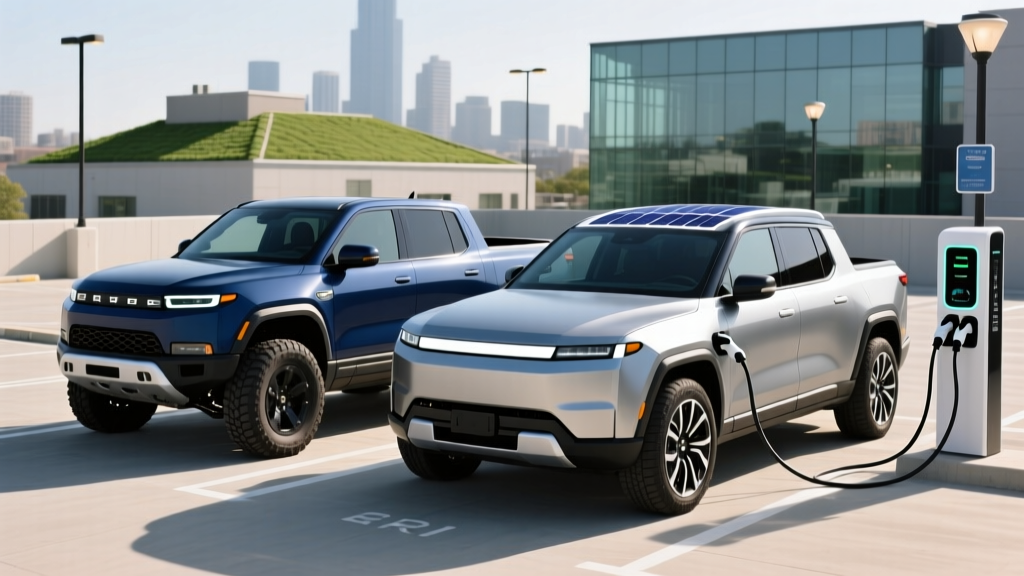
Rivian's second-generation R1T pickup and R1S SUV arrived with a comprehensive overhaul that reshapes the value proposition of both vehicles. This Rivian update covers everything current for the 2026 model year: the new Dual-Motor and Tri-Motor powertrains, updated battery packs with revised chemistry, faster charging architecture, and the pricing shifts that affect federal tax credit eligibility under IRS §30D rules. If you're cross-shopping the R1T against the Ford F-150 Lightning or the R1S against the Tesla Model X and Hyundai Ioniq 9, this profile gives you the exact numbers to decide.
| Spec | R1T Dual-Motor (Standard) | R1T Tri-Motor | R1S Dual-Motor (Standard) |
|---|---|---|---|
| EPA Range | 342 mi (est.) | 420 mi (Max pack, est.) | 330 mi (est.) |
| Battery (usable) | ~92 kWh (NMC) | ~141 kWh (NMC) | ~92 kWh (NMC) |
| Horsepower | 533 hp | 850 hp | 533 hp |
| 0-60 mph | 4.5 sec | 2.9 sec | 4.6 sec |
| Peak DC Charge | ~200 kW | ~220 kW | ~200 kW |
| 10-80% DC Time | ~28 min | ~38 min | ~28 min |
| Level 2 Rate | 11.5 kW (~30 mi/hr) | 11.5 kW (~30 mi/hr) | 11.5 kW (~29 mi/hr) |
| Towing Capacity | 11,000 lbs | 11,000 lbs | 7,700 lbs |
| Base MSRP | $69,900 | $99,900 | $75,900 |
Range and Efficiency: EPA vs. Real-World
Rivian's 2026 lineup carries over the Standard, Large, and Max battery configurations, though the second-generation platform has improved thermal management and motor efficiency that translate to meaningful range gains. The Dual-Motor R1T with the Standard pack (~92 kWh usable, NMC chemistry) carries an EPA-estimated 342 miles. The Max pack (~141 kWh) on the Tri-Motor pushes the R1T to an estimated 420 miles EPA — making it one of the longest-range electric pickups on the market.
EPA Estimate: 342 mi (R1T Dual-Motor Standard) / 420 mi (R1T Tri-Motor Max)
Expect in practice: ~280-310 mi highway at 70-75 mph in moderate temps. Cold weather (below 32°F) can reduce range by 20-30%, bringing the Standard pack R1T down to ~240-270 mi on highway trips. Towing a 5,000-lb trailer cuts range roughly in half — plan for 150-180 mi between charges when towing heavy. The Max pack provides a more comfortable towing buffer at ~200-230 mi.
Efficiency for the Dual-Motor R1T lands around 48 MPGe combined (approximately 70 kWh/100 mi), per fueleconomy.gov data. The R1S, with its slightly heavier body and different aero profile, returns marginally lower figures. These are competitive numbers for a body-on-frame electric truck, though they trail unibody crossovers like the Hyundai Ioniq 5 or Tesla Model Y by a significant margin. Physics is physics: a 7,000-lb truck with the frontal area of a pickup will consume more energy per mile.
Charging Speed: DC Fast Charging and Home Setup
The second-generation Rivians use an upgraded electrical architecture that supports faster DC fast-charging rates than the first-generation vehicles. The Dual-Motor models peak at approximately 200 kW on a capable DC fast charger, while the Tri-Motor with Max pack can reach roughly 220 kW. These are peak rates — the charge curve tapers significantly above 80% State of Charge to protect battery longevity.
| Charging Level | Power / Rate | Miles Added per Hour | Notes |
|---|---|---|---|
| Level 1 (120V household) | ~1.4 kW | ~3-4 mi/hr | Emergency/trickle only |
| Level 2 (240V, 48A) | 11.5 kW | ~29-31 mi/hr | Full charge in ~9-13 hrs depending on pack |
| DC Fast Charge (Standard pack) | Peak ~200 kW | 10-80% in ~28 min | Tapers above 80%; ~180 kW sustained to 50% |
| DC Fast Charge (Max pack) | Peak ~220 kW | 10-80% in ~38 min | Larger battery = longer session despite higher peak kW |
For home charging, Rivian recommends a 48-amp Level 2 wall connector on a 60-amp circuit. At 11.5 kW, you'll add roughly 30 miles of range per hour of charging — enough to fully replenish a Standard pack overnight. Installation costs vary widely: expect $800-$2,000 if your electrical panel has capacity, or $2,500-$5,000+ if you need a panel upgrade to 200A service. Always get a quote from a licensed electrician before committing.
Rivian uses the NACS (North American Charging Standard) connector on 2026 models, giving native access to Tesla's Supercharger network — currently the most reliable DC fast-charging infrastructure in the US. This eliminates the adapter dependency that earlier Rivian owners dealt with using CCS-to-NACS dongles at non-Tesla stations.
Performance, Drivetrain, and Capability
The 2026 Rivian lineup offers three powertrain configurations: Dual-Motor AWD, Performance Dual-Motor AWD, and the flagship Tri-Motor AWD. The Dual-Motor produces 533 horsepower and 610 lb-ft of torque, launching the R1T to 60 mph in approximately 4.5 seconds — quick for a truck that weighs over 7,000 pounds. The Tri-Motor configuration delivers a staggering 850 hp and a 2.9-second 0-60 time, putting it in supercar territory despite its pickup body.
All configurations use a single-speed reduction gear with torque vectoring across the axles. The quad-motor setup from the first generation has been consolidated to the Tri-Motor architecture, which uses two rear motors and one front motor for improved efficiency and reduced complexity. Rivian's hydraulic roll control system replaces traditional anti-roll bars, improving both on-road body control and off-road articulation.
Towing capacity remains at 11,000 lbs for the R1T and 7,700 lbs for the R1S. However, towing at or near max capacity dramatically impacts range. Rivian's integrated trailer hitch and tow-mode software include trailer light checks and an integrated brake controller, which are practical advantages over competitors that require aftermarket additions.
Interior, Cargo, and Tech Features
The R1T offers a 54-inch bed (4.5 feet) with a unique Gear Tunnel — a pass-through storage compartment behind the rear seats that provides 11 cu ft of secure, lockable space. Total cargo volume with the bed and front trunk (frunk) comes to approximately 56 cu ft of enclosed storage. The R1S provides 104.7 cu ft of cargo space behind the front row, 57.7 cu ft behind the second row, and 21 cu ft behind the third row, with seating for up to seven passengers.
Rear legroom in the R1T measures 41.3 inches — competitive with midsize crew-cab trucks. The R1S third row is best suited for children or short trips, with 28.7 inches of legroom.
The 2026 infotainment system runs on Rivian's in-house software with a 15.6-inch center touchscreen and a 12.3-inch digital instrument cluster. Wireless Apple CarPlay and Android Auto are standard. The vehicle's software receives regular over-the-air (OTA) updates that have historically added meaningful features — including improved route planning, camp mode enhancements, and driver-assist refinements.
Rivian's driver-assistance suite includes adaptive cruise control, lane-centering assist, and automatic emergency braking. This is an SAE Level 2 system — meaning the driver must remain attentive and keep hands on the wheel at all times. It is not self-driving. The system is competent for highway cruising but does not match the hands-free capability of GM's Super Cruise or Ford's BlueCruise on mapped highways.
Pricing, Trims, and Federal Tax Credit Eligibility
The 2026 Rivian R1T starts at $69,900 for the Dual-Motor Standard pack, with the Large pack adding approximately $6,000 and the Max pack adding $12,000-$14,000 depending on configuration. The Tri-Motor R1T starts at $99,900. The R1S SUV commands a premium, starting at $75,900 for the Dual-Motor Standard.
| Model / Config | Base MSRP | As-Tested (Typical) | §30D Credit Eligible? |
|---|---|---|---|
| R1T Dual-Motor Standard | $69,900 | $74,000-$78,000 | Yes — under $80K truck cap* |
| R1T Dual-Motor Large | $75,900 | $80,000-$85,000 | Check MSRP cap* |
| R1T Tri-Motor Max | $99,900 | $105,000+ | No — exceeds $80K truck cap |
| R1S Dual-Motor Standard | $75,900 | $80,000-$84,000 | Yes — under $80K SUV cap* |
| R1S Dual-Motor Large | $81,900 | $86,000-$90,000 | No — exceeds $80K SUV cap |
*Under IRS §30D rules, trucks and SUVs have an $80,000 MSRP cap. Buyer income limits apply ($150K single / $300K joint AGI). Battery component and critical mineral sourcing requirements must also be met. The credit amount (up to $7,500) depends on sourcing compliance and can be transferred to the dealer at point of sale. Always verify current eligibility with a tax professional before purchasing.
The critical takeaway: only the base Dual-Motor Standard configurations reliably fall under the MSRP cap for the federal credit. Once you add the Large or Max pack, or step up to the Tri-Motor, you exceed the cap and lose eligibility. This is a significant financial consideration — the $7,500 credit effectively makes the Standard pack configurations $7,500 cheaper than their sticker suggests, widening the value gap between trims.
Battery, Warranty, and Long-Term Ownership
Rivian uses NMC (nickel manganese cobalt) lithium-ion battery chemistry across the R1 lineup. NMC offers higher energy density than LFP (lithium iron phosphate), which is why it's used in vehicles where maximizing range in a given physical space is critical — like a truck platform. The trade-off is that NMC batteries generally benefit from being kept between 20-80% State of Charge for daily use, with 100% charges reserved for road trips.
Rivian's battery warranty covers 8 years or 175,000 miles, whichever comes first, against defects and capacity loss below 70% of original capacity. The powertrain warranty is also 8 years / 175,000 miles. The limited vehicle warranty is 5 years / 60,000 miles. These are competitive terms that exceed the industry-standard 8yr/100,000-mi battery coverage offered by most automakers, giving owners additional confidence for high-mileage use.
Battery replacement costs remain a concern for prospective EV buyers. While Rivian has not published official out-of-warranty replacement pricing, industry estimates for a pack of this size (92-141 kWh) range from $15,000 to $25,000+ depending on the configuration. However, real-world degradation data from first-generation Rivians suggests moderate capacity loss — approximately 5-8% over the first 100,000 miles — which is within normal expectations for NMC chemistry with proper care.
Pros, Cons, and the Verdict
- Class-leading range with Max pack (420 mi EPA)
- NACS connector = native Supercharger access
- Excellent build quality and thoughtful design (Gear Tunnel, frunk)
- Strong OTA update track record adding real features
- 11,000-lb towing capacity (R1T)
- 8yr/175,000-mi battery warranty exceeds most competitors
- Tri-Motor performance is extraordinary (2.9 sec 0-60)
- MSRP cap eliminates tax credit on most configurations
- DC fast-charge speed trails Hyundai/Kia 800V platforms (~240+ kW)
- Towing severely impacts range (expect ~50% reduction)
- Driver-assist is competent but not hands-free like Super Cruise
- Third-row R1S space is tight for adults
- No LFP option for buyers who prefer daily 100% charging
- Service center network still expanding in rural areas
Who Should Buy the 2026 Rivian?
Choose the R1T if: You need a capable electric pickup for weekend adventures, light-to-moderate towing, and daily driving. The Dual-Motor Standard pack at $69,900 (potentially ~$62,400 after the §30D credit) is the value sweet spot. The Gear Tunnel and frunk make it uniquely practical for gear-heavy lifestyles.
Choose the R1S if: You need three-row electric SUV seating for family duty and want genuine off-road capability. The Standard pack at $75,900 keeps you under the MSRP cap. Understand the third row is best for kids.
Look elsewhere if: You tow heavy loads daily and need 300+ miles of range while doing it (consider a diesel until charging infrastructure catches up), you want hands-free highway driving (GM Super Cruise), or you need the fastest possible DC charging (Hyundai Ioniq 5 / Kia EV9 with 800V architecture).
Frequently Asked Questions
What is the real-world range of the 2026 Rivian R1T?
The EPA rates the Dual-Motor Standard at approximately 342 miles. In real-world highway driving at 70-75 mph, expect 280-310 miles. Cold weather (below freezing) can drop that to 240-270 miles. The Max pack configuration extends real-world highway range to roughly 350-380 miles in moderate conditions.
How fast does the 2026 Rivian charge?
On a DC fast charger, the Dual-Motor Standard pack peaks at ~200 kW and charges from 10-80% in approximately 28 minutes. The Max pack peaks at ~220 kW but takes ~38 minutes for 10-80% due to the larger battery capacity. At home on a 48-amp Level 2 charger (11.5 kW), you'll add about 30 miles of range per hour.
Does the 2026 Rivian qualify for the federal EV tax credit?
The base Dual-Motor configurations (R1T at $69,900, R1S at $75,900) fall under the IRS §30D MSRP cap of $80,000 for trucks/SUVs and may qualify for up to $7,500, depending on buyer income (≤$150K single / ≤$300K joint), battery sourcing compliance, and point-of-sale transfer rules. Higher trims with the Large or Max pack exceed the cap and are not eligible. Verify current rules at irs.gov and consult a tax professional.
Is the Rivian R1T worth buying vs. the Ford F-150 Lightning?
The R1T offers more range (342 vs. ~320 mi for Lightning Extended Range), a more premium interior, and the Gear Tunnel. The F-150 Lightning has a larger bed (67 in vs. 54 in), Pro Power Onboard for job-site use, and a lower starting price (~$55,000 for base Pro). If you prioritize lifestyle/adventure features and range, the R1T wins. If you need a work truck with a full-size bed and lower cost, the Lightning is the better tool.
What are the biggest drawbacks of the 2026 Rivian?
The primary drawbacks are: (1) most configurations exceed the $80K MSRP cap, eliminating the federal tax credit; (2) DC fast-charge speeds trail 800V competitors; (3) towing cuts range roughly in half; and (4) the driver-assist system requires hands-on engagement, unlike GM's hands-free Super Cruise.
Does Rivian offer an LFP battery option?
No. The 2026 R1 lineup uses NMC chemistry exclusively. LFP batteries offer longer cycle life and tolerate daily 100% charges better, but they are heavier and less energy-dense — a significant trade-off in a truck where range and payload both matter. If LFP is a priority, consider the Tesla Model Y Rear-Wheel Drive or base Ford Mustang Mach-E.