Rivian's electric SUVs and pickups have been a North American success story, but the question on every British EV enthusiast's mind has been: when is Rivian coming to the UK? As of early 2026, Rivian has confirmed its international expansion roadmap, with the UK and Europe firmly on the horizon. While direct UK deliveries have not yet commenced, understanding the Rivian lineup — its real-world range, charging performance, pricing, and ownership economics — is critical for prospective British buyers preparing for the brand's arrival.
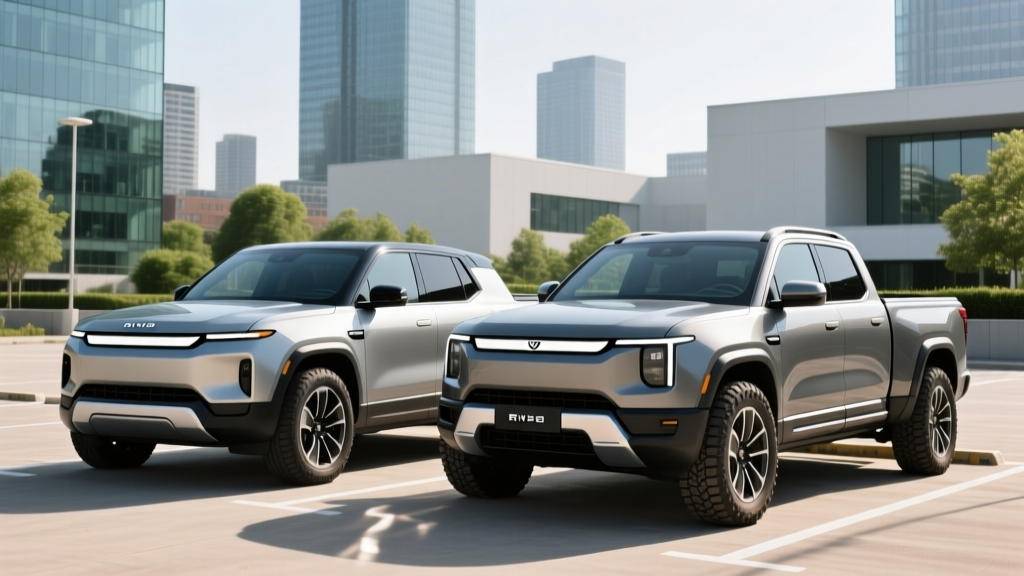
This profile covers the current-generation Rivian R1S (three-row SUV) and R1T (pickup truck) as sold in the US market, translating every spec into practical terms for UK buyers evaluating whether to import, wait for official right-hand-drive models, or cross-shop against the likes of the Tesla Model X, BMW iX, and Lotus Eletre already available in Britain.
Rivian UK Expansion: What We Know for 2026
Rivian CEO RJ Scaringe confirmed in late 2025 that the company is targeting European and UK market entry, with initial sales expected through a direct-to-consumer model similar to its US approach. However, as of mid-2026, no UK-spec right-hand-drive R1S or R1T has been officially announced for sale. Rivian's Normal, Illinois factory is currently fulfilling North American demand, and the upcoming Georgia plant (expected late 2026 production start) will increase capacity for export markets.
For UK buyers, this means two paths: waiting for official UK availability (likely 2027 at earliest based on current timelines) or exploring grey-market import of a US-spec left-hand-drive vehicle — which introduces significant complications around warranty, charging connector compatibility (US models use NACS/Tesla connectors, while UK infrastructure is predominantly CCS2/Type 2), and service support.
Rivian R1S and R1T: Core Specifications at a Glance
Both the R1S SUV and R1T pickup share the same skateboard platform, battery options, and powertrain configurations. Here are the headline numbers for the 2026 model year as sold in the United States:
| Specification | R1S (SUV) | R1T (Pickup) |
|---|---|---|
| EPA Range (Max Pack) | 410 miles | 420 miles |
| EPA Range (Standard Pack) | 270 miles | 270 miles |
| Battery (Max Pack, usable) | ~149 kWh (NMC) | ~149 kWh (NMC) |
| Battery (Standard, usable) | ~95 kWh (LFP) | ~95 kWh (LFP) |
| Max DC Fast Charge | ~220 kW peak | ~220 kW peak |
| 10–80% DC Fast Charge | ~36 minutes (Max Pack) | ~36 minutes (Max Pack) |
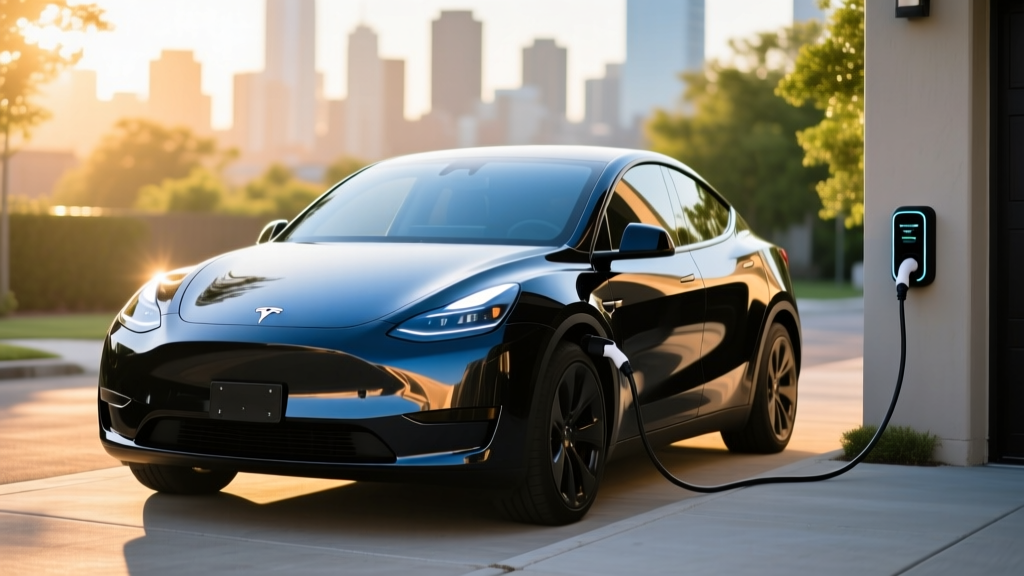
| Level 2 Home Charging | 11.5 kW (~25 mi/hr) | 11.5 kW (~25 mi/hr) |
| 0–60 mph (Dual-Motor) | 4.5 seconds | 4.5 seconds |
| 0–60 mph (Quad-Motor) | 3.0 seconds | 3.0 seconds |
| Horsepower (Dual-Motor) | 533 hp | 533 hp |
| Horsepower (Quad-Motor) | 1,025 hp | 1,025 hp |
| Drivetrain | AWD (Dual or Quad) | AWD (Dual or Quad) |
| Towing Capacity | 7,700 lbs | 11,000 lbs |
| MPGe (Dual-Motor, Max) | 73 MPGe combined | 73 MPGe combined |
| Efficiency (kWh/100 mi) | ~46 kWh/100 mi | ~46 kWh/100 mi |
Source: EPA Fuel Economy and Rivian Official Specs. Figures reflect 2025–2026 model-year data.
Real-World Range: What the EPA Sticker Doesn't Tell You
Rivian's EPA-rated range figures are impressive on paper — 410 miles for the R1S Max Pack and 420 for the R1T Max Pack. But as any experienced EV owner knows, the EPA cycle is optimistic for real-world motorway driving and cold-weather conditions.
In independent US testing, the R1S Dual-Motor Max Pack delivers approximately 330–360 miles at sustained motorway speeds (70–75 mph equivalent). That's a 12–20% reduction from the EPA sticker, which is typical for large, heavy electric SUVs with significant frontal area and rolling resistance.
Cold-weather impact is substantial. In temperatures below freezing (0°C / 32°F), expect a further 20–30% range reduction, bringing real-world winter motorway range down to approximately 250–290 miles on the Max Pack. The R1S and R1T do include a heat pump for cabin heating, which mitigates some of this loss compared to resistive heating systems, but battery chemistry (NMC in the Max Pack) still suffers reduced efficiency in cold conditions.
The Standard Pack with its 95 kWh LFP (lithium iron phosphate) battery is rated at 270 miles EPA. Real-world motorway range sits around 210–230 miles, and LFP chemistry is notably more resilient to cold-weather degradation — typically losing 15–20% rather than the 20–30% seen in NMC cells. LFP also supports daily charging to 100% without the long-term degradation concerns of NMC, making it practical for daily commuters who can charge at home.
Charging Performance: DC Fast and Home Level 2
Charging speed is where Rivian's large battery packs present a trade-off. The Max Pack's ~149 kWh capacity means impressive range, but it also means longer absolute charging times even at respectable power levels.
| Charging Level | Power / Rate | Miles Added per Hour | Notes |
|---|---|---|---|
| Level 1 (UK 3-pin / US 120V) | ~1.4 kW | ~3 mi/hr | Emergency/trickle only |
| Level 2 (UK 7kW wallbox) | 7 kW | ~15 mi/hr | Common UK home install |
| Level 2 (US Rivian Wall Connector) | 11.5 kW | ~25 mi/hr | Requires 48A circuit |
| Level 2 (UK 11kW / 3-phase) | 11 kW | ~24 mi/hr | Requires 3-phase supply |
| DC Fast Charge (Max Pack peak) | ~220 kW | N/A | 10–80% in ~36 min |
| DC Fast Charge (Standard Pack) | ~190 kW | N/A | 10–80% in ~28 min |
The Rivian charge curve is relatively flat compared to some competitors — it sustains near-peak power from roughly 10% to 55% state of charge before tapering. Above 80% SoC, charging slows dramatically to protect battery health, adding another 20–30 minutes to go from 80% to 100%. For road trips, the practical strategy is charging to 80% and moving on.
For UK home charging, a standard 7 kW single-phase wallbox (the most common UK installation) will fully replenish the Standard Pack overnight in about 13–14 hours. The Max Pack, however, requires over 21 hours on a 7 kW charger — making a three-phase 11 kW or even 22 kW home charger essential for Max Pack owners who drive significant daily mileage. Three-phase electricity is not standard in most UK homes, so this may require a distribution network operator (DNO) application and significant electrical work.
Pricing, Trim Levels, and Tax Credit Eligibility
Rivian's US pricing provides a baseline for estimating eventual UK pricing, though import duties, VAT (20% in the UK), and homologation costs will add substantially.
| Model / Trim | US MSRP (2026) | US Federal Tax Credit (§30D) | Effective US Price |
|---|---|---|---|
| R1S Dual-Motor Standard | $75,900 | $0 (exceeds $80k SUV cap on some configs) | $75,900 |
| R1S Dual-Motor Max | $89,900 | $0 (exceeds $80k SUV MSRP cap) | $89,900 |
| R1S Quad-Motor Max | $99,900 | $0 (exceeds MSRP cap) | $99,900 |
| R1T Dual-Motor Standard | $69,900 | Up to $7,500 (pickup $80k cap) | ~$62,400 |
| R1T Dual-Motor Max | $83,900 | $0 (exceeds $80k cap) | $83,900 |
| R1T Quad-Motor Max | $94,900 | $0 (exceeds MSRP cap) | $94,900 |
Source: IRS §30D Clean Vehicle Credit. The federal tax credit has an MSRP cap of $80,000 for SUVs and pickups, buyer income limits ($150k single / $300k joint AGI), and battery critical-mineral and component sourcing requirements. Most Rivian trims exceed the MSRP cap and do not qualify. Always verify eligibility with a tax professional.
For UK buyers, the pricing calculus is entirely different. The UK has no direct equivalent to the US §30D credit for vehicles at this price point (the UK Plug-in Car Grant was discontinued in 2022). However, UK EV buyers benefit from:
- Zero Vehicle Excise Duty (VED) until 2025 changes take full effect (expensive car supplement may apply from April 2025 for vehicles over £40,000)
- Benefit-in-Kind (BiK) tax at 2% for company car buyers through 2025, rising gradually to 5% by 2028 — still dramatically lower than ICE equivalents
- Zero London ULEZ and Congestion Charge compliance costs
- No VAT relief — the full 20% UK VAT applies on purchase
Estimated UK pricing, should Rivian officially enter the market, would likely start around £65,000–£70,000 for the R1T Dual-Motor Standard and £75,000–£85,000 for the R1S Dual-Motor Standard after accounting for shipping, homologation, and VAT. Max Pack and Quad-Motor variants would push well past £90,000.
Cargo, Passenger Space, and Practicality
The R1S is a genuine three-row, seven-seat SUV — a rarity in the EV space. Interior dimensions are generous:
- Front legroom: 41.3 inches (1,049 mm)
- Second-row legroom: 38.6 inches (980 mm)
- Third-row legroom: 30.4 inches (772 mm) — suitable for children or short trips
- Cargo behind 3rd row: 10.7 cu ft (303 litres)
- Cargo behind 2nd row (3rd row folded): 46.7 cu ft (1,322 litres)
- Max cargo (all rear seats folded): 91.6 cu ft (2,594 litres)
- Front trunk (frunk): 11.0 cu ft (311 litres) — lockable, weatherproof
The R1T pickup offers a unique gear tunnel — a pass-through storage compartment behind the rear seats accessible from both sides of the bed, providing 11.7 cu ft (331 litres) of secure, lockable storage. The 4.5-foot bed (extending to 6+ feet with the tailgate down) is shorter than a full-size American pickup but practical for UK roads and parking.
For UK buyers, the R1T's 218-inch (5,537 mm) overall length is a genuine consideration — it's longer than a Range Rover and will challenge typical UK parking spaces and narrow lanes. The R1S at 200.8 inches (5,100 mm) is more manageable but still firmly in the large SUV category.
Technology, Driver Assistance, and Standout Features
Rivian's software-defined vehicle approach is one of its strongest differentiators. The infotainment system runs on a custom 15.6-inch center display with native navigation, camp mode (maintains climate and power while parked), pet mode, and over-the-air updates that have meaningfully added features post-delivery — including improved regenerative braking profiles and new adventure-route planning.
Driver assistance comes via Rivian's Driver+ system, which includes adaptive cruise control, lane centering, and highway assist. This is an SAE Level 2 system — the driver must remain engaged with hands on the wheel and eyes on the road at all times. It is not self-driving and should not be confused with Level 4 autonomous systems like Waymo.
Standout features unique to Rivian include:
- Quad-Motor independent torque vectoring — each wheel has its own motor, enabling tank turns (spinning in place) and precise off-road control
- Integrated air suspension with up to 14.9 inches of ground clearance for serious off-road capability
- Vehicle-to-Load (V2L) — power external devices (camping equipment, tools, or even a home circuit) directly from the vehicle's battery
- Adventure Network — Rivian's proprietary charging network at trailheads and adventure destinations across North America (UK equivalent TBD)
- Camp Kitchen (R1T option) — an integrated slide-out kitchen system powered by the vehicle battery
Warranty Coverage and Long-Term Ownership
Rivian's warranty is competitive within the premium EV segment:
- Battery and powertrain: 8 years / 175,000 miles (approx. 280,000 km) — whichever comes first. Rivian guarantees the battery will retain at least 70% of its original capacity during this period.
- General vehicle warranty: 5 years / 60,000 miles
- Roadside assistance: 5 years / unlimited miles
- Corrosion perforation: 12 years / unlimited miles
For UK buyers considering a grey-market import, the critical caveat is that Rivian's warranty is currently valid only in the United States and Canada. An imported vehicle would have no warranty coverage in the UK, and Rivian's service infrastructure does not yet extend to Britain. Any repairs would require either shipping components from the US or finding an independent EV specialist — a significant risk for a vehicle at this price point.
Battery longevity data is still accumulating, but early R1T and R1S vehicles (delivered from 2022 onward) show degradation in line with industry expectations: approximately 5–8% capacity loss over the first 50,000 miles, with the curve flattening significantly thereafter. The NMC Max Pack chemistry is managed conservatively by Rivian's thermal management system, which includes active liquid cooling and heating.
Rivian vs. UK Market Competitors: Is It Worth the Wait?
For UK buyers considering a large electric SUV or pickup, the Rivian R1S and R1T compete against several established options already available in Britain:
| Vehicle | EPA/WLTP Range | UK Price (approx.) | Seats | Key Advantage |
|---|---|---|---|---|
| Rivian R1S (Max Pack) | 410 mi EPA / ~550 km WLTP est. | £75k–£95k (est.) | 7 | Off-road capability, range |
| BMW iX xDrive50 | ~380 mi WLTP | £87,000 | 5 | Refinement, dealer network |
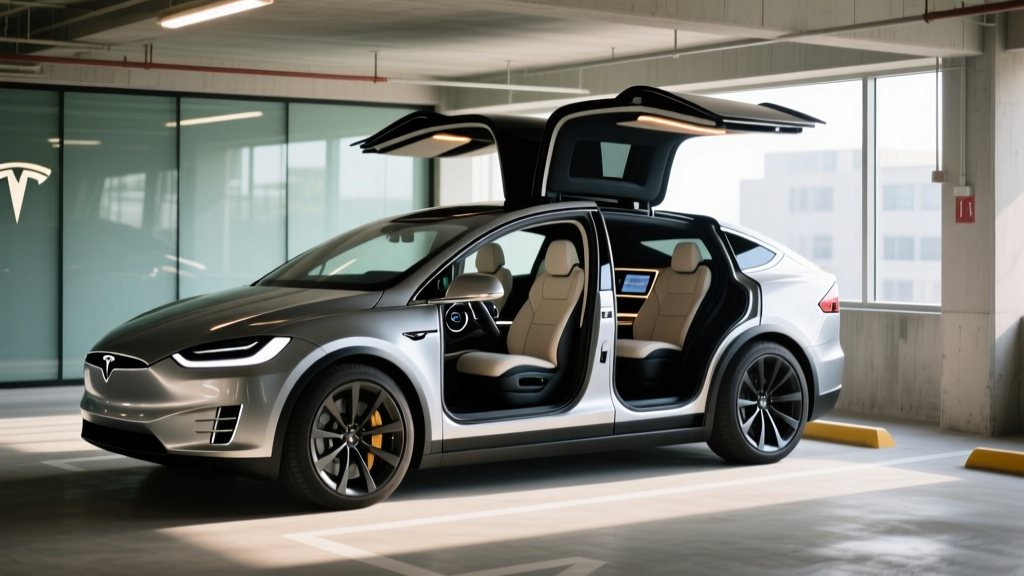
| Tesla Model X Plaid | 348 mi EPA / ~528 km WLTP | £110,000 | 7 | Supercharger network, performance |
| Lotus Eletre R | ~304 mi WLTP | £105,000 | 5 | British-built, handling |
| Mercedes EQS SUV 450+ | ~410 mi WLTP | £108,000 | 7 | Luxury, range efficiency |
The Rivian's primary advantages are its genuine off-road capability (no competitor matches its ground clearance and approach/departure angles), the R1T's unique pickup format (the only electric pickup available in this segment), and the R1S's combination of seven seats with over 400 miles of EPA range. Its disadvantages for UK buyers are significant: no confirmed UK availability, no right-hand-drive model, no UK service network, and the NACS charging connector incompatibility.
Pros
- Class-leading EPA range (410–420 mi Max Pack)
- Genuine off-road capability with air suspension
- Seven-seat R1S is rare in the EV SUV market
- Quad-Motor performance (0–60 in 3.0 sec) with torque vectoring
- Over-the-air updates continuously add features
- V2L capability for camping and emergency power
- Strong 8-year / 175,000-mile battery warranty
Cons
- No confirmed UK launch date or right-hand-drive model
- No UK service network or warranty coverage
- NACS connector requires adapter for UK CCS2 chargers
- Large physical size challenges UK parking and narrow roads
- Expensive — most trims exceed $80k US MSRP cap (no tax credit)
- Max Pack charging takes ~36 min (10–80%) — slower than Hyundai/Kia E-GMP
- Third-row space in R1S is tight for adults
Who Should Consider the Rivian R1S or R1T?
The Rivian R1S is best suited for active families who need seven seats, serious cargo capacity, and genuine off-road ability — think ski trips to the Alps, towing a horse trailer, or weekend expeditions to the Scottish Highlands. If you can charge at home and most of your driving is within a 200-mile radius, the Standard Pack is more practical and affordable.
The R1T pickup fills a niche that simply doesn't exist in the UK market: an electric pickup with car-like refinement and serious utility. However, the UK's historical lack of pickup-truck culture (aside from commercial use) and the R1T's large dimensions make it a challenging proposition for British roads.
For UK buyers specifically, the honest recommendation is to wait for Rivian's official UK entry rather than attempt a grey-market import. The warranty, service, charging connector, and right-hand-drive issues make importing impractical for all but the most determined enthusiasts. In the meantime, the BMW iX, Tesla Model X, and Mercedes EQS SUV are strong alternatives available today with full UK support.
Frequently Asked Questions
When will Rivian officially sell cars in the UK?
Rivian has confirmed UK and European expansion is planned, but no official launch date has been announced as of mid-2026. Industry estimates suggest 2027 at the earliest, pending right-hand-drive development and UK homologation.
Can I import a US Rivian to the UK?
Technically yes, but it is not recommended. You will face left-hand-drive challenges, no UK warranty coverage, no local service support, NACS-to-CCS2 charging adapter requirements, and full 20% VAT plus import duty (10% for vehicles from non-FTA countries). Total landed cost would significantly exceed US MSRP.
Does the Rivian R1S qualify for any UK EV incentives?
The UK Plug-in Car Grant was discontinued in June 2022. However, company car buyers benefit from extremely low Benefit-in-Kind (BiK) tax rates for zero-emission vehicles (2% in 2024–25, rising to 5% by 2027–28). At the R1S's estimated price, the BiK tax savings for a 40% taxpayer could amount to £8,000–£12,000 per year versus a comparable ICE vehicle.
What is the real-world range of the Rivian R1S in cold weather?
The R1S Max Pack is EPA-rated at 410 miles. In real-world motorway driving at 70 mph, expect 330–360 miles in mild conditions. In sub-freezing temperatures (below 0°C), that drops to approximately 250–290 miles — a 20–30% reduction typical of NMC battery chemistry in cold weather. The heat pump helps but cannot eliminate the loss.
How does Rivian's charging speed compare to competitors?
Rivian's peak 220 kW DC fast charge is respectable but not class-leading. The Hyundai Ioniq 5 and Kia EV6 (E-GMP platform) peak at 240 kW and charge 10–80% in approximately 18 minutes thanks to their 800V architecture. Rivian's 400V system and large battery packs mean longer absolute charging times: ~36 minutes for the Max Pack (10–80%). For the Standard Pack with LFP chemistry, expect ~28 minutes.
Will Rivian offer right-hand-drive vehicles for the UK?
Rivian has not confirmed right-hand-drive development, but entering the UK and Australian markets without RHD would severely limit sales. Industry analysts expect RHD variants to be part of the international launch plan, though this adds 12–18 months of engineering and testing time.
Is the Rivian battery LFP or NMC?
It depends on the pack. The Standard Pack (~95 kWh usable) uses LFP (lithium iron phosphate) chemistry, which offers better cycle life, less cold-weather degradation, and the ability to charge to 100% daily without accelerated wear. The Max Pack (~149 kWh usable) uses NMC (nickel manganese cobalt) chemistry, which provides higher energy density for maximum range but requires more conservative charging habits (daily charge to 80–90% recommended).