Quick Verdict: The Rivian Tri Motor in 2026
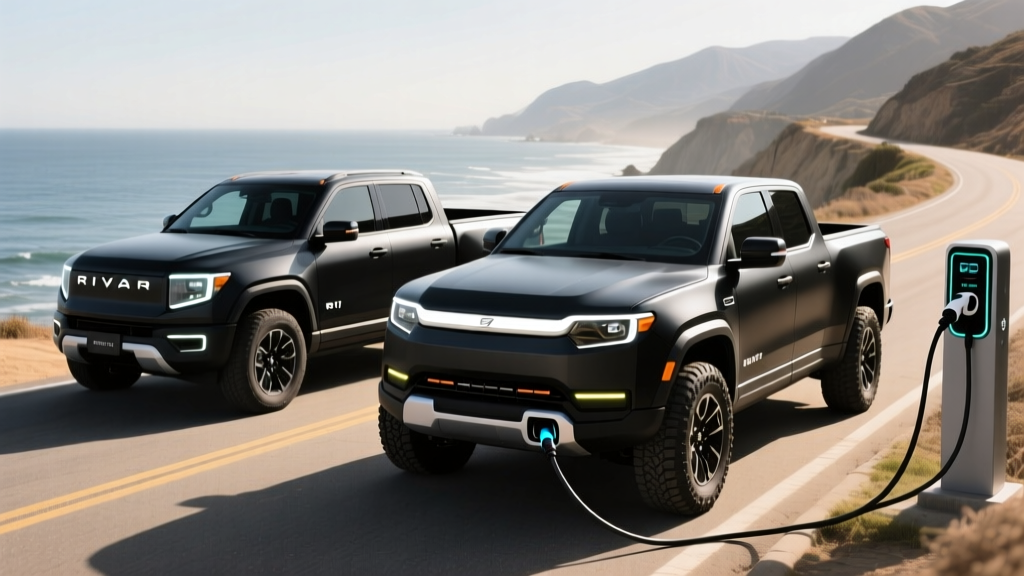
The Rivian Tri Motor powertrain — available across both the R1T pickup and R1S SUV — occupies a rare space in the EV market: it delivers supercar-rivaling acceleration in a body built for genuine off-road duty and family hauling. For the 2026 model year, Rivian's second-generation architecture pairs a 109.4 kWh usable battery pack (NMC chemistry) with three independent drive units to produce up to 850 horsepower and a manufacturer-estimated 0-60 mph time of roughly 3.0 seconds in Sport mode. But raw numbers only tell part of the story. This review breaks down the real-world range you can actually expect, the charging-curve behavior at DC fast chargers, the total cost after federal incentives, and whether the Tri Motor justifies its premium over dual-motor rivals like the Tesla Cybertruck Beast, Lucid Gravity, and the Ford F-150 Lightning Platinum.
| Spec | R1T Tri Motor | R1S Tri Motor |
|---|---|---|
| EPA Est. Range (Max Pack) | ~420 mi | ~390 mi |
| Battery (usable / chemistry) | 109.4 kWh / NMC | 109.4 kWh / NMC |
| Horsepower (Sport Mode) | 850 hp | 850 hp |
| 0–60 mph | ~3.0 sec | ~3.0 sec |
| Peak DC Fast Charge | ~220 kW | ~220 kW |
| 10–80% DC Time | ~27 min | ~27 min |
| Level 2 Home Charge | 11.5 kW (~25 mi/hr) | 11.5 kW (~25 mi/hr) |
| MPGe (combined) | ~70 MPGe | ~68 MPGe |
| Towing Capacity | 11,000 lb | 7,700 lb |
| Base MSRP (Tri Motor) | $99,900 | $104,900 |
| Battery Warranty | 8 yr / 175,000 mi | 8 yr / 175,000 mi |
Range and Efficiency: EPA Sticker vs. Real-World Miles
Real-World Expectation: ~330–360 mi highway at 70 mph; ~250–280 mi in sub-30°F cold; ~180–220 mi when towing a 5,000 lb trailer.
The headline 420-mile EPA figure applies to the R1T Tri Motor equipped with the Max battery pack on the most efficient wheel/tire configuration (21-inch all-seasons). The R1S Tri Motor, heavier and less aerodynamic, drops to roughly 390 miles on the same pack. These numbers are impressive on paper — but Rivian's second-gen trucks are large, heavy vehicles pushing substantial frontal area, and real-world efficiency reflects that.
On a 70 mph highway loop in moderate temperatures (60–75°F), expect to consume roughly 48–52 kWh per 100 miles, translating to about 330–360 usable miles before you need to find a charger. In winter conditions below freezing, the NMC pack loses roughly 20–30% of its effective range even with Rivian's heat pump and battery preconditioning active — putting realistic cold-weather range in the 250–280 mile band.
Towing is where the Tri Motor's range story changes most dramatically. Pulling a 5,000-pound camper or boat, energy consumption can exceed 80 kWh/100mi, cutting effective range to roughly 180–220 miles. For owners planning long towing trips, route planning around DC fast chargers becomes essential. Rivian's built-in route planner accounts for this, factoring in trailer weight and terrain.
The Tri Motor's efficiency sits around 70 MPGe combined (roughly 48 kWh/100mi) — competitive with the Tesla Cybertruck AWD but behind lighter SUVs like the Lucid Gravity (~95 MPGe). For a vehicle this capable, that trade-off is expected.
Charging Speed: DC Fast Charge, Level 2, and the Charge Curve
| Charge Level | Max Power | Rate (mi/hr added) | Notes |
|---|---|---|---|
| Level 1 (120V / 12A) | ~1.4 kW | ~3 mi/hr | Emergency/top-up only; ~150 hr for full pack |
| Level 2 (240V / 48A) | 11.5 kW | ~25 mi/hr | Full charge in ~10–11 hr; ideal for home |
| DC Fast Charge (CCS/NACS) | ~220 kW peak | Up to ~400 mi/hr at peak | 10–80% in ~27 min; tapers sharply above 80% |
Rivian's second-generation architecture supports peak DC fast-charge rates of approximately 220 kW. At a 350 kW Electrify America or Tesla Supercharger (via the NACS adapter Rivian now ships standard), the Tri Motor can add roughly 140 miles of range in 15 minutes under ideal conditions — meaning a preconditioned pack and a SoC below 20%.
The charge curve is where real-world nuance matters. The Tri Motor sustains its peak rate up to roughly 40–45% State of Charge, then steps down progressively. By 70% SoC, you're typically seeing 100–120 kW, and above 80%, the rate drops to under 50 kW as the battery management system protects the NMC cells. This is standard behavior for high-nickel NMC packs, but it means charging from 80–100% at a DC fast charger is painfully slow and expensive — plan to charge to 80% and drive on.
At home, the onboard 11.5 kW AC charger fills the 109.4 kWh Max Pack from empty in roughly 10–11 hours on a 48-amp Level 2 circuit. Most Tri Motor owners will install a 60-amp dedicated circuit (requiring a NEMA 14-60 or hardwired EVSE), which costs $800–$2,000 including electrician labor, depending on panel proximity. If your home's electrical panel is maxed at 100 amps, a panel upgrade to 200 amps can add $1,500–$3,000 to the project.
Performance: 850 Horsepower Meets Off-Road Capability
The Tri Motor powertrain uses one motor on the front axle and two on the rear, enabling torque vectoring across the rear wheels. In Sport mode, the system delivers 850 hp and a manufacturer-estimated 0–60 mph time of approximately 3.0 seconds — making the R1T Tri Motor one of the quickest production pickups ever built, rivaling the Tesla Cybertruck Beast and the GMC Hummer EV in straight-line thrust.
But the Tri Motor's real differentiator is how it deploys that power off-road. Rivian's quad-motor torque-vectoring philosophy (condensed to three motors here) allows precise wheel-by-wheel torque control. In Rock Crawl mode, the system can send torque to individual wheels with traction, effectively acting like a virtual locking differential. Ground clearance reaches 14.9 inches in Max mode thanks to the air suspension, and the R1T's wading depth is rated at over 3 feet.
The trade-off for this capability is weight. The R1T Tri Motor tips the scales at roughly 7,000 pounds, and you feel it during cornering and braking. The regenerative braking system is strong enough for one-pedal driving in most scenarios, but the friction brakes work hard when you need emergency stopping from highway speed. Rivian's brake feel has improved with the second-gen architecture, but it still lacks the progressive pedal response of lighter EVs.
Pricing, Tax Credits, and Total Cost of Ownership
| Trim / Configuration | MSRP | §30D Credit Eligible? | Effective Price (if eligible) |
|---|---|---|---|
| R1T Tri Motor (Dual-Motor not available; Tri Motor starts here) | $99,900 | No — exceeds $80,000 MSRP cap for trucks | $99,900 |
| R1S Tri Motor | $104,900 | No — exceeds $80,000 MSRP cap for SUVs | $104,900 |
| R1T Tri Motor Adventure + Max Pack | ~$112,000 | No | ~$112,000 |
Here is the critical pricing reality for the Rivian Tri Motor: it does not qualify for the federal §30D new EV tax credit. Under current IRS rules, the §30D credit caps eligible pickup trucks at an $80,000 MSRP and SUVs at $80,000. Every Tri Motor configuration exceeds that threshold, meaning buyers should budget the full MSRP without expecting the $7,500 federal credit.
Some buyers may still benefit from state-level incentives (California's CVRP, Colorado's state credit, and others), utility rebates for home charger installation, or the used EV credit (up to $4,000) if purchasing a pre-owned Tri Motor in future years. Always consult a tax professional for your specific situation.
On the operating-cost side, the Tri Motor is cheaper to fuel than a gas-powered F-150 or Tahoe. At the U.S. average electricity rate of ~$0.16/kWh, fully charging the 109.4 kWh Max Pack costs roughly $17.50 at home — equivalent to about $0.05 per mile. Compare that to a gas truck at 18 mpg and $3.50/gallon, which costs roughly $0.19 per mile. Over 15,000 annual miles, that's a fuel savings of roughly $2,100 per year. However, insurance premiums for the Tri Motor run 20–35% higher than the segment average, and tire replacement (especially on the 22-inch sport wheels) is costly.
Interior, Cargo, and Technology
The R1T Tri Motor seats five with generous rear legroom (~38 inches), and the bed offers a 4-foot-6-inch box with a lockable tonneau cover. The signature Gear Tunnel — a pass-through storage compartment between the cab and bed — holds 11.7 cubic feet and is ideal for skis, camping gear, or groceries. The R1S Tri Motor offers three rows of seating (up to seven passengers) and up to 104.7 cubic feet of cargo space behind the first row with the second and third rows folded.
Rivian's second-generation infotainment system runs on a 15.6-inch center display with an updated UI that's faster and more intuitive than first-gen software. Wireless Apple CarPlay and Android Auto are standard. The 18-speaker Rivian Elevation audio system (with Dolby Atmos) is one of the best factory audio setups in any vehicle.
Driver assistance comes via Rivian's Driver+ system, which includes adaptive cruise control, lane centering, and automatic lane changes on highways. This is an SAE Level 2 system — the driver must remain attentive, with hands on or near the wheel at all times. It is not a self-driving system. Rivian's Driver+ competes with Ford BlueCruise and GM Super Cruise in capability, though it lacks the hands-free highway mapping of those rivals as of 2026. The system works well in practice but requires active supervision.
Warranty, Reliability, and Ownership Considerations
Rivian covers the Tri Motor's battery and drive units with an 8-year / 175,000-mile warranty, with a guaranteed capacity retention threshold of 70% over that period. The bumper-to-bumper limited warranty runs 5 years / 60,000 miles — competitive with the EV segment. Rivian's mobile service fleet handles many repairs at your home or office, and the company has expanded its service center network significantly since 2023, though rural owners may still face longer wait times for body repair or major component replacement.
As an NMC pack, the Max battery is optimized for energy density and performance rather than the extreme cycle life of LFP chemistry. Based on industry degradation data for similar NMC packs, expect roughly 8–12% capacity loss over the first 100,000 miles, with the curve flattening thereafter. Rivian's thermal management system (liquid cooling with active preconditioning) helps mitigate degradation, and the large 109.4 kWh usable capacity provides a substantial buffer — even at 85% State of Health, you'd still have roughly 350 miles of EPA range.
Who the Rivian Tri Motor Is For — and Who Should Skip It
Pros
- 3.0-second 0–60 mph with genuine off-road capability (14.9" ground clearance)
- ~420-mile EPA range (R1T Max Pack) — among the longest of any pickup
- 11,000-lb towing capacity (R1T) with integrated trailer brake controller
- Gear Tunnel storage and camp kitchen accessory options
- Over-the-air updates continuously improve software and features
- Strong 8-yr/175,000-mi battery warranty
Cons
- No federal §30D tax credit — MSRP exceeds the $80K cap
- Peak DC charge rate of ~220 kW trails Hyundai/Kia's 350 kW E-GMP platform
- Range drops sharply when towing (180–220 mi realistic)
- Heavy weight (~7,000 lb) impacts tire wear and braking distances
- Driver+ is Level 2 only — no hands-free highway driving
- Service center access still limited in rural regions
The Rivian Tri Motor is best for: Adventure-oriented buyers who want a single vehicle that can tow a camper on Friday, hit a trail on Saturday, and commute on Monday — and who value acceleration and tech as much as utility. It's ideal for households with home charging access and the budget to absorb a six-figure purchase price without relying on federal credits.
Skip the Tri Motor if: You're primarily a highway commuter who doesn't need off-road capability or a truck bed — a dual-motor R1T or a sedan/SUV like the Lucid Gravity or Tesla Model X will deliver better efficiency and may qualify for incentives. If tax-credit eligibility is a dealbreaker, Rivian's own Dual Motor Standard Pack models (starting below $75,000) are worth considering, though they sacrifice the Tri Motor's performance edge.
Frequently Asked Questions
What is the real-world range of the Rivian Tri Motor?
The EPA rates the R1T Tri Motor Max Pack at approximately 420 miles. In real-world highway driving at 70 mph, expect 330–360 miles. In sub-freezing temperatures, plan for 250–280 miles. When towing, range drops to 180–220 miles depending on trailer weight and terrain.
How fast does the Rivian Tri Motor charge?
On a DC fast charger, the Tri Motor peaks at roughly 220 kW, achieving a 10–80% charge in about 27 minutes under ideal conditions. At home on a 48-amp Level 2 charger (11.5 kW), a full charge takes approximately 10–11 hours.
Does the Rivian Tri Motor qualify for the federal EV tax credit?
No. Under current IRS §30D rules, the new clean vehicle credit caps eligible trucks and SUVs at an $80,000 MSRP. All Tri Motor configurations exceed this limit. State incentives and utility rebates may still apply.
Is the Rivian Tri Motor worth it vs. the Tesla Cybertruck or F-150 Lightning?
The Tri Motor offers superior off-road capability and interior refinement compared to the Cybertruck, and far more acceleration than the F-150 Lightning. However, the Cybertruck Beast offers comparable performance at a lower starting price, and the Lightning is more affordable for buyers who don't need 850 hp. If you want a luxury adventure truck and can absorb the MSRP, the Rivian Tri Motor is the most well-rounded choice.
What battery chemistry does the Tri Motor use?
The Tri Motor uses an NMC (nickel manganese cobalt) lithium-ion pack with 109.4 kWh of usable capacity. NMC provides higher energy density than LFP, which is essential for achieving 420 miles of range in a heavy truck — but it requires more careful charge management (avoiding prolonged 100% SoC storage) to maximize longevity.
Can the Rivian Tri Motor use Tesla Superchargers?
Yes. Rivian began shipping vehicles with a NACS charge port in 2025, and adapters for existing CCS-port vehicles are available. The Tri Motor can access the Tesla Supercharger network (now the largest in North America) as well as Electrify America and other CCS networks.