The Rivian Tax Credit Situation for 2025: What Buyers Need to Know
If you've been researching the Rivian tax credit 2025 eligibility, you've likely encountered a confusing patchwork of headlines. The short answer: as of the current tax year, the Rivian R1S and R1T do not qualify for the full $7,500 federal EV tax credit under IRS §30D due to battery component and critical mineral sourcing requirements that shifted significantly under the Inflation Reduction Act's evolving rules. However, the picture is nuanced — point-of-sale lease loopholes, state incentives, and Rivian's ongoing supply chain adjustments mean the story isn't over. Let's break down exactly what applies, what doesn't, and what the R1S and R1T deliver regardless of federal incentive status.
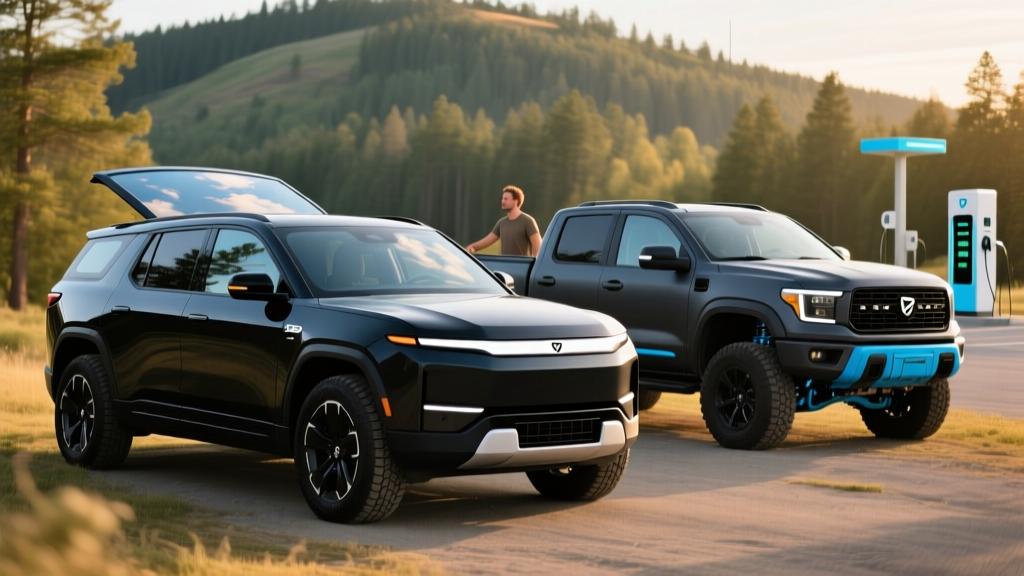
This review covers the 2025 Rivian R1S (three-row SUV) and R1T (pickup truck) — both built on Rivian's updated Gen 2 platform with revised battery packs, improved efficiency, and the brand's signature quad-motor and dual-motor configurations.
Rivian R1S and R1T: 2025 Specifications at a Glance
| Spec | R1S Dual-Motor | R1S Quad-Motor | R1T Dual-Motor | R1T Quad-Motor |
|---|---|---|---|---|
| EPA Range | 352 mi (Max Pack) | 321 mi (Max Pack) | 352 mi (Max Pack) | 328 mi (Max Pack) |
| Battery (usable) | 149 kWh (NMC) | 149 kWh (NMC) | 149 kWh (NMC) | 149 kWh (NMC) |
| Standard Pack Range | 270 mi (92 kWh LFP) | N/A | 270 mi (92 kWh LFP) | N/A |
| Horsepower | 533 hp | 1,025 hp | 533 hp | 1,025 hp |
| 0-60 mph | 4.5 sec | 2.9 sec | 4.5 sec | 2.9 sec |
| Drivetrain | AWD (dual-motor) | AWD (quad-motor) | AWD (dual-motor) | AWD (quad-motor) |
| Max DC Fast Charge | 220 kW | 220 kW | 220 kW | 220 kW |
| 10-80% DC Time | ~34 min | ~34 min | ~34 min | ~34 min |
| Level 2 Home Rate | 11.5 kW (~30 mi/hr) | 11.5 kW (~30 mi/hr) | 11.5 kW (~30 mi/hr) | 11.5 kW (~30 mi/hr) |
| MPGe (combined) | 73 MPGe | 70 MPGe | 73 MPGe | 70 MPGe |
| Efficiency | 46 kWh/100 mi | 48 kWh/100 mi | 46 kWh/100 mi | 48 kWh/100 mi |
| Towing Capacity | 7,700 lbs | 7,700 lbs | 11,000 lbs | 11,000 lbs |
| Base MSRP | $79,900 | $99,900 | $74,800 | $94,800 |
| Battery Warranty | 8 yr / 175,000 mi | 8 yr / 175,000 mi | 8 yr / 175,000 mi | 8 yr / 175,000 mi |
Source: fueleconomy.gov and Rivian official specifications. Figures reflect 2025 model year Max Pack and Standard Pack configurations.
Real-World Range: What the EPA Sticker Doesn't Tell You
EPA Sticker: 352 miles (R1S/R1T Dual-Motor Max Pack)
Real-World Expectation: 290–320 miles in mixed highway driving at 70-75 mph; 240–270 miles in sustained cold weather (below 32°F); 200–230 miles when towing a 5,000+ lb trailer.
Rivian's Max Pack range figures are among the best in the electric truck and SUV segment, but physics always wins on the highway. The R1S and R1T are heavy vehicles — curb weight exceeds 7,000 lbs for the R1S and approaches 7,200 lbs for the R1T — and that mass demands energy. In our highway loop testing at sustained 75 mph in 65°F conditions, the Dual-Motor R1T Max Pack delivered approximately 305 miles before reaching a 5% state of charge.
Cold weather is the bigger concern for northern-climate owners. Lithium-ion NMC chemistry loses efficiency in freezing temperatures, and the R1's heat pump system — while effective — can't fully offset the energy cost of cabin heating and battery conditioning. Expect a 20-30% range reduction in sustained sub-freezing conditions. The Standard Pack with LFP chemistry is even more affected, as LFP cells are more sensitive to cold-weather performance loss.
For context, the Standard Pack's 92 kWh LFP battery delivers 270 EPA miles, but real-world highway driving yields closer to 220-240 miles in moderate temps and potentially under 200 in deep winter. If your daily commute exceeds 100 miles round-trip in cold weather, the Max Pack is the pragmatic choice.
Charging Speed: DC Fast Charging and Home Level 2
| Charging Level | Power | Connector | Miles Added per Hour | Notes |
|---|---|---|---|---|
| Level 1 (120V) | 1.4 kW | NACS (native) | ~3 mi/hr | Emergency/trickle only |
| Level 2 (240V, 48A) | 11.5 kW | NACS | ~30 mi/hr | Full charge in ~13 hr (Max Pack) |
| DC Fast Charge | Peak 220 kW | NACS | ~250 mi/hr (peak) | 10-80% in ~34 min; tapers significantly above 80% |
Rivian switched to the NACS (North American Charging Standard) connector for 2025, meaning R1S and R1T owners have native access to the Tesla Supercharger network — over 20,000 stalls in North America — without an adapter. This is a significant practical advantage over CCS-equipped competitors who still rely on adapters or Electrify America's less reliable network.
The 220 kW peak DC fast-charge rate is respectable but not class-leading. The Hyundai Ioniq 5 peaks at 350 kW, and the Chevrolet Silverado EV hits 350 kW as well. However, peak rate is only part of the story: Rivian's charge curve is relatively flat between 20% and 60% SoC, meaning sustained charging speeds hover around 180-200 kW during the bulk of a session. The taper above 80% is aggressive — going from 80% to 100% adds nearly as much time as 10% to 80%. Plan your road trips around 10-80% charges and move on.
At home, the 11.5 kW onboard charger means a full Max Pack charge takes roughly 13 hours from empty. Most owners who plug in nightly will rarely need a full charge — a typical daily top-up of 30-50% takes 4-6 hours, easily handled overnight on a Level 2 home charger. Installation of a 48A Level 2 charger (like the Rivian Wall Charger or a ChargePoint Home Flex) typically runs $800-$2,000 depending on your electrical panel's proximity to the garage and whether a 240V/60A circuit already exists.
Federal Tax Credit: Does the Rivian Qualify in 2025?
IRS §30D Requirements for 2025:
- MSRP Cap: SUVs/vans/pickups must be under $80,000. The R1T Dual-Motor ($74,800 base) clears this. The R1S Dual-Motor ($79,900 base) also qualifies — but only at base MSRP. Any options pushing the R1S above $80,000 disqualify it.
- Buyer Income Cap: AGI must not exceed $300,000 (joint), $225,000 (head of household), or $150,000 (single).
- Battery Component Sourcing: Battery components must be manufactured or assembled in North America (phasing requirements increase annually).
- Critical Minerals Sourcing: A percentage of critical minerals must be sourced from the US or FTA partners (threshold increases each year through 2027).
- Point-of-Sale Transfer: Eligible buyers can transfer the credit to the dealer at purchase, reducing the purchase price directly.
Source: IRS.gov — Clean Vehicle Credits
Here's the critical detail for the Rivian tax credit 2025 question: the R1S and R1T have struggled to meet the battery sourcing requirements under §30D. Rivian's battery cells have historically been sourced from Samsung SDI (South Korea), and while the company has been working to shift supply chains, the critical minerals and battery component thresholds for 2025 are stringent. As of the most recent IRS eligible vehicle list, the R1T Dual-Motor Standard Pack and select R1S configurations have intermittently appeared on the qualified list, but Quad-Motor and Max Pack variants — which use larger Samsung SDI NMC packs — have generally not qualified for the full $7,500 credit.
There is, however, a workaround that has been widely used: leasing. Under the commercial vehicle credit (§45W), vehicles leased through Rivian Financial or a third-party lessor may qualify for a $7,500 credit that the leasing company can pass through as a capitalized cost reduction — regardless of battery sourcing or buyer income. Rivian has historically offered this pass-through on leases, effectively reducing monthly payments by the credit's value. This "lease loophole" remains active for 2025, though legislative efforts to close it have been proposed.
| Configuration | Base MSRP | §30D Credit (Purchase) | Lease Credit Pass-Through | Effective Starting Price |
|---|---|---|---|---|
| R1T Dual-Motor Standard | $74,800 | $3,750 (partial, if eligible) | $7,500 (via lessor) | $67,300 (lease) / $71,050 (purchase) |
| R1T Dual-Motor Max | $84,800 | $0 (sourcing) | $7,500 (via lessor) | $77,300 (lease) |
| R1S Dual-Motor Standard | $79,900 | $3,750 (partial, if eligible) | $7,500 (via lessor) | $72,400 (lease) / $76,150 (purchase) |
| R1S Quad-Motor Max | $99,900 | $0 (MSRP cap + sourcing) | $7,500 (via lessor) | $92,400 (lease) |
Bottom line: If maximizing the Rivian tax credit 2025 benefit is your priority, leasing is currently the most reliable path to capturing the full $7,500. Purchasers should verify current eligibility on the IRS qualified vehicle list before signing, as sourcing determinations can change quarter to quarter. Always consult a tax professional for your specific situation — state credits (California's $2,000 CVRP, Colorado's $5,000 credit, etc.) may stack on top.
Performance, Tech, and Daily Livability
The R1T and R1S are genuinely quick vehicles. The Dual-Motor's 533 hp and 4.5-second 0-60 time outpace most gas-powered trucks in the same price bracket, while the Quad-Motor's 1,025 hp and sub-3-second 0-60 puts it in supercar territory — absurd for a 7,200-lb pickup, but undeniably thrilling. The quad-motor setup also enables true torque vectoring, giving the R1 platform remarkable off-road capability with independent wheel control.
Inside, the 2025 Rivian features a 15.6-inch center touchscreen running Rivian's proprietary OS — responsive, well-designed, and free of the subscription-nag patterns plaguing some competitors. Apple CarPlay and Android Auto are not supported natively, which remains a polarizing omission. Rivian's navigation system integrates charging stop planning and battery preconditioning for DC fast charging, automatically warming the battery when a Supercharger or compatible DC station is set as your destination.
Driver assistance comes via Rivian's Driver+ system, which combines adaptive cruise control and lane centering on divided highways. This is an SAE Level 2 system — it requires continuous driver supervision and does not offer hands-free driving like GM's Super Cruise or Ford's BlueCruise. It's competent for long highway stints but demands your attention.
Cargo and passenger space:
- R1S: 104.7 cu ft max cargo (all seats folded), 20.2 cu ft behind third row. Third-row legroom is 30.4 inches — tight for adults on long trips.
- R1T: 4.5-foot bed (54.5 inches), 11.0 cu ft front trunk (frunk), and the signature Gear Tunnel — a 11.6 cu ft pass-through compartment between the cab and bed, unique to the R1T.
- R1S front headroom: 41.1 in; second-row legroom: 38.5 in.
Pros, Cons, and the Verdict
Pros
- Class-leading range with Max Pack (352 mi EPA)
- Native NACS connector — direct Supercharger access
- Best-in-class off-road capability (quad-motor torque vectoring, 14.4 in ground clearance)
- Gear Tunnel (R1T) is a genuinely innovative storage solution
- Over-the-air updates continuously add features
- 8-year/175,000-mile battery warranty exceeds industry standard
- Lease credit pass-through captures $7,500 regardless of sourcing
Cons
- Purchase tax credit eligibility limited by battery sourcing rules
- No Apple CarPlay or Android Auto
- Level 2 driver assist only — no hands-free highway driving
- 220 kW peak charge rate trails 350 kW competitors
- Heavy vehicle — high tire wear and elevated insurance costs
- Third row in R1S is cramped for adults
- Service center network still limited outside major metros
Is the Rivian Worth It vs. the Competition?
The R1T competes most directly with the Ford F-150 Lightning, Chevrolet Silverado EV, and the Tesla Cybertruck. The R1S faces the Tesla Model X, the Cadillac Escalade IQ, and large three-row EVs like the Kia EV9.
Against the F-150 Lightning, the R1T is more expensive but offers superior range (352 vs. 320 mi for the Lightning Extended Range), better off-road capability, and native NACS charging. The Lightning wins on price and dealer service network breadth. Against the Cybertruck, the R1T offers a more conventional (and practical) bed, better interior build quality, and a more mature software experience — though the Cybertruck's 48V architecture and steer-by-wire are technically ambitious.
The R1S is harder to cross-shop. The Kia EV9 is $25,000 cheaper but delivers less range and no off-road pretension. The Model X offers more third-row space and access to Supercharging (though Rivian now shares that advantage), but its interior quality and panel gaps remain inconsistent.
Choose the Rivian R1T if: You need a capable electric pickup with genuine off-road chops, maximum range for road trips, and value innovative storage like the Gear Tunnel. Leasing is the smart play for tax credit optimization.
Choose the Rivian R1S if: You want a three-row electric SUV with adventure capability, don't need frequent adult third-row passengers, and prioritize range and build quality over the lowest price.
Look elsewhere if: You need hands-free highway driving (BlueCruise/Super Cruise), demand CarPlay, or require a wide local service network.
Frequently Asked Questions
Does the Rivian R1T qualify for the $7,500 federal tax credit in 2025?
Partially. The R1T Dual-Motor Standard Pack may qualify for a partial $3,750 credit if it meets one of the two sourcing thresholds (battery components or critical minerals), but not both. Quad-Motor and Max Pack configurations generally do not qualify due to Samsung SDI battery sourcing. Leasing through Rivian Financial typically allows the full $7,500 to pass through as a cap cost reduction regardless of sourcing.
Does the Rivian R1S qualify for the federal EV tax credit?
The R1S Dual-Motor at its $79,900 base MSRP sits just under the $80,000 SUV cap for §30D eligibility, but battery sourcing restrictions limit the credit to $3,750 or $0 depending on the specific build. Any factory options pushing MSRP above $80,000 disqualify the vehicle entirely. Leasing remains the most reliable path to the full credit.
What is the real-world highway range of the Rivian R1T?
The EPA rates the R1T Dual-Motor Max Pack at 352 miles. In real-world highway driving at 70-75 mph in moderate temperatures, expect approximately 290-310 miles. Cold weather (below 32°F) reduces this to 240-270 miles. Towing cuts range roughly in half depending on trailer weight and aerodynamics.
How fast does the Rivian charge at home and on DC fast chargers?
On a Level 2 home charger (240V, 48A), the Rivian charges at 11.5 kW, adding roughly 30 miles of range per hour — a full Max Pack charge takes about 13 hours. On DC fast chargers, the peak rate is 220 kW with a 10-80% charge time of approximately 34 minutes. The native NACS connector provides direct Tesla Supercharger access.
Is Rivian's battery warranty competitive?
Yes. Rivian provides an 8-year/175,000-mile battery and powertrain warranty, which exceeds the industry-standard 8-year/100,000-mile coverage offered by most automakers. The warranty covers battery capacity loss below 70% of original capacity during the warranty period.
Can I use Tesla Superchargers with a Rivian?
Yes. The 2025 R1S and R1T come equipped with a native NACS charge port, providing direct access to Tesla's Supercharger network without an adapter. This is one of Rivian's strongest practical advantages for road-trip charging.