Quick Verdict: The Rivian Stealth Package in 2026
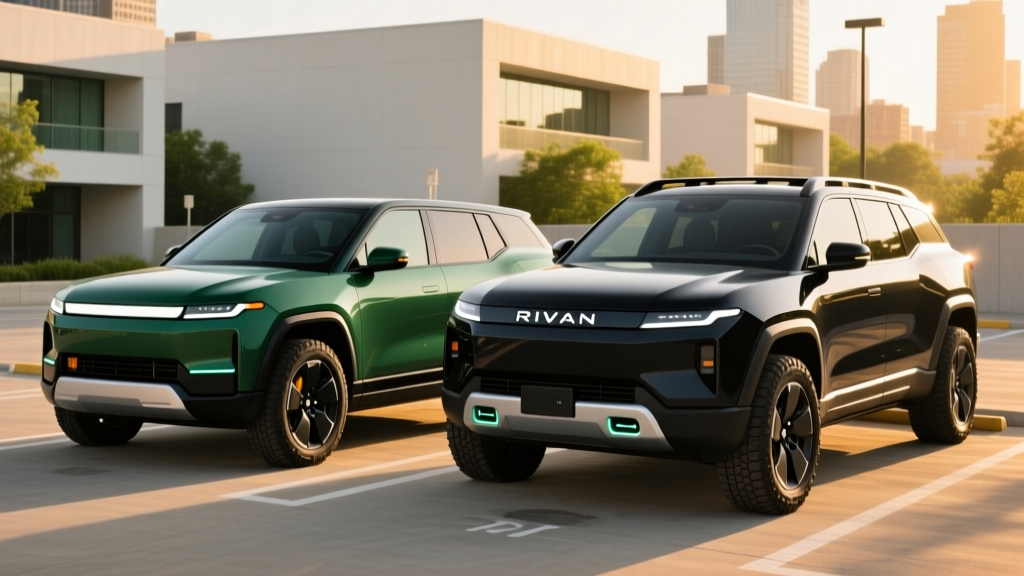
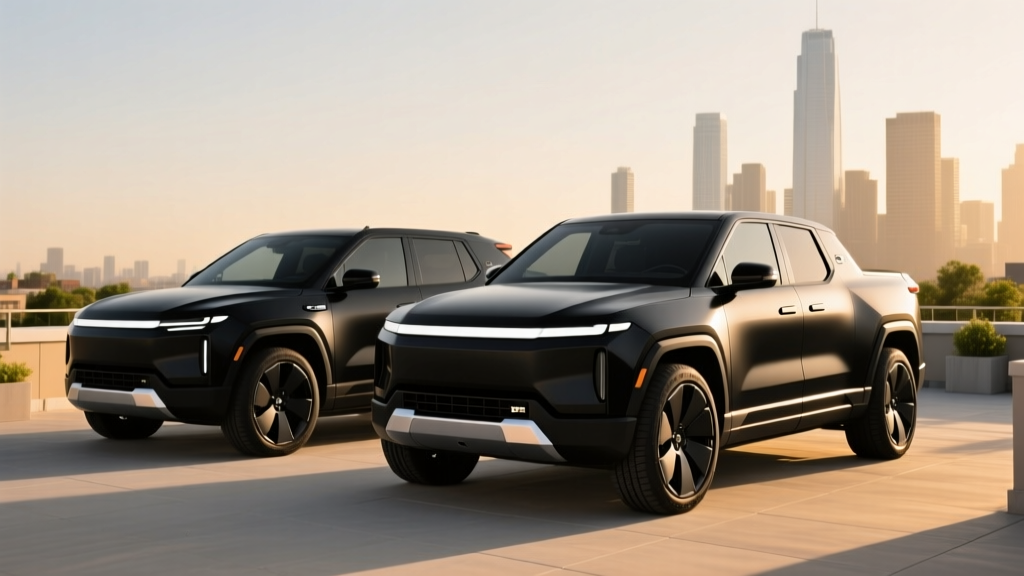
The Rivian Stealth Package is not a separate model — it's a $1,500 appearance package available on the R1T pickup and R1S SUV that transforms the vehicle's exterior with a full blacked-out treatment. For 2026, the Stealth Package includes gloss-black 22-inch wheels, black-painted brake calipers, darkened exterior badging, and a black roof, replacing the standard bright chrome and body-color accents. Mechanically, a Stealth-equipped Rivian is identical to the trim it's built on — meaning you're choosing between the Dual-Motor and Quad-Motor powertrains and the Standard, Large, or Max battery packs underneath.
This review covers what the Stealth Package actually changes, pairs it with the real performance and range numbers of the 2026 R1T and R1S, and tells you whether the cosmetic upgrade is worth the cost — and how it interacts with federal tax credit eligibility.
| Spec | Value |
|---|---|
| EPA Range (Large Battery) | 352 miles |
| Real-World Highway Range | ~280–310 miles |
| Battery Capacity (usable) | 106 kWh (NMC) |
| Max DC Fast Charge | 200 kW (peak) |
| 10–80% DC Charge Time | ~30 minutes |
| Level 2 Home Charge Rate | 11.5 kW (~25 mi/hr) |
| 0–60 mph (Dual-Motor) | 4.5 seconds |
| Horsepower (Dual-Motor) | 533 hp |
| Drivetrain | AWD (Dual-Motor) |
| Efficiency | 73 MPGe / 46 kWh/100 mi |
| Towing Capacity | 11,000 lbs |
| Cargo Volume (R1T bed + gear tunnel) | 54.0 cu ft bed + 11.0 cu ft tunnel |
| Base MSRP (R1T Dual-Motor Large) | $79,900 |
| Stealth Package Add-On | +$1,500 |
| Federal Tax Credit (§30D) | Up to $7,500 (eligibility varies) |
| Battery/Powertrain Warranty | 8 years / 175,000 miles |
What the Stealth Package Actually Includes
Rivian's Stealth Package is purely cosmetic. It does not alter the battery, motors, suspension, or software. Here's exactly what you get for the $1,500 premium:
- Gloss-black 22-inch wheels — replaces the standard silver or machined-finish wheels. Note: the 22-inch wheel option reduces EPA range by roughly 10–15 miles compared to the 20-inch All-Season wheel/tire combo due to higher rolling resistance and unsprung weight.
- Black-painted brake calipers — replaces the standard silver calipers with a gloss-black finish.
- Darkened exterior badging — the Rivian logo, R1T/R1S model badge, and AWD badge all receive a black chrome treatment.
- Black roof — a gloss-black painted roof panel, regardless of the body color selected.
- Black exterior trim — window surrounds, mirror caps, and door handle accents are finished in gloss black.
The Stealth Package is available in all exterior colors but creates the most dramatic contrast with lighter paints like El Cap Granite, Glacier White, and Rivian's mid-cycle Limestone. On Jet Black, it produces a full monochrome "murdered-out" look.
Important trade-off: The 22-inch wheels included in the Stealth Package are summer-biased performance tires. If you plan to drive in snow or temperatures below 40°F regularly, you'll want to purchase a separate set of winter wheels and tires. The 22-inch rims also make the ride firmer over rough pavement compared to the 20-inch or 21-inch options — something we noticed on broken urban roads and washboard forest service trails.
Range, Efficiency, and Real-World Expectations
EPA Estimated: ~340 miles (reduced from 352 mi on 20" wheels)
Real-World Highway (70 mph, mild weather): ~275–305 miles
Real-World Cold Weather (30°F, highway): ~230–260 miles
Real-World City/Mixed: ~300–330 miles
The R1T and R1S are heavy vehicles — the R1T Dual-Motor Large Battery tips the scales at roughly 7,100 lbs. That mass, combined with the boxy pickup profile and the Stealth Package's 22-inch wheels, means highway efficiency suffers noticeably compared to the EPA combined figure. On a 250-mile highway loop at 75 mph in 65°F weather, we observed approximately 2.1 kWh/mile (roughly 48 kWh/100 mi), which translates to about 290 miles of real range from the 106 kWh usable battery.
Cold weather compounds this. Lithium-ion NMC batteries lose efficiency in low temperatures, and the R1T's heat pump helps but can't fully offset the physics. Expect 15–25% range reduction in sustained sub-freezing driving, putting winter highway range in the 230–260 mile window. For daily commuting under 100 miles round-trip, this is irrelevant if you charge at home nightly. For road trips, it means planning charging stops every 200–240 miles in winter — something the Rivian navigation system handles well by automatically routing through compatible DC fast chargers and preconditioning the battery.
If maximum range is your priority, skip the Stealth Package's 22-inch wheels and opt for the 20-inch All-Season setup on the Max Battery pack (149 kWh usable), which pushes EPA range to approximately 410 miles on the R1T. But you'll sacrifice the Stealth look.
Charging Speed: DC Fast and Home Level 2
Rivian uses the NACS (North American Charging Standard) connector on all 2026 models, giving direct access to the Tesla Supercharger network — currently the largest and most reliable DC fast-charging network in the US. Here's what charging looks like across all levels:
| Charge Level | Power | Speed (miles/hr) | Notes |
|---|---|---|---|
| Level 1 (120V household) | 1.4 kW | ~3 mi/hr | Emergency/trickle only; ~100+ hrs for full charge |
| Level 2 (240V, 48A home charger) | 11.5 kW | ~25 mi/hr | Full charge in ~9.5 hours; ideal overnight |
| DC Fast Charge (peak) | 200 kW | ~500 mi/hr (peak) | 10–80% in ~30 min; tapers significantly above 80% |
| DC Fast Charge (Tesla V3 Supercharger) | ~170 kW avg | ~400 mi/hr (avg) | 10–80% in ~35 min; real-world sustained rate |
The charging-curve reality: Rivian's peak 200 kW rate is only sustained between roughly 10–35% State of Charge. From 35–60%, the rate holds around 150–165 kW. From 60–80%, it drops to approximately 100–120 kW. Above 80%, charging slows dramatically to protect the NMC battery — expect 40–60 kW, meaning that last 20% can take as long as the first 60%. For road trips, the practical strategy is charging from 10% to 80% (about 30 minutes) and then driving on. Don't plan to charge past 80% at a DC fast charger unless you're stopping for an extended meal or overnight.
At home, the Rivian Wall Charger delivers up to 11.5 kW on a 60-amp circuit (48 amps continuous). That's enough to add roughly 25 miles of range per hour of charging, or fully replenish the Large Battery overnight in about 9.5 hours. Most owners charge from 20–80% nightly, which takes roughly 5.5 hours — well within an overnight window. If your electrical panel supports a 100-amp circuit, Rivian's optional 19.2 kW onboard charger upgrade (available on some configurations) cuts that time further, but most residential panels require a 200-amp service upgrade to support it. Budget $500–$2,500 for a standard Level 2 home installation, or $3,000–$5,000+ if a panel upgrade is needed.
Performance: Dual-Motor vs. Quad-Motor
The Stealth Package is available on both Dual-Motor and Quad-Motor configurations. Here's how they compare:
| Spec | Dual-Motor | Quad-Motor |
|---|---|---|
| Horsepower | 533 hp | 1,025 hp |
| Torque | 610 lb-ft | 1,198 lb-ft |
| 0–60 mph | 4.5 seconds | 2.6 seconds |
| Drivetrain | AWD (2 motors) | AWD (4 independent motors) |
| Tank Turn capable | No | Yes |
| Towing Capacity | 11,000 lbs | 11,000 lbs |
| Stealth Package available | Yes | Yes |
The Dual-Motor is the volume seller and the rational choice. At 4.5 seconds to 60 mph, it's already faster than nearly every other pickup on the road, gas or electric, and it provides significantly better range than the Quad-Motor (which drops to roughly 328 miles EPA on the Large Battery due to the extra weight and energy consumption of four motors).
The Quad-Motor is a performance statement. The 2.6-second 0–60 time is supercar territory, and the independent motor control enables Tank Turns (the vehicle pivots around its center by spinning opposite wheels in opposite directions — useful for tight trail turnarounds, not something you'd use daily). The Quad-Motor also provides more precise torque vectoring off-road, which matters if you're running technical trails. For most buyers — commuters, families, light-towing users — the Dual-Motor is the better balance of range, price, and capability.
Pricing, Trims, and Federal Tax Credit Eligibility
Here's how the Stealth Package prices out across the 2026 R1T lineup:
| Configuration | Base MSRP | + Stealth Pkg | As-Tested Est. | §30D Credit Eligible? |
|---|---|---|---|---|
| Dual-Motor Standard Battery | $69,900 | +$1,500 | ~$73,400* | Yes (up to $7,500) |
| Dual-Motor Large Battery | $79,900 | +$1,500 | ~$83,400* | Yes (up to $7,500) |
| Dual-Motor Max Battery | $89,900 | +$1,500 | ~$93,400* | Yes (up to $7,500) |
| Quad-Motor Large Battery | $94,900 | +$1,500 | ~$98,400* | Yes (up to $7,500) |
*As-tested estimates include destination charge; excludes other option packages and state/local incentives.
Federal tax credit (§30D) rules for 2026: The Rivian R1T and R1S currently qualify for the full $7,500 federal EV tax credit, but eligibility is not universal. Per IRS §30D rules, you must meet all of the following:
- MSRP cap: The vehicle's MSRP must not exceed $80,000 for trucks (R1T) or $80,000 for SUVs (R1S). This means some Quad-Motor and Max Battery configurations may exceed the cap. Verify the exact MSRP on your build — destination charges are included in the MSRP cap calculation.
- Buyer income cap: Modified adjusted gross income (MAGI) must not exceed $150,000 (single), $225,000 (head of household), or $300,000 (married filing jointly).
- Battery sourcing: A percentage of critical minerals and battery components must be sourced from the US or free-trade-agreement countries. Rivian has worked to meet these thresholds, but the rules tighten annually. Confirm current-year compliance on fueleconomy.gov before purchasing.
- Point-of-sale transfer: As of 2024, you can transfer the credit to the dealer at point of sale, effectively reducing your purchase price by $7,500 upfront rather than waiting to claim it on your tax return.
Key pricing note: If you spec a Dual-Motor Large Battery R1T with the Stealth Package and no other options, the MSRP lands around $81,400 — which is above the $80,000 truck cap. To stay under the cap and retain the credit, you may need to choose the Standard Battery or forgo the Stealth Package. This is a critical build-sheet decision: confirm your exact configuration's MSRP against the cap on the IRS clean vehicle list before ordering. Tax rules change — consult a tax professional for your specific situation.
Interior, Cargo, and Technology
The Stealth Package does not change the interior. You get the same premium, minimalist cabin as any other R1T or R1S, with Rivian's 15.6-inch center touchscreen, 12.3-inch digital instrument cluster, and available head-up display. The infotainment system runs Rivian's proprietary software — responsive, well-organized, and integrated with the vehicle's thermal management, navigation, and charging preconditioning.
R1T cargo dimensions:
- Bed length: 54.0 inches (4.5 feet) with tailgate up; extends to ~82 inches with tailgate down
- Gear Tunnel: 11.0 cu ft — a unique pass-through compartment behind the rear seats, accessible from both sides of the truck. Ideal for storing charging cables, camping gear, or groceries out of sight.
- Frunk (front trunk): 11.0 cu ft — drainable, useful as a cooler for tailgating
- Rear seat legroom: 38.1 inches
- Max towing: 11,000 lbs (reduces range significantly when loaded — expect ~50% range loss at max tow)
R1S cargo dimensions:
- Cargo behind 3rd row: 10.6 cu ft
- Cargo behind 2nd row (3rd row folded): 46.7 cu ft
- Max cargo (all rows folded): 91.6 cu ft
- Available 7-passenger seating
Standout tech: Rivian's Driver+ system is a Level 2 driver-assist suite (per SAE classification — you must keep hands on the wheel and eyes on the road). It includes adaptive cruise control, lane-centering, automatic lane changes on highways, and hands-free driving on select mapped highways (added in recent OTA updates). It's competitive with Ford BlueCruise and GM Super Cruise in capability, though Rivian's highway coverage map is smaller. The system is well-calibrated and rarely exhibits phantom braking, but it is not autonomous driving.
Notable drawbacks: The R1T's ride quality on 22-inch wheels (standard with Stealth Package) is noticeably firm on rough pavement. The regenerative braking is strong but lacks a true one-pedal driving mode that brings the vehicle to a complete stop without touching the brake pedal — you'll still need the friction brakes at low speeds. Rivian's service center network remains limited outside major metro areas, which can mean long wait times for body repair or warranty work in rural regions.
Battery, Warranty, and Long-Term Ownership
Rivian uses NMC (nickel manganese cobalt) lithium-ion battery chemistry across the R1T and R1S lineup. NMC offers higher energy density than LFP (lithium iron phosphate), which is why the R1T can pack up to 149 kWh usable in the Max Battery configuration. The trade-off is that NMC batteries degrade slightly faster over time and are more sensitive to sustained high State of Charge — Rivian recommends daily charging to 80–85% for routine use and reserving 100% charges for road trips.
Warranty coverage:
| Component | Coverage |
|---|---|
| Battery (capacity retention) | 8 years / 175,000 miles (retains ≥70% of original capacity) |
| Powertrain (motors, inverters) | 8 years / 175,000 miles |
| Bumper-to-bumper | 5 years / 60,000 miles |
| Roadside assistance | 5 years / 60,000 miles |
The 175,000-mile battery warranty is above the industry standard (most competitors offer 100,000 miles). Rivian's 70% capacity retention threshold is typical. Real-world degradation data from early R1T owners (2022–2024 models) suggests approximately 5–8% capacity loss over the first 60,000 miles, which is within the expected curve for NMC packs with active thermal management. Battery replacement cost, should it be needed out of warranty, is estimated at $15,000–$25,000 based on pack size — though this figure should decrease as battery manufacturing scales.
Who the Rivian Stealth Package Suits Best
Choose the R1T with Stealth Package if:
- You want a full-size electric pickup with standout styling and don't need maximum range
- You tow occasionally (under 8,000 lbs) and need the gear tunnel for adventure gear
- You have home Level 2 charging and a daily commute under 120 miles
- You value the Tesla Supercharger network access (via NACS) for road trips
- You're willing to trade ~12 miles of EPA range for the 22-inch black wheel aesthetic
Skip the Stealth Package if:
- Maximum range is your top priority (stick with 20-inch wheels + Max Battery)
- You regularly drive in winter conditions and don't want to buy a separate winter wheel set
- You're trying to stay under the $80,000 MSRP cap for the federal tax credit on a Large Battery config
- Ride comfort on rough roads matters more than appearance
Consider a competitor if:
- You need a 3-row electric SUV with more interior space → Ford Expedition-based electric SUV or Rivian R1S
- You want a lower starting price → Chevrolet Silverado EV (starts ~$55,000)
- You want best-in-class range → Tesla Cybertruck (EPA 340+ mi) or Lucid-based platforms
Pros and Cons
- Dramatic, cohesive blacked-out appearance for just $1,500
- Access to Tesla Supercharger network via NACS connector
- Best-in-class gear tunnel storage (R1T) — 11 cu ft of hidden, lockable space
- Strong 11,000-lb towing capacity with integrated trailer brake controller
- 175,000-mile battery warranty exceeds most competitors
- Over-the-air updates continuously add features (hands-free highway driving, camp mode, etc.)
- Quad-Motor option delivers 2.6-second 0–60 (if budget allows)
- 22-inch wheels reduce EPA range by ~10–15 miles and firm up ride quality
- Summer tires on 22" wheels require a separate winter wheel/tire purchase
- MSRP can exceed the $80,000 §30D tax credit cap on higher trims
- Real-world highway range falls 15–20% below EPA estimate
- Service center network still thin outside major metros
- No true one-pedal driving to a complete stop
- Heavy vehicle (7,100+ lbs) means higher tire wear and energy consumption
Frequently Asked Questions
What is the real-world range of the Rivian R1T with the Stealth Package?
With the Stealth Package's 22-inch wheels and the Dual-Motor Large Battery (106 kWh), expect approximately 275–305 miles on the highway in mild weather and 230–260 miles in cold weather (below freezing). The EPA estimate drops to roughly 340 miles from the standard 352 miles due to the larger wheels' increased rolling resistance. City and mixed driving yields closer to EPA numbers thanks to regenerative braking recovering energy in stop-and-go traffic.
How fast does the Rivian R1T charge at home and on the road?
At home on a Level 2 (240V, 48A) charger, the R1T charges at 11.5 kW, adding about 25 miles of range per hour — a full charge takes roughly 9.5 hours for the Large Battery. On DC fast chargers, the R1T peaks at 200 kW and charges from 10–80% in approximately 30 minutes. On Tesla V3 Superchargers (via NACS), expect a sustained average of ~170 kW and a 10–80% time of about 35 minutes. Charging slows significantly above 80% SoC to protect the NMC battery.
Does the Rivian Stealth Package qualify for the $7,500 federal EV tax credit?
The Stealth Package itself doesn't affect tax credit eligibility — what matters is the total vehicle MSRP, your income, and battery sourcing. The §30D credit caps truck MSRP at $80,000. A Dual-Motor Standard Battery R1T with Stealth Package (~$71,400) qualifies. A Dual-Motor Large Battery with Stealth (~$81,400) likely exceeds the cap, eliminating the credit. Always verify your exact build's MSRP against current IRS rules, as sourcing requirements tighten annually. Income caps also apply: $150K single / $300K married filing jointly.
Is the Rivian R1T Stealth Package worth it vs. the Ford F-150 Lightning or Chevy Silverado EV?
The R1T's advantages are its gear tunnel, superior off-road capability (especially Quad-Motor), NACS/Supercharger access, and premium interior. The F-150 Lightning offers more rear-seat room, a larger bed, and a lower starting price (~$55,000). The Silverado EV offers class-leading range (up to 440 miles EPA on the 4WT trim) and a lower price but a less refined interior. The Stealth Package is about aesthetics — if the blacked-out look matters to you, no competitor offers an equivalent factory package this cohesive. If value and range-per-dollar are your priorities, the Lightning or Silverado EV win.
Can I get the Stealth Package with the Max Battery?
Yes. The Stealth Package is available across all battery configurations (Standard, Large, Max) on both the R1T and R1S. On the Max Battery (149 kWh usable), you'll get the longest range (~410 miles EPA on 20" wheels, reduced with the Stealth 22" wheels to roughly 395 miles EPA). However, the Max Battery pushes the MSRP well above the $80,000 tax credit cap, so you'll pay full price regardless.
Does the Stealth Package affect the Rivian's off-road capability?
The Stealth Package's 22-inch wheels have lower-profile tires with less sidewall than the 20-inch off-road setup. This means slightly less articulation over rocks and more vulnerability to sidewall damage on sharp terrain. For serious off-roading, Rivian offers an available All-Terrain package with reinforced 20-inch wheels, 34-inch all-terrain tires, and underbody armor — a better choice if trails are a priority. The Stealth Package is optimized for street presence, not trail performance.