Does Rivian Offer Detailing at the Service Center?
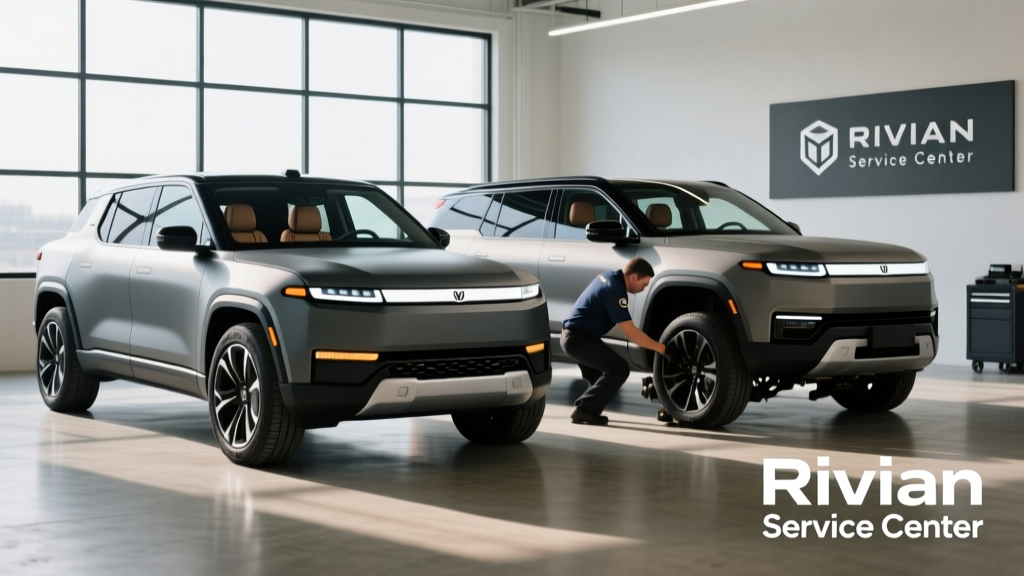
Rivian does not include complimentary cosmetic detailing as a standard service-center offering. Rivian Service Centers and mobile service vans focus on mechanical, electrical, and software repairs under warranty or paid service plans. If your R1S or R1T needs paint correction, interior deep-cleaning, or ceramic coating, Rivian will typically refer you to a third-party detailer or handle only the specific damage claim (e.g., a warranty-covered panel replacement that includes paint).
That said, some owners have reported that after body-shop or paint-warranty work, vehicles return washed and lightly cleaned — but this is incidental, not a dedicated detailing package. Rivian's service portal lists collision repair, software diagnostics, battery health checks, suspension work, and recall fulfillment. Cosmetic detailing is not on that menu.
For owners who want a factory-fresh finish, the practical path is a reputable local detailer familiar with aluminum-bodied EVs and matte or satin wrap finishes (popular on R1T Adventure builds). Expect to pay $250–$600 for a full exterior detail and $150–$350 for interior, depending on your market.
Rivian R1S and R1T: Quick Spec Overview
Whether you're evaluating the R1S three-row SUV or the R1T pickup, the 2025–2026 Gen 2 platform shares core architecture. Here's what the numbers look like across the most popular configurations.
| Spec | R1S Dual-Motor (Standard) | R1S Tri-Motor | R1T Dual-Motor (Standard) | R1T Tri-Motor |
|---|---|---|---|---|
| EPA Range | ~270 mi | ~420 mi (Max Pack) | ~270 mi | ~420 mi (Max Pack) |
| Battery (usable) | ~92 kWh (NMC) | ~141 kWh (NMC) | ~92 kWh (NMC) | ~141 kWh (NMC) |
| Horsepower | 533 hp | 850 hp | 533 hp | 850 hp |
| 0–60 mph | 4.5 sec | ~2.9 sec | 4.5 sec | ~2.9 sec |
| Drivetrain | AWD (dual-motor) | AWD (tri-motor) | AWD (dual-motor) | AWD (tri-motor) |
| Max DC Fast Charge | ~200 kW | ~220 kW | ~200 kW | ~220 kW |
| 10–80% DC Time | ~28 min | ~30 min | ~28 min | ~30 min |
| Level 2 Home Rate | 11.5 kW (~25 mi/hr) | 11.5 kW (~25 mi/hr) | 11.5 kW (~25 mi/hr) | 11.5 kW (~25 mi/hr) |
| Towing Capacity | 7,700 lb | 7,700 lb | 11,000 lb | 11,000 lb |
| Base MSRP | ~$79,900 | ~$104,900 | ~$74,800 | ~$99,900 |
Sources: fueleconomy.gov, Rivian official specifications. Figures reflect current dual-motor and tri-motor configurations; LFP Standard pack trims may differ.
Real-World Range: What to Actually Expect
EPA sticker: 270 mi (Standard) / 352 mi (Large) / 420 mi (Max)
Real-world highway (70–80 mph, mild weather): expect ~230–250 mi (Standard), ~300–320 mi (Large), ~360–380 mi (Max)
Cold weather (below 30°F, highway): subtract 20–30%, yielding ~170–200 mi on Standard pack
Towing (R1T, 5,000+ lb trailer): expect range to drop 40–50%
Rivian's boxy silhouette, aggressive all-terrain tire options, and 6,000+ lb curb weight all work against highway efficiency. The EPA numbers assume mixed driving; sustained 80-mph interstate travel in a tri-motor Max Pack will realistically net around 360 miles — still impressive, but not the sticker figure.
Cold weather is the bigger variable. Rivian's heat pump (standard on Gen 2) helps cabin efficiency, but battery chemistry still loses throughput in freezing temps. Preconditioning the battery before DC fast charging is essential — without it, your initial charge rate may be limited to under 50 kW until the pack warms.
Charging Speed: DC Fast, Level 2, and the Rivian Adventure Network
Charging infrastructure is where Rivian owners get a unique advantage: access to the Rivian Adventure Network (Rivian's proprietary DC fast-charger network at trailheads, parks, and key road-trip corridors) plus full Tesla Supercharger compatibility via the built-in NACS port on 2025+ models or an adapter for earlier CCS-equipped vehicles.
| Charging Level | Power / Connector | Speed (Miles of Range per Hour) | Notes |
|---|---|---|---|
| Level 1 (120V) | ~1.4 kW / NEMA 5-15 | ~3 mi/hr | Emergency/trickle only |
| Level 2 (240V home) | 11.5 kW / NACS or J1772 | ~25 mi/hr | Full charge overnight (~10–12 hrs for Max Pack) |
| DC Fast (CCS/NACS) | Up to ~220 kW peak | ~140 mi in 15 min (ideal) | 10–80% in ~28–30 min; tapers sharply above 80% |
| Rivian Adventure Network | Up to 200+ kW | Similar to above | Located at outdoor destinations; reliable but sparse |
The charge curve matters: Rivian's NMC packs sustain strong rates from 10–60% SoC, then taper. Don't plan road-trip stops around "peak kW" — plan around 10–80% time, which is roughly 28 minutes on a Dual-Motor Standard and 30 minutes on a Max Pack (the larger battery accepts more total energy but at a similar peak rate).
For home charging, a 48-amp Level 2 wall connector on a 60-amp circuit delivers the full 11.5 kW. Expect to pay $800–$2,000 for a professional home install (charger + electrician + permit), depending on whether your panel needs an upgrade.
Pricing, Trims, and Federal Tax Credit Eligibility
Rivian's pricing places the R1S and R1T in the premium EV segment. Here's how the lineup breaks down and how the federal tax credit factors in.
| Model / Config | Base MSRP | As-Tested Typical | §30D Credit Eligible? |
|---|---|---|---|
| R1T Dual-Motor Standard | ~$74,800 | $82,000–$90,000 | Yes — if buyer income < $150K single / $300K joint; MSRP under $80K cap for trucks |
| R1T Tri-Motor Max | ~$99,900 | $108,000+ | No — exceeds $80,000 MSRP cap for trucks |
| R1S Dual-Motor Standard | ~$79,900 | $88,000–$96,000 | Borderline — SUV cap is $80,000; options can push over |
| R1S Tri-Motor Max | ~$104,900 | $115,000+ | No — exceeds $80,000 SUV MSRP cap |
The IRS §30D credit has strict eligibility gates: buyer modified adjusted gross income must fall below $150,000 (single) or $300,000 (joint); the vehicle MSRP must be under $80,000 for trucks/vans or $80,000 for SUVs (Rivian classifies the R1S as an SUV); and critical-mineral and battery-component sourcing requirements must be met. Rivian's US-assembled vehicles with qualifying battery sourcing have historically cleared the sourcing threshold, but always verify current-year eligibility at the point of sale, as rules shift annually.
Practically: the Dual-Motor Standard R1T is the most credit-friendly configuration. The moment you add the Large or Max battery, paint upgrades, and the Camp Kitchen or Gear Tunnel, you're likely over the MSRP cap. The point-of-sale transfer option lets you hand the credit directly to the dealer as a down-payment reduction.
Efficiency, Cargo Space, and Daily Practicality
Efficiency for the Dual-Motor Standard sits around 73–76 MPGe combined (per EPA data), translating to roughly 44–46 kWh per 100 miles. That's thirstier than a Tesla Model Y (~28 kWh/100mi) but expected for a 6,500-lb adventure vehicle with all-terrain tires.
R1S (three-row SUV): ~105 cu ft total cargo (all seats folded), ~43 cu ft behind the third row. Third-row legroom is tight at ~32 inches — best for kids. Front trunk (frunk) adds ~11 cu ft of lockable, drainable storage.
R1T (pickup): ~54-inch bed with the innovative Gear Tunnel (lockable, pass-through storage behind the cab, ~11 cu ft). The frunk is enormous at ~11 cu ft and drainable — perfect for ice and drinks. Total enclosed lockable storage exceeds most midsize trucks when you count the tunnel and frunk.
Standout tech includes Rivian's Driver+ system (Level 2 hands-on highway assist with lane-centering and adaptive cruise), a 15.6-inch center display, native route planning with charging stops, over-the-air updates that have materially improved the vehicle since launch, and the Camp Kitchen option for R1T (slide-out kitchen in the Gear Tunnel).
Warranty Coverage and Long-Term Ownership
Rivian provides an 8-year / 175,000-mile battery and drive unit warranty — one of the more generous mileage thresholds in the industry. The bumper-to-bumper limited warranty covers 5 years / 60,000 miles.
The battery warranty guarantees that the pack will retain at least 70% of its original capacity over the coverage period. Rivian uses NMC chemistry across its Large and Max packs; NMC offers higher energy density (more range per pound) but is more sensitive to sustained 100% SoC storage. Daily charging to 80–90% and avoiding prolonged full-charge states will maximize longevity.
For service, Rivian operates a growing network of Service Centers plus a robust mobile service fleet that handles ~70% of routine issues at your home or office. Major repairs (suspension, battery module replacement) require a Service Center visit. Wait times in major metros are generally 1–3 weeks; rural owners may face longer scheduling windows.
Pros, Cons, and Who Should Buy a Rivian
- Class-leading adventure capability (off-road modes, wading, air suspension)
- Excellent build quality and distinctive design
- 420-mile Max Pack range eliminates most road-trip anxiety
- NACS native + Supercharger access (2025+)
- OTA updates continuously improve the vehicle
- Generous 8-yr/175,000-mi battery warranty
- R1T Gear Tunnel and frunk are genuinely innovative
- High starting price; most trims exceed §30D MSRP cap
- Efficiency trails car-based EVs (44+ kWh/100mi)
- Service center availability still limited in many states
- No complimentary detailing or cosmetic care at service visits
- Third-row R1S space is tight for adults
- Towing cuts range by 40–50%
- Driver+ is competent but less polished than GM Super Cruise on mapped highways
• Outdoor families who ski, camp, or tow boats and want three rows (R1S)
• Adventure-oriented truck buyers who need a daily-drivable pickup with real off-road chops (R1T)
• High-mileage road trippers who'll spec the Max Pack and use Superchargers
• Not ideal for budget-focused commuters, urban apartment dwellers without home charging, or buyers who want a self-driving experience (Driver+ is Level 2 — you must stay engaged)
Frequently Asked Questions
Does Rivian offer detailing at the service center?
No. Rivian Service Centers handle mechanical, electrical, software, and collision-related work. Cosmetic detailing (paint correction, ceramic coating, interior deep-clean) is not offered. Vehicles may come back washed after body work, but this is not a detailing service.
What is the real-world range of the Rivian R1S and R1T?
Expect ~230–250 highway miles on the Standard pack, ~300–320 on the Large, and ~360–380 on the Max — all below EPA stickers due to the vehicle's aerodynamics and weight. Cold weather (below 30°F) can reduce these figures by an additional 20–30%.
How fast does a Rivian charge at home and on the road?
At home on Level 2 (240V, 48A), you'll add ~25 miles of range per hour — a full overnight charge. On DC fast chargers, the Dual-Motor peaks around 200 kW and reaches 10–80% in ~28 minutes. The Tri-Motor Max Pack peaks near 220 kW with a similar 10–80% time (~30 min) due to the larger battery.
Does the Rivian R1T or R1S qualify for the $7,500 federal EV tax credit?
The Dual-Motor Standard R1T (MSRP under $80K) generally qualifies, provided your income is under $150K single / $300K joint and battery sourcing requirements are met. The R1S Dual-Motor Standard is borderline at ~$79,900 — options can push it over the $80K SUV cap. Tri-Motor and Max Pack configurations exceed the cap and do not qualify. Always verify at irs.gov before purchase.
Is a Rivian worth buying vs. a Tesla Model X, Ford F-150 Lightning, or Chevy Silverado EV?
Rivian wins on build quality, off-road capability, and adventure-specific design (Gear Tunnel, air suspension, wading). The F-150 Lightning is cheaper and more practical for traditional truck buyers. The Model X offers more range efficiency and Supercharger maturity but less ruggedness. The Silverado EV targets fleet/commercial use. If outdoor lifestyle is central to your vehicle use, Rivian's value proposition is strong despite the premium price.
What are the biggest ownership surprises?
Tire wear is faster than expected (heavy vehicle + instant torque eats all-terrain tires in 25,000–35,000 miles). Insurance premiums run 15–25% higher than comparable ICE trucks. And while mobile service is excellent for software and minor hardware issues, collision repair wait times can stretch 4–8 weeks in some markets due to parts availability.