Rivian Scout at a Glance: Quick Verdict
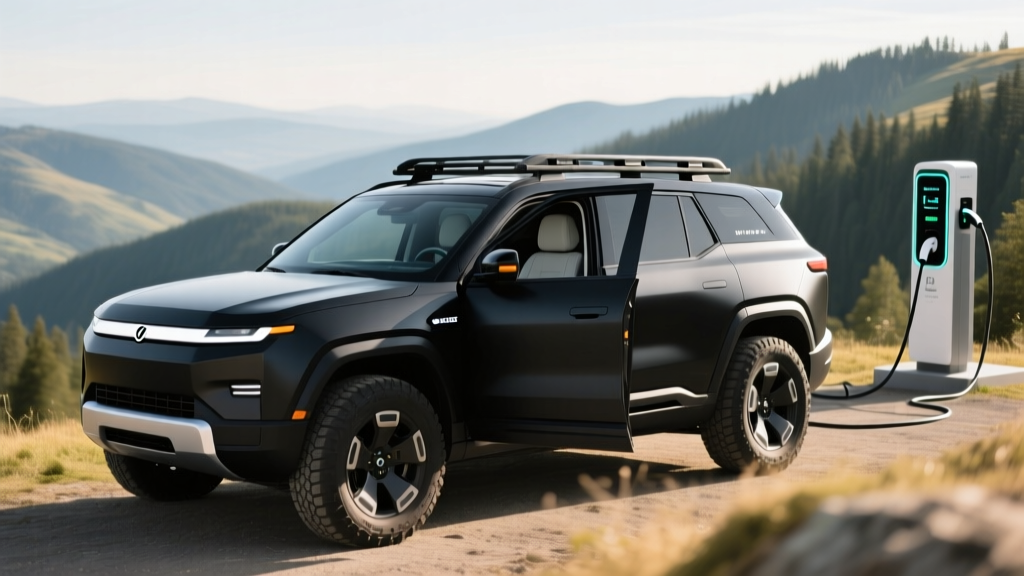
The Rivian Scout — officially unveiled as the Scout Traveler SUV and Scout Terra pickup under Volkswagen's revived Scout Motors brand, with Rivian's R2 platform technology underpinning future collaborations — represents one of the most anticipated entries in the mid-size electric adventure vehicle segment. As of early 2026, Scout Motors (a VW Group subsidiary, not Rivian directly) is targeting production at its new South Carolina facility, with first deliveries expected in late 2026 or early 2027. Rivian's involvement stems from the VW-Rivian joint venture announced in 2024, which shares electrical architecture and software.
This profile covers what we know from official Scout Motors announcements, the VW-Rivian tech partnership, and preliminary specifications. Because the Scout Traveler and Terra are not yet in customer hands, EPA figures remain estimated, and real-world testing data is unavailable. We'll update this review as production specs are finalized and independent testing begins.
Range, Battery, and Efficiency
Scout Motors has confirmed that both the Traveler SUV and Terra pickup will offer a battery-electric variant with a targeted range of up to 350 miles (EPA estimated, pending official certification). A range-extended EV (EREV) variant with a gasoline generator is also planned, pushing total range beyond 500 miles combined.
EPA Estimated Range: Up to 350 miles (BEV, preliminary)
Real-World Expectation: For a boxy, body-on-frame SUV with a large frontal area, expect highway range to drop 15–20% below EPA at sustained 75+ mph speeds — roughly 280–300 miles on long road trips. Cold-weather operation (below 32°F) could reduce range an additional 20–30% without preconditioning, bringing effective winter highway range to approximately 220–250 miles. The EREV variant mitigates this significantly with its onboard generator.
| Spec | Traveler SUV (BEV) | Terra Pickup (BEV) | EREV Variant |
|---|---|---|---|
| Battery Capacity (estimated) | ~100–120 kWh usable | ~100–120 kWh usable | ~40–60 kWh + gas generator |
| Battery Chemistry | NMC (expected, unconfirmed) | NMC (expected) | NMC or LFP (TBD) |
| EPA Range (est.) | Up to 350 mi | Up to 340 mi | 500+ mi combined |
| Efficiency (est.) | ~2.0–2.3 kWh/mi | ~2.1–2.4 kWh/mi | N/A (hybrid operation) |
| MPGe (est.) | ~130–150 MPGe | ~125–145 MPGe | N/A |
The battery chemistry has not been officially confirmed. Given the range targets and performance goals, nickel-manganese-cobalt (NMC) is the likely choice for the BEV variants, prioritizing energy density over the cycle-life advantages of lithium iron phosphate (LFP). The EREV's smaller battery pack could potentially use LFP, benefiting from daily charging tolerance, but Scout Motors has not specified.
Charging Speed: DC Fast, Level 2, and Home Setup
Scout Motors has committed to NACS (North American Charging Standard) as the native connector, aligning with the broader industry shift and granting access to Tesla's Supercharger network — a major advantage for road-tripping buyers.
| Charging Level | Power / Rate | Estimated Speed |
|---|---|---|
| Level 1 (120V household) | ~1.4 kW | ~3–4 miles per hour |
| Level 2 (240V home/public) | ~11.5–19.2 kW | ~25–45 miles per hour |
| DC Fast Charge (peak) | Up to 200+ kW (target) | 10–80% in ~25–30 min (est.) |
Charging curve reality check: Peak DC fast-charge rates are rarely sustained. A 200 kW peak typically averages 130–160 kW across the 10–80% session as the battery management system tapers current to protect cell health above ~60% state of charge. On a 350-mile-range pack, a 25-minute 10–80% session would add roughly 245 miles of range — adequate for highway rest-stop charging but not class-leading versus the Hyundai Ioniq 5's 18-minute 10–80% capability at 240 kW.
For home charging, a 48-amp Level 2 wall connector on a 60-amp circuit delivers approximately 11.5 kW, replenishing the full pack in roughly 9–11 hours overnight. Upgrading to an 80-amp circuit with a 19.2 kW charger cuts this to 5.5–7 hours but requires a 100-amp dedicated circuit and likely a panel upgrade in older homes — budget $1,500–$3,500 for professional installation depending on your electrical panel's capacity.
Performance and Drivetrain
Scout Motors has positioned the Traveler and Terra as adventure-capable vehicles with serious off-road credentials, not just on-road efficiency. Both models are expected to offer dual-motor all-wheel drive as standard or widely available.
| Metric | Traveler SUV | Terra Pickup |
|---|---|---|
| Drivetrain | Dual-motor AWD | Dual-motor AWD |
| Horsepower (est.) | 400–550 hp | 400–550 hp |
| 0–60 mph (est.) | ~4.5–5.5 seconds | ~4.5–5.5 seconds |
| Towing Capacity (target) | Up to 7,000 lbs | Up to 10,000 lbs |
| Ground Clearance | ~9–10 inches (est.) | ~9–10 inches (est.) |
| Water Fording | TBD | TBD |
The Terra pickup's 10,000-pound towing target would place it in the same league as the Rivian R1T and Ford F-150 Lightning, making it viable for boat, trailer, and camper duty. However, towing at max capacity will slash range by 40–50% — a reality for all electric trucks. Expect roughly 170–200 miles of range when towing heavy loads at highway speeds, necessitating careful route planning around DC fast chargers.
Pricing, Trims, and Federal Tax Credit Eligibility
Scout Motors has indicated a starting price in the mid-$50,000s for the Traveler SUV and Terra pickup, though final MSRP by trim has not been published as of early 2026. Here's what we know and how the federal tax credit factors in.
| Trim / Config | Est. MSRP | After §30D Credit |
|---|---|---|
| Traveler Base (AWD) | ~$55,000–$58,000 | ~$47,500–$50,500 |
| Traveler Mid Trim | ~$62,000–$68,000 | ~$54,500–$60,500 |
| Terra Base (AWD) | ~$55,000–$60,000 | ~$47,500–$52,500 |
| Terra Mid/High Trim | ~$65,000–$75,000 | ~$57,500–$67,500 |
Federal §30D Tax Credit Requirements (2026 rules):
- MSRP Cap: SUVs/pickups must be at or below $80,000 MSRP to qualify. Scout's expected pricing should clear this threshold on most trims.
- Buyer Income Cap: Modified AGI must not exceed $150,000 (single), $225,000 (head of household), or $300,000 (joint filers).
- Battery Sourcing: Critical minerals and battery components must meet escalating domestic/free-trade-partner sourcing thresholds. As a VW Group product built in South Carolina, Scout's eligibility will depend on its supply chain — check the IRS approved vehicles list at time of purchase.
- Point-of-Sale Transfer: Eligible buyers can transfer the credit to the dealer for an upfront price reduction rather than claiming it on their tax return.
- Final Assembly: Must occur in North America. Scout's South Carolina plant satisfies this requirement.
Note: The EREV (range-extended) variant may qualify for a reduced credit under plug-in hybrid rules — consult a tax professional and the IRS §30D guidance before purchasing.
Interior, Cargo, and Technology
Scout Motors has emphasized a utilitarian-meets-modern interior philosophy, with physical controls for off-road functions and a large central touchscreen for infotainment. The Traveler SUV is expected to seat five adults comfortably, while the Terra pickup offers a four-door crew cab configuration.
| Dimension | Traveler SUV | Terra Pickup |
|---|---|---|
| Seating Capacity | 5 passengers | 5 passengers |
| Rear Legroom (est.) | ~38–40 inches | ~38–40 inches |
| Cargo Volume (behind 2nd row) | ~35–45 cu ft | N/A (bed) |
| Cargo Volume (seats folded) | ~75–85 cu ft | N/A |
| Bed Length (Terra) | N/A | ~5.5 ft (est.) |
| Frunk (Front Trunk) | Confirmed, size TBD | Confirmed, size TBD |
Standout Tech Features (announced or expected):
- Large central touchscreen (estimated 15+ inches) with Scout's proprietary UI built on the Rivian-VW joint venture software stack
- Over-the-air (OTA) updates for vehicle software, performance tuning, and feature additions
- Off-road driving modes with terrain-select, locking differentials (mechanical or electronic), and trail-specific navigation
- Vehicle-to-load (V2L) capability for powering campsite equipment, tools, or emergency home backup
- ADAS suite expected to include adaptive cruise, lane-centering, automatic emergency braking, and blind-spot monitoring — likely SAE Level 2 (driver supervision required at all times)
Notable Drawbacks & Unknowns:
- No production vehicles delivered yet — build quality, software reliability, and dealer/service network remain unproven
- Reservation holders face uncertain delivery timelines; Scout's South Carolina plant is still ramping
- Boxy design prioritizes style and interior volume over aerodynamic efficiency, impacting highway range
- Service infrastructure is nascent — buyers in rural areas may face long tow distances for warranty repairs
Warranty and Long-Term Ownership
Scout Motors has not published final warranty terms, but industry standards for EVs in this segment point to the following expected coverage:
- Battery & Powertrain: 8 years / 100,000 miles (minimum, per federal mandate for emission-related components; most EV makers match or exceed this)
- Battery Capacity Retention: Typically guaranteed above 70% of original capacity during the warranty period — Scout's specific threshold is TBD
- Bumper-to-Bumper: Likely 4 years / 50,000 miles
- Roadside Assistance: Expected to be included, duration TBD
Battery replacement cost for a 100+ kWh pack, should it be needed out of warranty, typically ranges from $12,000 to $20,000+ depending on labor and cell availability. However, modern NMC and LFP packs are demonstrating 85–90% capacity retention at 150,000+ miles in fleet data from comparable platforms, making full replacement uncommon within typical ownership periods.
Who Should Buy the Scout — and Who Should Look Elsewhere
Choose the Scout Traveler/Terra if:
- You need genuine off-road capability with ground clearance, AWD, and towing capacity
- You want a rugged, boxy design that stands apart from crossover-style EVs
- The EREV variant appeals to you for eliminating range anxiety on remote trips
- You value NACS native compatibility and Supercharger access
- You're willing to be an early adopter with a new brand and accept first-year build risks
Look elsewhere if:
- You prioritize maximum efficiency and highway range over off-road capability (consider the Hyundai Ioniq 5, Tesla Model Y, or Lucid Gravity)
- You want a proven service network with nearby dealerships today
- You need a vehicle immediately — Scout deliveries are late 2026 at the earliest
- Third-row seating is a requirement (Scout is a two-row, five-passenger platform)
Scout vs. Key Competitors
| Spec | Scout Traveler (est.) | Rivian R1S (2026) | Jeep Recon (2026) |
|---|---|---|---|
| EPA Range | ~350 mi | ~352–410 mi | ~300+ mi (est.) |
| Starting MSRP | ~$55,000 | ~$79,900 | ~$55,000–$60,000 |
| 0–60 mph | ~4.5–5.5 sec | ~3.5–5.0 sec | TBD |
| Towing | ~7,000 lbs | ~7,700 lbs | TBD |
| Off-Road Focus | High | High | Very High |
| EREV Option | Yes (planned) | No | No |
The Scout's most compelling differentiator is the planned EREV variant — no direct competitor in the adventure-EV space currently offers a range-extended option. This positions Scout uniquely for buyers who want electric daily driving with gasoline backup for remote overlanding. The pricing, if it lands near $55,000, undercuts the Rivian R1S significantly while targeting similar capability.
Pros
- EREV variant eliminates range anxiety for remote adventures
- Native NACS connector with Supercharger access
- Competitive starting price vs. Rivian R1S
- Distinctive, rugged design with genuine off-road hardware
- Strong towing capacity for the class
- VW Group backing provides manufacturing scale and capital
Cons
- Not yet in production — delivery timeline uncertain
- Unproven brand with no service track record
- Boxy aerodynamics will reduce real-world highway range
- Final specs, warranty, and tax credit eligibility not confirmed
- Two-row seating limits family utility vs. three-row competitors
- Software and build quality are unknowns until vehicles ship
Frequently Asked Questions
What is the real-world range of the Rivian Scout / Scout Traveler?
The Scout Traveler targets up to 350 miles EPA estimated in BEV form. Real-world highway driving at 75+ mph will likely yield 280–300 miles, and cold weather (below 32°F) could drop that to 220–250 miles without preconditioning. The EREV variant with a gasoline generator extends total range beyond 500 miles, making it far less range-sensitive.
How fast does the Scout charge at home and on the road?
Scout targets DC fast charging at 200+ kW peak, with an estimated 10–80% time of 25–30 minutes. At home on a 240V Level 2 charger (11.5 kW), expect a full charge in roughly 9–11 hours overnight. A higher-power 19.2 kW home charger reduces this to 5.5–7 hours but requires a larger electrical circuit.
How much does the Scout cost after tax credits?
With a starting MSRP estimated around $55,000–$58,000 and a potential $7,500 federal §30D tax credit (subject to income, MSRP, and battery-sourcing requirements), the effective price could drop to approximately $47,500–$50,500. Final eligibility depends on your income, the specific trim's MSRP, and Scout's battery supply chain at time of delivery. The credit can be transferred to the dealer as a point-of-sale discount.
Is the Scout worth buying vs. the Rivian R1S or Jeep Recon?
If you want the lowest entry price in an adventure-capable EV and value the EREV option for remote trips, the Scout is compelling — but you're accepting early-adopter risk with an unproven brand. The Rivian R1S costs significantly more (~$80,000+) but offers proven performance, a mature service network, and available three-row seating. The Jeep Recon targets hardcore off-road buyers with Jeep's Trail Rated heritage. Your choice depends on budget, timeline, and risk tolerance.
Does the Scout qualify for the $7,500 federal EV tax credit?
Likely yes for most trims, provided the MSRP stays at or below $80,000 (the SUV/pickup cap under §30D), your income is within limits ($300,000 joint / $150,000 single), and Scout's battery meets critical-mineral and component sourcing requirements. The vehicle will be assembled in South Carolina, satisfying the North American final-assembly rule. Always verify eligibility on the IRS approved vehicles list before purchasing, as sourcing rules evolve.
What's the difference between Scout Motors and Rivian?
Scout Motors is a subsidiary of Volkswagen Group, reviving the International Harvester Scout brand as an electric adventure-vehicle maker. Rivian is a separate, publicly traded EV company (maker of the R1T, R1S, and commercial vans). The two are connected through a joint venture announced in 2024, where VW invested up to $5.8 billion in Rivian to co-develop electrical architecture and software that will benefit both companies' future vehicles — including Scout's platform technology.
When can I actually buy a Scout Traveler or Terra?
Scout Motors targets production start in late 2026 at its Blythewood, South Carolina facility, with first customer deliveries potentially extending into early 2027. Reservations are open with a refundable deposit. As with any new-brand launch, production ramp timelines can shift — treat announced dates as estimates until vehicles are shipping at scale.