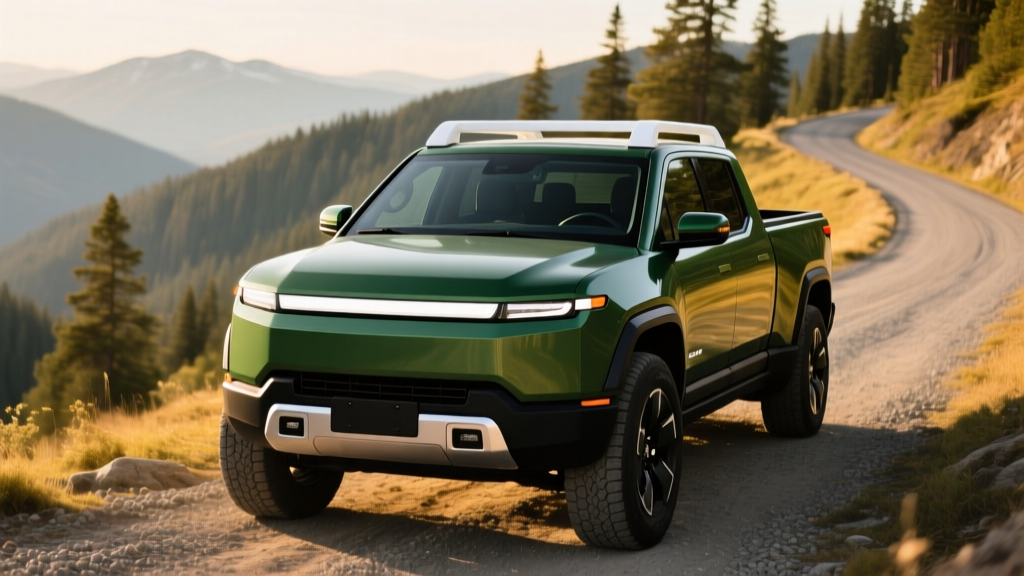
Rivian's loyalty and referral ecosystem has evolved significantly since the automaker launched its first electric trucks in 2022. With the 2026 model year bringing updated pricing, refreshed battery options, and new referral structures, understanding the latest Rivian Rewards program update is essential for anyone considering an R1T pickup or R1S SUV — or current owners looking to earn credits toward accessories, charging, or a future vehicle.
This guide covers the current state of Rivian's rewards and referral program as of early 2026, then dives deep into the vehicles the program supports: the R1T Dual-Motor and R1S Dual-Motor, including EPA range, charging performance, real-world efficiency, pricing after federal tax credits, and whether either model makes sense against competitors like the Ford F-150 Lightning, Tesla Cybertruck, and Hyundai Ioniq 5-based SUV concepts.
What Is the Rivian Rewards Program in 2026?
Rivian's referral-driven rewards system lets existing owners earn account credits when a new buyer uses their referral code to purchase or lease an R1 vehicle. The program has gone through several iterations since launch, and the 2026 structure reflects a more mature, credit-based ecosystem rather than the cash-equivalent rewards of earlier years.
As of the current program cycle, here's how the rewards break down:
- Referrer earns: $500–$1,000 in Rivian account credit per successful referral (credit amount varies by promotional period and vehicle configuration)
- Referred buyer receives: $500–$1,000 in account credit applied toward accessories, Rivian Gear Shop purchases, Waypoint charging network credits, or service
- Credit stacking: Owners can accumulate credits across multiple referrals, though annual caps may apply during certain promotional windows
- Eligibility: Referral codes are issued to verified R1 owners; codes must be applied at order time, not retroactively
Rivian periodically adjusts the credit values and terms, so checking the official Rivian Rewards page before ordering is always recommended. Program terms can shift quarterly, and promotional boosts (e.g., double-credit events around new model launches) are common.
R1T and R1S: 2026 Specs at a Glance
Before evaluating whether the rewards program meaningfully offsets the cost of a Rivian, it's worth understanding exactly what you're buying. The 2026 R1T (pickup) and R1S (three-row SUV) share the same skateboard platform, battery options, and powertrain configurations, but differ in body style, cargo capacity, and pricing.
| Spec | R1T Dual-Motor (Standard) | R1S Dual-Motor (Standard) |
|---|---|---|
| EPA Range | 270 miles | 260 miles |
| Battery Capacity (usable) | ~92 kWh (NMC) | ~92 kWh (NMC) |
| Battery Chemistry | NMC (nickel manganese cobalt) | NMC |
| Max DC Fast Charge | ~200 kW peak | ~200 kW peak |
| 10–80% DC Charge Time | ~30 minutes | ~30 minutes |
| Level 2 Home Charging | 11.5 kW (~25 mi/hr) | 11.5 kW (~25 mi/hr) |
| 0–60 mph | 4.5 seconds | 4.6 seconds |
| Horsepower | 533 hp | 533 hp |
| Drivetrain | AWD (dual-motor) | AWD (dual-motor) |
| MPGe (combined) | 73 MPGe | 70 MPGe |
| Efficiency | 46 kWh/100 mi | 48 kWh/100 mi |
| Base MSRP | $69,900 | $74,900 |
| Battery/Powertrain Warranty | 8 yr / 175,000 mi | 8 yr / 175,000 mi |
Source: fueleconomy.gov and Rivian official specifications. Figures reflect the Standard Battery pack; Max and Large battery options alter range, pricing, and charging performance.
Real-World Range: What the EPA Sticker Doesn't Tell You
EPA Estimated: 270 miles
Real-World Highway (70–80 mph, moderate temps): ~220–240 miles
Cold Weather (below 32°F, highway): ~180–210 miles
City/Commuter (regenerative braking active): ~260–280 miles
The R1T's boxy aerodynamic profile — a flat front, exposed bed, and tall ride height — creates substantial drag at highway speeds. In practice, this means highway road trips will consume range faster than the EPA combined cycle suggests. On a 250-mile interstate drive at 75 mph in 65°F weather, expect to arrive with roughly 10–15% state of charge remaining, making a charging stop necessary for longer stretches.
Cold weather compounds this. Below freezing, the R1T's NMC battery loses efficiency to cabin heating and internal resistance, even with Rivian's heat pump system engaged. Preconditioning the battery while plugged in (a feature accessible through the Rivian app) mitigates some of this loss, but owners in northern climates should plan for 25–35% range reduction in sustained winter driving.
The R1S, being slightly heavier and similarly un-aerodynamic, tracks 10–20 miles behind the R1T in most real-world scenarios. Three-row SUV buyers prioritizing range should consider the Large Battery pack (EPA ~352 miles for R1T, ~340 miles for R1S), which adds significant cost but meaningfully extends road-trip flexibility.
Charging Performance: DC Fast and Home Level 2
Rivian's Gen 2 platform supports up to ~200 kW peak DC fast charging on the Standard Battery pack, with the Large and Max packs capable of higher sustained rates. Here's how that translates to real charging sessions:
| Charging Level | Power (kW) | Miles Added per Hour | Notes |
|---|---|---|---|
| Level 1 (120V household) | ~1.4 kW | ~3 mi/hr | Emergency/trickle only; impractical for daily use |
| Level 2 (240V, 48A home) | 11.5 kW | ~25 mi/hr | Full charge in ~8–9 hours; ideal for overnight |
| DC Fast Charge (Standard pack) | ~200 kW peak | ~140 mi in 20 min (10–80%: ~30 min) | Peak rate sustained to ~50% SoC, then tapers |
| DC Fast Charge (Max pack) | ~220+ kW peak | 10–80%: ~25 min (est.) | Higher sustained rate; better for road trips |
Understanding the charge curve: Like all EVs, the R1T and R1S do not sustain their peak kW rate for the entire session. The ~200 kW peak applies roughly between 10–50% state of charge. Above 60%, the rate tapers to protect battery health — dropping to ~80 kW by 70% and ~40 kW above 85%. This is why manufacturers quote 10–80% times rather than 0–100%. For road-trip planning, expect 25–35 minute stops at 150+ kW chargers to go from 15% to 80%.
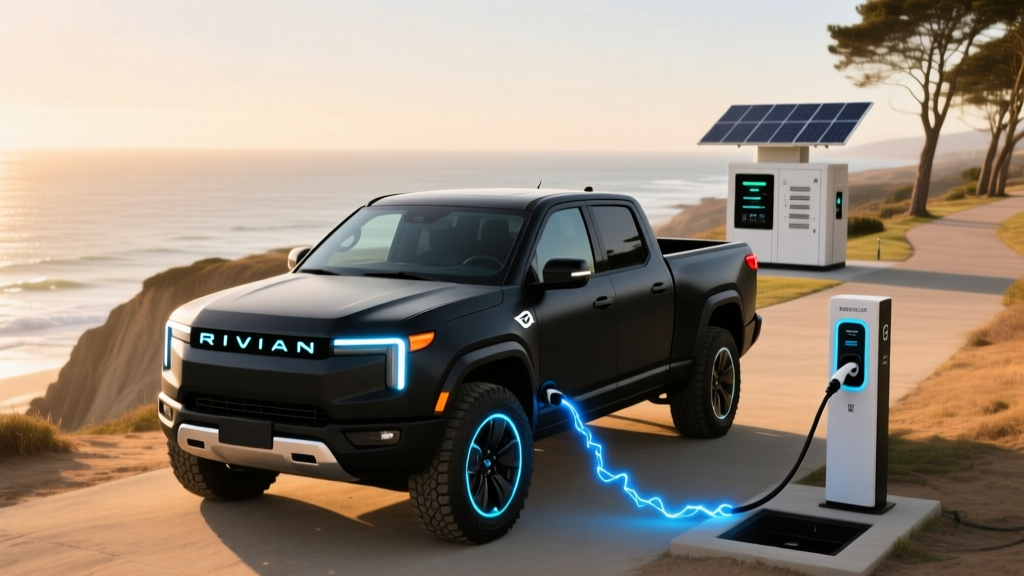
Rivian's proprietary Rivian Adventure Network (branded Waypoints) offers chargers at trailheads, parks, and select highways, though coverage remains far sparser than Tesla's Supercharger network. The R1T and R1S use the NACS connector as of the 2025 model year refresh, granting access to Tesla Superchargers with no adapter — a significant practical advantage for road-trippers.
For home charging, a 48-amp Level 2 wall connector on a 60-amp dedicated circuit delivers the full 11.5 kW. Expect $800–$2,000 for professional installation depending on panel capacity and run length. Homes with 100-amp electrical panels may require a $2,000–$4,000 panel upgrade to support a dedicated 60-amp EV circuit alongside existing loads.
Pricing, Trims, and Federal Tax Credit Eligibility
The 2026 Rivian lineup spans multiple battery and motor configurations. Here's where pricing stands and how the federal §30D tax credit applies:
| Configuration | R1T MSRP | R1S MSRP | §30D Credit Eligible? |
|---|---|---|---|
| Dual-Motor Standard Battery | $69,900 | $74,900 | R1T: Yes (under $80K truck cap) | R1S: Yes (under $80K SUV cap) |
| Dual-Motor Large Battery | $76,900 | $81,900 | R1T: Yes | R1S: No (exceeds $80K SUV cap) |
| Tri-Motor Max Battery | $93,500 | $98,500 | No (exceeds MSRP caps for both body styles) |
Critical §30D caveats: The federal EV tax credit under IRS Section 30D is not a guaranteed $7,500 for every buyer. Eligibility depends on several factors that interact:
- MSRP Cap: Vans, SUVs, and pickups must have an MSRP ≤ $80,000. Sedans ≤ $55,000. The R1T qualifies as a pickup; the R1S as an SUV.
- Buyer Income Cap (Modified AGI): $300,000 joint / $225,000 head of household / $150,000 individual. Exceed these and you're ineligible regardless of the vehicle.
- Battery Sourcing Requirements: A portion of the credit ($3,750) depends on critical minerals sourced from the U.S. or free-trade-agreement partners; the other $3,750 depends on battery components manufactured or assembled in North America. Rivian assembles vehicles in Normal, Illinois, but battery cell sourcing varies by pack and model year. Check the DOE/FuelEconomy credit eligibility tool for the specific VIN-level determination.
- Point-of-Sale Transfer: As of 2024, buyers can transfer the credit to the dealer at purchase, reducing the out-of-pocket price directly — rather than waiting to claim it on their tax return. Rivian supports this at delivery.
In the best-case scenario — a Dual-Motor Standard R1T at $69,900 with full $7,500 credit eligibility — the effective price drops to ~$62,400 before state incentives, delivery fees, or options. Add the Rivian Rewards referral credit ($500–$1,000) on top, and a well-qualified buyer could see an effective entry price in the low $60Ks. That's competitive with a mid-trim Ford F-150 Lightning and significantly undercuts the Tesla Cybertruck AWD at its current pricing.
Performance, Interior, and Standout Technology
The Dual-Motor R1T delivers 533 horsepower and a 4.5-second 0–60 mph time — quick for a 7,000-pound pickup, though not in the territory of Rivian's quad-motor configurations (which hit 60 in under 3 seconds). The dual-motor setup uses one permanent-magnet motor per axle, providing true all-wheel drive with independent torque distribution.
Interior and cargo:
- R1T bed: 4'6" bed with a ~1,760-lb payload capacity and integrated camp kitchen option. The gear tunnel (a pass-through storage compartment behind the cab) adds 11.7 cu ft of lockable, weather-sealed space — a unique Rivian feature competitors don't match.
- R1S cargo: 10.4 cu ft behind the third row; 46.7 cu ft with the third row folded; 91.6 cu ft with both rear rows down. Front trunk (frunk) adds 11.0 cu ft.
- Passenger space: R1S offers 41.2" front legroom, 38.5" second-row, and 30.4" third-row. The third row is best suited for children on longer trips; adults will find it tight beyond 30-minute rides.
Tech and driver assistance:
- 15.6" center touchscreen running Rivian's proprietary OS — responsive but with a learning curve for first-time EV users. No Apple CarPlay or Android Auto; Rivian relies on its native navigation, media, and phone-mirroring integration.
- Rivian's Driver+ suite includes adaptive cruise control, lane centering, and automatic lane changes on divided highways. This is an SAE Level 2 system — the driver must remain attentive with hands on or near the wheel at all times. It is not autonomous driving.
- Over-the-air (OTA) updates continuously add features; recent updates have improved regenerative braking customization, route planning with charging stops, and camp mode enhancements.
- No Apple CarPlay/Android Auto: A dealbreaker for buyers who rely on phone-native navigation and media. Rivian's native system is capable but requires adaptation.
- Highway efficiency: The boxy truck/SUV shape means highway MPGe drops noticeably vs. sleeker EVs. Expect 2.0–2.3 kWh/mile at 75 mph — roughly 30% less efficient than a Tesla Model Y at cruise.
- Service center density: Rivian's service network is growing but remains thin outside major metro areas. Mobile service vans cover many regions, but complex repairs may require travel to a service center.
- Third-row practicality (R1S): Adults will find the third row cramped. Families needing frequent full-capacity seating should cross-shop the Kia EV9 or a three-row PHEV.
Who Should Buy a Rivian R1T or R1S?
Choose the R1T if:
- You need a pickup bed for gear, bikes, or light hauling but want EV running costs
- Adventure-oriented lifestyle: camping, trailheads, ski trips (the gear tunnel and camp kitchen are genuinely useful)
- You have home Level 2 charging and a daily commute under 150 miles round-trip
- You qualify for the §30D credit and can bring the effective price near $62K
- You need three rows occasionally but don't want a minivan
- The Standard Battery configuration keeps you under the $80K MSRP cap for §30D eligibility
- You value the frunk + cargo versatility for family road trips
- Maximum range is your top priority (Tesla Model Y or a Max-pack R1 at higher cost)
- You rely on Apple CarPlay for daily navigation
- You live in a region with no Rivian service presence and cannot tolerate mobile-service-only support
- You need frequent 7-passenger seating with adult-sized third-row comfort
Rivian Rewards: Is the Referral Credit Worth Factoring In?
The $500–$1,000 referral credit from the Rivian Rewards program is a modest but real offset against a vehicle in the $70K+ range. It's best understood as a bonus rather than a decision-driver — equivalent to a free set of all-weather floor liners or a year of Rivian Waypoint charging credits.
Where the rewards program gains significance is for existing owners considering a second Rivian purchase or upgrade. Accumulated credits from multiple referrals can meaningfully reduce the cost of accessories (Rivian's Gear Shop items are premium-priced — a camp kitchen runs $5,000+), making the program a genuine loyalty benefit for multi-vehicle or accessory-heavy households.
For new buyers, the more financially impactful factors remain: §30D tax credit eligibility (up to $7,500), state-level incentives (which vary significantly — check your state energy office for current programs), and the total cost of ownership advantage from lower fuel and maintenance costs versus a comparable gas-powered truck or SUV.
Competitor Comparison: How the R1T and R1S Stack Up
| Attribute | Rivian R1T Dual-Motor Std | Ford F-150 Lightning XLT | Tesla Cybertruck AWD |
|---|---|---|---|
| EPA Range | 270 mi | 240 mi (Std) / 320 mi (Ext) | 340 mi |
| Base MSRP | $69,900 | ~$54,995 | ~$79,990 |
| §30D Eligible (base) | Yes | Yes | Yes (at cap) |
| Max DC Charge | ~200 kW | ~150 kW (Std) / ~155 kW (Ext) | ~250 kW |
| 0–60 mph | 4.5 sec | ~5.0 sec (XLT) | 4.1 sec |
| Unique Feature | Gear tunnel, camp kitchen | Pro Power Onboard, Mega Power Frunk | Stainless exoskeleton, 110V/240V bed outlets |
The F-150 Lightning undercuts the R1T on price significantly, especially in XLT trim, and offers a more traditional truck experience with broader dealer service coverage. The Cybertruck delivers more range and faster charging at a higher starting price, but its polarizing design and limited service infrastructure are real considerations. The R1T occupies a premium-adventure niche that neither fully matches — if you value the gear tunnel, Rivian's build quality, and the adventure-community ecosystem, the price premium over the Lightning is justified by features Ford simply doesn't offer.
Frequently Asked Questions
What is the real-world range of the Rivian R1T?
The EPA rates the 2026 R1T Dual-Motor Standard at 270 miles combined. In real-world highway driving at 70–80 mph, expect 220–240 miles. In cold weather below freezing, plan for 180–210 miles. City driving with regenerative braking can approach or slightly exceed the EPA figure.
How fast does the R1T and R1S charge?
On a DC fast charger, the Standard Battery peaks at ~200 kW, reaching 10–80% in approximately 30 minutes. At home on a 48-amp Level 2 charger (11.5 kW), a full charge takes about 8–9 hours, adding roughly 25 miles of range per hour. Charging above 80% slows significantly to protect battery longevity.
How much does a Rivian cost after tax credits?
A 2026 R1T Dual-Motor Standard starts at $69,900. If you qualify for the full $7,500 §30D credit (meeting income, MSRP, and battery-sourcing requirements), the effective price drops to ~$62,400. Adding a $500–$1,000 Rivian Rewards referral credit brings the effective entry point to roughly $61,400–$61,900 before delivery fees and options. The R1S Standard starts at $74,900, dropping to ~$67,400 after the credit.
Does the Rivian R1T or R1S qualify for the federal EV tax credit?
The R1T Dual-Motor Standard ($69,900) and R1S Dual-Motor Standard ($74,900) fall under the $80,000 MSRP cap for pickups and SUVs. However, the full $7,500 credit requires meeting battery critical-mineral and component sourcing thresholds, which vary by model year and pack. Your personal modified AGI must also fall below IRS limits ($300K joint / $150K individual). Verify eligibility at fueleconomy.gov and consult a tax professional before relying on the credit.
Is the Rivian Rewards referral credit applied to the vehicle price?
No. The referral credit is issued as Rivian account credit — usable toward accessories, Gear Shop items, Waypoint charging, or service. It does not reduce the vehicle purchase price or affect §30D credit calculations. It is applied after delivery, typically within 30–60 days of the referred buyer taking delivery.
Is the R1T worth buying over the Ford F-150 Lightning?
If your priority is lowest cost and broadest service access, the Lightning wins — it starts ~$15,000 lower and can be serviced at any Ford dealer. If you value the gear tunnel, Rivian's adventure-oriented build quality, the camp kitchen ecosystem, and a more refined software experience, the R1T justifies its premium. For towing-heavy use, neither is ideal for long-distance towing due to range loss (expect 40–50% range reduction when towing near max capacity), but the R1T's integrated trailer-brake controller and tow-assist features are well-implemented.